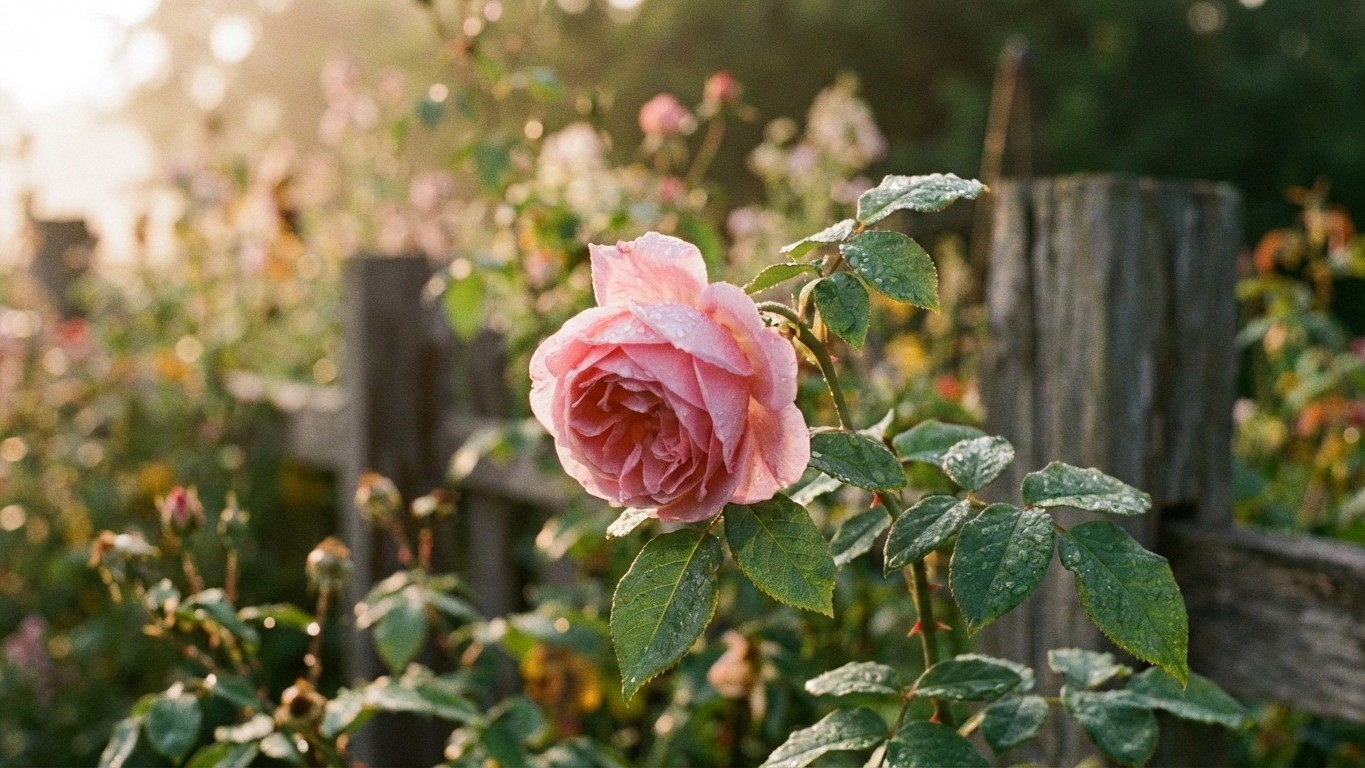

Roses can do well in Wyoming when the plant suits the site. Choose cold-hardy shrub roses, plant container roses after the May 7 to May 18 last-frost window (the Cheyenne figure), and give them a windbreak, deep watering and a mulch mound before winter. Hybrid teas can work too, with more protection. Below are dates, varieties, pests and season-long care. For the national overview, see How to Grow Roses: The Complete Guide.
When to plant Roses in Wyoming

Cheyenne is the reference city here. Its 1991-2020 NOAA NCEI Climate Normals put the last spring 32°F freeze between May 7 and May 18, and the first fall freeze between September 24 and October 5. Those are the 30 to 70 percent probability dates, so inside that stretch a freeze is a real possibility, not a freak event. The result is roughly 130 frost-free days at 6,000 feet.
One city does not speak for the state. Northern basins, mountain valleys and anything higher than Cheyenne run later in spring and earlier in fall, and frost is possible in any month at higher elevations. Treat the dates above as a starting point and shift them later the colder your site is. Season extension (row cover, burlap wraps, plastic jugs with the bottoms cut out) is part of the routine here.
Bare-root and container roses
Bare-root roses are dormant, so they tolerate cold nights better than leafed-out plants. Put them in as soon as the soil is thawed and no longer soggy, which is roughly two weeks ahead of the early end of the frost window. In a Cheyenne-type climate that means late April. Soak the roots in a bucket of water overnight first.
Container roses from a greenhouse are already leafing out, and tender new growth is what a late freeze kills. Plant them from May 18 on, or from May 7 if you cover them on cold nights. Greenhouse plants also need hardening off, which takes 7 to 10 days. Count back from planting day: to plant on May 18, set the pots outside in part shade on May 8 and move them into full sun over the following week. To plant on May 7, start on April 27. Bring pots inside or cover them whenever the forecast dips near freezing.
Fall planting is a gamble. A new rose needs about six weeks of root growth before the ground freezes. Counting back from the September 24 to October 5 window, that puts the last reasonable planting date between August 13 and August 24, and only at lower, warmer sites. Spring is the better bet.
Starting from seed
Seed is a long road for roses. Named hybrids do not come true from seed, so this route suits species roses such as the native Woods’ rose. The seed needs about 12 weeks of cold, moist stratification in the refrigerator, then roughly six weeks indoors under lights before it can go out. That is 18 weeks in all. Counting back from May 7 puts the start at New Year’s Day, and from May 18 at the second week of January. Most gardeners will do better buying plants.
Soil and site preparation
Roses want at least six hours of direct sun, and morning sun is worth more than afternoon sun because it dries the dew off the leaves. Wind is the other half of site choice. Constant wind dries canes and shreds flowers, so a spot on the lee side of a house, fence or hedge beats an open lawn. Keep roses a few feet from walls that reflect heat, and away from tree roots that will outcompete them.
Soil texture and drainage
Roses want loose, well-drained soil with plenty of organic matter. Test drainage before you buy anything. Dig a hole about 12 inches deep, fill it with water, let it drain, then fill it again. If water is still standing a day later, pick another spot or build a raised bed 10 to 12 inches high. Very sandy soil drains too fast and needs compost to hold moisture. Heavy clay needs compost to open it up, but do not fill the planting hole with rich amendments alone, because roots then circle inside it instead of reaching out.
Roses do best in slightly acidic to neutral soil. Many soils across the high plains and intermountain West lean alkaline, and alkaline soil locks up iron so leaves turn yellow with green veins. A soil test through your county extension office tells you where you stand. Elemental sulfur lowers pH slowly, over months, so apply it the fall before planting.
Weeks before planting
Start the bed in the fall or at least four weeks before planting. Strip the sod, pull perennial weeds by the root (field bindweed will return through a rose bed if any root is left), and work 2 to 3 inches of compost into the top 12 inches of soil. Dig each hole about 18 inches wide and deep enough that the roots spread without bending.
Space hybrid teas and floribundas about 3 feet apart, compact shrub roses 3 to 4 feet, and large shrubs and climbers 5 to 6 feet or more. In cold climates, plant grafted roses with the bud union (the knobby swelling where the canes join the roots) about 2 inches below the soil surface. Own-root roses go in at the depth they grew in the pot.
Varieties that suit Wyoming
Traits to look for
Cold hardiness comes first. A rose that dies to the ground each winter spends its short summer rebuilding instead of blooming. Check your USDA zone and pick roses rated at least one zone colder than yours, since wind and thaw-freeze cycles do more damage than the thermometer alone.
Own-root roses are the safer bet. If the canes freeze back, the plant regrows true to its variety. A grafted rose that dies to the bud union can come back as the rootstock instead, which is a different (and usually less pretty) plant.
Repeat bloom is worth having because roughly 130 frost-free days leaves time for several flushes. Disease resistance matters too. Dry air limits some leaf diseases, but powdery mildew thrives on warm days and cool nights, so mildew-resistant foliage is a plus.
Roses worth looking for
| Rose | Type | Good for | Keep in mind |
|---|---|---|---|
| Hansa | Rugosa shrub | Fragrant double flowers, repeat bloom, hips, tough foliage | Suckers; needs elbow room |
| William Baffin | Explorer-series climber/large shrub | Cold hardiness, disease resistance, tall screens | Needs space and a sturdy support |
| John Cabot | Explorer-series climber | Fences and trellises, strong early bloom | Cool pruning attention in spring |
| Morden Blush | Parkland-series shrub | Compact beds, repeat bloom, pale blush flowers | Smaller plant, lighter fragrance |
| Harison’s Yellow | Old pioneer rose | Poor, dry soils; heavy single flush of yellow | Blooms once; can spread by suckers |
| Knock Out | Modern shrub | Continuous bloom, low maintenance | May die back to the ground in hard winters, then regrow |
| Woods’ rose (Rosa woodsii) | Native species | Pollinators, birds, wildlife hedges, bright hips | Forms a thicket; flowers once |
Canadian-bred Explorer and Parkland roses were developed for cold prairie winters, which is why they show up so often in northern gardens. They are widely sold at nurseries and by mail. If you want hybrid teas, treat them as annuals-with-benefits: plant them in the most sheltered spot, bury them deep for winter, and expect some years of cane loss.
What to plant alongside
Good companions share a rose’s sun and drainage needs. Lavender and catmint both thrive in full sun and lean soil, and their flowers draw bees and beneficial insects. Catmint also grows low enough to cover bare ground around the base of a rose. Yarrow, salvia, blanket flower and native penstemons (the Rocky Mountain penstemon is a good one) do the same job and take dry spells in stride. Creeping thyme works as a living mulch at the front of the bed.
Some pairings have a weaker case. Garlic, chives and ornamental alliums planted around roses are said to repel aphids, but the evidence is thin. Their scent may confuse a few pests, and the blooms attract pollinators, but expect a modest benefit, not protection. Marigolds suppress certain soil nematodes, yet that does nothing for aphids or black spot.
Avoid neighbors that compete or conflict. Turf grass growing up to the canes steals water and nutrients, so keep a mulched circle 2 to 3 feet wide. Aggressive spreaders such as mint and bindweed will smother a young rose. Water-loving plants don’t pair well with lavender or yarrow, so group by water need. Skip crowding as well: packed plantings trap humid air and invite powdery mildew. Leave at least a foot of open space around each rose so air moves through the canopy.
Watering, feeding and support
Water and mulch
Deep, infrequent watering builds deep roots. Aim for about an inch a week from rain and irrigation combined, delivered at the soil rather than over the leaves. Dry wind pulls moisture out faster than the calendar suggests, so check by pushing a finger or trowel 3 to 4 inches down. If that depth is dry, water. New plants need more attention in the first summer, often twice a week during hot, windy stretches.
Spread 2 to 3 inches of shredded bark or wood chips after the soil has warmed, keeping the mulch a few inches off the canes. It slows evaporation and suppresses weeds. A fresh layer in late fall also insulates the crown.
Feeding
Feed in three steps. Give a balanced rose or all-purpose fertilizer when new growth begins in spring, a second round after the first big flush of bloom, and compost around the base each spring. Stop fertilizing by the end of July. Feeding later pushes soft new canes that won’t harden before the September 24 to October 5 freeze window, and soft canes die back over winter.
Support and pruning
Climbers and tall shrub roses need ties to a trellis or fence, secured loosely with soft material that won’t girdle the cane. Prune in spring, once buds swell and the worst cold has passed. Cut out dead, black or shriveled wood back to green tissue, then thin crossing canes. Cutting back dead canes late is safer than cutting early, because you can see what survived.
Suckers on grafted roses arise from below the bud union and usually look different from the variety above, with leaves made up of more, smaller leaflets. Trace them to the root and pull them off rather than snipping at ground level.
Common problems

Insects
The University of Wyoming Extension’s pest publication for home vegetable gardens names aphids, grasshoppers, blister beetles, cutworms, flea beetles and garden slugs among the insects that matter in the state, and the list is not exhaustive. Several of these reach roses. Aphids cluster on buds and new shoots, leaving sticky residue and distorted growth. A blast of water knocks them off, and soap spray handles heavier infestations. Grasshoppers chew foliage and flowers, especially in dry summers, and blister beetles feed on blooms in late summer. Wear gloves if you pick blister beetles by hand, because they release a compound that blisters skin.
Cutworms can slice through the base of a young plant overnight, so a collar of cardboard or foil around new transplants helps. Flea beetles leave tiny shot-holes and rarely do lasting harm to established roses. Spider mites, which are not on that list but flourish in hot, dry spells, leave fine stippling on leaves and webbing underneath. A hard spray of water on the underside of leaves discourages them. Your county extension office can identify a pest you can’t name.
Diseases and disorders
Powdery mildew shows as a white dusty coating on young leaves and buds. Better airflow and morning watering reduce it. Black spot, with round black spots and yellowing leaves, depends on wet foliage, so it is a bigger worry in humid places like Connecticut (see Growing Roses in Connecticut: Planting Dates, Varieties and Local Pests) than in dry air. Wet springs and overhead sprinklers can still bring it on. Remove fallen leaves and don’t compost them.
Yellow leaves with green veins point to iron chlorosis, common in alkaline soil. Twisted, strap-like leaves and cupped new growth can come from herbicide drift from lawn treatments. Rose rosette disease, spread by tiny mites, produces red, crowded, abnormally thorny shoots, called witches’ broom. It is documented in the central United States. If you see it, contact your county office before doing anything else, since affected plants usually need to be removed.
Poor bloom has simpler causes: too little sun, too much nitrogen, or a hard winter that killed the flowering wood. Canes that leaf out but then wilt often suffered winter injury, so prune to live tissue.
Harvest and end of season
Cut flowers in the morning, when stems hold the most water, just above a five-leaflet leaf. Put stems in water right away, strip leaves below the waterline and keep the vase out of direct sun. Cutting also prompts the plant to rebloom, so a vigorous bush wants regular cuts.
Rugosa roses and species roses such as Woods’ rose produce hips that sweeten after a frost. Stop deadheading by about late August to let hips form, which also tells the plant to slow down for winter. Hips can be dried for tea or made into jelly.
Plan for the first fall freeze, expected between September 24 and October 5 at Cheyenne and earlier at higher elevations. Water deeply before the ground freezes, because dry roots suffer in dry winter wind. After a few hard freezes, mound 10 to 12 inches of soil, compost or shredded leaves over the base of grafted roses. Tie climbers loosely and consider wrapping them in burlap. Wait until spring to prune, and pull the mound away gradually as growth begins.
Local help
County-level frost dates, soil testing and pest identification are available through University of Wyoming Extension, and your county office knows which conditions apply to your elevation. More state-specific guidance is collected in our Wyoming guides.
Common questions
When is the best time to plant roses in Wyoming?
Plant bare-root roses in late April once the soil is workable, and container roses after the last frost window of May 7 to May 18 (Cheyenne). Higher and northern locations run later. Finish any fall planting by mid-August.
Which roses survive Wyoming winters best?
Own-root, cold-hardy types do best: rugosas such as Hansa, Canadian Explorer and Parkland roses, old pioneer roses like Harison’s Yellow, and the native Woods’ rose. Knock Out may die back but usually regrows.
Do roses need winter protection?
Grafted roses do. Mound soil or mulch 10 to 12 inches over the base after several hard freezes and water well before the ground freezes. Hardy shrub roses need less, but a layer of mulch still helps.
What pests should I watch for?
Aphids, grasshoppers, blister beetles, cutworms and slugs are named in University of Wyoming Extension’s home garden pest list, and spider mites flourish in hot, dry spells. Take a sample to your county office if you are unsure what you have.
Can I grow roses from seed?
Species roses can be, after about 12 weeks of cold stratification, but named hybrids will not come true. For the neighboring plains state with a longer season, compare notes in Growing Roses in Nebraska: Planting Dates, Varieties and Local Pests; either way, a nursery plant saves two seasons.