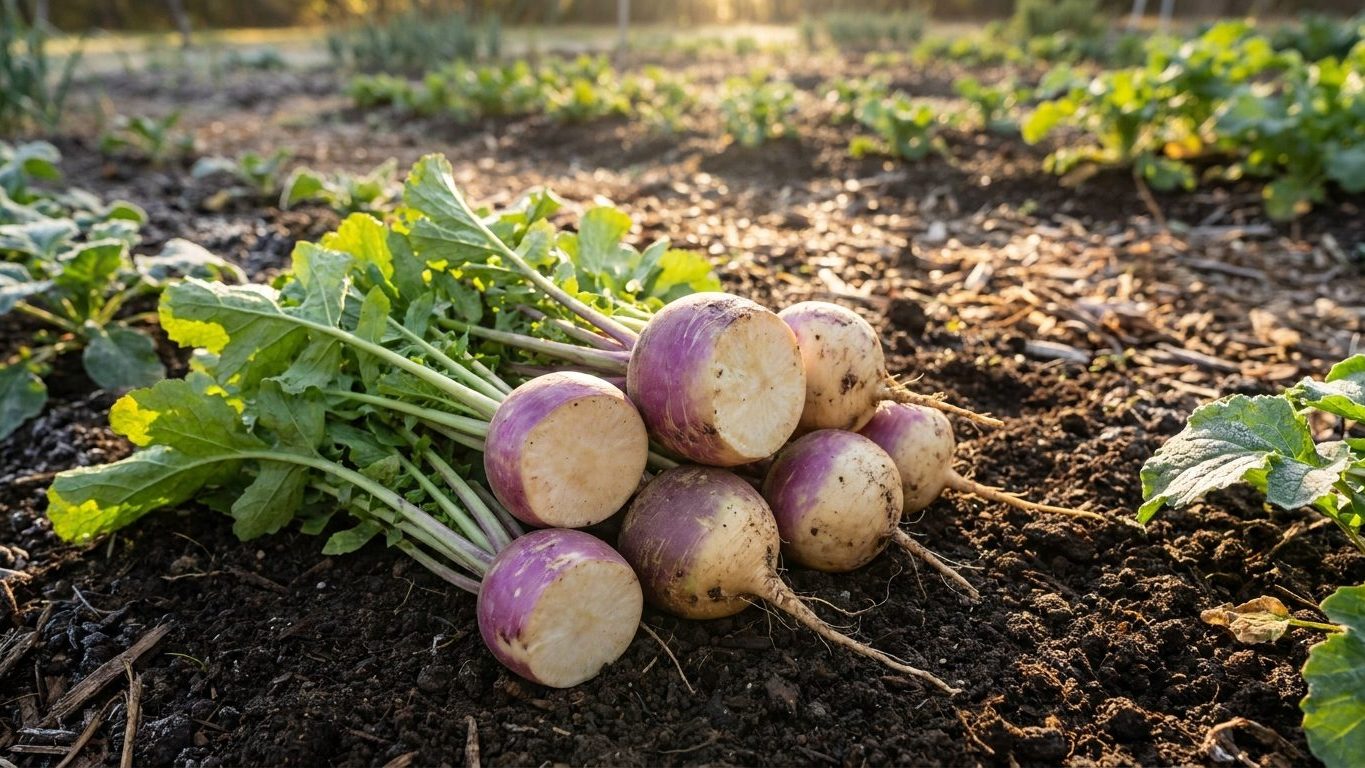

In and around Anchorage, turnip and rutabaga seed goes into the ground once the soil itself has shed its spring chill, which trails the last frost date by a couple of weeks. The frost-free window there runs roughly May 3 to October 1, about 143 days, generous by Alaska standards but still short enough that timing and crop choice matter more than they would farther south.
When the soil is warm enough in Alaska
NOAA’s 1991-2020 Climate Normals put the last spring frost at Anchorage’s reference station (USW00026451) between May 3 and May 12. That’s a 30-70% probability band, not a calendar guarantee. Some years the freeze risk clears by the earlier date, some years it lingers past the later one, and a gardener who plants right on May 3 is accepting real odds of a setback.
Frost date and soil temperature are two different things, and that difference matters more for turnips and rutabaga than people expect. Air can warm up on a sunny afternoon while the ground underneath stays cold from months of snowmelt runoff and a slow-to-thaw subsoil. Turnip and rutabaga seed doesn’t need summer-warm soil the way corn or squash does, they’re cool-season brassicas built for exactly this kind of climate, but the seed still sits and sulks in soil that’s still cold and wet at depth. The practical fix is patience: wait until the soil has drained and warmed past its raw spring state, which in the Anchorage bowl usually trails that last-frost window by a week or two, rather than sowing the moment the frost-date calendar says it’s safe.
Raised beds and black landscape fabric laid down early both speed that soil warm-up in a climate where every degree and every day counts. South-facing slopes and beds sheltered from the cold air that pools in low spots will be workable before flatter, exposed ground.
Turnips and rutabaga are brassicas, and that single fact governs most of the pest and disease pressure they’ll face here: root maggot, flea beetle, and clubroot all move freely between turnips, rutabaga, cabbage, kale, and mustard. A bed that grew any of those crops in the last few years isn’t a clean start, no matter how good it looks. Rotation planning belongs on its own page, and this site’s brassica rotation guide is the place to work out a bed sequence rather than guessing.
Roots pulled early in the season for fresh eating don’t need much of a storage plan, but the habit is worth starting now: before eating or storing any root, check it over. A soft patch, a weeping spot, or a moldy crown means that root is done, no matter how solid the rest of it looks.
How long the season lasts here
Anchorage’s frost-free window runs from the May 3-12 spring frost to a first fall frost of September 22 to October 1, both from the same NOAA station and normals period. That’s about 143 frost-free days, and it’s one of the more generous windows anywhere in Alaska, since Anchorage sits among the mildest inhabited parts of the state. The Interior and the north run considerably shorter, so a gardener gardening outside the Anchorage bowl should treat this number as an upper bound, not a statewide figure.
What 143 days actually buys a grower depends on which crop is in the ground. Turnips, which mature quickly, fit comfortably into a single sowing with room to spare, and a second sowing timed for a fall harvest is realistic in most years, especially given Alaska’s long summer daylight, which pushes growth along faster than the day count alone suggests. Rutabaga is the slower of the two and asks for most of that window from a single sowing rather than splitting it. Treating rutabaga as a one-shot crop and turnips as a candidate for succession is the more reliable way to use a 143-day season than trying to squeeze two rutabaga crops into it.
Transplanting rather than direct-sowing can buy a week or two at the front end for gardeners who start seedlings indoors, though both crops resent root disturbance more than most vegetables, so the transplants need to be young and the root ball checked for kinks before they go in the ground. Whether that trade is worth it depends on how tight the window already is: with 143 days to work with, direct-sowing on schedule is usually simpler and just as productive. For a full walkthrough of staggering plantings for a longer harvest window, this site’s succession sowing guide covers the spacing and timing in more detail than fits here.
Heat and water in Alaska
This is where growing turnips in Anchorage looks nothing like growing them almost anywhere else in the country. The days-above-90°F count that shapes so much of turnip and rutabaga growing advice across the Lower 48, the one that decides bolting risk and pushes gardeners toward shade cloth and afternoon watering, simply isn’t part of the Anchorage story. Summers there are cool enough that heat stress on the crop is a non-issue most years. What replaces it isn’t drought either, it’s the opposite kind of pressure: cool, damp stretches that slow ripening and give downy mildew and other fungal issues room to establish, particularly where plants are crowded or airflow is poor.
The numbers that actually govern this crop in Alaska are both cold ones, and they land at the other end of the calendar. The mean daily minimum of Anchorage’s coldest month sits at 11.0°F, per NOAA’s 1991-2020 Climate Normals for the reference station. That figure, not the record low and not a monthly average, is what decides whether roots can be left in the ground under a heavy mulch through early winter or need to be lifted and stored before the ground locks up hard. At 11°F for the coldest month’s typical overnight low, sustained ground-freezing is a given, and mulch alone won’t keep soil workable once that settles in.
USDA places Anchorage within a hardiness range of 1a to 8a for the state as a whole, though that figure is built on a single variable, the average annual extreme minimum temperature, and it spans the entire territory rather than describing any one garden. For dated planning purposes, Anchorage itself is the reference point that matters, not the statewide range, since conditions in the Interior or on the North Slope diverge sharply from what a coastal Anchorage garden experiences.
The upside of this cold-first climate is the flavor payoff turnips and rutabaga are known for: a stretch of near-freezing nights before harvest converts starches to sugars in the root, a process gardeners call frost sweetening. With a coldest-month minimum around 11°F, the crop gets more of that cold exposure than it would in a milder climate, provided the roots are lifted before the ground freezes solid rather than left to actually freeze in place.
Which turnips and rutabaga suit Alaska
Given a roughly 143-day window, a cool damp summer, and a coldest month that drops to an 11°F average low, the type of turnip or rutabaga that makes sense here is shaped by three things: speed, airflow, and disease resistance, in that order.
Matching type to climate, not to a variety name
Fast-maturing turnip types make the best use of a short season and are the only realistic candidates for a second, fall-timed sowing. Rutabaga, being the slower crop, is better treated as a single planting that runs most of the season rather than something to squeeze twice. Because the summer here runs cool and damp rather than hot and dry, disease resistance, particularly to the fungal issues that thrive in still, humid air, matters more for a home garden here than it would in a drier climate, and spacing that allows airflow around the leaves does real work in keeping mildew pressure down.
This page won’t name a specific cultivar, and that’s a deliberate choice rather than an oversight. Variety trials run by Alaska’s Cooperative Extension Service test turnip and rutabaga selections against exactly the conditions described here, the short but daylight-rich summer, the damp cool stretches, the early fall frost, and the results shift as new varieties are trialled and older ones fall out of favor. A name picked from a national seed catalog and repeated on a gardening page is a guess dressed up as a recommendation. A name that came out of a trial plot in Alaska’s own growing conditions is something else entirely, and that’s the list worth asking the extension service for before buying seed.
Whatever type gets chosen, it’s still a brassica, and the same rotation caution from earlier applies without exception: turnips and rutabaga share their pest and disease pressures with cabbage, kale, and mustard, and planting either one into a bed that grew any of those crops recently hasn’t rotated anything at all. Working that sequence out before seed goes in the ground does more for a healthy crop in Alaska’s cool, damp summers than any variety choice will.