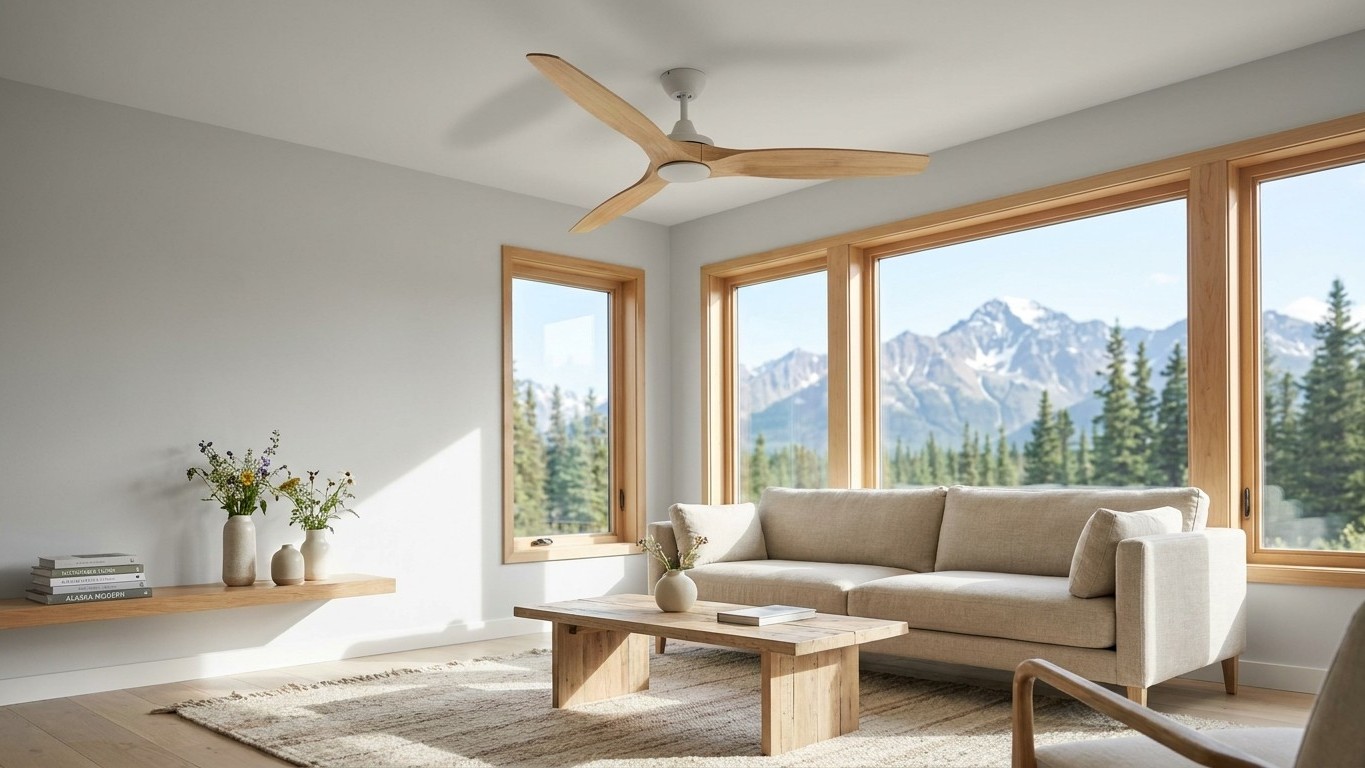

Kentucky is a central-air state through and through. Ninety-five percent of homes run some form of cooling, and 84% of them do it with a central system tied into the furnace or heat pump. Window units, portables, and mini-splits fill in for the rest, and ceiling fans back up the machinery in most houses regardless of what’s cooling the air.
What homes in Kentucky actually cool with
The Energy Information Administration’s 2020 Residential Energy Consumption Survey puts three numbers on Kentucky’s cooling stock: 95% of homes use air-conditioning equipment of some kind, 84% use a central air-conditioning unit, and 19% use an individual unit, meaning a ductless mini-split, a window or wall unit, or a portable. Ceiling fans show up in 82% of homes, which tells you most households are running a fan alongside whatever does the actual cooling, not instead of it.
The gap between the first two figures is where the real story usually sits. In Connecticut, 90% of homes have air conditioning but only 34% run central, meaning most of the state’s cooling load falls on window and wall units. Alabama runs the opposite way: 94% have air conditioning and 81% of that is central, a mix that looks a lot like Kentucky’s. Add up Kentucky’s central and individual shares, though, and you get 103%, which is higher than the 95% of homes that have any air conditioning at all. That only works one way: a meaningful slice of Kentucky households are running both a central system and a window unit or mini-split, probably cooling a finished basement, a sunroom, or a bedroom addition that the ductwork never reached.
That detail matters more than it looks. A home with 84% odds of having central air is still a home where a spare bedroom over the garage might be fighting the thermostat all summer, and a second, smaller unit for that one room is often cheaper and more effective than pushing the central system harder to compensate. None of this is a recommendation on what to install; it reflects what got built and what got added on, decade after decade, across a housing stock that skews older in Kentucky’s small towns and newer in its suburban counties. For a full rundown of what’s covered under this state’s heating and cooling setup, the Kentucky heating and cooling hub lays out both sides of the equipment mix.
How much cooling the year actually asks for
Louisville’s reference station, tracked by NOAA under the 1991-2020 Climate Normals, averages 37.2 days a year at 90 degrees Fahrenheit or hotter. That’s a count of days crossing a specific threshold at one weather station, not a statewide average temperature and not a measure of how hot the average July afternoon feels. It’s the number that drives cooling demand, water use, and the stress that puts on outdoor plants and aging equipment alike.
37.2 days a year above 90 degrees is a real heat load, not a marginal one. It puts Kentucky solidly in the range where central air conditioning earns its keep across a full summer rather than sitting idle most of it. That’s worth noting because equipment mix and heat load don’t always agree in this survey. A state can log plenty of hot days and still run mostly on window units, because the housing stock never got ductwork installed for a furnace either. Kentucky doesn’t have that mismatch. Winters here are cold enough that most homes already needed a central heating system with ducts, and once that ductwork exists, adding central cooling on top of it is a small step rather than a full retrofit. The heat load and the equipment mix point the same direction here: hot enough to justify central air, and already wired for it.
Wet heat or dry heat, and what it changes
Summer rainfall at the same reference station runs about 12.0 inches across June, July, and August, out of 48.3 inches for the year. Broken down by month, that’s 4.27 inches in June, 4.05 in July, and 3.71 in August, the driest of the three. That’s a wet summer by any reasonable read: four inches a month of rain is a lot of moisture moving through the air, even before the heat starts pulling it back out of the ground and off every leaf in the yard.
Rainfall isn’t humidity, and this figure doesn’t measure either the relative humidity or the dew point. What it does tell you is how much water is landing on the ground and evaporating back into a Kentucky summer, and that’s relevant to air conditioning because of what the machine is actually doing. An air conditioner has two jobs running at once: lowering the temperature and pulling moisture out of the air as it passes over the cold coil. Removing that moisture takes run time. In a dry climate, the unit’s job is almost entirely about temperature, and a unit that cools fast and shuts off quickly does its job fine. In a wet one, cutting the cycle short before the coil has had time to condense water back out of the air leaves a room that reads cold on the thermostat but still feels damp and heavy, which is exactly the complaint people have about an oversized unit in a humid climate.
- Let the unit run its full cycle rather than sizing or setting it to shut off the instant the thermostat number is hit.
- Set the fan to auto, not on. A fan running continuously blows the moisture sitting on the cold coil back into the room instead of letting it drain away.
- Size for the room, not for speed. A unit that’s too big will drop the temperature fast and stop, long before it’s pulled the humidity down to match.
Sizing a room unit, from the published chart
For anyone shopping a window unit, a portable, or a mini-split, ENERGY STAR publishes a straightforward chart matching room size to cooling capacity, measured in BTUs per hour.
| Area to be cooled (square feet) | Capacity needed (BTU per hour) |
|---|---|
| 100 up to 150 | 5,000 |
| 150 up to 250 | 6,000 |
| 250 up to 300 | 7,000 |
| 300 up to 350 | 8,000 |
| 350 up to 400 | 9,000 |
| 400 up to 450 | 10,000 |
| 450 up to 550 | 12,000 |
| 550 up to 700 | 14,000 |
| 700 up to 1,000 | 18,000 |
| 1,000 up to 1,200 | 21,000 |
| 1,200 up to 1,400 | 23,000 |
This is a starting point published by ENERGY STAR for a single room unit, and it stops at 1,400 square feet for a reason: past that, you’re no longer talking about a window unit or a portable, you’re talking about a central system, which gets sized by an actual load calculation that accounts for insulation, window area, orientation, and ductwork, not a lookup table. That distinction matters in Kentucky specifically, where 84% of homes already run central air and this chart won’t tell them anything useful about their main system. Where it earns its keep is the other 19%, the mini-splits, window units, and portables covering that spare bedroom, the garage conversion, or the sunroom the central ducts never reached. An oversized unit isn’t a safety margin; it’s a fault. It cools the air fast, cycles off, and never runs long enough to pull the moisture out of a Kentucky summer, leaving the room cold and clammy instead of comfortable.
What actually needs looking after here
Maintenance in a mostly-central state comes down to the ductwork and the filter, since that’s what most Kentucky homes are actually running. ENERGY STAR is direct about the filter: “Inspect, clean, or change air filters once a month in your central air conditioner, furnace, and/or heat pump.” That covers all three pieces of equipment, not just the furnace, which matters for anyone who assumed filter care was a winter-only chore.
Skip that step and the cost shows up quietly. ENERGY STAR notes that “airflow problems can reduce your system’s efficiency by up to 15 percent,” which means a system in otherwise perfect working order can still be underperforming simply because nobody’s checked the filter since spring. For the 84% of Kentucky homes running central air, there’s a second issue worth knowing about: ENERGY STAR states that “in a typical house, however, about 20 to 30 percent of the air that moves through the duct system is lost due to leaks, holes, and poorly connected ducts.” That’s air paid for and never delivered, usually leaking into an attic or crawlspace before it reaches a single vent. It’s a central-system problem specifically; a house running only a window unit or a mini-split has no ducts to leak.
- Check or change the filter monthly, on every central system, furnace, and heat pump in the house.
- Have ductwork inspected for leaks before the peak of summer heat, especially in older housing stock where duct sealing has never been checked.
- Clean the outdoor condenser coil and clear debris from around the unit before the hottest stretch of days above 90 degrees arrives.
For equipment-specific detail, the Kentucky heating and cooling hub breaks down central systems, mini-splits, and window units individually. Homes just across the border see a different mix worth comparing: air conditioning in Tennessee and air conditioning in West Virginia both show how quickly the equipment split can change from one state line to the next.