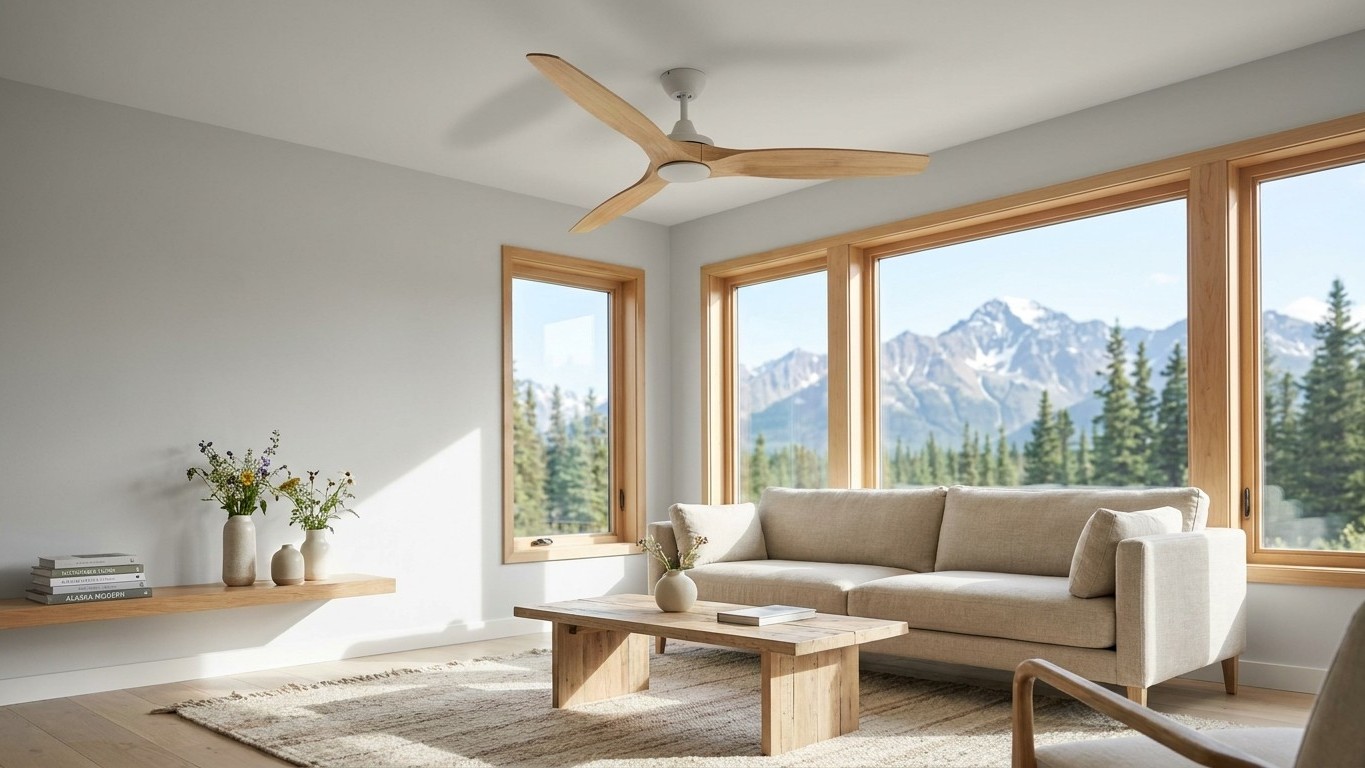

Michigan homes lean on central air conditioning more than a lot of people assume, though a real share also run window units, mini-splits, or portables to cover a room central air doesn’t reach. The equipment mix here traces back to a housing stock built with ductwork already in place for furnaces, which turned adding central cooling into an easy retrofit once air conditioning became standard rather than a luxury.
What homes in Michigan actually cool with
Statewide survey data lays the numbers out plainly. 87% of Michigan homes use some form of air-conditioning equipment, according to the U.S. Energy Information Administration’s Residential Energy Consumption Survey. Of those, 66% run a central air-conditioning unit, and 27% rely on an individual unit, a ductless mini-split, a window or wall unit, or a portable. Another 69% of homes still keep ceiling fans running, whether or not they have mechanical cooling installed.
Those figures don’t need to add up to a hundred, and the overlap is the interesting part. A house can run central air for most of the home and still keep a window unit in a converted attic bedroom or a sunroom the ductwork never reached. That gap between “has air conditioning” and “has a central unit” is exactly what this survey is built to capture, and in some states it’s the entire story: Connecticut shows air conditioning in 90% of homes but central in only 34%, while Alabama runs 94% and 81%. Michigan sits closer to the Alabama pattern, where central cooling covers most of the installed base rather than individual units filling in for it.
A share of installed equipment says nothing about what a house should run. It reflects what was affordable and available when the home was built. A subdivision built with forced-air furnaces and ductwork already run through the walls made central air an easy add-on decades later. Older housing stock without ducts, or additions built after the fact, tends to lean on individual units instead. When the survey marks a figure “Q,” it means the sample was too small to publish, not that the number is zero, though that doesn’t apply to any of Michigan’s figures above.
How much cooling the year actually asks for
The reference station in Detroit averages 10.3 days a year at or above 90°F, per NOAA’s 1991-2020 climate normals. That’s a count of days at a single weather station, not a statewide average and not a measure of how hot the air itself feels. It’s the standard way climatologists gauge cooling demand: how many days a year push equipment into its hardest work.
Ten days is a modest number, especially set against states in the Deep South where 90-degree afternoons stretch across whole months. Michigan’s cooling season is short and concentrated in July and August, with plenty of stretches where a window unit or careful fan use would carry a household through most of the summer without strain.
Yet 66% of Michigan homes run central air, a heat load and an equipment story that don’t line up on paper. The explanation isn’t temperature. It’s timing and construction. Cold Michigan winters mean nearly every home already needs a furnace and ductwork to get through January, and once that ductwork exists, adding central air conditioning is a matter of installing a coil and a condenser rather than building an entirely new distribution system just for cooling. Central air here isn’t a response to brutal summer heat. It’s largely a byproduct of what winter heating already required the house to have.
That’s the useful takeaway for anyone shopping for cooling in Michigan: the mild heat load means equipment doesn’t need to be oversized for extreme, sustained heat, but the housing stock’s existing forced-air plumbing makes central systems the path of least resistance regardless of how hot a given summer turns out to be.
Wet heat or dry heat, and what it changes
Michigan summers run wet by national standards: about 10.0 inches of rain fall across June, July, and August at the same NOAA reference station, with August the driest of the three months at 3.26 inches. That figure measures rainfall, not humidity and not dew point. It says how often the sky opens up, not how sticky the air feels on a given afternoon.
The distinction matters because an air conditioner does two separate jobs at once: it lowers the temperature, and it pulls moisture out of the air. Removing that moisture takes run time, coil surface, and a fan that isn’t cycling on and off too fast. In a dry summer, nearly all of a unit’s work goes into temperature, and a room feels comfortable quickly. In a wetter one, a meaningful share of that work goes into drying the air, and a unit that’s too large for its room shuts off before it’s finished that part of the job. The room reads cold on the thermostat and clammy to the skin at the same time.
With roughly 10 inches of summer rain on record and central air covering two-thirds of the state’s homes, here’s the order that makes sense for Michigan:
- Favor longer, steadier run times over short blasts of cold air. A unit set to run continuously on low removes more moisture than one cycling on high.
- Set the fan to auto, not on. A fan that keeps blowing after the compressor shuts off re-evaporates water sitting on the coil, undoing drying work already done.
- Resist sizing up “for safety.” An undersized unit runs longer and dries better; an oversized one satisfies the thermostat and quits before the room actually feels dry.
Sizing a room unit, from the published chart
For anyone covering a room with a window unit, a mini-split, or a portable, ENERGY STAR publishes a starting chart matching square footage to cooling capacity.
| Area to be cooled (square feet) | Capacity needed (BTU per hour) |
|---|---|
| 100 up to 150 | 5,000 |
| 150 up to 250 | 6,000 |
| 250 up to 300 | 7,000 |
| 300 up to 350 | 8,000 |
| 350 up to 400 | 9,000 |
| 400 up to 450 | 10,000 |
| 450 up to 550 | 12,000 |
| 550 up to 700 | 14,000 |
| 700 up to 1,000 | 18,000 |
| 1,000 up to 1,200 | 21,000 |
| 1,200 up to 1,400 | 23,000 |
This chart is a starting point published by ENERGY STAR for a single room unit, not a substitute for the load calculation a contractor runs before sizing a central system. Michigan’s two-thirds central-air majority means most homes here never need this table at all. But with 27% of homes running an individual unit somewhere, whether that’s a whole house on window units or just a room a central system misses, this is the number a real share of Michigan households actually needs.
The chart stops at 1,400 square feet, and it should stay there. Don’t extend it past its last line, and don’t turn it into a rate per square foot to cover a bigger room; the relationship between area and capacity isn’t a straight line. Oversizing isn’t a safety margin, it’s a fault: a unit too big for its room cools the air fast, shuts off, and never runs long enough to pull the moisture out, leaving the room cold and damp instead of comfortable, which matters even more in a summer that already carries as much rain as Michigan’s.
What actually needs looking after here
With central air covering most Michigan homes, ducts and filters are where seasonal upkeep pays off, though the state’s meaningful minority running individual units needs its own version of the same care.
ENERGY STAR’s guidance is direct: “Inspect, clean, or change air filters once a month in your central air conditioner, furnace, and/or heat pump.” That’s not a seasonal task or an occasional one; it’s monthly, for every piece of equipment that pushes air through a filter, not just the furnace a homeowner might associate with fall upkeep.
The payoff for that habit is spelled out just as plainly. ENERGY STAR notes that “airflow problems can reduce your system’s efficiency by up to 15 percent,” which means a system that turns on, cools the house, and never throws an error code can still be quietly costing more to run than it should, simply because a dirty filter is choking the airflow it needs.
For Michigan’s central-air majority, ducts deserve equal attention. ENERGY STAR’s finding here is worth taking seriously: “In a typical house, however, about 20 to 30 percent of the air that moves through the duct system is lost due to leaks, holes, and poorly connected ducts.” A room that never quite cools down in July isn’t always a sign the system is undersized or broken; the cooled air may be leaking into an attic or crawlspace before it ever reaches the vent. Homes running window units or mini-splits skip this concern entirely, since there’s no duct system to leak in the first place.
A seasonal pass through Michigan’s cooling equipment, before the heat load season starts in earnest:
- Check or replace filters on the same monthly schedule ENERGY STAR recommends, for central systems and mini-splits alike.
- Have ductwork inspected for leaks if the home runs central air and a particular room consistently runs warmer than the rest.
- Clear the area around outdoor condenser units and clean mini-split indoor coils before the first stretch of 90-degree days arrives.
For equipment-specific detail, the furnace and heat pump guides on this site cover the winter side of the same ductwork this maintenance keeps clear.