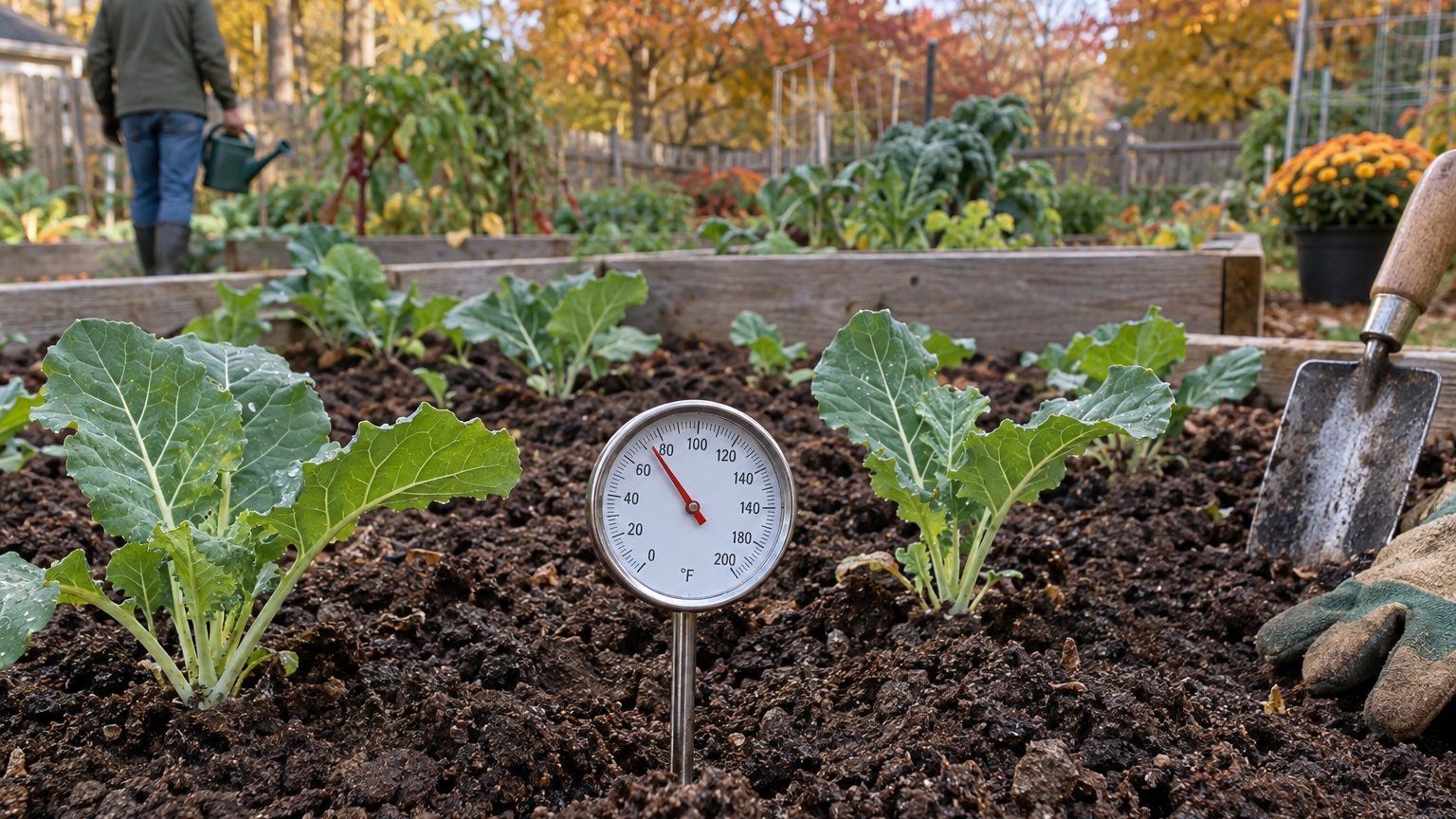

Growing Collards in West Virginia works best when you plant by soil temperature, not by the calendar, and adjust your season around the state’s variable elevation and winter lows. Charleston’s frost window, a mean coldest-month low of 26.1°F, and USDA zones 5a-7a across the state all shape when to sow, how long the bed produces, and whether your collards stand through winter or finish in fall.
When the soil is warm enough in West Virginia

Frost dates get all the attention, but they’re a stand-in for the number that actually matters: soil temperature. Collard seed germinates poorly in cold, wet ground, and transplants sulk instead of growing when the soil hasn’t caught up to the air. At the Charleston reference station (USW00013866), NOAA’s 1991-2020 Climate Normals put the last spring frost (32°F, 30-70% probability band) between April 9 and April 23. That’s a probability, not a promise, meaning a late cold snap after that window is entirely possible in some years.
The practical move is to let the frost date pass, then wait another week or two before setting transplants or direct-sowing, so the soil itself has warmed rather than just the daytime air. Gardeners at higher elevations should push that later still, since Charleston sits in a river valley that warms up faster in spring than the ridges and higher hollows across the rest of the state.
Working with the state’s elevation spread
West Virginia’s terrain means two gardens thirty miles apart can be on different planting calendars entirely. A valley bed near a river might be workable two full weeks before a garden up a mountain road. If you’re not sure where your own soil sits, a simple soil thermometer pushed a few inches down beats any date on a seed packet.
Collards tolerate a light frost once established, which is part of why they’re forgiving for a first-time grower. But young seedlings set out too early into cold, saturated soil don’t die outright, they just stall, and a stalled plant rarely catches back up to one planted two weeks later into warmer ground.
Rotation matters from day one. Collards are brassicas, sharing pests and diseases with cabbage, kale, mustard, turnip, and rutabaga, so a bed that grew any of those last year hasn’t rested the family, it’s just carried the same problems forward. Plan your bed placement with that in mind before you ever open a seed packet.
How long the season lasts here
Bracket the two Charleston frost windows and you get the outer edges of the growing season: last spring frost between April 9 and April 23, first fall frost between October 18 and November 1. Depending on where those dates fall in a given year, that leaves somewhere between roughly 178 and 206 frost-free days to work with, a genuinely long window by regional standards.
What that length allows is the real question. A season stretching past six months gives you room for more than one collard planting: an early crop that starts near the tail end of spring frost risk, and a second sowing in mid-to-late summer aimed squarely at that long fall harvest window. Collards actually improve in flavor after a touch of fall cold, so timing a second sowing to mature as temperatures drop is one of the better uses of West Virginia’s generous frost-free stretch.
Why the calendar changes the transplant decision
A short season forces compromises: you sow once, you commit to transplants to save time, and you skip anything that delays harvest. A season this long removes most of that pressure. You can direct-sow the first planting without worrying you’ve wasted precious weeks, and still have time left over for a second round from seed rather than needing store-bought transplants to hit the fall window.
For the actual staggered planting schedule, timing gaps between sowings, and how to overlap harvests without a glut, the succession sowing guide on this site walks through the specifics. West Virginia’s frost-free window is long enough to make that planning worthwhile rather than optional.
Heat and water in West Virginia

Collards are a cool-season crop that tolerates heat better than most greens, but West Virginia’s summers aren’t the brutal, sustained-heat test that Deep South gardeners face. The state doesn’t post the kind of stretch of 90°F-plus days that forces gardeners further south to chase afternoon shade and midday irrigation just to keep collards from bolting or scorching.
That’s the good news. The less obvious challenge is moisture and humidity working together against you. West Virginia’s hollows and river valleys trap damp air, and a collard patch with poor airflow in a wet summer is a setup for fungal trouble, powdery mildew and leaf spot in particular, rather than heat stress. Spacing plants generously and avoiding overhead watering late in the day does more good here than any amount of shade cloth.
The winter question decides more than the summer does
Here’s the detail that actually reshapes how you plan the bed: Charleston’s coldest month averages a mean daily minimum of 26.1°F. That’s cold enough to end an outdoor collard crop for the season in most winters, meaning collards here behave as an autumn crop that runs through the fall frost window and finishes at a hard freeze, rather than the standing, pick-through-winter crop gardeners get in milder climates further south.
That distinction should drive your fall sowing date. If you’re aiming for a true autumn harvest that wraps up cleanly before winter locks in, plant your fall crop early enough that it reaches useful size well before that hard freeze arrives, rather than betting on a mild stretch to keep it going into December. Across the state’s 5a-7a hardiness range, colder pockets at higher elevation will hit that hard freeze sooner than Charleston does, so treat the valley numbers as a starting point, not a guarantee for your own yard.
Which collards suit West Virginia
Rather than naming a specific variety, the honest answer is to reason from the conditions above and let your state’s own trial data fill in the name. West Virginia’s frost-free window is long enough that you’re not locked into the earliest-maturing types out of necessity, but a fall crop racing a hard freeze still benefits from a quicker-maturing type for that second, autumn-focused sowing.
The humidity and airflow issues in low-lying valley gardens push disease resistance up the priority list ahead of pure yield or leaf size. A variety bred with resistance to common leaf diseases will outperform a heavier-yielding type that folds under mildew pressure in a wet August. Good spacing and airflow help any variety, but they matter more here than in a drier climate.
This is exactly where a state-specific recommendation actually helps, and where guessing hurts. West Virginia University Extension runs the trials that tell you which types have actually performed well in this state’s conditions, tested against the real disease pressure and season length local gardeners face, not a generic national list. Their variety recommendations, current for the current growing season, are available through WVU Extension.
Skipping a specific cultivar name here isn’t an oversight. A name picked without local trial data behind it is a guess dressed up as advice, and collards are cheap enough, and the season long enough, that testing two or three recommended types side by side in your own bed this year beats trusting any single name from outside the state.