
Yes, Connecticut can grow sweet potatoes, and the season is long enough to do it. Heat is the shaky part. Bridgeport averages only 6.2 days a year at 90 F or more, so a good crop depends on timing and setup. Plant slips into warm soil rather than on a calendar date. Give them plastic or a ridge if spring runs cool. Choose an early, disease-resistant type.
When the soil is warm enough in Connecticut
At Bridgeport, the last spring frost falls between April 2 and April 12. That comes from the NOAA NCEI 1991-2020 Climate Normals for station USW00094702, using the 30-70% probability band for a 32 F freeze. Like every frost date, it is a probability, not a promise.
Bridgeport sits on Long Island Sound and is the mildest corner of the state. Inland and northwest Connecticut freeze noticeably later in spring, so a gardener in the hills should shift every date in this article later.
Still, do not plant slips in that window. Frost is a stand-in. Sweet potatoes are tropical plants, and what they wait for is warm soil, which arrives after frost risk ends. Ground holds winter cold long after the air has softened. A slip set into cold, wet soil stalls, sulks and can rot before it roots.
Checking the soil instead of the calendar
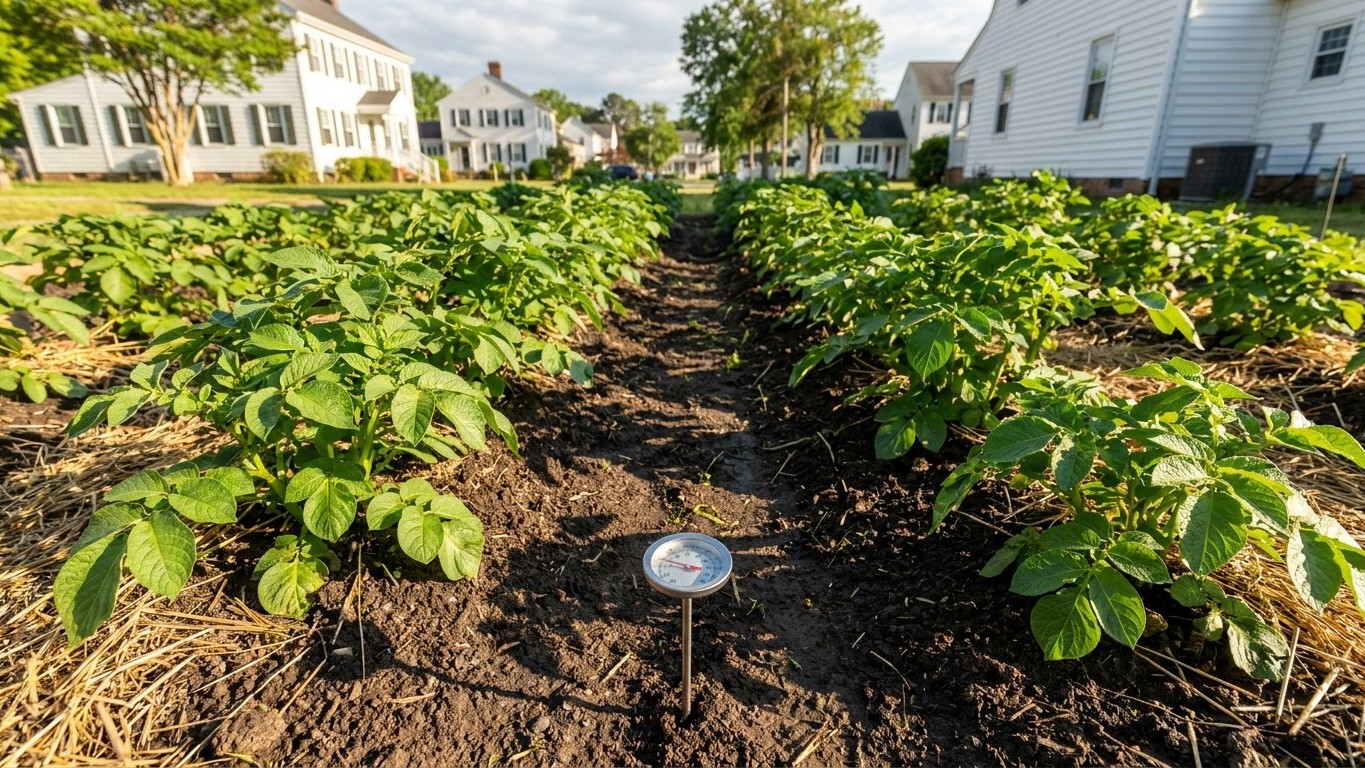
A soil thermometer at planting depth is a cheap fix. Take readings in the morning, when the soil is coolest, over several days in a row. One warm afternoon proves nothing. If the readings are still climbing, the bed is not ready. Ask UConn Extension for the threshold it recommends, because I would rather send you to the number the university stands behind than repeat one from memory.
In practice, the planting date lands weeks after the frost band closes, and later still inland or on a shaded, north-facing lot. Use that gap. Order slips to arrive then, and prepare the bed ahead of time: loosen the soil, form a ridge, and lay plastic if you plan to use it so it can pre-warm the ground.
A note on the plant itself, since supermarket labels muddy it. A sweet potato is not a yam, and it is not a potato. It belongs to the morning glory family, not the nightshades, so it does not rotate with potatoes or tomatoes and shares none of their blight history. Treat it as a warm-season vine that happens to grow food underground. For the full step-by-step, including growing your own slips, the guide to Growing Sweet Potatoes: Slips, Heat, and a Careful Cure covers the basics.
How long the season lasts here
Both ends of the window come from the same Bridgeport normals. The last spring frost falls between April 2 and April 12. The first fall frost falls between October 28 and November 10. Subtract, pairing the extremes, and the frost-free stretch runs from 199 to 222 days.
| Pairing | Last spring frost | First fall frost | Days between |
|---|---|---|---|
| Shortest window | April 12 | October 28 | 199 |
| Longest window | April 2 | November 10 | 222 |
Those figures describe the coast. Inland stations lose days at both ends, and I have no sourced figure for them, so I will not invent one. Your own first and last frost of the past few years, written down, will tell you more than any normal.
What that length allows
The frost-free count overstates what the crop can use. The first weeks are too cold for slips, and cooling soil in autumn slows the roots before frost ever arrives. The usable window is shorter than the table suggests. Even so, a window this long on the coast gives some slack, and slack is what makes a second planting possible.
Treat it as staggering, not as a second crop. Setting out a few slips first and the rest a couple of weeks later spreads the harvest. It also insures against a cold snap that knocks back the first batch. A planting made late, hoping to fit a whole cycle into the end of summer, is a gamble against cooling soil. The main sweet potato guide covers the cycle itself, and the succession sowing guide on this site explains how to space repeat plantings.
Where the window is shorter, the first planting is the only one, and every slip counts. Transplanting is less risky than it sounds. A slip is a rooted cutting, so a few days of wilting after transplant is normal, and shade cloth or a sheltered afternoon helps it recover. The real danger is planting early into cold soil. For places where the arithmetic gets far tighter, see Growing Sweet Potatoes in Wyoming and Growing Sweet Potatoes in Northwest Territories.
One more date matters at the far end. A frost that blackens the vines starts a clock. Dig soon after, on a dry day, and handle the roots gently, because bruises invite rot.
Heat and water in Connecticut
The count of hot days is small. At the Bridgeport reference station, the 1991-2020 normals show 6.2 days a year reaching 90 F or more. That is one station, not the whole state, and it measures daytime peaks, not the warm nights sweet potatoes also want. Even so, it says something clear: this is not a place where the crop grows itself.
In a hot territory, sweet potatoes are routine. Here they are a small project. Black plastic mulch warms the bed ahead of planting and holds heat through cool nights. A ridge of loose soil drains faster and warms sooner than flat ground. A low tunnel over young plants buys a few extra weeks in a cold spring. And an early type, chosen with UConn’s help, matters more than in a hot state.
What a cool, damp summer brings instead
When summers run cool and wet, the problems are not heat stress. Leaves stay damp and foliar disease spreads. Roots ripen slowly and stay small. Waterlogged soil invites rot, and rot is the failure that does the most harm.
That makes the rainfall figures worth reading closely. NOAA’s 1991-2020 monthly normals for the same station show about 11.1 inches of rain across June, July and August, out of 44.1 inches for the year. June brings 3.77 inches, July 3.32 (the driest summer month) and August 3.98. That is plenty of water. Sweet potatoes are fairly tolerant of dry spells, and Connecticut rarely tests them.
Averages hide the pattern that matters. A dry stretch followed by a heavy soaking can split roots that were swelling steadily. Even moisture is the goal, not maximum moisture.
Soil changes the picture. An inch of rain drains from sand within the day but sits on clay for a week, so a sandy bed may need watering even in a wet summer. Clay may need the opposite, with ridges and compost to keep water from pooling around the roots. Heat and storms complicate it further: a single thunderstorm mostly runs off rather than soaking in.
These are normals, not a forecast, and a slope, a rain shadow or a city lot can shift them. A rain gauge on your own plot settles what your garden actually receives.
Which sweet potatoes suit Connecticut
Choose by type. This page names no varieties, and that is deliberate. The only recommendation worth following is one from trials run in Connecticut soil, on Connecticut coastlines and hillsides, and I do not have those results. A name pulled from a catalog or another state could fail here, and a gardener who has planted the wrong one will not forget it.
So ask UConn Extension which types it has trialled at extension.uconn.edu. Then reason from the facts of the state to read the answer.
- Earliest-maturing types come first. The frost-free window is decent on the coast but shorter inland, and hot days are few.
- Disease resistance is the second criterion. A humid climate with 44.1 inches of rain a year favors foliar and soil problems, so ask which resistances the trials recorded.
- Airflow and shade at the root matter more in hot climates. Here they count for less, but crowded, unruly vines still hold moisture around the crown.
- Certified disease-free slips are worth asking about. A healthy start prevents problems no variety can fix later.
The hardiness zone is a minor factor. The USDA Plant Hardiness Zone Map (2023) puts Connecticut at 6a to 7b, built on average annual extreme minimum temperature. That measure describes winter cold, which sweet potatoes never face, because frost ends the crop first. Cite your own reference city rather than the whole range, and remember that inland and northwest gardens differ from Bridgeport.
Harvest brings its own choice. Newly dug roots need curing, then storage, and both are where a good crop is lost. Never put sweet potatoes in a refrigerator or a cold cellar. Cold injury below the storage range is real and irreversible, and it is the most common way a home crop is ruined after a good harvest.
Inspect every root before it goes in. Firm, dry and intact is the standard. A soft patch or a weeping spot ends the question: that root is done, and looking sound elsewhere does not make it safe. UConn Extension publishes the curing and storage ranges it recommends, so use those numbers.
Common questions
Can I plant slips as soon as the last frost date passes?
No. Frost date is only a proxy. The date that counts is when the soil is warm and staying warm. Check with a thermometer at planting depth, morning readings, several days in a row. Slips set into cold soil stall and can rot.
Is a sweet potato the same as a yam?
No. The supermarket label is wrong. A sweet potato is a morning glory relative, not a true yam and not a potato. It is not a nightshade, so it does not rotate with potatoes, tomatoes or peppers.
Do I need black plastic in Connecticut?
Often it helps. With only 6.2 days a year at 90 F or more at Bridgeport, warmth is the limiting factor, and plastic warms the bed and holds heat overnight. Inland gardens, where spring is later, benefit more. It is a tool, not a requirement, and UConn Extension can advise on your area.
Where should I store the harvest?
Never in a refrigerator or a cold cellar, because cold injury is irreversible. Cure the roots first, then keep them somewhere dry, ventilated and comfortably warm indoors. Check them regularly. A soft patch or a weeping spot means that root is finished. Ask UConn Extension for its recommended ranges.