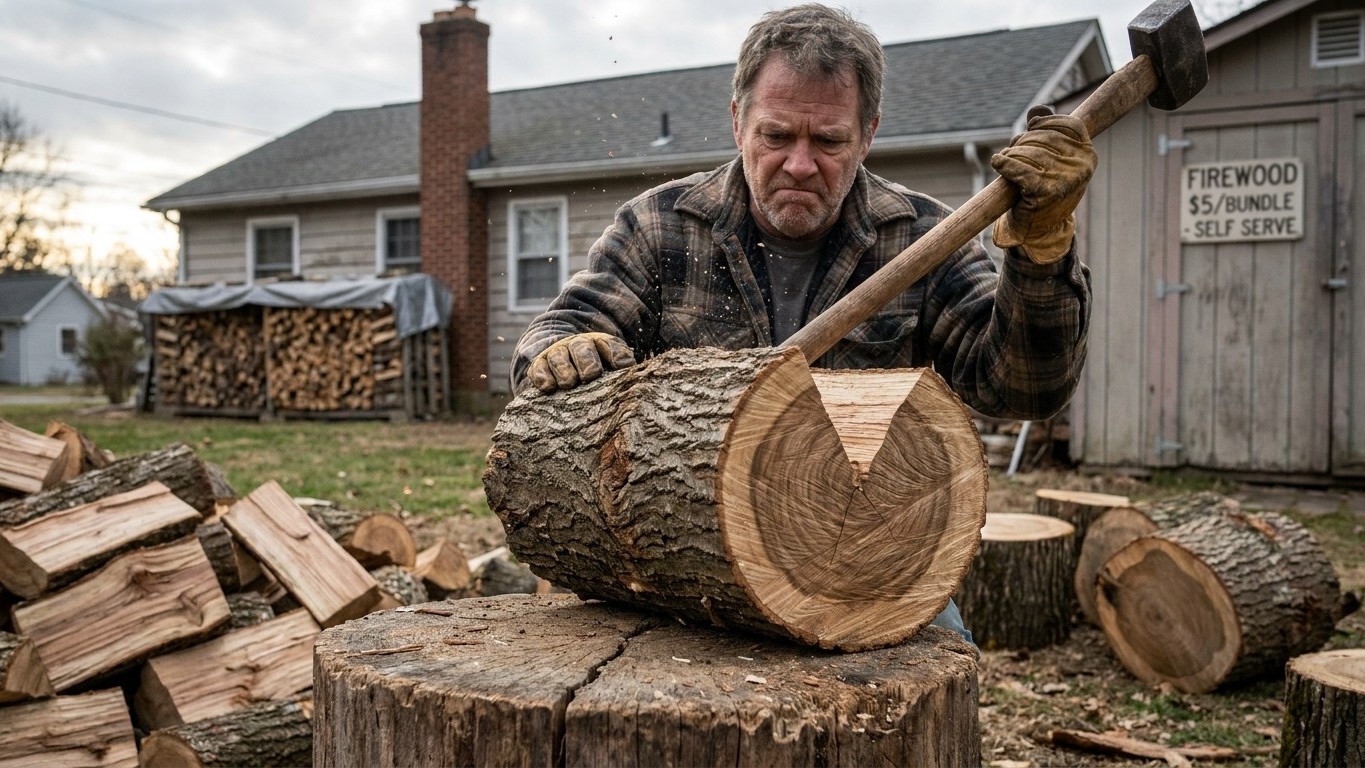

Elm firewood burns with moderate heat, moderate smoke, and almost no snap or crackle, but the real story with elm isn’t what happens in the firebox. It’s what happens before that, when you’re standing over a round with a maul and it simply refuses to split. Elm is the firewood species that tests patience long before it tests your stove.
Heat Output: Where Elm Lands on the BTU Scale

According to the Missouri Department of Conservation, American elm produces 21.4 million BTU per full cord when properly seasoned, putting it solidly in the middle of the firewood pack. Red elm, also called slippery elm, runs a bit hotter, closer to 20.7 million BTU per cord. Compare that to a top performer like shagbark hickory or white oak, both of which push past 24 million BTU, and elm starts to look like a second-tier choice. But compare it to soft maple, aspen, or white pine, all of which sit in the 14 to 17 million BTU range, and elm suddenly looks respectable.
What that means in practical terms: a cord of well-seasoned elm will heat a home through a cold snap, but you’ll load the stove more often than you would with oak or hickory. Homeowners who rely on elm as a primary heat source often mix it with a denser hardwood, using elm to fill gaps between loads of oak or ash rather than as the sole fuel.
Splitting Elm: The Species’ Defining Challenge
Ask anyone who’s spent a Saturday afternoon at the splitting block about elm and you’ll get the same reaction: a groan. Elm’s grain doesn’t run straight. It twists and interlocks, fiber over fiber, in a pattern that evolved to keep the tree from splitting in high winds. That same structural trick makes it miserable for anyone with an axe.
A maul that would cleave a round of ash or oak in one swing will often just bounce off elm, leaving a shallow dent. Multiple hits from different angles are sometimes needed just to get a crack started, and even then the wood tends to twist and tear rather than separate cleanly.
What Actually Works on Elm
Most experienced firewood processors reach for a hydraulic splitter when elm is on the pile, and for good reason. The steady, sustained pressure of a splitter works with elm’s stubborn grain in a way that a sudden axe blow doesn’t. A few practical approaches:
- Split elm rounds while they’re still green or freshly cut; the wood gets tougher, not easier, as it dries
- Target the outer edge of the round rather than the center, working around the piece in sections
- Use a splitting wedge and sledge if a hydraulic splitter isn’t available, driving multiple wedges into the same crack
- Consider leaving problem rounds whole for a fire pit or outdoor burn instead of fighting them into stove-sized pieces
Some elm rounds, especially larger diameter pieces from mature trees, never split cleanly at all. Processors who deal with elm regularly often just accept a certain percentage of “uncooperative” rounds and burn them whole in an outdoor fire ring rather than waste hours on a single log.
Seasoning Time and Moisture Content
Elm holds water. Freshly cut, it can carry moisture content well above 100 percent on a dry-weight basis, higher than most common firewood species. That moisture doesn’t leave quickly either, thanks to the same interlocked grain that makes splitting a chore. Where a species like ash might season in six to twelve months, elm typically needs a full year, and two years is safer if the goal is a hot, clean-burning fire.
The seasoning process matters more with elm than with most woods because unseasoned elm doesn’t just burn poorly, it can be genuinely frustrating to get lit at all. Green elm hisses, sputters, and produces a fire that struggles to maintain temperature, sometimes going out entirely if not tended closely.
To speed things along, split elm rounds should be stacked off the ground, exposed to sun and wind, and covered only on top to allow airflow through the stack. A moisture meter is a worthwhile investment for anyone burning elm regularly. Elm firewood is ready to burn when internal moisture reads below 20 percent, and checking a freshly split face rather than the weathered exterior gives the most accurate reading.
Smoke and Sparks: What to Expect in the Firebox
Properly seasoned elm produces a moderate amount of smoke, more than dense hardwoods like oak or hickory but less than resinous softwoods like pine or spruce. The smoke tends to be more noticeable if the wood hasn’t fully seasoned, which circles back to why that one or two-year drying window matters so much with this species.
Sparking is minimal to moderate, making elm a reasonable choice for indoor wood stoves and fireplaces with sound spark screens. It’s not a species known for the aggressive popping and shooting embers you get from wetter softwoods, but it’s also not silent the way a fully dried piece of oak can be.
One quirk worth knowing: elm has an odor when burning that some describe as slightly unpleasant compared to the sweeter smell of fruitwoods or the clean scent of oak. It’s not offensive, but it’s distinct enough that people who burn a lot of different species tend to notice when elm is in the mix.
Creosote Considerations
Because elm holds moisture longer and can be tempting to burn before it’s truly ready, it carries a slightly elevated risk of creosote buildup in chimneys and stovepipes compared to species that season faster. This isn’t a property of the wood itself so much as a consequence of impatience. Elm burned at proper moisture content behaves like any other seasoned hardwood; elm burned too early is where chimney problems start. Regular chimney inspection matters with any wood-burning setup, but it’s worth extra attention for households that burn elm.
How Elm Compares to Other Common Firewood Species
Placed next to the firewood species homeowners typically consider, elm occupies a specific niche. It beats softwoods and fast-growing species like poplar or willow on heat output and burn time. It falls short of premium hardwoods like oak, hickory, and sugar maple on both BTU content and ease of processing. Ash sits closer to elm in the middle tier but splits far more easily and seasons faster, which is part of why ash is often preferred when both species are available from the same wood lot.
Where elm does have an edge: availability. Dutch elm disease has killed a large share of mature American elms across the country since the mid-20th century, and dead or dying elms are common on rural properties and along fence lines. That makes elm a frequent, often free, source of firewood for landowners dealing with storm damage or disease-killed trees, even if it’s not the species they’d choose from a catalog.
Practical Notes for Burning Elm This Season
Anyone working with a fresh supply of elm rounds benefits from a plan rather than improvisation. Split it as soon as possible after cutting, while the wood is still relatively soft compared to how it will be in six months. Stack it somewhere with good airflow and full sun exposure if possible, since elm’s slow-drying nature makes every bit of ventilation count.
Give it the full season, or better, a full year before burning as a primary fuel. Test moisture content before loading it into a stove for anything beyond a quick outdoor fire. And if a batch of rounds proves impossible to split by hand, a rented log splitter for an afternoon often costs less in time and frustration than fighting the wood with a maul.
Elm won’t be the top choice for anyone with access to oak, hickory, or ash, but it’s a legitimate, respectable firewood for households willing to put in the extra seasoning time. Given how much of it ends up on the ground from storm damage and disease each year, learning to work with elm rather than around it is a practical skill for anyone who heats with wood in the eastern and midwestern United States, where elm populations remain widespread despite decades of disease pressure.