
Delaware suits sweet potatoes, with two conditions: plant late enough and dig before the cold arrives. The frost-free stretch at the Wilmington-area reference station runs well over six months, which is room for one full crop. The two trouble spots are cold soil in spring and the harvest-and-cure stage in fall. Neither is hard to manage once you know where the dates fall.
When the soil is warm enough in Delaware
The last spring frost at the Wilmington-area airport station (NOAA station USW00013781) falls between April 3 and April 14. That comes from the NOAA NCEI 1991-2020 Climate Normals, using the 32F freeze probabilities in the 30-70% band. It is a probability, not a promise, and a late freeze after the window is always possible. It is also a reference-city figure. Suburban and rural gardens usually see their last frost one to two weeks later, so check your own county before you mark a calendar.
Frost is a proxy here, and a rough one. Sweet potatoes don’t care about the air on the last frost date. They care about the soil, and soil warms after the frost risk ends, not with it. Plant slips (the rooted sprouts the crop is grown from) into ground that is still chilly and they sit there, stunted, or rot. A week of cold rain in early May can undo a planting made on the first mild weekend.
So use the frost window as the earliest point at which to start paying attention, then let the ground decide. A few habits help:
- Push a soil thermometer a few inches down and read it in the morning, when the ground is at its coolest.
- Wait until the reading has held steady for several days, not just one warm afternoon.
- Ask your extension office what soil temperature it uses as the go signal for your county.
Plenty of Delaware gardeners plant well after mid-May for exactly this reason. Raised ridges and dark plastic mulch warm the soil sooner, which helps in a cool spring.
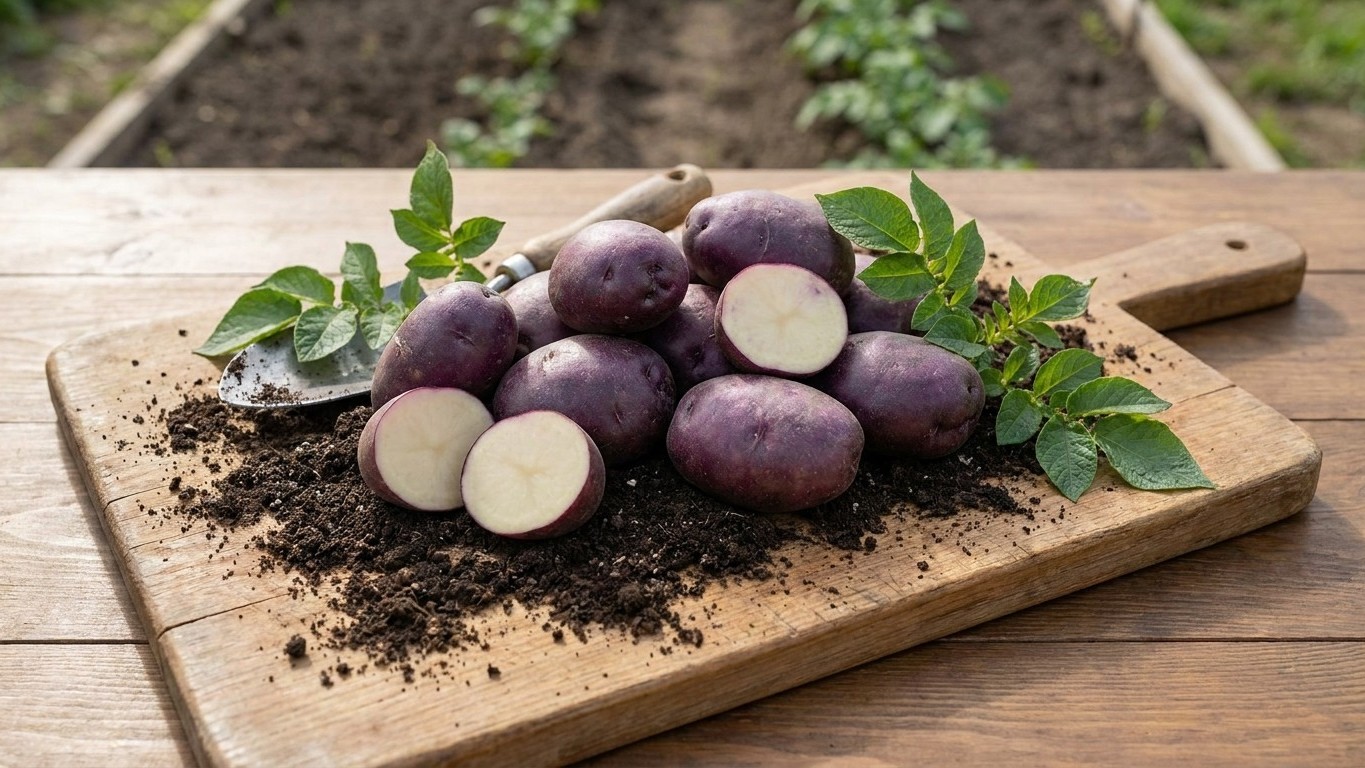
One correction belongs here, because it changes how you plan the bed. A sweet potato is not a yam, whatever the supermarket label says, and it is not a potato. It is not a nightshade either. It is a distant relative of the morning glory. That means you plant slips instead of seed pieces, and the bed does not slot into a potato rotation. Potato and tomato diseases are a separate matter from what afflicts this crop. The full method, from slips to curing, is in Growing Sweet Potatoes: Slips, Heat, and a Careful Cure.
On varieties, this page talks in types and leaves names to the people who run local trials. The University of Delaware’s Cooperative Extension is the place to ask what has performed well in the state.
How long the season lasts here
The first fall frost at the same station falls between October 26 and November 7. Set that against the spring window and the arithmetic is simple. From the latest spring date (April 14) to the earliest fall date (October 26) is 195 days. From the earliest spring date (April 3) to the latest fall date (November 7) is 218 days. The frost-free window at the reference station therefore runs from 195 to 218 days.
Trim that for your own yard. Outside the airport station, spring frost comes later and fall frost earlier, often by one to two weeks at each end. A rural garden could lose a month at the extremes. Even then the season is long enough for a full sweet potato crop, and the warm-soil wait costs only a slice of it.
What does that length allow? Mostly it allows patience. A long window is the kind that permits a second sowing, but sweet potatoes are the wrong crop to double up on. They need the whole warm season to bulk up their roots, and a second planting set out in midsummer would meet frost with nothing worth digging. Use the extra time for quick crops that fill the gaps before and after, and the main sweet potato guide covers the slips-to-cure sequence for the crop itself. The succession sowing guide on this site shows how to stagger those other plantings. In a territory with a much shorter season, the first planting becomes the only one and every week of delay costs more. Compare Growing Sweet Potatoes in Indiana and Growing Sweet Potatoes in Nova Scotia to see how the same crop gets handled against a different clock.
The USDA Plant Hardiness Zone Map (2023 edition, built on 1991-2020 normals) puts Delaware at 7a to 8a. That range is worth knowing, but it measures one thing, the average annual extreme minimum temperature. It says how cold winter gets, not how warm summer runs, and sweet potatoes are grown as an annual that dies in the first hard frost anyway. Zones differ across the state, so treat the range as background and your county’s frost dates as the working number.
The end of the window brings the storage step. A frost that blackens the vines is the signal to dig promptly, handle the roots gently, and cure them somewhere warm. Never put sweet potatoes in the refrigerator or a cold cellar. Chilling injury below the proper storage range is real and permanent, and it is the most common way a good harvest gets ruined afterward. Before you store any root, check it. A soft patch or a weeping spot ends the question, and a root that merely looks sound is not proof that it is.
Heat and water in Delaware
The reference station at Wilmington averages 17.6 days a year reaching 90F or more (NOAA NCEI Climate Normals, 1991-2020). That is a count at one station, not a portrait of the whole state, and it is a measure of summer heat load, not of average temperature. Sweet potatoes want accumulated warmth and warm nights more than a scattering of hot afternoons, and 17.6 hot days a year is a modest number. In Delaware the crop is workable rather than routine. It grows well in a normal summer and slows in a cool one.
When spring runs cool or June turns gray, the practices that help are the ones that bank heat: raised ridges, dark plastic mulch over the bed, and planting a bit later instead of a bit earlier. In a cool, damp summer the trouble isn’t scorching. The vines sulk, roots ripen slowly, and mildew and other foliage diseases settle into dense, wet leaf cover. Spacing the plants for airflow and keeping the ridge draining matter more here than in a desert state.
Rain is the second half of the picture. The same station’s 1991-2020 normals show about 13.1 inches of rain across June, July and August, out of 45.3 inches over the year. By month, June gets 4.67 inches, July 4.41, and August 3.98, which makes August the driest of the three. Those are figures for what the region can usually expect, not a forecast and not your garden. A slope, a rain shadow or a city can change them, and a rain gauge on your own plot settles the question better than any normal.
The number never reads alone. On sandy ground (much of southern Delaware sits on lighter Coastal Plain soil), an inch of rain drains through within the day, so a wet summer can still leave the bed thirsty every second day. Clay holds that same inch for a week. Heat matters too, because days at 90F or above pull water out of the soil, and a summer thunderstorm delivers rain so fast that much of it runs off rather than soaking in. A ridge helps on a heavy soil by draining water away from the roots.
Watering steadily also protects the harvest. Sweet potatoes that go through a long dry stretch and then a soaking downpour late in the season tend to split as the roots swell too fast. Even moisture through August and September, with less of it as digging time nears, gives the best chance of clean, unsplit roots.
Which sweet potatoes suit Delaware
This page names no varieties, and that is deliberate. The only recommendation worth anything is one drawn from trials in the state, and this page does not have those results. A name pulled from a national catalog might have done well in Georgia or Ohio and struggled in a humid Delaware summer. Any list here would be a guess, so the honest answer is to point you to the people who ran the trials. Contact the University of Delaware Cooperative Extension and ask which sweet potato types have been trialled in your county.
You can still choose by type, using the facts above. A season that runs 195 to 218 days at the reference station, and possibly a few weeks fewer at your place, is not short. Even so, if your garden sits inland or in a cold pocket, lean toward earlier-maturing types so the roots finish well ahead of the first frost. Give yourself a margin, because you cannot dig a crop the cold has already reached.
Humidity pushes the choice in another direction. Delaware summers are damp enough that disease resistance should come first when you compare types. Ask the extension service which types hold up against the problems common in your area, and buy certified disease-free slips from a reputable supplier so you are not planting trouble into the bed. Heat matters less here, at 17.6 days above 90F, than in a Deep South summer. Vigorous vines that shade the root zone still help, and so does spacing that lets air move through the canopy.
One last point about the finished crop. Whatever type you plant, cure it warm after digging and never refrigerate it or store it in a cold cellar. Inspect every root before storing, and discard any with a soft patch or a weeping spot. Looking sound on the outside is not the same as being sound.
Common questions
When should I plant sweet potatoes in Delaware?
Wait until the soil is warm, which comes after the last frost window of April 3 to April 14 at the Wilmington-area reference station, not at it. Gardens away from the airport often see frost one to two weeks later. Read a soil thermometer for several days running, and ask extension for the local threshold.
Can I plant a second crop of sweet potatoes in summer?
Not with any hope of a harvest. The crop uses the whole warm season to size up, and a midsummer planting would meet the first fall frost, which comes between October 26 and November 7 at the reference station, before it had roots worth digging. Use the leftover window for quick crops instead.
Can I store sweet potatoes in the refrigerator or a cold cellar?
No. Cold injury below the proper storage range is permanent and is the most common way a home crop is ruined after harvest. Cure them warm, inspect each root, and throw out any with a soft patch or a weeping spot.
Do sweet potatoes belong in my potato rotation?
No. A sweet potato is not a potato, not a nightshade, and not a yam. It is related to the morning glory, so it stays out of the potato and tomato rotation and gets planned as its own bed. The “yam” on many supermarket labels is simply a sweet potato with a misleading name.