
Indiana suits sweet potatoes better than its corn-and-soybean reputation suggests. One crop a year is realistic. The slips go in after the frost risk has passed and the soil has warmed, and the local decisions come down to timing, watering habits and the right type of plant. Get those three right and a backyard bed pays off.
When the soil is warm enough in Indiana
Most gardeners start with the frost date. For Indianapolis, the NOAA 1991-2020 Climate Normals put the last spring 32°F freeze at April 9 to April 21. That is the band where the probability of a freeze runs between 30 and 70 percent, measured at station USW00093819.
Treat it as a probability, not a promise. Purdue notes roughly a 10% chance of a 32°F event after the published spring date, so anything tender set out on the early edge needs a cover within reach.
Indianapolis is the reference point, not the whole state. Southern Indiana runs earlier in spring than the north by a fortnight or more, so a gardener near the Ohio River and one near Lake Michigan are working from different calendars.
Frost is only a proxy, though. Sweet potatoes wait for warm soil, and soil warms after the frost risk ends, not with it. Air can hit the seventies on an April afternoon while a bed that sat wet all winter stays cold underneath. Heavy, wet clay is the slowest to catch up. A ridged or raised bed of looser soil warms faster, and black plastic laid over a ridge for a couple of weeks before planting pulls heat into the ground.
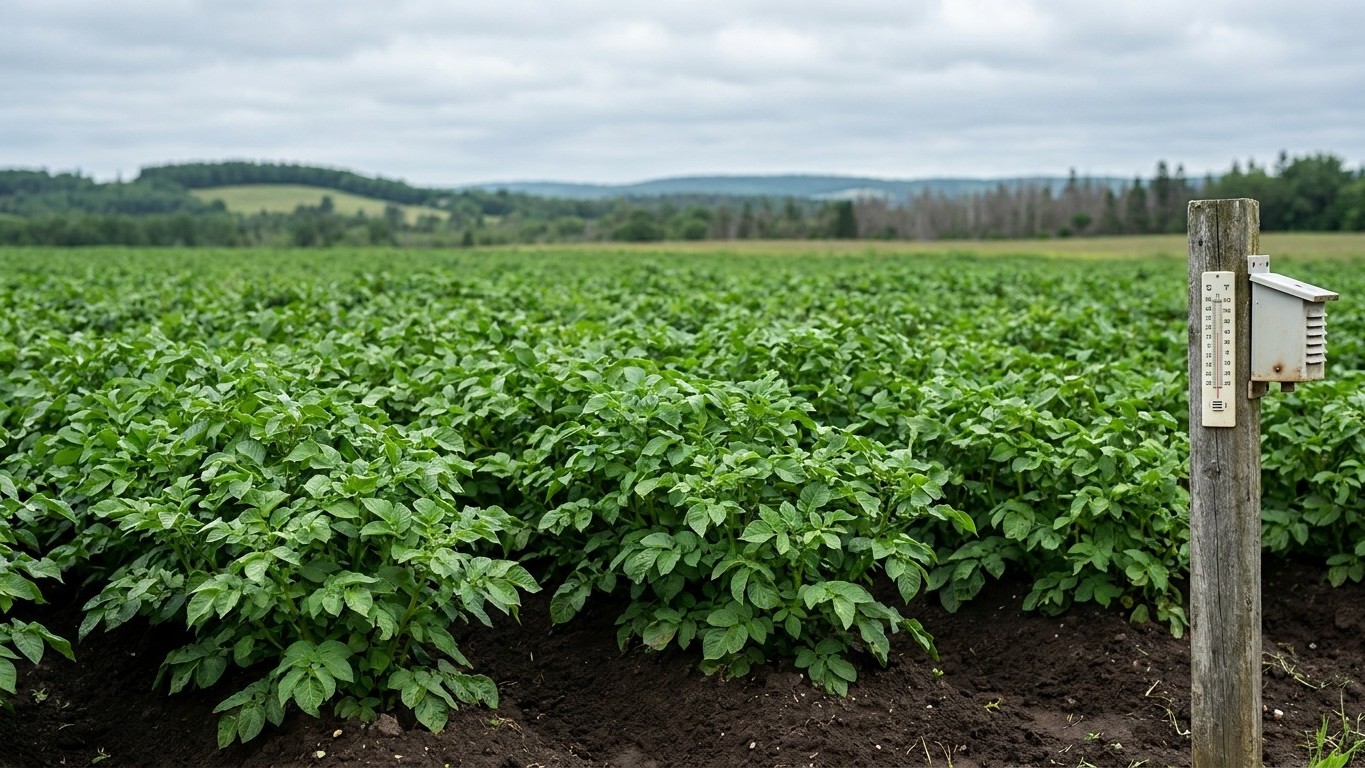
A cheap soil thermometer settles the argument. Take a reading a few inches down, in the morning when the soil is at its coolest, over several days in a row. Then check the threshold your state extension service recommends for the crop. One warm afternoon proves nothing.
You plant slips, which are rooted sprouts, not seed pieces. And this is where the mix-up costs people. Potatoes go into cool early-spring soil and belong to the nightshade family. Sweet potatoes are related to morning glories, want the opposite conditions, and have no place in a potato rotation. The supermarket “yam” label is wrong too: true yams are a different tropical plant, and what you are growing is a sweet potato.
How long the season lasts here
Take the latest spring date and the earliest fall date from the same NOAA normals, April 21 and October 21, and the frost-free stretch at Indianapolis is 183 days. Take the earliest spring date and the latest fall date, April 9 and October 30, and it stretches to 204 days. Call it 183 to 204 days between the last and first 32°F freeze, with the first fall frost falling somewhere from October 21 to October 30.
Those are frost-free days, not sweet potato days. The slips wait for warm soil, so the working season starts weeks after the spring date and ends when fall frost threatens the vines. Farther north the whole window slides later in spring and earlier in fall, and the south gets the extra fortnight or more.
What does a window this long allow? A hedge. A second batch of slips set out a couple of weeks after the first spreads the risk of a late cold snap or a bad batch, and staggers the harvest. It is not a second crop. A planting made deep into summer runs out of warmth before the roots bulk up, and fall frost stays the ceiling. The succession sowing guide on this site covers how to space plantings, and the same logic applies to transplant dates.
A long window also makes the root check worth doing. Look at each slip before it goes in the ground. If it has no roots, stand it in water for a few days first. In a short-season territory that delay might cost the whole crop, but here you can afford it, and a rooted slip settles in faster than a bare one.
The end of the season matters as much as the start. A frost that blackens the vines is a signal to dig promptly, not to leave the roots sitting in cold, wet soil. After the harvest the roots need curing in a warm, humid spot before storage. The method is laid out in Growing Sweet Potatoes: Slips, Heat, and a Careful Cure.
One rule on storage: never put sweet potatoes in a refrigerator or a cold cellar. Cold injury below their storage range is real and irreversible, and it is the most common way a good home crop is ruined after harvest. Inspect every root. A soft patch or a weeping spot ends the question, and a root that looks sound is not thereby proven safe or good to keep.
Heat and water in Indiana
Sweet potatoes want accumulated warmth, and warm nights as much as warm days. At the Indianapolis reference station, the 1991-2020 normals count 14.6 days a year reaching 90°F or more. That is a count at one station, not a description of every Indiana county. It measures the summer heat load, not the average summer temperature, and it says nothing directly about nights.
Read honestly, 14.6 puts Indiana in the middle. This is not the Deep South, where the crop is routine, and it is not a cool northern territory where every plant is a project. The crop is dependable in a normal summer. Cool springs are the weak point, which is why plastic and ridges earn their keep here even in a state with hot Julys. A cool, damp summer brings its own trouble: slow ripening, sluggish vines and more disease pressure in wet soil.
Rainfall is the other half. The same normals give about 12.6 inches across June, July and August, out of 43.6 inches for the year. June brings 4.95 inches, July 4.42, and August, the driest summer month, 3.2. That drop matters because August is when roots are swelling. A dry stretch followed by a heavy soaking is the classic recipe for splitting, so steady moisture through late summer beats feast and famine.
Those inches never read alone. Soil changes what they do: a sandy surface lets rain through within the day, while clay holds it for a week. A sandy bed can need watering every second day even in a wet summer, and a clay bed can stay soggy long enough to invite rot. Heat changes it too. Days at 90°F or more drive evaporation, and rain that arrives as a single thunderstorm mostly runs off instead of soaking in, especially off a ridge.
These are normals over 1991-2020 at a reference station, not a forecast, and not your garden. A slope, a rain shadow or a city changes the picture. A rain gauge on your own plot settles it, and a finger pushed into the ridge tells you the rest. If the soil a few inches down is still damp, hold off.
Ridging helps both ways. It drains a wet clay bed and warms the root zone, and it gives the roots loose soil to swell into. Keep the vines from smothering the ridge shoulders in a humid stretch so air can move, and ease off watering as harvest nears.
Which sweet potatoes suit Indiana
Choose by type, and start from the local facts. Indiana spans USDA hardiness zones 5b to 7a on the 2023 map. That range is built on the average annual extreme minimum temperature and tells you little here, because sweet potatoes are grown as a tender annual. The frost dates, the heat count and the rainfall matter far more.
Start with the season. Anywhere in the state, the earlier-maturing types make the most sense. That goes double in the northern counties, where spring arrives later and fall frost comes sooner than at Indianapolis. Gardeners in the south have the fortnight or more of margin and can take a slower-maturing type with less worry. Vine habit matters too. Compact, bush-type plants suit small beds and let air move around the ridge, while long-vined types sprawl and shade the soil, which helps in a hot spell and hurts in a humid one.
The humid summers make disease resistance the first criterion. Look for types described as resistant or tolerant to soil-borne problems, and buy slips from a source that certifies them disease-free. Rotate the bed as well. Do not follow tomatoes or potatoes on the theory that they belong together (they don’t, since sweet potatoes are not nightshades), but do avoid planting sweet potatoes in the same spot year after year.
Beyond that, the choice is flesh color and taste: orange, cream, purple. All grow, and none is inherently hardier here.
This page does not name a variety, and that is deliberate. The only recommendation worth following is one from trials run in Indiana soil and Indiana summers, and this page does not have those results. Purdue Extension, at extension.purdue.edu, is where those results live, alongside the local county office. Naming a cultivar from memory would trade something checkable for something a gardener may regret in August.
For a different reading of the same choices, the guides to Growing Sweet Potatoes in Pennsylvania and Growing Sweet Potatoes in Delaware work through their own frost dates and summers.
Common questions
Can I plant sweet potatoes in Indiana as soon as the last frost date passes?
Not by the date alone. Frost is a proxy for the real trigger, which is warm soil, and the soil lags behind the air. Read a soil thermometer in the morning over several days and compare it with your extension service’s threshold. Keep a cover handy if you plant on the early edge of the April 9 to April 21 range.
Can I grow them in northern Indiana?
Yes, with more care. The Indianapolis dates are a reference point, and the north runs later in spring and earlier in autumn by a fortnight or more. Favor the earliest-maturing types, warm the bed with plastic and ridges, and plant only when the soil has warmed. Check with the Purdue Extension office for what has done well near you.
How do I know when a root is ready to store?
Cure it first, in a warm, humid spot. Then inspect every root and set aside any with a soft patch or a weeping spot. Looking sound does not make a root safe, and this page cannot promise how long any batch will keep. Never store them in a refrigerator or cold cellar, because cold injury is permanent.
Do sweet potatoes belong in the same rotation as potatoes?
No. Sweet potatoes are not nightshades, and they are not related to potatoes or true yams. Treat them as their own crop in the rotation, and do not rely on the supermarket label to tell you what you are growing.