
In south Louisiana, sweet potatoes go in once the frost risk has passed and the soil has warmed, and the real limit on the crop is summer heat and water, not frost. The figures below come from the New Orleans reference station, where a 32F freeze shows up in only 86.8 percent of years. North Louisiana freezes more reliably, so read these numbers as a south-state baseline and adjust northward.
When the soil is warm enough in Louisiana

The date most gardeners ask about is the last spring freeze. At the New Orleans reference station, NOAA’s 1991-2020 Climate Normals put the 30-70 percent freeze-probability band at January 18 to February 8. That is a probability, not a promise: a freeze after that band closes is uncommon but possible, so keep a row cover or old sheet within reach.
Frost is only a proxy, though. Sweet potatoes are tropical vines, and they wait for warm soil, not a frost-free forecast. Soil lags the air. A February afternoon can feel mild while the ground underneath is still cold and, in a state that averages 63.4 inches of rain a year, often soggy. Slips set into cold wet soil sit and sulk, and some rot. Frost dates tell you when the danger ends. They say nothing about when the roots will start to grow.
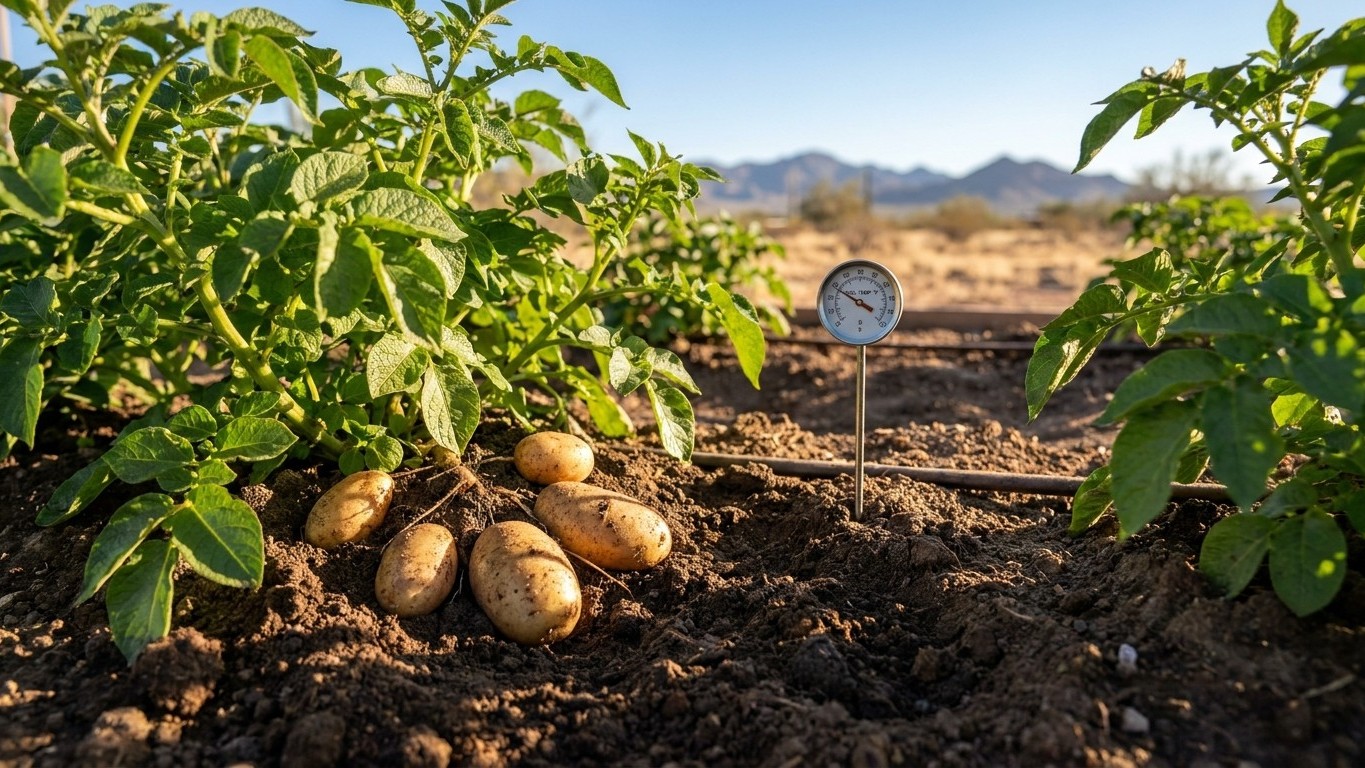
A soil thermometer settles it better than a calendar. Check the ground at planting depth in the morning, since that reading is the coolest of the day. Your parish agent at the LSU AgCenter can give you the soil temperature and planting window that fit your part of the state. This page doesn’t invent a threshold for you.
South Louisiana is also an odd place to lean on frost at all. Roughly one year in seven has no 32F freeze, so in those winters the spring and fall markers barely exist. The USDA Plant Hardiness Zone Map (2023, built on 1991-2020 normals) spans zones 8a to 10a across the state. That range is built on one variable, the average annual extreme minimum, and it is a statewide spread. Your own zone, and your own last freeze, depend on how far north or how close to the Gulf you garden.
A word on the plant itself, since the grocery store muddies it. What supermarkets label a “yam” is a sweet potato. It is not a true yam, and it is not a potato either. It belongs to the morning glory family, not the nightshades, so it does not rotate with potatoes, tomatoes or peppers, and it grows from rooted slips rather than seed pieces. The full method for slips, heat and curing is in Growing Sweet Potatoes: Slips, Heat, and a Careful Cure.
How long the season lasts here
Set the two frost bands from the same station side by side. The first fall freeze falls between December 17 and January 8. Take the tight case, the latest spring date and the earliest fall date: February 8 to December 17 leaves about 312 days. Take the generous case, January 18 to January 8 of the following year: about 355 days. Call it 312 to 355 days between freezes, well over ten months.
Compare that with a place like Saskatchewan, where the first planting is the only planting and every week counts (see Growing Sweet Potatoes in Saskatchewan). A Louisiana gardener has slack. That slack changes several decisions.
What the extra time allows
A long window makes a second planting of slips realistic. Staggering two plantings a few weeks apart spreads the harvest instead of dropping every root on you at once. The parent guide covers slips in detail, and the succession sowing guide on this site covers the spacing logic behind staggered plantings, which applies to slips as well as seed.
It also changes the root check. Where the season is short, you inspect every slip for roots because a failed transplant costs the whole year. Here a dud slip costs a few weeks. You should still look for white roots at the base before setting a slip out, but the stakes are lower and replanting is a normal fix.
The frost window is not the usable window, though. Planting waits for warm soil, which arrives after the last freeze, and summer heat and rain (next section) shape what grows well in the middle of that span. The 312 to 355 days is the ceiling, not a growing plan.
Harvest without a killing frost
In much of the north, a first frost tells gardeners to dig. In south Louisiana it may arrive around the New Year or not at all, so it is a poor signal. Dig a test hill instead and look at the roots. When you do harvest, handle the roots gently, then cure them in a warm, humid place as the parent guide describes.
Storage is where a good crop gets ruined. Never put sweet potatoes in a refrigerator or a cold cellar: cold injury below their storage range is real, irreversible, and often shows up only after the roots go back to the kitchen. Inspect each root before you store it. A soft patch or a weeping spot ends the question for that root. A firm-looking skin alone does not make a root safe to keep.
Heat and water in Louisiana

At the New Orleans reference station, NOAA’s 1991-2020 normals count 70.7 days a year at 90F or more. That is a count at one station, not a portrait of the whole state, but it says what the crop faces: long, hot, humid summers. Sweet potatoes want accumulated warmth and warm nights, not just hot afternoons, and Gulf-coast summers supply both. Here the crop is routine. Where gardeners in cooler states fight for heat with black plastic and ridges, Louisiana gardeners mostly fight the opposite problem.
Water is the bigger variable. The station’s normals show about 21.3 inches of rain across June, July and August: 7.62 in June, 6.79 in July (the driest summer month) and 6.91 in August. Over the whole year the total is 63.4 inches. Those are averages over 1991-2020, not a forecast, and a slope, a low spot or a city changes them. A rain gauge on your own plot tells you what actually fell.
Rain also never reads alone. The same inch behaves differently on sand than on clay. Sandy ground lets it through within the day, so a wet-summer garden on sand can still need water every second day. Clay holds it for a week, and a bed that stays saturated can rot roots. Summer thunderstorms often dump rain fast, and much of it runs off instead of soaking in, especially when the ground is baked hard by heat.
For the crop, the risk is swings, not totals. Roots that swell steadily in even moisture can split when a dry spell breaks into a heavy downpour. The practices that help are ones you can start now. Plant on raised ridges or beds so water drains. Mulch to even out moisture, especially on sandy soil. Space vines so air moves through the canopy, because humid heat is when leaf and root diseases spread. If your garden sits nearer the Texas line, Growing Sweet Potatoes in Texas shows how the same crop plays out with a different rainfall pattern.
Which sweet potatoes suit Louisiana
This page names no varieties, and the refusal is deliberate. Cultivars differ in disease resistance, vine habit and root quality, and the only recommendation that means anything is one from trials run in your soil and climate. The LSU AgCenter (lsuagcenter.com) is Louisiana’s land-grant extension service, and its agents know which types have been tested in your parish. A variety name copied from a page that never grew it in Louisiana is worse than none.
What this page can do is reason from the facts above. Louisiana’s season is long, so you don’t need the earliest-maturing types that northern gardeners chase. The heat is heavy and the humidity higher, so the list to pull together is about disease and airflow. Ask your extension office these questions:
| Type to ask about | Why it matters here |
|---|---|
| Types with documented disease resistance | Humid heat and 63.4 inches of rain a year favor rot and leaf disease, so this is the first criterion. |
| Vining versus short-vine habit | A dense canopy shades the roots but traps moisture; a compact habit fits small beds and moves air better. |
| Flesh color and texture | This is about eating quality, not climate, so choose it last. |
Buy certified disease-free slips or start your own from roots you know are sound. Keep tools clean, clear diseased debris from the bed, and don’t plant sweet potatoes back into the same spot year after year. Rotation here means moving to a bed that hasn’t held sweet potatoes recently, not swapping in potatoes, which is the wrong family for the job.
Common questions
Can I plant right after the last frost date?
Not automatically. The band of January 18 to February 8 marks when freeze risk fades, not when the soil is ready. Wait until the ground at planting depth has warmed, and check with a thermometer or your parish extension agent.
Do these dates apply to north Louisiana?
No. The frost figures come from the New Orleans reference station in the south of the state. North Louisiana freezes far more reliably, so its dates differ, and your local extension office can give you the right ones.
Is a sweet potato a yam?
No. True yams are a different plant, and the supermarket label is wrong. A sweet potato is not a potato or a nightshade either, so it doesn’t rotate with tomatoes, peppers or potatoes.
Can I store cured sweet potatoes in the refrigerator?
No, and neither in a cold cellar. Cold injury below their storage range is irreversible and often appears after the roots come out. Check every root before storing, and discard any with a soft patch or a weeping spot.