
Yes, and the timing is the whole game. Detroit’s last spring frost falls around April 30, but sweet potatoes wait for warm soil, which arrives later. Michigan also logs only about 10 days a year at 90 F or above at its Detroit reference station. That means early types, ridged beds and often black plastic, not a plant-and-forget crop. Done that way, a home harvest is realistic.
When the soil is warm enough in Michigan

The date most gardeners are after is the last spring frost. MSU Extension’s frost-free dates put it around April 30 in the Detroit area, and early to mid May across most of the Lower Peninsula. That is a probability, not a promise, and a late cold snap can still arrive after it.
Frost is only a proxy for what sweet potatoes want. They are tropical vines, and they care about soil temperature, not the calendar. Air warms faster than ground, so the soil reaches planting condition after the frost risk ends, not on the same day. Plant on the frost date and you put a heat-loving root into cold, wet ground where it sulks or rots. A slip that stalls for two weeks loses ground in a season that has little to spare.
How to read your own soil
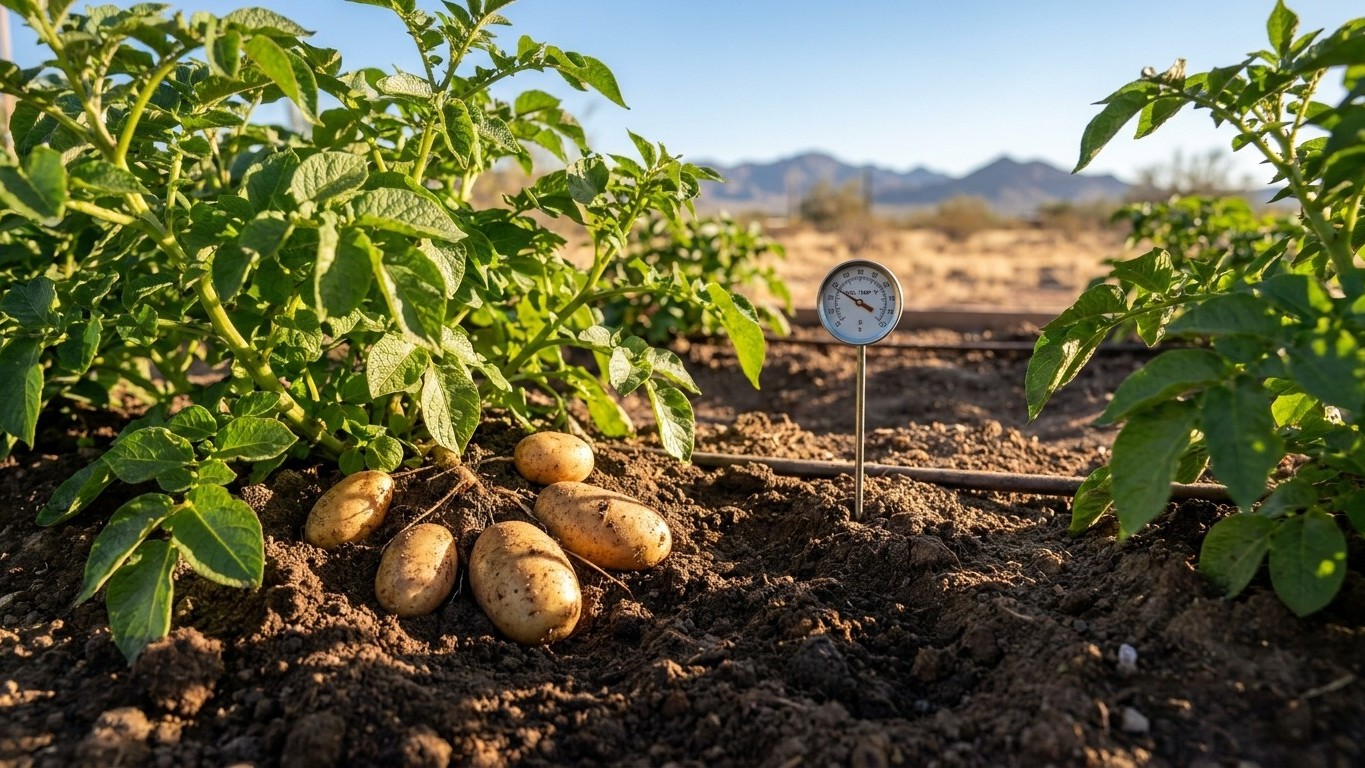
A soil thermometer is the cheapest insurance you can buy. Push it a few inches into the bed in the morning, when the ground is at its coolest, and check across several days rather than after one sunny afternoon. Your MSU Extension office can give you the target temperature for your area. Black plastic laid over the bed for a couple of weeks before planting warms the top layer noticeably, and it is the standard trick for northern growers.
Michigan is not one climate. The USDA Plant Hardiness Zone Map (2023, built on 1991-2020 normals) spans zones 4a to 6b across the state. That system rests on a single variable, the average annual extreme minimum temperature. So the Detroit-area date above is a reference point, not a rule for Traverse City or Marquette. Farther north, the warm-soil wait runs later.
What you are planting, and what it isn’t
Most home growers plant slips, which are rooted sprouts pulled from a mature root, rather than the roots themselves. The supermarket label saying “yam” is wrong: true yams are an unrelated tropical crop. A sweet potato is also not a potato. It is not a nightshade, it does not share pests or rotation rules with potatoes and tomatoes, and it goes in weeks after your potatoes do. Treating it like a potato is the most common timing mistake.
For varieties, talk in types and defer to local trials. Earlier-maturing types suit Michigan’s shorter warm stretch, but which named ones perform in your county is a question for your state extension service, covered in the last section. Our broader guide, Growing Sweet Potatoes: Slips, Heat, and a Careful Cure, covers slip production and curing in more depth.
How long the season lasts here
Two dates from MSU Extension give the frost-to-frost window. The last spring frost is around April 30 in the Detroit area. The first fall frost runs October 6 to October 21 for zone 6a, per the Michigan Garden Calendar. Subtract, and the numbers look like this:
| Measure | Date or length |
|---|---|
| Last spring frost (Detroit area) | Around April 30 |
| First fall frost (zone 6a) | October 6 to October 21 |
| Frost-free window | 159 to 174 days |
That gives a frost-free stretch of 159 to 174 days in the Detroit area. Elsewhere in the Lower Peninsula, where the last frost comes early to mid May, the window loses up to about two weeks at the front. The fall dates are for zone 6a, and colder parts of the state will end sooner.
Now the real question: what does that length allow? Less than it seems. Nobody plants slips into cold ground on frost day, so the usable season starts when the soil warms, weeks into that window. For a crop that builds roots on accumulated heat, this is a tight fit, not a generous one. Treat the first planting as the only planting. A second sowing of slips in midsummer will not have time to size up, and the succession sowing guide on this site is better spent on the quick crops that can follow, or precede, the sweet potato bed.
The short window changes the value of a root check too. Before you transplant, look at each slip: pale, healthy roots or nubs at the base mean it will settle in and start growing. A limp, dark or rootless slip can cost you a week of the few weeks you have. If a cutting looks poor, discard it and replace it, or set it in water until roots show, rather than hoping it recovers in the ground.
Fall matters as much as spring. Frost blackens the vines, and the roots should not be left sitting in cold soil afterward. Watch the forecast in early October and plan to dig before a hard freeze, not after one. A tight season is easier to manage when you know the harvest deadline from the start.
Heat and water in Michigan

At the Detroit reference station, NOAA’s 1991-2020 climate normals count 10.3 days a year at 90 F or above. That is a count at one station, not a description of the whole state, and it measures heat load, not average summer temperature. It is a small number. Sweet potatoes want accumulated warmth and warm nights, not a handful of hot afternoons, so Michigan is a place where this crop is a project, not a routine. Hence the plastic, the ridges and the early types.
Ridges (mounded rows of loose soil, raised well above the path) drain faster and warm sooner than flat ground. Black plastic holds heat into the night, when a cool Great Lakes summer would otherwise pull the soil down. A low tunnel of row cover in the first weeks keeps young vines from stalling. Some gardeners in cooler regions go further and grow in containers or raised beds for the extra warmth. A hot-summer state can skip most of this. Michigan should not.
A cool, damp summer brings a different set of problems: mildew on foliage, slow ripening and rot in the soil. Roots that have not finished bulking by fall stay small. If your summer runs cool, expect a modest crop rather than a large one. For a contrast, Growing Sweet Potatoes in Massachusetts deals with a similar northern squeeze, while Growing Sweet Potatoes in Utah covers a much drier, hotter setting where the problems flip.
Rain is the other half. The same reference station shows about 10.0 inches across June, July and August, out of 34.3 inches over the year:
| Month | Rainfall (inches) |
|---|---|
| June | 3.26 |
| July | 3.51 |
| August | 3.26 |
August is the driest summer month at 3.26 inches, tied with June. Sweet potatoes do best with steady moisture while roots swell, then drier conditions toward harvest. Long dry spells followed by heavy rain make roots split. These are normals, not a forecast, and they do not settle your garden. A sandy bed drains a rainstorm within the day and may need watering every few days, while clay holds it for a week. A single summer thunderstorm mostly runs off rather than soaking in. A rain gauge on your own plot tells you what actually landed.
Which sweet potatoes suit Michigan
The choice comes down to type, and Michigan’s facts point in a clear direction. A frost-free window of 159 to 174 days in the Detroit area, and less farther north, favors the earliest-maturing types, because a late type may not finish before October frost. Only about 10 days a year reach 90 F at the reference station, so a type that thrives on long, intense heat is a poor bet. And summers with about 10.0 inches of rain put disease resistance near the top of the list. Compact, bushier vine types also suit raised beds and containers, where soil warms faster.
This page does not name a single variety, and that is deliberate. The only recommendation worth following is one from local trials, and a claim that a named type will thrive across a state that spans hardiness zones 4a to 6b would be a guess. Sellers’ catalogs describe ideal conditions, not yours. Ask your MSU Extension office which varieties have been trialled near you before ordering slips. The land-grant extension directory lists the outreach contacts at canr.msu.edu/outreach, and county educators and Master Gardener programs can usually point to results from Michigan growing conditions.
The choice does not end at the catalog. A disease-resistant type still needs clean slips, and reusing the same bed year after year invites trouble even though sweet potatoes are not related to potatoes or tomatoes. Rotate with unrelated crops such as beans or greens. Airflow between vines helps, so avoid crowding them.
Harvest and storage are where a good crop is most often lost. Freshly dug roots need curing in a warm, humid spot before they store, and your extension office can give the exact conditions. Never put sweet potatoes in a refrigerator or a cold cellar. Cold injury below their storage range is real and irreversible, and it ruins more home crops than any pest. Inspect every root before storing and again during storage. A soft patch or a weeping spot ends the question, so discard the root. A root that looks sound is not proof that it is safe or that it will keep, and no page can promise a keeping time for your batch.
Common questions
Can I grow sweet potatoes in northern Michigan or the Upper Peninsula?
It is harder. The state spans USDA zones 4a to 6b, and the dates on this page are for the Detroit area and the Lower Peninsula. Farther north the frost-free window is shorter and summers are cooler, so you would need plastic, ridges and the earliest types. Ask your county extension office what has worked locally.
Can I plant slips on the last frost date?
No. Frost is a proxy, and soil warms after the risk ends. Wait for warm soil, measured with a thermometer in the morning over several days, and use your extension office’s target temperature. Planting early into cold, wet ground stalls the slips and invites rot.
Should sweet potatoes follow potatoes in the same bed?
Rotation with potatoes is not the concern it would be for tomatoes. Sweet potatoes are not nightshades, and they are not potatoes or yams despite the supermarket labels. Still, rotate beds across seasons to keep soil disease down, and follow them with unrelated crops.
Where should I store the harvest?
Cure the roots warm and humid first, then keep them somewhere above the cold range. Never use a refrigerator or a cold cellar, because chilling damage is permanent. Check roots regularly, and discard any with a soft patch or a weeping spot.