
Sweet potato slips go into Mississippi ground after the last frost, and only once the soil has caught up with the air. At the Jackson reference station, the last spring frost falls between March 6 and March 22. Planting comes after that, when the soil is warm. The season is long and the summers are hot and wet, so the real decisions are about drainage, disease resistance and where you put the rows.
When the soil is warm enough in Mississippi

The date to anchor on is March 6 to March 22. That is the band of last 32°F freezes (the 30 to 70 percent probability range) in NOAA’s 1991-2020 Climate Normals for the Jackson airport station. It is a probability, not a promise, so a freeze outside that band can still happen in any given year.
Frost is only a proxy, though. Sweet potatoes come from the tropics, and what they wait for is warm soil, not a frost-free forecast. Soil warms more slowly than air. A sunny afternoon in late March can feel like spring while the ground a few inches down is still cold and wet, and slips set into that ground sit and stall or rot. The soil keeps warming after frost risk ends, and it is the soil that sets the planting date. A soil thermometer read in the morning tells you more than the calendar does.
Your garden is not the airport
Those dates describe one station. Suburban and rural gardens typically see the last spring frost later than an airport does, often by one to two weeks, and more at elevation. A garden in the hills of north Mississippi may sit well behind the Jackson numbers. Ask your county extension office what it has recorded for your area, and treat the airport band as the earliest reasonable starting point for your thinking.
Slips, not seed potatoes
The crop starts from slips, which are rooted sprouts grown off a mature root, not from cut pieces of tuber. That is one reason the supermarket label misleads. A sweet potato is not a potato and not a yam. It is not a nightshade either, so it does not belong in a rotation with potatoes or tomatoes, and the “yam” tag on grocery bins is simply wrong. For the mechanics of starting slips, heat and curing, see Growing Sweet Potatoes: Slips, Heat, and a Careful Cure.
One more caution while you plan. This page talks in types of sweet potato because it cannot source the varieties trialled in Mississippi. Mississippi State University Extension, at extension.msstate.edu, can, and its recommendation carries more weight than anything a general article offers.
How long the season lasts here
Take both frost dates from the Jackson normals: last spring frost March 6 to March 22, first fall frost November 7 to November 22. Count from the latest spring date to the earliest fall date and you get 230 days. Count from the earliest spring date to the latest fall date and you get 261. The frost-free stretch at the reference station is therefore 230 to 261 days.
Trim that for real life. A garden that gets frost one to two weeks later in spring and one to two weeks earlier in fall gives up as many as four weeks of it. And the crop’s own window is shorter than the frost-free one, because slips wait for warm soil and roots need to come out around the time fall frost threatens. Still, this is a generous margin compared with states where the first planting is the only planting.
What a long window allows
In a short-season state, everything rides on one planting, and the gardener has to make sure slips are well rooted before they go in, because there is no time to replant. Mississippi gives you room to be less nervous. A late cold snap or a waterlogged bed that ruins a first batch of slips can be replaced. You can also stagger plantings so the harvest does not arrive all at once.
The succession sowing guide on this site covers how to space those plantings. The trade-off is that a later planting has fewer warm weeks to size up its roots, so ask your extension office for the last planting date it considers safe for your part of the state. Do not guess it from the total above.
What the hardiness zone does and does not say
The USDA Plant Hardiness Zone Map (2023 edition, built on 1991-2020 normals) places the state in zones 7b to 9a. That system rests on a single variable, the average annual extreme minimum temperature, and the range covers the whole state. It describes how cold winter gets, which matters little for a crop you replant every year from slips. Frost dates and soil temperature are far more useful here.
If you garden elsewhere in the Southeast or are comparing states, the same window math for neighboring climates is laid out in Growing Sweet Potatoes in South Carolina and Growing Sweet Potatoes in Virginia.
Heat and water in Mississippi

Jackson averages 71.1 days a year at 90°F or higher, according to the 1991-2020 normals. That is roughly ten weeks of hot days, a serious heat load. It is a count at one station, so the Gulf Coast, the Delta and the northern hills will each run somewhat differently.
Sweet potatoes want accumulated warmth and warm nights, not just hot afternoons. The count above tracks days, not nights, so it cannot prove anything about night temperatures on its own. Still, a state with this many 90°F days is one where the crop is routine. Gardeners in cooler territories treat sweet potatoes as a project, with black plastic, tall ridges and the earliest types they can find. Mississippi gardeners mostly skip that. A cool, damp summer would bring mildew, slow ripening and disease instead. That is not the usual Mississippi problem, and heat is not the main worry here.
Rain that arrives in bursts
June, July and August together bring about 14.1 inches of rain at the reference station: 4.43 inches in June, 5.02 in July and 4.69 in August, out of 57.4 inches for the whole year. Even the driest summer month, June, is not dry on paper. But those are normals for one station over 1991-2020, not a forecast and not your yard.
Rain does not read alone. Summer thunderstorms often deliver an inch quickly, and on hot ground much of it runs off. A sandy bed drains that inch within the day, so a wet summer can still mean watering every couple of days. A clay bed can hold it for a week. A rain gauge on your own plot settles what the normals cannot.
Steady moisture, fewer split roots
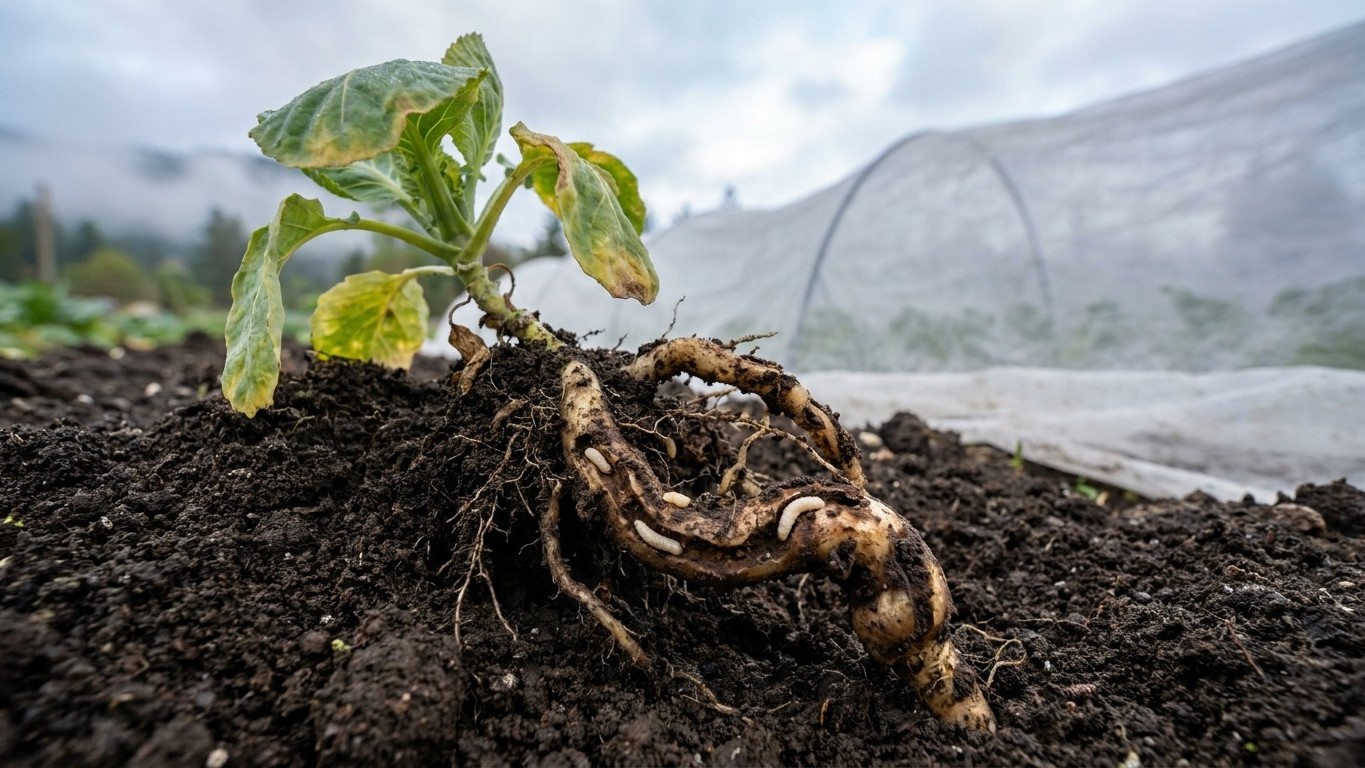
Rainfall decides whether roots swell steadily or split late in the season. A long dry spell followed by a downpour is the classic setup for cracking. Wet, heavy soil in a humid climate also invites rot. Planting on raised ridges sheds water, warms faster and keeps roots out of standing wet, and it costs nothing but a hoe and an afternoon. Even watering during dry stretches matters more than heavy watering after a long gap.
Which sweet potatoes suit Mississippi
This page names no varieties, and that is deliberate. A variety that thrives in one county’s soil and disease pressure can struggle in another, and the only useful recommendations come from local trials. Mississippi State University Extension, at extension.msstate.edu, holds those results. A list copied from a general article would be a guess dressed as advice.
What this page can do is reason by type from Mississippi’s climate:
- Disease resistance comes first. Warm, humid, wet summers favor root rots and nematodes, so look for types the trials list as resistant.
- Vigorous vining types cover the ground and shade the root zone, which helps in heat. Give them spacing and airflow so foliage dries after storms.
- Compact, short-vine types suit small beds but leave more soil exposed.
- The earliest-maturing types are less necessary given the long window, though they help if you want to harvest ahead of fall or squeeze in a second planting.
- Flesh type, orange and moist versus paler and drier, is a matter of taste. It has no bearing on how hardy the plant is.
A word on storage
Harvest ends with curing and storage, and a mistake here can waste a good crop. Never store sweet potatoes in a refrigerator or a cold cellar. Cold injury below their storage range is irreversible, and it is one of the most common ways a home crop is ruined after a good harvest. Keep them at room-level warmth, in the conditions your extension office describes.
Inspect roots before you keep them and while they are stored. A root that looks sound is not proven safe, and a soft patch or a weeping spot ends the question, so that root goes out. Promising a keeping time here would be irresponsible, since it depends on your harvest, your cure and your storage spot.
Common questions
Can I plant sweet potatoes right after the last frost date?
Not by the date alone. The Jackson band of March 6 to March 22 marks the end of frost risk, and the soil keeps warming after that. Gardens outside the airport zone often see frost one to two weeks later. Plant when a soil thermometer shows warm ground, not because the frost band has passed.
Can I make a second planting in summer?
The frost-free window at the reference station, 230 to 261 days, leaves room for one. A later planting has less warm time to size up roots, so ask your extension office for the last safe planting date in your county before you buy extra slips.
Do sweet potatoes need watering during Mississippi summers?
Summer rain averages about 14.1 inches across June, July and August, but it arrives unevenly. Sandy beds may need water every couple of days, while clay holds moisture much longer. Check a rain gauge on your own plot, and keep moisture steady to reduce split roots.
Where should I store the harvest?
Keep it out of the refrigerator and out of cold cellars, because cold injury cannot be reversed. Check roots regularly. A soft patch or a weeping spot means that root should go, however good the rest looks. Your extension office can give the storage conditions that fit your setup.