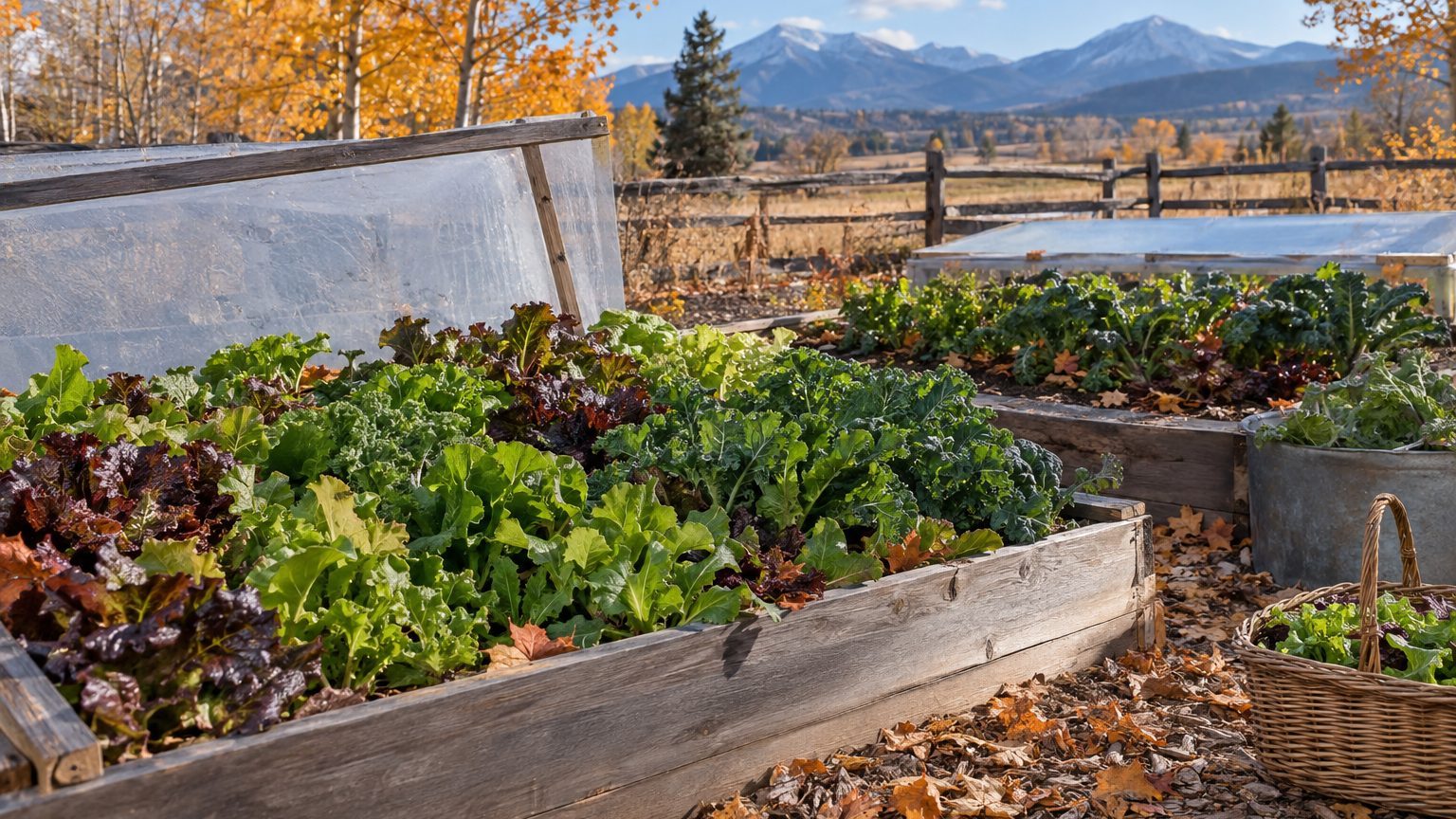

Illinois winter salads are sown in late summer and early fall, weeks before the first hard freeze, so the plants reach useful size while the days are still long enough to grow them. The hardiest types, such as mâche, claytonia and spinach, then hold in the bed through the cold with little more than a cover. Find your own first fall frost date, count back from it, and put the seed in before that window closes.
When the soil is warm enough in Illinois

Frost date first, soil second
NOAA’s 1991-2020 climate normals put the last spring freeze at the Chicago airport station between April 11 and April 22. That is the 30 to 70 percent probability band for a 32°F freeze, so it describes odds and not a promise. Suburban and rural gardens usually see the last freeze one to two weeks later than the airport, and central and southern Illinois run on a different calendar from Chicago. Your county’s office of University of Illinois Extension can tell you which side of that range you sit on.
Treat the frost date as a proxy. Winter salads care about the soil, and the soil warms after the frost risk ends, not with it. A bed can be frost-free in late April and still be cold, wet and sticky enough to rot seed. Pick up a handful and squeeze it. If it stays in a wet lump, wait. If it crumbles when you poke it, you can sow the cool-season types.
Sowing for winter runs the other way
A spring sowing of spinach, mâche or claytonia is a cool-weather crop harvested before summer. The true winter crop is sown in late summer, and the problem flips. The soil is now too warm, not too cold. Lettuce and spinach seed sown into hot, dry ground germinates poorly, so water the row before sowing, lay a board or a piece of shade cloth over it until seedlings show, and take it off at the first green.
For the crop as a whole, start with Winter Salads: What Grows When Lettuce Will Not, which covers the steps this page assumes you have already done, such as bed preparation and choosing a cover.
Keep it to beds, raised boxes and containers you seed yourself. Salad greens bought as seed are the only ones worth growing here, and you have no need to look for leaves outside the garden. Several plants that resemble young salad leaves are seriously toxic, and nothing in this guide depends on them.
How long the season lasts here
Doing the subtraction
NOAA’s 1991-2020 normals give a first fall freeze at the same Chicago airport station between October 24 and November 3. Set that against the spring range and the frost-free window is easy to count. The shortest case runs from April 22 to October 24, which is about 185 days. The longest runs from April 11 to November 3, about 206 days. Call it roughly 185 to 205 days, or 26 to 29 weeks, at the reference station.
Your own garden will not match it. If your spring freeze runs one to two weeks later and your fall freeze one to two weeks earlier, as often happens away from the airport, you lose somewhere between two and four weeks. Treat those figures as a starting point and confirm them for your county.
What that length allows
A window near half a year is generous for salad. It allows a spring sowing, a late-summer sowing and a final fall sowing, each with its own job. The spring sowing feeds you before heat arrives. The late-summer sowing is the one that overwinters. The last sowing, made a few weeks before your first freeze, gives small plants that sit in the bed and grow on during mild spells.
Spacing them out matters more than most people expect. Sow everything on one day and the whole crop is ready together, then bolts or is finished by the first hard cold. The succession sowing guide on this site lays out the intervals. The short version is to sow a little every couple of weeks in the late-summer stretch, not a lot once.
The window also settles the transplant question. Where the season is long, direct sowing works for the tough, cold-loving types, and you skip the root check that makes transplanted spinach and mâche sulk. Transplanting earns its place for lettuce, endive and escarole in late summer. Start them in trays in a shaded spot where the soil stays cooler, then move them out once the worst heat has passed.
The fall date has a second meaning. Winter salads do not grow much once the light drops, so the plant you have at the first freeze is roughly the plant you will be cutting from all winter. A sowing that misses that window does not fail outright, but it stays tiny until the days lengthen again.
Heat and water in Illinois

Summer decides how you start
This page does not carry a count of days above 90°F or a summer rainfall total, so it will not quote either. NOAA publishes both for the Chicago station and for stations across the state, and it is worth looking up the ones nearest you. What can be said without them is that Illinois summers are warm and often humid, with rain that arrives in bursts. That shapes the late-summer sowing. Heat stops lettuce seed from germinating and pushes young plants toward bolting. Humidity, when it lingers, brings mildew, botrytis and slug damage to seedlings packed too close together.
The practical response is airflow and shade at the root. Thin seedlings early, water in the morning so foliage dries before evening, and mulch the soil lightly so it stays cooler. Overhead watering late in the day is the habit that most often turns a good stand into a diseased one.
Winter decides what survives
NOAA’s 1991-2020 normals put the mean daily minimum of the coldest month at 18.8°F at the Chicago reference station. That is an average of the nightly lows, not the coldest night. Some nights run well below it. The USDA Plant Hardiness Zone Map (2023) shows Illinois spanning zones 5a to 7b, so a gardener in the south of the state faces a much milder winter than the figure suggests.
Read that against the crop and the plants sort themselves into three groups:
- Stand uncovered: spinach, mâche and claytonia will take the Chicago-area cold in the open, though they grow little.
- Need a cover to stay edible: lettuce, arugula, mizuna and tatsoi stay clean and tender under a low tunnel or in a cold frame.
- Cannot manage at all: tender summer lettuce sown late, and anything still soft and small when the hard freezes arrive.
Covered beds bring their own chore. Cover keeps rain out, so soil can dry more than you expect, and you should check it on mild days. Vent cold frames when the sun comes out, because trapped warmth in a sealed frame produces the same disease you avoided in summer.
Which winter salads suit Illinois
Choose by type, and choose on cold tolerance first. A long, variable winter with a Chicago mean minimum of 18.8°F favors the leaf crops built for it. Humid summers make disease resistance the first thing to check on a seed packet. And because the first freeze at the reference station falls between October 24 and November 3, the types that reach useful size fast are the safer bet for the last sowing.
| Type | Cold tolerance | Cover needed | Best use |
|---|---|---|---|
| Mâche (corn salad) | Very high | Optional | Slow, small rosettes cut through winter |
| Claytonia | Very high | Optional | Grown from seed in a bed or box |
| Spinach | High | Helpful in hard cold | Sown late summer, cut from fall on |
| Endive and escarole | Moderate | Yes, in hard freezes | Sturdy heads, good for the last sowing |
| Arugula, mizuna, tatsoi | Moderate | Yes | Quick baby leaf under a tunnel |
| Cold-tolerant lettuce | Lower | Yes, always | Cold frame crop, transplanted |
The ratings are relative, meant to help you rank the types against each other, not to promise survival at a given temperature. A dry, protected bed carries a plant through cold that would kill it in wet, open ground.
Why no cultivar names here
You will not find a variety list on this page, and that is deliberate. The cultivars that perform in a Chicago-area garden, in a Springfield garden and on a southern Illinois farm are not the same, and the only recommendation worth following is one from trials run near you. This page does not hold those results, so it would only be guessing. Ask your county office at University of Illinois Extension for the varieties trialed in your part of the state.
Look at neighboring states for contrast if you want it. Winter Salads for Michigan Gardens deals with colder lake-influenced winters, and Winter Salads for Oregon Gardens shows what changes when winters are mild and wet. Illinois falls between them, with cold that calls for a cover on most types and summers that make disease the main worry in the seedling stage.
Common questions
Can I sow winter salads in spring instead?
Yes, but you will get a spring crop, not a winter one. Spinach, mâche and claytonia sown as soon as the soil is workable give leaves before summer heat. For cutting in winter, the sowing has to be late summer or early fall.
Do I need a cold frame for winter salads in Illinois?
Not for all of them. Spinach, mâche and claytonia stand in an open bed in a typical Chicago-area winter. Lettuce, arugula, mizuna and tatsoi stay in better condition under a low tunnel or in a frame, and a colder stretch than average can damage even the hardy ones.
My last sowing is tiny and it is already November. Is it lost?
Usually not. Small plants of the hardy types survive winter and pick up again when the days lengthen. You will not cut much before then, so treat that sowing as an early spring crop.
Do the Chicago dates apply in my county?
Only roughly. The frost dates come from the Chicago airport station, and gardens in the suburbs and the country often see a later last frost and an earlier first frost by one to two weeks. Southern Illinois runs milder than Chicago and central Illinois sits between. Your county extension office can give local dates.