
Start counting from the last spring frost, but sow by soil. In Indiana that frost lands between April 9 and April 21 at the Indianapolis reference station. The growing window it opens runs roughly six months, which is enough for a spring crop and a late-summer sowing meant to carry into winter. Most of what decides the outcome is cold, not heat.
When the soil is warm enough in Indiana
The frost date, as the record gives it
The last spring frost at Indianapolis falls between April 9 and April 21, going by the NOAA NCEI 1991-2020 Climate Normals. That figure rests on 32F freeze probabilities (the 30-70% band) at station USW00093819. A frost date is a probability, not a promise, and Purdue adds a practical caution: roughly a 10% chance of a 32F event remains after the published spring date. Anything tender set out at the early edge of that range needs a cover standing by.
Indianapolis is a reference point, not the whole state. Southern Indiana runs earlier in spring and later in autumn than the north by a fortnight or more. A gardener near the Ohio River can shift the whole calendar earlier, and one near the Michigan line should shift it later.
Why the soil matters more than the date
The frost date is a proxy. Seeds do not read calendars, and they do not react to air temperature the way a thermometer does. They respond to the soil, and the soil warms after the frost risk ends, not along with it. Bed soil in mid-April can still be sluggish and wet, especially heavy clay, which describes a good share of central and northern Indiana. Seed sown into cold, soggy ground tends to sit and rot rather than sprout.
The reverse problem comes later in the year. A sowing meant for winter harvest goes in during late summer, when the soil is plenty warm, and the trouble is keeping that seedbed cool and damp enough for germination. So one crop group asks about warm soil in spring and a different question in August. Both are about the soil, and neither is answered by the air.
A simple habit helps: push a soil thermometer a couple of inches down in the morning and trust it over the date. Compare readings across a week, not a single day. A cold snap can drop the soil back after a warm spell, and a bed that is workable on Tuesday may not be ready on Saturday.
For varieties that have been trialled in Indiana conditions, ask Purdue Extension. This page talks about types of salad crop, because a named variety is only worth recommending when someone has grown it locally.
How long the season lasts here
The subtraction
Both ends of the window come from the same NOAA station. The last spring frost is April 9 to April 21. The first fall frost is October 21 to October 30. Counting from the earliest spring date to the latest fall date gives 204 days. Counting from the latest spring date to the earliest fall date gives 183. So the frost-free window at Indianapolis runs between 183 and 204 days, or about six months, with the real figure in any given year landing somewhere inside or just outside that band.
Those are frost-free days, not growing days for salad. Many winter salad crops keep growing, slowly, after the first frost, and a few do not mind it at all. The window is better read as the stretch when tender crops can stay uncovered and everything grows at full speed.
What six months allows
A window that long allows a second sowing, which is the whole point. A short window forces a single sowing and changes whether transplanting is worth it, since a seedling that stalls from root disturbance has no spare weeks to recover. In Indiana there is room to sow, watch, and sow again. A failed first sowing, whether from a cold snap or a hard rain on bare soil, can be replaced without losing the season.
That room argues for sowing in short intervals rather than one large block. Staggering sowings spreads out the harvest and also spreads the risk. The succession sowing guide on this site lays out the spacing between sowings, and it fits Indiana’s window better than it fits a northern territory with a window half this long.
The window also shifts within the state. A fortnight of difference between south and north is a large share of the margin. A southern Indiana gardener may fit in a third sowing, while a northern one is better off making two count. Neighbors to the east face different numbers: see Winter Salads for Pennsylvania Gardens and Winter Salads for Delaware Gardens for how the same crops fit other calendars.
Heat and water in Indiana
What this page does not carry
This page does not hold a verified count of days above 90 F for the reference station, nor a verified summer rainfall total, so it states neither. Guessing at either would hand you a number that looks precise and is not. What can be said without figures is general: Indiana summers are humid, and humid weather brings disease pressure in the form of mildew and rot on dense, crowded salad plants. Slow, uneven germination in hot bed soil is the other familiar complaint with late-summer sowings.
The practical response is cheap and unglamorous. Give seedlings airflow by thinning early. Water at the base in the morning so leaves dry before evening. Shade the seedbed in the hottest part of the afternoon with a cloth or a taller crop on the sunny side. These matter most for the late-summer sowing, which is the one that feeds the winter table.
The cold decides the rest
The number that sorts these crops is the winter low. At the Indianapolis reference station, the mean daily minimum of the coldest month is 20.9 F (NOAA NCEI Climate Normals 1991-2020). That is an average of nightly lows, not the record low, so individual nights run colder. The USDA Plant Hardiness Zone Map 2023 puts Indiana across zones 5b to 7a, built on the average annual extreme minimum. That range covers the whole state, and parts of it differ from Indianapolis, so check your own county.
With nights averaging near 21 F in the coldest month, the crops sort into three groups:
- Stand uncovered through most winters: the hardiest leafy greens, such as spinach, mâche and kale.
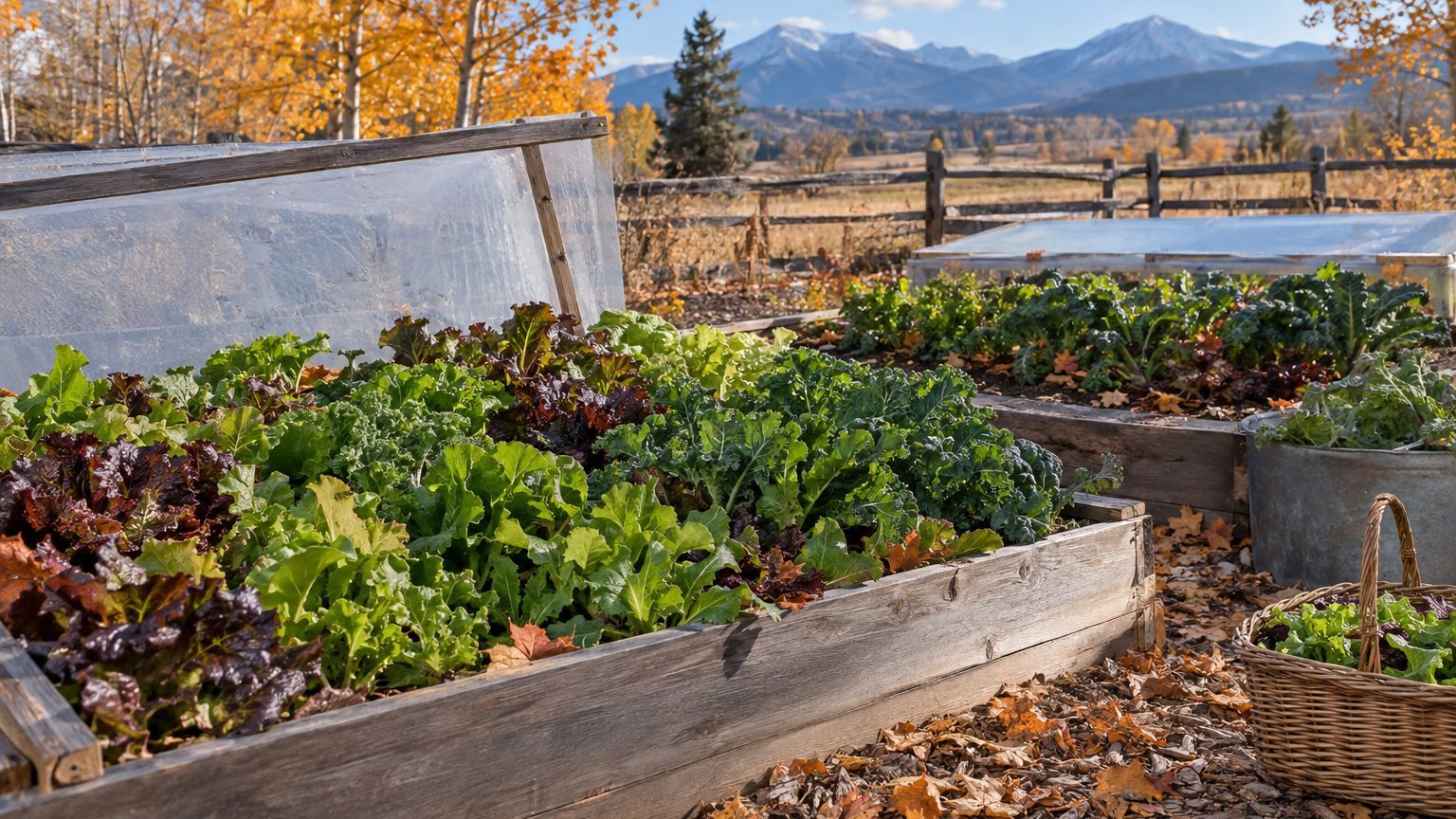
- Need a cover to stay in edible condition: tender lettuces and milder salad greens, which a row cover or low tunnel protects.
- Cannot manage at all: tender summer herbs, which fail at the first frost.
The first frost, October 21 to October 30 at Indianapolis, sets the other limit. A sowing has to reach useful size before the light fails, because growth slows sharply as days shorten, and a plant still tiny in late autumn mostly waits until spring. Count back from the first fall frost date, and sow earlier than feels necessary.
Which winter salads suit Indiana
Choose by type, not by name
Indiana’s window is moderate, its summers are humid, and its winters are cold but not brutal. That combination points to a few criteria. Humid weather makes disease resistance the first thing to look for on a seed packet. A season with a long frost-free stretch does not force you to the very earliest types, though a late sowing still benefits from fast ones. Hot late-summer soil rewards types that tolerate heat at germination, planted with airflow and shade over the root zone.
| Type | Uncovered | With cover | Main concern |
|---|---|---|---|
| Hardy leafy greens (spinach, mâche, kale) | Usually fine | Helps in the worst spells | Sowing early enough |
| Mustards and arugula | Often fine until hard cold | Keeps leaves clean and tender | Cold burn on leaf edges |
| Lettuce | Marginal | Needed | Mildew in damp, crowded beds |
| Tender herbs | No | Not enough | Fail at first frost |
Why this page names no varieties
You will not find cultivar names here. A variety recommendation only means something if it has been grown and compared in the conditions you will face, and this page does not have those trial results. Purdue Extension and its county offices do, and the varieties they have trialled in Indiana soil and weather are the only recommendation worth following. Call the county office before ordering seed.
Everything discussed here is grown from seed in beds and containers. None of it is foraged. For the broader picture of what keeps growing once lettuce quits, see Winter Salads: What Grows When Lettuce Will Not.
Common questions
When is the last spring frost in Indiana?
At the Indianapolis reference station, it falls between April 9 and April 21, based on NOAA’s 1991-2020 normals. Southern Indiana is earlier and northern Indiana later, by a fortnight or more.
How long is the Indiana growing window?
Between 183 and 204 days from the last spring frost to the first fall frost at Indianapolis, using the frost ranges above. That is long enough for a second sowing.
Do winter salads survive Indiana winters uncovered?
The hardiest leafy greens usually do. The coldest month averages a nightly low of 20.9 F at Indianapolis, and tender lettuces generally need a cover to stay edible. Individual nights run colder than that average.
Which varieties should I plant?
Ask Purdue Extension for the varieties trialled in Indiana. This page recommends types only, because local trial results are what separate a good choice from a guess.