
Iowa’s last spring frost is the date most salad calendars hang on, and for winter salads it is the wrong one to watch. These crops are sown in late summer and early fall, timed backward from the first fall frost, then carried through the cold under fabric, a low tunnel or a cold frame. Look up the first fall frost for your own county and count back from it before you buy a single packet.
When the soil is warm enough in Iowa

The date question first. NOAA’s 1991-2020 climate normals from NCEI put the last spring freeze at the Des Moines airport station between April 12 and April 24, using the 30 to 70 percent probability band for 32 F. Other parts of Iowa differ. Iowa State Extension county figures, built on 1950 to 2021 records, run about four days later in spring than that airport station, so treat the airport range as the optimistic end. A frost date is a probability, not a promise, and a late freeze after the window closes is always possible.
Frost is a stand-in for soil
Nobody sows by the frost date because they care about the air. They use it as a proxy for the ground. Soil lags the air, and after the last freeze the beds stay cold and wet for a while. Seed dropped into cold, saturated soil sits, rots or comes up patchy. The soil, not the calendar, sets the sowing date. A soil thermometer pushed a couple of inches down tells you more than any printed date, and each seed packet lists its own germination range.
A spring sowing of winter-type greens has a limited use in Iowa anyway. Spinach, arugula and the Asian mustards sown after the frost risk ends give you a quick early crop, but they bolt once the days lengthen and the weather warms. The main event happens the other way around.
In late summer the problem reverses
When you sow for winter, the soil is not too cold. It is too warm. Lettuce seed in particular can refuse to germinate in hot soil, and a seedbed that dries out in August stalls everything else. Water the row before you sow, cover the seed with a light layer of compost rather than baking soil, and shade the bed with a piece of cloth on a frame until the seedlings are up. The same thermometer that told you to wait in April tells you when to stop waiting in late summer.
The general method for the crop, including what a winter salad is and which steps come first, is laid out in Winter Salads: What Grows When Lettuce Will Not. This page covers what changes in Iowa. Everything described here is grown from seed in a bed, a container or a frame you built yourself, and none of it is gathered from the wild.
How long the season lasts here
NOAA’s 1991-2020 normals put the first fall freeze at the same Des Moines airport station between October 14 and October 25. Set that beside the spring window and the frost-free stretch runs from roughly 173 days, if the spring freeze comes late and the fall one early, to roughly 196 days, if the reverse happens. That is about 25 to 28 weeks. The arithmetic is simple: April 12 to October 25 gives the long end, April 24 to October 14 gives the short end.
The Iowa State Extension county figures pull that down. Running about four days later in spring and about ten days earlier in fall, they cost you roughly two weeks. Away from the airport, plan on a window nearer 23 to 26 weeks. Your own county’s dates will settle it, and a garden in a low spot or a river valley may lose more.
What that length allows
Roughly half a year is long enough for two sowings, and that changes the plan. The first goes in as the soil warms and comes out before summer heat pushes the greens to seed. The second goes in late summer, into the bed the first crop vacated, and it is the one that carries you into winter. The succession sowing guide on this site walks through the spacing of those sowings. In Iowa, the point to hold onto is that the late-summer sowing gets its own bed and its own date, and you should not treat it as an afterthought to spring.
The length of the window also bears on transplanting. A short window makes every week precious, and a tray-raised seedling set out at four true leaves saves time. Here, with room to spare, direct sowing is the better default for the crops that resent root disturbance: mâche, spinach, arugula and claytonia. Lettuce and the Asian greens tolerate transplanting well. Start them in trays in a shaded spot while the bed is still occupied by a summer crop, then set them out once it clears.
Where the window stops mattering
The frost-free count describes tender crops. The hardy greens keep growing after the first freeze, slowly and then barely at all as the days shorten. What matters is the size a plant reaches before the light fails. A plant that is nearly full-sized going into the dark months is one you can harvest from all winter. A seedling that is still tiny will sit there until late winter and then bolt in spring without giving you a salad.
Heat and water in Iowa

This page has no count of days above 90 F for Des Moines and no summer rainfall total from a credited source, so it states none. Iowa summers are warm and humid enough that heat and moisture matter at two moments only: when you sow in late summer and when the autumn damp sets in. Winter itself is decided by the cold.
Late-summer heat and autumn damp
Hot, dry soil in August stalls germination, and a sudden downpour on a just-sown bed crusts the surface and buries small seed. A shaded, mulched, evenly watered bed avoids both. In the humid weeks of early autumn, the risk shifts to disease. Downy mildew and gray mold get going on crowded seedlings with wet leaves. Thin early, water at the base in the morning, and leave a gap between plants so air moves through.
What the winter low decides
NOAA’s 1991-2020 normals put the mean daily minimum of the coldest month at Des Moines at 13.8 F. That is an average night, not the worst one, and the real lows go well below it. The USDA Plant Hardiness Zone Map 2023 places Iowa across zones 4b to 6a, so northern parts of the state run colder than Des Moines and the south a little milder. A 13.8 F average sorts the salad greens into three groups.
- Stand uncovered in most winters: mâche, claytonia, spinach, hardy kale.
- Need a cover to stay edible: cold-hardy lettuce, arugula, mizuna, tatsoi, endive.
- Cannot manage at all: tender, warm-season greens, which finish at the first hard frost.
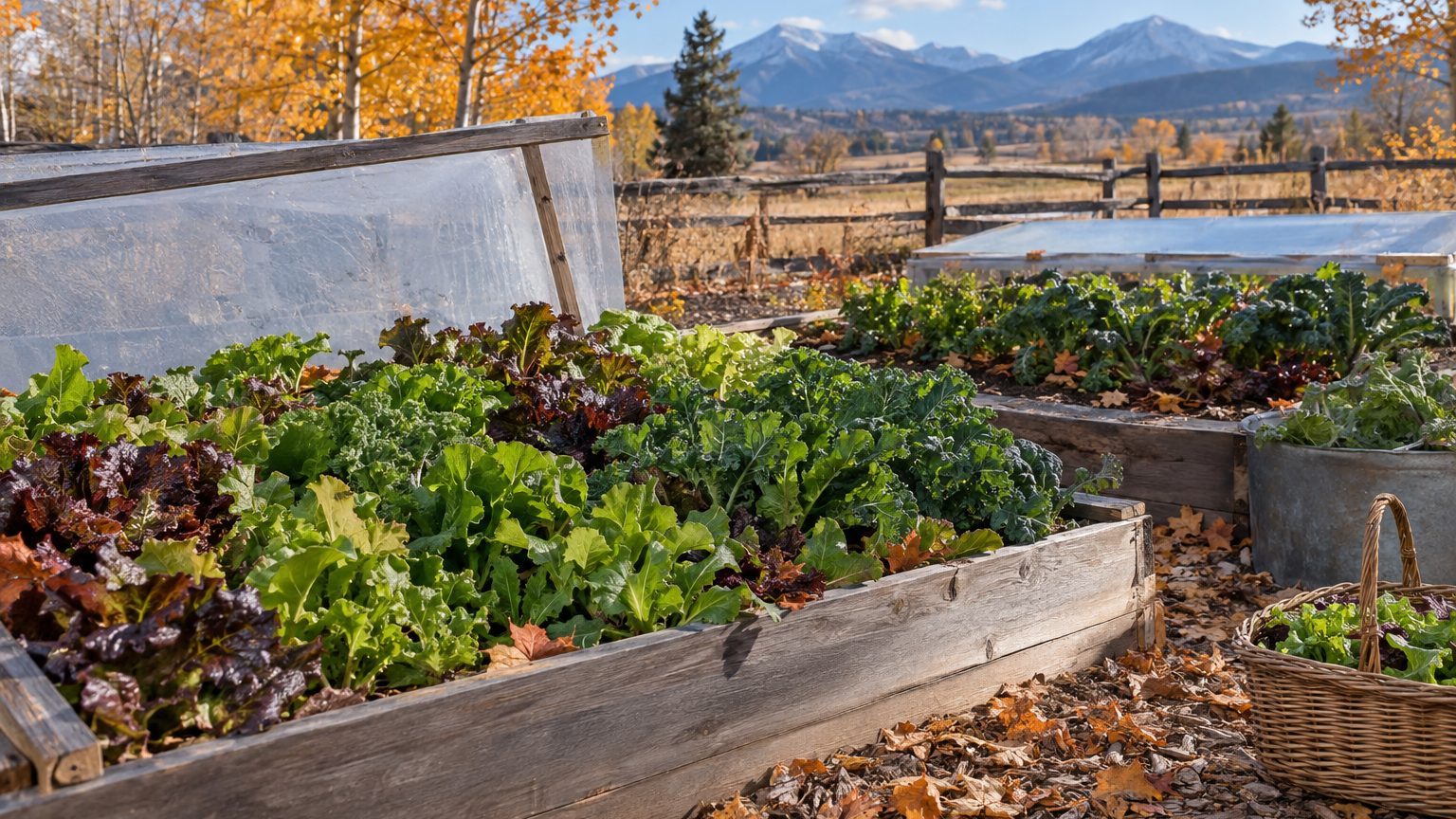
The uncovered group survives, but a hard freeze burns and shreds the leaves, so even these harvest better under a layer of row cover. The middle group survives an average night under fabric or a frame and can be lost in a hard cold snap without one. Cover holds a few degrees against the air and does more against wind and drying.
The first frost sets the other limit. A sowing has to reach useful size before the days get too short for growth, and the packet’s days to maturity understate the time in autumn, because the same plant grows more slowly in fading light than it does in summer. Count back from the first fall frost, add generous slack, and sow the slower crops first.
Gardeners on the Atlantic side face the opposite problem, with milder winters and more damp. Winter Salads for Rhode Island Gardens shows how much that changes the plan. The island province of Winter Salads for Prince Edward Island Gardens shows it again in the other direction, with a different mix of cold and wet.
Which winter salads suit Iowa
Choose by type, and let the winter low and the humid autumn do the sorting. A season that closes in October favors the fast crops you can cut young: baby lettuce, arugula, mizuna. A hot late summer favors types that germinate in warm soil and tolerate a shaded, mulched bed. A damp autumn puts disease resistance at the top of the list. In lettuce that means checking the packet for downy mildew resistance before anything else.
| Type | Cold handling at Des Moines | Best use |
|---|---|---|
| Mâche | Usually stands uncovered | Slow, cold-season rosettes |
| Claytonia | Usually stands uncovered | Tolerates shade and cool beds |
| Spinach | Overwinters small, uncovered | Fall sowing for early spring cutting |
| Hardy kale (baby leaf) | Stands uncovered, growth stops | Sturdy leaves for a cover-free row |
| Arugula, mizuna, tatsoi | Cover during cold snaps | Quick cuts in fall |
| Cold-hardy lettuce | Needs a frame or tunnel | The softest salad, but most exposed |
Why this page names no variety
You will not find a cultivar list here. The only recommendation worth following is one from trials run in Iowa soil and Iowa winters, and this page does not have those results. A name pulled from a seed catalogue tells you how a plant did somewhere else. Iowa State University Extension and your county office are the place to ask which varieties have been trialled near you, and whether the cold-hardy lettuces there held up in a frame.
Pick the type first, confirm the variety with your county office, and check the packet for disease resistance. Buy the seed only after you have counted back from your own first fall frost. A packet of mâche bought in August and sown in mid-October is the single most common way an Iowa winter bed fails.
Common questions
Will winter salads actually grow in December and January in Iowa?
Barely. Growth nearly stops in midwinter because the days are short, so what you cut in those months was mostly grown before then. The cold beds hold the crop like a refrigerator, and growth picks up again as the light returns in late winter.
My greens are frozen stiff in the morning. Are they dead?
Probably not. Frozen leaves go limp and glassy, and picking or walking on them while frozen damages them. Wait until they thaw, then check whether they perk up. If the crown is intact, new leaves follow even when the outer ones are lost.
Can I overwinter salad greens in containers?
Only with extra protection. A pot freezes from the sides as well as the top, so the roots take a harder cold than plants in the ground. Sink the container into a bed, pile leaves or straw around it, or move it against a house wall under cover.
Do I have to open the cover on warm days?
Yes. On a sunny day a closed tunnel or frame heats up and traps humidity, which is what mildew and gray mold want. Vent it in the morning and close it before the temperature falls in late afternoon. On the coldest days, leave it shut.