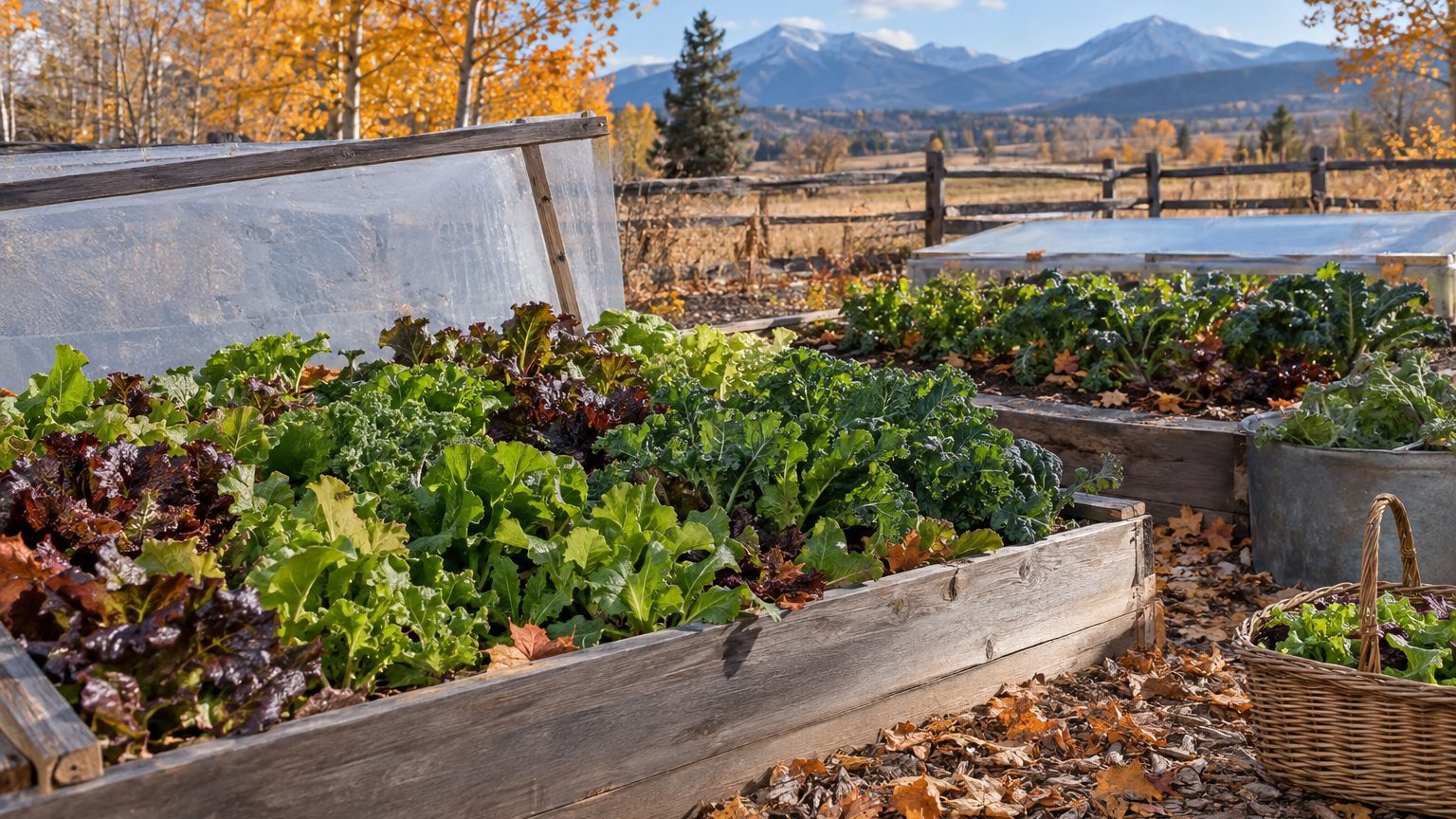

Maine winter salads are sown in late summer and early fall, not in winter. The greens reach picking size while the days are still long enough to grow them, then sit in the bed under a cover and wait for you. Find your first fall frost date now and have a cold frame, low tunnel or row cover ready before it arrives.
When the soil is warm enough in Maine

What the frost date tells you
NOAA’s 1991-2020 climate normals for Portland put the last spring freeze between April 22 and May 1, using the 30 to 70 percent probability band for a 32 F reading. That is a probability, not a promise, so a late freeze after the window can still happen. Portland sits on the coast at the mild end of Maine. Inland and northern gardens run substantially later in spring, and your own last freeze may fall weeks past those dates.
A frost date is only a proxy. Salad greens respond to the soil, and the soil warms after the frost risk ends, not at the same moment. For most of the crops on this page that lag works in your favor. Spinach, lettuce, arugula and the hardy Asian greens germinate in cool ground, so a spring sowing needs soil you can work, not soil that has warmed. Squeeze a handful. If it crumbles, sow. If it forms a wet, sticky ball, wait.
The August problem
The warm-soil question that matters for winter salads comes at the other end of the year. The seed goes in when the ground is still holding summer heat, and hot soil stalls the germination of lettuce and spinach. Sow in the shade of taller crops, water the row lightly every day until the seedlings show, and lay a board or a strip of burlap over the row for the first few days, lifting it as soon as the first sprouts appear. Mâche and claytonia are slow to come up in any case, so mark the row.
Your county extension office can tell you what local soil temperatures look like in your part of the state, and a cheap soil thermometer pushed into the top inch of the bed gives you a reading of your own. For the wider picture of what holds up in cold weather and why, start with Winter Salads: What Grows When Lettuce Will Not. This page is about how Maine changes the timing.
How long the season lasts here
NOAA’s 1991-2020 normals for Portland also give the first fall freeze as October 9 to October 21. Count from the end of the spring range to the start of the fall range and you get roughly 160 days. Count from the start of the spring range to the end of the fall range and you get roughly 180. So the frost-free window at Portland runs about 23 to 26 weeks. Both figures are calculated from ranges, which means the true length in any given year can land anywhere between them or outside them.
Inland and northern Maine lose weeks at both ends. A gardener there should treat the Portland window as a ceiling, not a forecast, and look up the nearest NOAA station or ask the extension service for local dates.
What that window allows
At the coastal end, 23 to 26 weeks is enough for two crops in one bed. A quick spring salad, cut before summer, is followed by a late-summer sowing that becomes the winter crop. Sowing small batches across late summer, rather than one big row, spreads the risk if a hot week or a slug invasion takes one of them. The same logic runs through the succession sowing approach used for summer lettuce.
At the short end, and anywhere inland, the fall sowing is the only one worth planning around. Skip the spring salad crop or grow it in a different bed, and keep the winter bed free. Gardeners comparing a much colder interior state can see the same squeeze handled differently in Winter Salads for South Dakota Gardens.
Transplant or direct sow
A short window changes whether transplanting is worth the root check. Starting seedlings in flats in a shaded spot while the bed is still occupied buys you weeks. That is worth it for some types and a mistake for others.
- Transplant: lettuce, kale, endive, radicchio, and the leafy Asian greens.
- Direct sow: spinach, mâche, claytonia, arugula and other taproot or fine-rooted greens.
Move flats-grown seedlings while they are small, water them in well, and shade them for a few days.
Heat and water in Maine

Heat and rain are small players
The figures in front of this page do not include a count of days above 90 F or a summer rainfall total for Portland, so none appears here. Look them up in NOAA’s normals for the station nearest you. Maine summers are cool and often damp, and the trouble that follows is different from a hot climate. Brief heat spells matter mostly for August germination. A cool wet summer brings downy mildew on spinach and lettuce, gray mold in crowded beds, slugs, and slow growth that leaves plants small when the fall frost arrives. Space plants for airflow, water at the base in the morning, and avoid overhead watering late in the day.
Gardeners in the far South face the reverse problem, with heat setting the limits. Winter Salads for South Carolina Gardens shows what that looks like.
The cold decides everything
NOAA’s 1991-2020 normals for Portland give the mean daily minimum of the coldest month as 15.6 F. That is an average of nightly lows, so individual nights run colder. The USDA Plant Hardiness Zone Map (2023) puts Maine at zones 3b to 6a, based on the average annual extreme minimum, and Portland sits at the warm end of that range. That winter low sorts the crops into three groups. The table below shows the pattern for Portland, and colder inland gardens should move every crop one step toward the covered column.
| Type | Holds up in the open? | What a cover adds |
|---|---|---|
| Kale | Usually yes, though leaf edges may burn in hard cold | Cleaner leaves, easier picking after snow |
| Spinach | Often survives, but growth stalls in midwinter | Leaves stay clean and pickable through the season |
| Mâche and claytonia | Among the toughest salad greens | Cleaner leaves, faster regrowth |
| Tatsoi, mizuna and other Asian greens | Take moderate cold, damaged in a deep freeze | Needed to stay edible in the coldest weeks |
| Arugula | Fair in fall, poor in deep cold | Extends the harvest into winter |
| Lettuce and endive | Most types do not last | Essential, and still marginal in deep winter |
Tender lettuces sown too late, or left with no cover at all, cannot manage a Maine winter.
Why the first frost sets the sowing date
Growth slows sharply as the days shorten, and in midwinter most plants barely grow at all. The bed becomes a place where finished greens are stored, not where they mature. The first fall freeze, October 9 to 21 at Portland, is the marker. Count back from it using the days to maturity on the packet, then add a generous margin, because catalogue figures assume good growing weather and the light is fading. Plants that reach picking size by the time growth stalls will feed you all winter. Small plants only sit there.
Under a cover, rain no longer reaches the soil. Water on a mild morning and vent the cover so the leaves dry, or mildew and gray mold move in.
Which winter salads suit Maine
Choose by type, and let three facts about Maine set the order of priorities: the cold, the damp, and the short runway before the light fails.
Hardiness first
With a coldest-month mean minimum of 15.6 F at Portland and colder conditions inland, the types that stand up best are spinach, mâche, claytonia and kale. Build the bed around them. Add the leafy Asian greens and arugula for fall picking, and treat lettuce and endive as crops that need a frame.
Speed second
The window before growth stalls is short, so favor types that reach picking size quickly. Baby-leaf greens such as arugula and mizuna are cut young and are far less exposed to a late sowing than a head of lettuce. Anything you want as a full head needs the earliest sowing on your calendar.
Disease resistance third
Cool damp summers make mildew the failure that shows up most often, so read the seed packet for disease resistance before you look at anything else. Seed catalogs list downy mildew resistance for lettuce with a code that begins with Bl, and for spinach with codes that begin with Pfs. Those are catalogue facts, printed on the packet, and they apply in every state.
Why this page names no varieties
This page does not name cultivars, and that is deliberate. The varieties that perform in a coastal garden differ from those that do in Aroostook County, and the only recommendation worth following comes from trials run in Maine. UMaine Extension is the place to ask, and its local offices know the trial results for your county. Everything on this page is written for beds, containers and frames. Foraging is a separate subject that this page does not cover.
Common questions
Do the Portland frost dates apply to my inland Maine garden?
No. Portland is the mild end of the state, and inland and northern Maine have a later last spring freeze and an earlier first fall freeze. Sow your winter crop earlier than the Portland numbers suggest, and check your nearest NOAA station or your extension office for local dates.
Can I sow winter salad greens outdoors in January?
Not usefully. Growth stalls in midwinter, so seed sown then mostly sits in the ground until conditions improve. Sow in late summer and early fall so the plants are established before the light fades, or sow again in early spring under cover.
Is a cold frame enough, or do I need a hoop house?
A cold frame or a low tunnel is enough for the hardy greens in the table. A hoop house lets you stand up and work in winter, and it holds more crops, but it costs more and takes more effort to build. Adding a layer of row cover inside a frame or tunnel gives extra protection on the coldest nights.
Can I pick greens that are frozen stiff?
Wait until they thaw. Handling frozen leaves bruises and tears them, and the damage shows up as slimy patches a day later. On a cold morning, pick in the afternoon once the cover has warmed and the leaves have gone limp again.