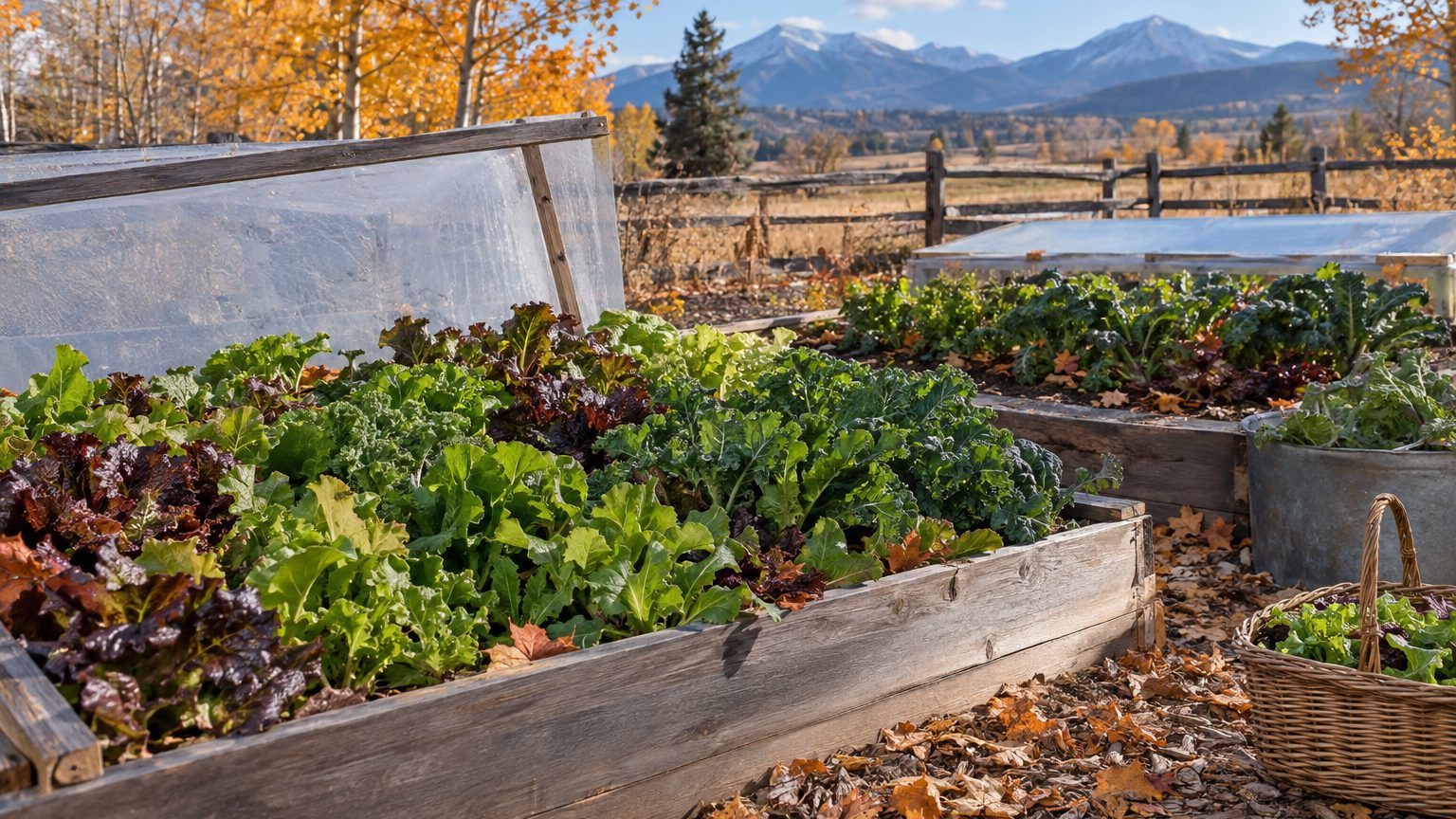

North Dakota gardeners who sow greens in spring and hope to be cutting in January usually find an empty bed by the first hard freeze. Winter salad here means sowing in late summer and early fall, then harvesting from a cold frame, low tunnel or unheated greenhouse, because the leaves will not stay edible in the open through a Dakota January. Count back from your fall frost, and have the covers built before the first hard freeze, not after.
When the soil is warm enough in North Dakota

NOAA’s 1991-2020 climate normals for the Fargo airport station put the last spring 32F freeze between May 4 and May 15 (the 30 to 70 percent probability band). That is a reference-city figure. Gardens outside Fargo, especially in the country, often see their last freeze a week or two later, and higher ground later still. Your county office at NDSU Extension can tell you how far your own ground sits from the airport.
A frost date is a probability, not a promise, so a freeze after the range is always possible.
Frost is only a proxy for soil
Winter salads do not care about the calendar. They care about the soil under the seed. Soil warms after the frost risk ends, not at the same moment, because a bed that has just lost its last frost is still holding the cold of March and April. Most of these greens germinate happily in cool ground, so a spring sowing can go in as soon as the bed is workable. Spring is a poor place to start a winter crop, though. Anything sown then is heading for July heat and will be finished long before December.
The winter crop is sown in the opposite condition, into soil that is warm and dry in late summer. Some of the hardiest types, mâche and spinach among them, germinate poorly when the seedbed is hot. So the soil question comes twice a year, and a thermometer answers it better than a calendar.
What to check before you sow
- Push a soil thermometer a couple of inches down in the morning, not in the afternoon sun.
- Water the row and shade it if the bed is hot, because dry, baking soil stops hardy seed from sprouting.
- Confirm the bed drains, since cold, wet soil rots seed and seedlings in fall.
- Ask NDSU Extension which varieties have been trialled in your county before you buy seed.
The rule that matters most is to trust the soil thermometer over the frost date. The frost range tells you when to start watching the bed, and the thermometer tells you when to sow.
How long the season lasts here
NOAA’s 1991-2020 normals for Fargo put the first fall 32F freeze between September 25 and October 5. Set that beside the spring range of May 4 to May 15 and the frost-free window runs from about 133 days (last freeze May 15, first freeze September 25) to about 154 days (last freeze May 4, first freeze October 5). That is roughly 19 to 22 weeks. Outlying gardens will have less, since they freeze later in spring and earlier in fall.
That is a short window, and it changes what you can do with it. A gardener in a long-season region can sow a spring crop, pull it, and sow a second and third round. Here you get one spring planting of greens that finish before summer heat, and after that the next sowing is already the winter one. There is little room for a spare round in between, so the succession sowing guide on this site matters less for repeating the same crop and more for staggering fall sowings a week or two apart.
What the window allows
The fall frost date is your deadline, and the calculation runs backward from it. Take the days to maturity printed on the seed packet (catalogue figures are counted from transplant and vary by a week or two with the season). Then add extra time, because growth slows as the days shorten and the soil cools. Plants need to be close to harvest size when the freezes arrive, since a small plant does not put on much new growth under a cover in November. What you cut in December and January is mostly what stood there in October.
Transplant or direct sow
A short window makes transplanting tempting, because a started plant gains weeks. The cost is the root check. Mâche, claytonia and spinach resent disturbance, so sow those in place and thin them. Kale and lettuce transplant more forgivingly, and setting out sturdy young plants in early fall gains time that seed sown in the bed cannot. For the wider picture of which crops fit which conditions, Winter Salads: What Grows When Lettuce Will Not covers the crop as a whole.
Heat and water in North Dakota

This page will not quote a count of days above 90 F or a summer rainfall total, because those figures come from a single station and vary a great deal across the state. NOAA’s climate normals list both for the station nearest you, and it takes a few minutes to look them up. What can be said without a number is that summer heat here is a passing problem and not the defining one. It matters most in late summer, when a bed of newly sown seed sits in hot, dry soil, and shade cloth and steady watering get the row through.
A cool, damp summer brings its own trouble. Leaves stay wet, powdery and downy mildew move in, and slow-ripening or slow-growing plants reach fall smaller than they should. Give the rows airflow by thinning, and water at the base in the morning so foliage dries by evening.
The cold decides the rest
Everything on this page is settled by the winter. NOAA’s 1991-2020 normals for Fargo put the mean daily minimum of the coldest month at 0.2 F. That is an average of the nightly lows, not the record, so the worst nights are colder. The USDA Plant Hardiness Zone Map (2023) places the state across zones 3a to 4b, a range built on the average annual extreme minimum, and your own zone will differ from Fargo’s.
Those figures sort the crops into three groups:
- Nothing tender stands uncovered. Lettuce and similar leaves will not stay in edible condition in the open.
- Hardy types such as spinach, mâche, claytonia and kale can survive cold that kills lettuce, but they need a cover to stay in good shape for cutting.
- Some may survive under snow, yet snow is not a plan, because a thin winter leaves the bed exposed.
Guides written for milder coasts, such as Winter Salads for Washington Gardens or Winter Salads for California Gardens, assume the leaves stay outdoors and keep growing. That assumption fails at a mean January minimum near zero.
The first frost then sets the last useful sowing date, as the section above laid out. After it, light and temperature together stop the plants from growing much, and what you have is a living store of leaves to be cut a little at a time.
Which winter salads suit North Dakota
Choose by type, and choose the hardiest. A short season favors types that reach cutting size quickly and tolerate cold from the start. The cold means anything without frost tolerance is out. A damp or humid stretch makes disease resistance a real criterion, so read the seed description for mildew resistance before you buy.
This page names no cultivars, and that is deliberate. The varieties that perform here are the ones trialled in North Dakota, and this page does not have those trial results. NDSU Extension is the place to ask, and a variety recommended for a milder region tells you very little about a bed near zero in January.
Mâche

Mâche is a low rosette that tolerates cold well and grows slowly, so sow it early in the fall window and direct in the bed. It suits a cold frame, where its small leaves are easy to cut.
Claytonia

Claytonia is another compact, cold-tolerant green that handles low light better than most. It is sown in place, and it does its best growing in the cool shoulder seasons before deep winter.
Spinach

Spinach is the most familiar of the hardy group and sprouts poorly in hot soil, so wait for the bed to cool a little in late summer. Choose types with disease resistance listed, and cover the bed before the hard freezes.
Kale

Kale is the sturdiest of the lot, and baby leaves can be cut for salad from covered rows. It is worth a cover because leaves that are merely alive are not always pleasant to eat.
All of these are grown in beds, frames and containers, and none should be gathered from the wild.
Common questions
Can I leave winter salad greens uncovered all winter in North Dakota?
Not if you want to eat them. Hardy types such as spinach and kale can survive a lot, but survival is not the same as leaves in good condition. With a mean coldest-month minimum near 0 F at Fargo, a low tunnel or cold frame is the reliable route.
Will a cold frame keep growing salad all winter?
It will keep plants alive and cuttable, but growth largely stops in the deepest part of winter. You are cutting from a stock of leaves that were already there. A frame also adds no heat of its own, so on the coldest nights the plants inside can still freeze.
Is the Fargo frost date right for my town?
Only roughly. NOAA’s figures come from the Fargo airport station, and gardens elsewhere in the state differ, often by a week or two, and more at elevation. Use the range as a starting point and confirm it with your county extension office.
Should I sow winter salads in spring as well?
You can grow a spring crop of the same greens, but it will not become a winter crop. Spring plants face summer heat and are usually finished by then. The winter harvest comes from late summer and early fall sowings, timed back from the first fall freeze. That freeze falls between September 25 and October 5 at Fargo, according to NOAA’s 1991-2020 normals, and earlier in many rural gardens.