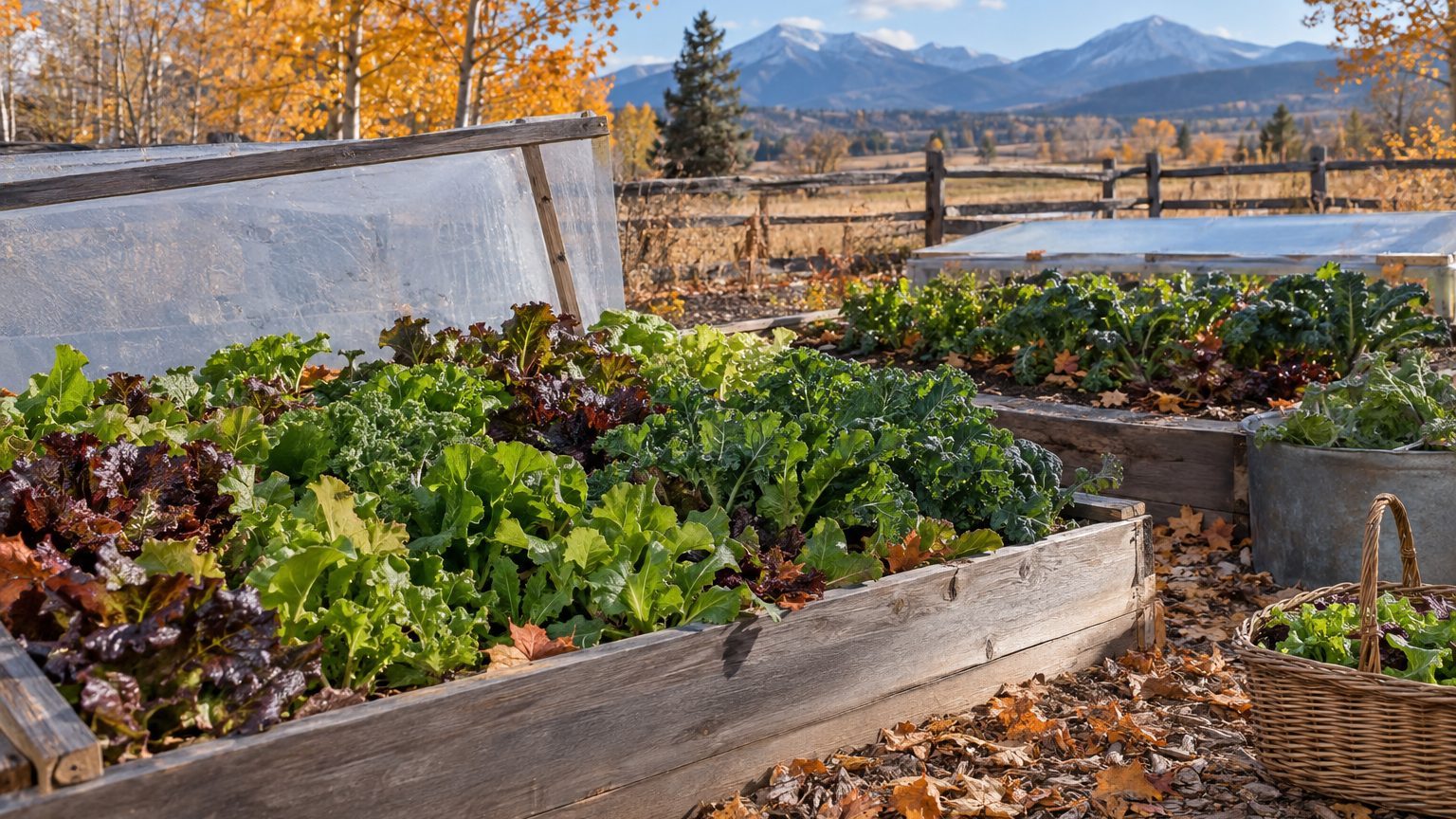

Western Washington seedlings sown in October sit at two leaves through December and hand you nothing to cut until March. Winter salad is settled by a late summer sowing, made before the light thins, and not by the spring frost date most guides lead with. Sow the hardy types in late summer and early fall, and have a low cover ready for the first cold nights of November.
When the soil is warm enough in Washington

The frost date, and why it is the wrong clock
NOAA’s 1991-2020 climate normals, drawn from the NCEI station USW00024233 in the Seattle area, put the last spring freeze at February 27 to March 18. That is the 30-70% probability band for a 32 F freeze. It is a probability, not a promise, so treat it as the middle of a risk and not a guarantee. It also describes western Washington only. East of the Cascades the land is high desert with a far shorter season, and the Seattle window does not carry over.
Frost is a proxy. Winter salads wait for warm soil, and soil warms after the frost risk ends, not with it. West of the mountains the gap is wide. Cold, wet ground and low spring light hold crops back well past the last freeze, so a seed that goes in on the frost date can sit in the row for weeks or rot there.
Two soil moments, not one
A winter salad bed has two dates that matter, and neither is the frost date. The first is late summer, when the soil is warm and the main sowing goes in. The second is late winter to spring, when cold soil finally releases the bed and you can make a last sowing for cutting into spring.
Late summer sowing has its own trap. Soil that is too warm can slow or stop germination in some crops, lettuce among them. Shade the row with a board or a strip of fabric until the seedlings show, and water the drill before you sow. The seed packet gives the minimum and maximum soil temperature for each crop, and a cheap soil thermometer pushed in at seed depth in the morning tells you which side of the line you are on.
In spring, judge by the soil, not the calendar. If a handful of soil squeezes into a sodden ball and drips, it is too wet to sow. If it crumbles and feels no colder than the air, you can start. If you have not yet chosen crops, Winter Salads: What Grows When Lettuce Will Not sorts the crop as a whole before you commit any bed space.
All of this grows salad in beds and containers. Buy seed from a reputable supplier and keep the cutting to what you sowed.
How long the season lasts here
NOAA’s 1991-2020 normals for the same Seattle-area station put the first fall freeze at November 13 to November 30. Set that beside the spring window and the subtraction is simple. From March 18 to November 13 is about 240 days. From February 27 to November 30 is about 275. So the frost-free stretch at this reference point runs roughly 240 to 275 days, or eight to nine months, and other parts of the state differ, sometimes by a lot.
What a long window allows
A window that long lets you sow more than once. You can make a spring sowing, a midsummer sowing and a late summer to early fall sowing from the same seed order, and each one cuts at a different time of year. The last of them is the winter crop. It matters most because it is the only one that has to reach useful size before the light fails, so it is the one you sow with the fall frost date in mind and not the spring one.
That is the logic of succession sowing. Instead of one big planting that all comes ready in the same fortnight, you stagger small ones a couple of weeks apart. In winter, staggering also insures you against a failed batch. A slug raid or a soggy fortnight in October can wipe out one row, but it will not take the other two.
Direct sowing or transplanting
Because the window is generous, direct sowing is usually the better choice for the roots-sensitive crops. Mâche, claytonia and spinach dislike having their roots disturbed and can sulk for weeks after transplanting. Leafy types like lettuce, endive and kale take transplanting well, and starting them in cell trays lets you keep the main bed free for a summer crop until late summer, then set them out as the bed empties.
Where the season is much shorter, the arithmetic reverses. Gardeners reading Winter Salads for Newfoundland and Labrador Gardens have one sowing, not three, and that changes whether a transplant’s root check is a price worth paying. Here you can afford to be patient, and you should, because the limit on your winter crop is light, not the length of the frost-free window.
Heat and water in Washington

To find them for your own town, look up NOAA’s 1991-2020 normals for the nearest station. What can be said without a number is that maritime western Washington has mild summers, and heat is rarely what ends a winter salad. The cold, the wet and the shrinking daylight do that.
What the winter low decides
NOAA’s 1991-2020 normals for Seattle give the mean daily minimum of the coldest month as 37.1 F. That is an average of the nightly lows, above freezing, so a typical winter night in the city does not freeze the ground. Individual nights still do, which is what the November freeze dates above describe, and a cold snap can go well below the average. The USDA Plant Hardiness Zone Map 2023 runs from zone 4a to 9a across Washington as a whole, which shows how much colder other parts of the state can be than Seattle.
For a bed near Seattle, that sorts the crops into three groups:
- Stand uncovered: mâche, claytonia, spinach, kale, and the hardier Asian greens such as tatsoi and mizuna.
- Need a cover to stay edible: lettuce, arugula and endive, which survive but turn ragged, bruised or slimy in hard frost and long rain.
- Cannot manage: basil, warm-season lettuces bred for summer, and anything sown for heat.
The wet is the real threat
Where summers are hot, gardeners fight bolting and scorch. In a cool, damp climate like this one, the equivalents are mildew, rot and slow growth. Leaves that stay wet for days under a canopy of fallen rain grow gray mold. Slugs work all winter and wreck a tender row overnight.
Rain does the watering from fall through spring, so the job is drainage. Raised beds shed water. A cloche, low tunnel or cold frame keeps the rain off while still admitting light, and you should prop it open on mild days so air moves. Space plants generously, because crowded leaves stay wet longer. Gardeners in the Deep South, as on Winter Salads for Mississippi Gardens, spend their effort on heat. Yours goes to keeping leaves dry and airy.
The fall frost also sets the deadline for sowing. A crop sown too late reaches only the seedling stage before the days shorten, and then it barely grows until spring. Count back from the November window, and sow so the plants are close to cutting size by the time the frosts arrive.
Which winter salads suit Washington
Choose by type, and let the cool, wet, low-light conditions decide. With a long window, you are not forced toward the very earliest types, but with damp weather in the cold months, disease resistance and hardiness come first. Types that lean toward open, upright leaves and dry crowns beat dense heads that hold water.
| Type | In a Seattle-area winter | Best used for |
|---|---|---|
| Mâche (corn salad) | Stands uncovered | Low, tidy rosettes cut whole |
| Claytonia | Stands uncovered | Tender leaves through the darkest months |
| Spinach | Stands uncovered; slow in low light | Baby leaf cutting |
| Kale (baby leaf) | Stands uncovered | Steady cutting for weeks |
| Tatsoi and mizuna | Mostly uncovered; cover in hard frost | Fast growth, mild mustard flavor |
| Cold-hardy lettuce | Cover helps | Loose-leaf cutting, not heads |
| Arugula, endive, radicchio | Cover helps | Bitter and peppery accents |
A cultivar recommendation is only worth having if it was trialled where you garden. Western and eastern Washington also grow very different crops in very different winters, so a name that suits one can fail in the other. WSU Extension is the place to ask for the varieties tested in your county, and its local offices know which ones cope with your soil and rainfall.
Choose two or three types from the table and sow each in a small block, not a single row. You learn quickly which ones your bed suits, and the ones that fail cost you only a few square feet.
Common questions
Can I use these dates in eastern Washington?
No. The frost windows come from a Seattle-area station and describe western Washington. East of the Cascades the season is far shorter and winters are colder, so check your own county’s normals and ask WSU Extension for local timing.
Do I need a cold frame near Seattle?
You can grow several types without one, including mâche, claytonia, spinach and kale. A cover mainly rescues lettuce, arugula and endive from hard frost and from weeks of rain. It also keeps leaves clean, which matters for a salad you eat raw.
Why did my winter seedlings stop growing in December?
Short days, not frost, are usually to blame. Plants sown too late reach the seedling stage as the light fades, and then stall until spring. Next year, sow earlier so they are close to cutting size when the November frosts arrive.
Can I sow in January and expect a crop?
You can, but cold, wet soil will hold the seed back long after sowing, and germination is slow and patchy. A row under a cloche has the best chance. For most beds a late winter sowing waits for the soil to loosen and dry a little, which usually happens after the last freeze window closes.