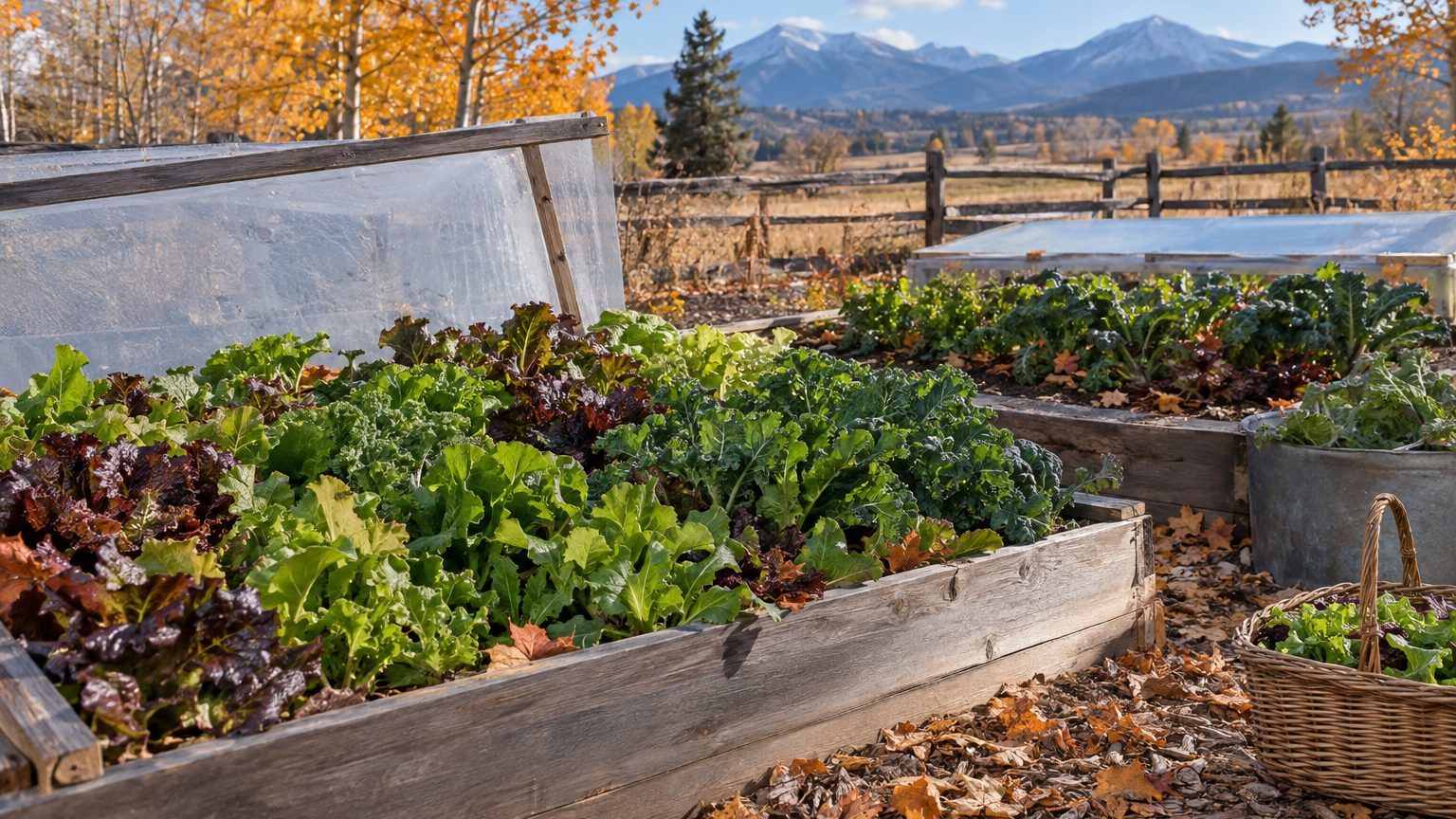

Growing winter salads in Rhode Island is realistic, and the cold decides the plan more than the heat does. At the Providence reference station the frost-free stretch runs about 200 days, enough for a late-summer sowing to reach size before the light fades. Hardy greens then carry through winter in beds or containers, with a cover for the tender ones.
When the soil is warm enough in Rhode Island
The date most gardeners ask about is the last spring frost. In NOAA’s 1991-2020 U.S. Climate Normals, the 32 F freeze probability for the Providence-area airport station sits in the 30 to 70 percent band from April 7 to April 17. That is a probability, not a promise. Some years the last freeze lands earlier, and some years it shows up after you have already planted.
It is also a reference-city figure, not a statewide guarantee. Suburban and rural gardens typically see the last spring frost later than an airport does, often by one to two weeks, and more at elevation. A garden in the cooler inland towns should add that margin and then check the county’s own records.
The frost date is a proxy, though, and a rough one. Winter salads wait for warm soil, and soil warms after the frost risk ends, not with it. Ground that spent months near freezing holds its chill through a few mild afternoons. Seed sown into cold, soggy dirt tends to sit and rot rather than sprout. A cheap soil thermometer pushed in at seeding depth in the morning tells you more than the calendar. Compare the reading with the germination range printed on the seed packet.
For the winter crop itself, the soil question runs the other way. Seed goes in during late summer, when a bed that has baked in sun since June can be too warm for lettuce to germinate well. Shade the bed with a cloth or a board, water it before sowing, and sow in the evening. Spinach and several other greens also germinate better in cooler ground, so many gardeners wait for a cool snap.
So the April 7 to April 17 band is less a planting date for winter salads than the start of the clock. Spring is for building beds, sorting out drainage, and learning how your own soil behaves. The sowings that matter for winter come months later, and the dates behind them are worked back from the fall freeze.
One note on varieties. Which specific lines perform here is a question for University of Rhode Island Cooperative Extension, which knows what has been trialled in the state’s soils. This page talks in types for that reason. Everything here is grown in beds and containers, and nothing on it concerns picking leaves from the wild.
How long the season lasts here
The same NOAA normals put the first fall freeze between October 24 and November 3. Count from April 7 to October 24 and you get 200 days. Count from April 17 to November 3 and you also get 200. At the reference station, then, the frost-free window is about 200 days, whichever end of the band you take.
Gardens away from the airport get less. If your last spring frost runs one to two weeks later and your first fall frost one to two weeks earlier, you are giving back two to four weeks of that total. A cold hollow or a hilltop plot loses more. The number is a ceiling, not a forecast for your yard.
What does a window this long allow? Mainly a second sowing, and often a third. A gardener with only 120 frost-free days has one shot at each crop, and the whole calendar bends around it. Here you can sow a spring round of greens, let it finish, and still have the back half of summer for the crop that matters for winter. Our succession sowing guide covers how to space those rounds, and the logic is simple: smaller, repeated sowings beat one big sowing that all matures in the same week.
The long window also changes the transplant question. In a short season, starting seedlings indoors buys time that direct sowing cannot, and the root check is a price worth paying. With about 200 days to work with, direct sowing is usually fine for the fall crop. That matters because spinach and some other greens resent root disturbance, while lettuce takes transplanting more kindly. Transplants earn their keep mainly when a late sowing is racing the light.
The frost date is not where the useful season ends, either. The first freeze, October 24 to November 3 at the reference station, is the point where covers go on, not the point where growth stops. What truly closes the season is daylight. Growth slows sharply once days fall below roughly 10 hours, which at Rhode Island’s latitude happens in early to mid November. A leaf that is half-grown by then will mostly hold its size through winter rather than keep growing. Planning backward from that date, as opposed to forward from spring, is the habit that pays off.
For a wider look at how crops behave when ordinary lettuce quits, see Winter Salads: What Grows When Lettuce Will Not.
Heat and water in Rhode Island
This page does not carry a verified count of days above 90 F or a summer rainfall total for the state, so it will not quote one. What can be said safely is that Rhode Island is not a territory where heat settles the matter. Hot spells come and go, and the bay and ocean take some of the edge off. The summer problem here is more often a cool, damp one.
A humid stretch brings powdery and downy mildew on leaves, slow ripening of anything sown too late, and slugs working through tender seedlings at night. Watering matters in dry weeks, since a seedbed that dries out in August gives patchy germination. But wet foliage going into a cool night is the bigger risk. Water at the base in the morning, give plants room for air to move, and thin early.
The cold is what sorts the crops. Providence’s coldest month averages a daily minimum of 22.1 F (NOAA NCEI Climate Normals 1991-2020). That is a mean, so individual nights run lower. The USDA Plant Hardiness Zone Map 2023 puts Rhode Island at 6a to 7b, a range built on the average annual extreme minimum. Shoreline gardens sit toward the milder end and inland ones toward the colder, so use the zone for your own town rather than the whole-state range.
| Type of salad crop | Against a 22.1 F average low | What it needs |
|---|---|---|
| Spinach, mâche, claytonia, kale | Usually stand uncovered | Good drainage; a cover in the hardest stretches keeps leaves cleaner |
| Leaf and head lettuce, arugula, tender Asian greens | Need a cover to stay in edible condition | Cold frame or row cover over hoops; vent on mild days |
| Basil and other warm-season salad crops | Cannot manage | Finish at the first frost or move indoors |
The first frost sets the other limit. A sowing has to reach useful size before October 24 to November 3 and the shortening days, because after that it is holding, not growing. Gardeners further inland should pull that back by the one to two weeks noted above.
Colder interior states handle the same problem differently, and the comparison is useful. See Winter Salads for Iowa Gardens for a deeper-cold version, or Winter Salads for Kansas Gardens for one where heat and wind come into play.
Which winter salads suit Rhode Island
Start from the climate. A frost-free window of about 200 days at the reference station is generous, but the winter light is short, so the earliest-maturing types have the edge. Fast baby-leaf greens sown in late summer get to cutting size while days are still long. Slow, large types sown late may never reach it.
Humidity makes disease resistance the first thing to read on a seed packet. Mildew resistance is listed as a trait for spinach and lettuce, and in a state with damp summers it matters more than flavor claims or catalog photographs. Pair it with airflow: spacing that lets leaves dry and mulch that keeps the root zone cooler through late-summer heat.
The cold narrows things further. Spinach, mâche, claytonia and hardy kale are the types to build around, since they tolerate a 22.1 F average low without help. Lettuce and arugula can join them if you commit to a low tunnel or cold frame. Anything warm-season is finished by the first freeze.
Specific varieties are another matter, and this page names none, on purpose. The lines that do well in Rhode Island are the ones trialled in Rhode Island, and this page has no trial results to draw on. A confident-sounding name from nowhere would be worse than no name. University of Rhode Island Cooperative Extension is the place to ask, and it can also help you account for your own microclimate, which can differ from the reference station by weeks.
Common questions
When should I sow winter salads in Rhode Island?
Work backward from the fall freeze. At the reference station that falls between October 24 and November 3, so count back using the days-to-maturity on your seed packet, then add a margin because growth slows as days shorten. Inland gardens should pull the schedule earlier by one to two weeks.
Do I need a cover over winter salads?
For lettuce, arugula and tender Asian greens, yes. Providence’s coldest month averages a 22.1 F minimum, and real nights go lower. Spinach, mâche, claytonia and kale usually stand uncovered, though a cover keeps their leaves cleaner.
Is April 7 to April 17 my last frost date?
It is the 30 to 70 percent freeze probability band at the airport reference station, not your yard. Suburban and rural gardens typically see the last spring frost one to two weeks later. Check your county, and trust a soil thermometer over any date.
Which varieties should I buy?
Ask University of Rhode Island Cooperative Extension for the ones trialled locally. In the meantime, choose by type: early-maturing, disease-resistant and cold-hardy. Keep a note of your own sowing dates and results, since a few seasons of your own records will tell you more about your plot than any chart.