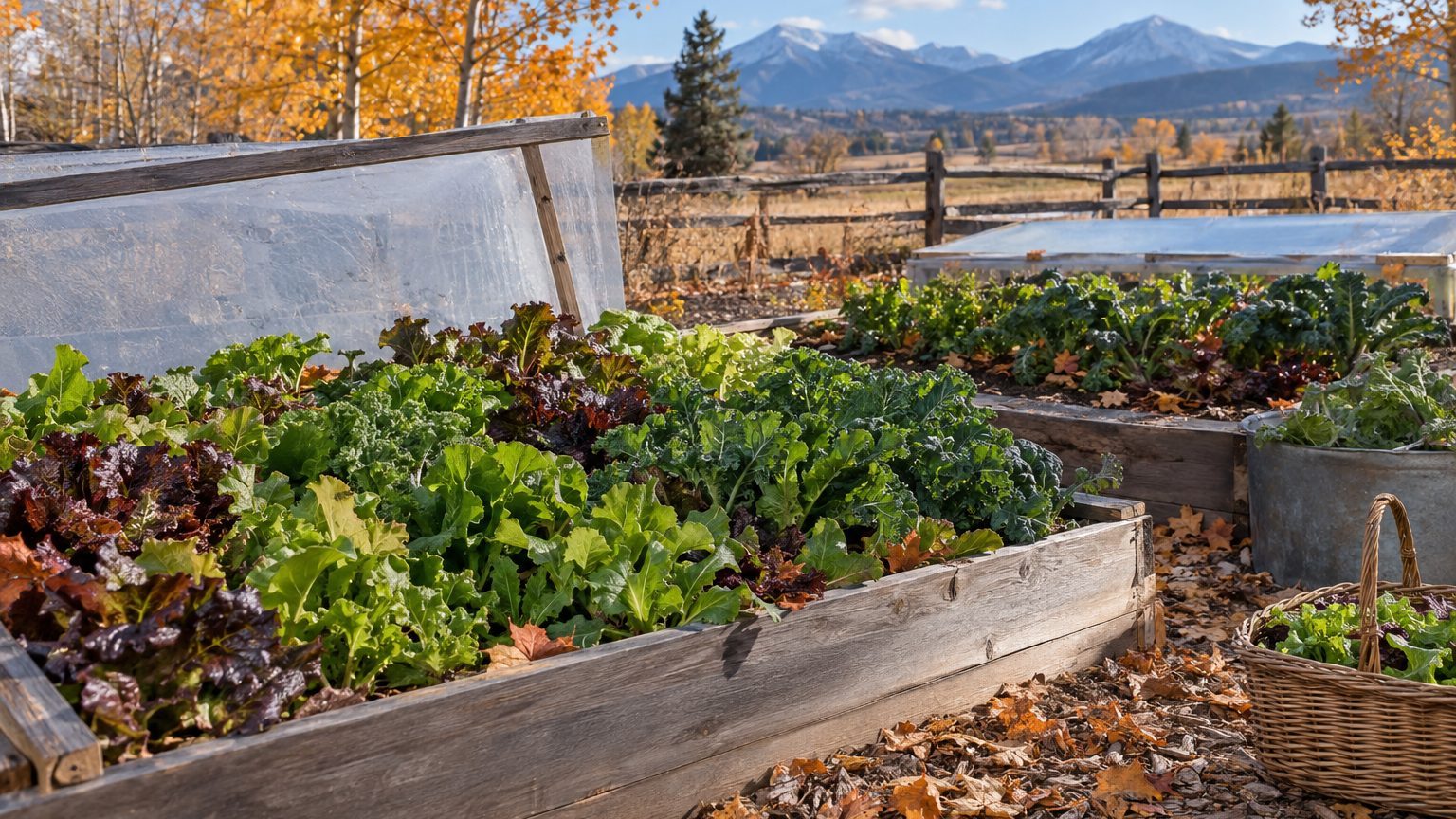

Growing winter salads in Kansas is mostly a fall project, timed backward from the first freeze. Spring dates only anchor the calendar. At the Wichita reference station, the last spring freeze falls between April 4 and April 18, and the first fall freeze between October 23 and November 2. The coldest month averages a nightly low of 22.5 F, so hardy greens can stand uncovered while tender ones need a cover.
When the soil is warm enough in Kansas
Most gardeners asking about dates want a single day, and the frost tables only give a span. NOAA’s 1991-2020 Climate Normals put the last spring 32 F freeze between April 4 and April 18 (the 30-70% probability band), according to NOAA NCEI data. That is a probability, not a promise, so a late freeze can still arrive after the span ends.
Those figures come from an airport weather station in Wichita. Suburban and rural gardens typically see the last spring frost later than that, often by one to two weeks. Check your own county before you mark anything on the calendar.
Frost is also only a proxy. Seeds care about soil, and soil warms after the freeze risk ends, not at the same moment. A bed can be frost-free on paper and still be cold and wet enough that seed sits and rots. A cheap soil thermometer pushed a couple of inches down tells you more than any table. For a spring crop of salad greens, wait until the bed drains and crumbles instead of smearing in your hand.
The winter crop works differently. You are not racing the last frost in spring. You are counting back from the first freeze in fall, and the issue is soil that is too warm, not too cold. Lettuce-type seed tends to sulk when sown into hot ground in late summer. Spinach-type, mâche-type and kale-family salad greens germinate more willingly as the soil cools, which is one reason they anchor a Kansas winter bed.
On varieties, this page talks in types and stops there. The cultivars that have been trialled in Kansas conditions are listed by Kansas State University Research and Extension, and that is the place to get names. Everything here assumes beds, raised boxes and containers, with seed from a catalog or garden center. None of it involves gathering greens from ditches or creek banks.
How long the season lasts here
Subtract the dates and the picture is concrete. Pairing the earliest and latest ends of the two ranges gives a frost-free window of roughly 188 to 212 days. The short end runs from April 18 to October 23, and the long end from April 4 to November 2. That is about 27 to 30 weeks, which is generous.
Remember the caution on those dates, though. A rural or suburban garden that loses one to two weeks at each end could give back a month of that window. Treat 188 to 212 days as the Wichita number and your own county as the one that counts.
What does a window that size allow? Mainly a second sowing, and a third. A gardener can run a spring crop, let the beds rest or hold something heat-tolerant through July, then restart salad in late summer with enough weeks left for plants to reach useful size before the light fades. Succession sowing, a handful of short rows a couple of weeks apart rather than one long one, spreads the risk of a bad week of weather. The Winter Salads: What Grows When Lettuce Will Not overview covers which crops suit that rhythm, and this site’s succession sowing guide explains how to space the sowings.
Transplanting also becomes a real option in a long window. Starting seedlings in cell trays in a shaded spot while the beds are still too hot costs a few weeks and gives you sturdy plants to set out. The root check from moving them is cheap when there is time to recover. In a short-season territory, with only a few frost-free weeks, that check would eat the whole margin and direct sowing would win. Kansas has room to choose.
One limit sits inside all this. The window measures frost-free days, but winter salad growth slows as days shorten, well before the first freeze arrives. The last sowing that can still reach useful size is earlier than the freeze date suggests. Count back from October 23 and treat the answer as a ceiling, not a target.
Heat and water in Kansas
This page carries no verified count of days above 90 F and no summer rainfall total for Kansas, so it quotes none. Borrowing a number from a neighboring state would only look authoritative. What gardeners here know from experience is that midsummer heat is hard on lettuce-type crops, and that the sowing date you pick for fall is partly a way to dodge it. Tender seedlings started in hot, dry ground bolt or fail to sprout.
The cold is what actually sorts the crops. Wichita’s coldest month has a mean daily minimum of 22.5 F, the typical low on a winter night, which means the worst nights run lower. The USDA Plant Hardiness Zone Map 2023 puts the state in zones 5b to 7a. That is a territory-wide range built on a single variable, the average annual extreme minimum, so western and eastern Kansas differ and your county page matters. Against that cold, salad crops fall into three groups:
- Hardy greens such as spinach-type, mâche-type and the tougher kale-family leaves usually stand uncovered, though a cover helps on the coldest nights.
- Middle-hardiness types, including many leaf lettuces, chicories and arugula-type greens, stay in edible condition only with a row cover or cold frame.
- Tender heading lettuces and similar delicate types often cannot manage a Kansas winter at all without real protection, and a cold frame is the minimum.
The first frost does a second job. It sets how late a sowing can still reach useful size before the light fails. Seed started in September at the north end of the state has fewer growing weeks than the same seed started there in August, and the plants stay small and slow all winter instead of catching up.
Water is the quieter problem. Late-summer seedbeds dry out fast, and a seed that germinates and then dries is a wasted row. Keep the surface evenly moist until the seedlings show, shade the bed with cloth if the sun is fierce, and mulch lightly once plants are up. In winter, wind and dry air do more damage than a single cold night, and covers should be vented on mild days so the plants do not sweat. Gardeners comparing climates may find it useful to set this page beside Winter Salads for Kentucky Gardens or Winter Salads for Quebec Gardens. Each state’s cold and water pull the choices in a different direction.
Which winter salads suit Kansas
Choose by type first, and let local trials supply the names. Kansas has a long frost-free window, hot summers, and a winter cold enough to knock out the tender crops, which points toward hardy greens as the backbone of the winter bed and cover-dependent types as the bonus.
| Type | Winter handling in Kansas | Main thing to watch |
|---|---|---|
| Hardy leaf greens (spinach-type, mâche-type, kale-family leaves) | Usually stand uncovered; cover on the coldest nights | Sowing early enough to reach size |
| Middle-hardiness types (many leaf lettuces, chicories, arugula-type) | Need a row cover or cold frame | Moisture trapped under covers |
| Tender heading lettuces | Need real protection, or skip them | Cold damage and slow growth in low light |
Beyond type, the territory’s facts suggest three filters. A long window means you do not have to hunt for the very earliest types, but the fall sowing still needs time to reach size. Hot summers favor types given airflow and some shade at the root during establishment. Eastern Kansas tends to run more humid than the west, so a gardener there should make disease resistance the first criterion, since mildew and leaf spots thrive where leaves stay damp under covers.
Naming a variety here would be a guess, and a guess is worse than silence. Seed catalogs describe varieties from trials in other regions, and a name that thrives in one state can fail in another. The only recommendation that means anything is one tested where you garden. Kansas State University Research and Extension and your county extension office hold that information, and they can say which types have proved their worth in your part of the state.
Common questions
When should I sow winter salads in Kansas?
Count backward from the first fall freeze, which the Wichita reference station puts between October 23 and November 2. Allow for your own county, where fall frost often arrives one to two weeks earlier than at the airport. Sow hardy types first, with enough weeks left to reach useful size before the days shorten.
Is the Wichita frost date my frost date?
Only if you garden near the Wichita airport. Suburban and rural sites typically see the last spring frost later and the first fall frost earlier, often by one to two weeks. Use the figures as a reference, then check your county.
Do I need a cover over winter salads?
For the hardiest greens, often not, since Wichita’s coldest-month mean minimum is 22.5 F. For most lettuces and other middle-hardiness types, yes, a row cover or cold frame is what keeps them in edible condition. Vent it on mild days.
Which varieties should I buy?
This page does not name any, because the right ones depend on where in Kansas you garden. Ask your county office or Kansas State University Research and Extension for the varieties trialled locally, and compare them with what your seed catalog lists. Zones in the state run from 5b to 7a, so a recommendation from the other end of Kansas may not apply to you.