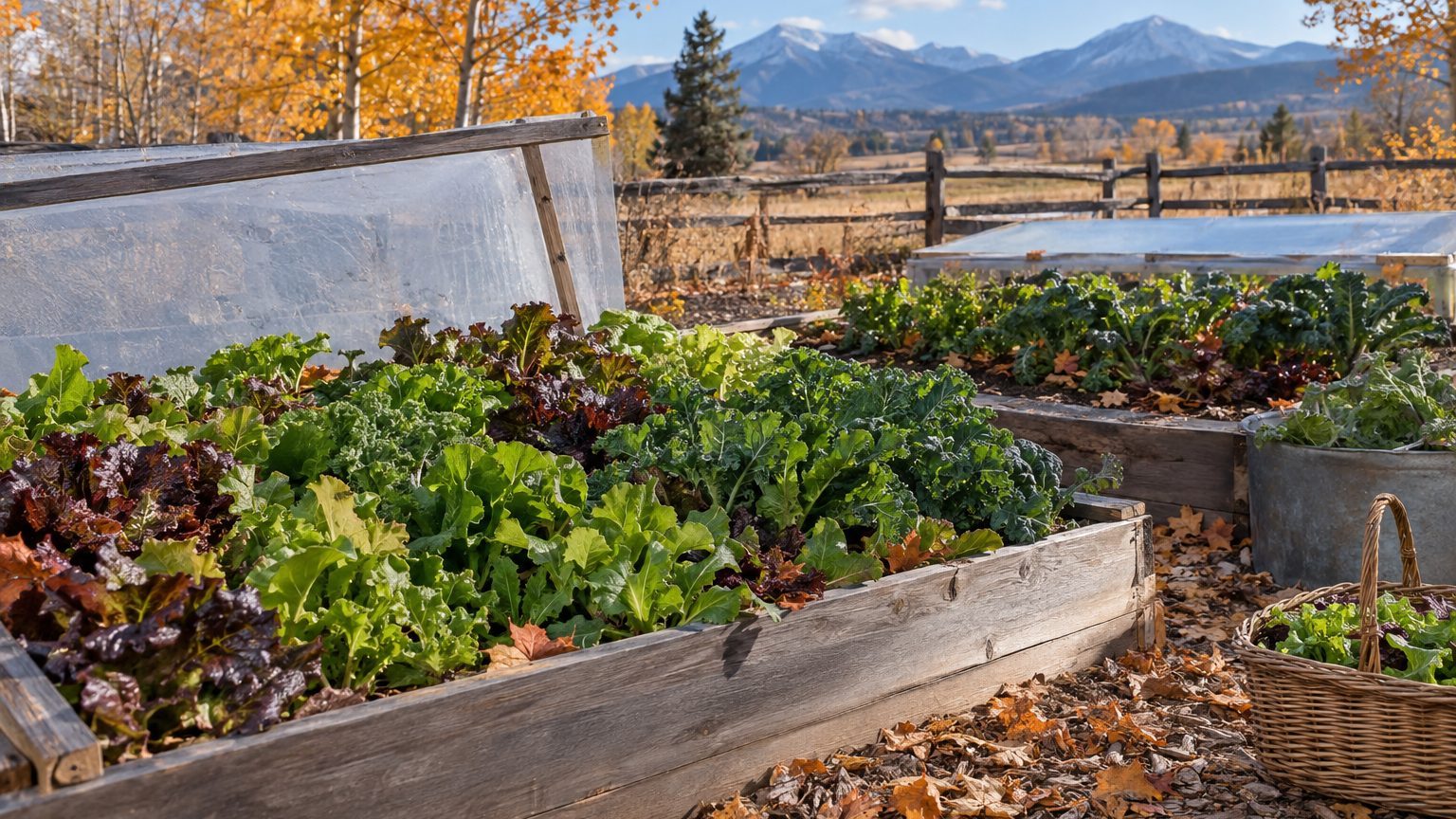

Texas winter salads are a fall crop that you cut through the cool months and into early spring. The sowing happens as summer heat finally breaks, and the harvest comes when little else in the garden is growing. Sow your first row when nights have cooled and the bed no longer holds afternoon heat, then look up your own county’s freeze dates before you plan the rest.
When the soil is warm enough in Texas

NOAA’s 1991-2020 climate normals put the last spring 32F freeze at Houston’s Bush Intercontinental station (IAH) between February 4 and March 1, using the 30 to 70 percent probability band. That is a probability, not a promise. It is also the mild Gulf end of the state. Texas spans a wide range of USDA hardiness zones, the Panhandle freezes months earlier in fall and months later in spring, and Hill Country and North Texas differ again. Even within Houston, Hobby airport runs about two weeks milder than IAH. Treat these dates as a Houston reference point and not as a Texas calendar.
Frost is only a proxy. What a salad seed feels is the soil, and the soil follows its own schedule. In Texas it matters twice a year.
Fall sowing: wait for the bed to cool
Summer leaves the ground hot long after the air feels bearable. Lettuce and spinach seed sown into hot soil germinates poorly or not at all, so the fall question is when the bed has cooled, not when frost arrives. A soil thermometer pushed in to seed depth in the morning tells you more than the calendar does. Ask Texas A&M AgriLife Extension for the germination limits of each crop you plan to grow. Shade cloth over the row and a light watering of the bed before sowing both pull the temperature down at the surface.
Late-winter sowing: wait for the soil to catch up
The soil warms after the frost risk ends, not with it. Seed sown in cold, saturated ground in late winter sits and rots, even if the air has already turned mild. In the Houston area the last-freeze window of February 4 to March 1 is your cue to start watching the soil, not to sow blindly on the first warm weekend. Later sowings also run out of time faster than you expect. Rising heat pushes lettuce and arugula to flower, and the harvest ends.
Everything is grown from packet seed in raised beds, in-ground rows or containers. For the crop as a whole, see Winter Salads: What Grows When Lettuce Will Not.
How long the season lasts here
Both frost dates come from the same NOAA 1991-2020 normals for the IAH station. The last spring freeze falls between February 4 and March 1. The first fall freeze falls between December 1 and December 19. Count from the latest spring date (March 1) to the earliest fall date (December 1) and you get about 275 days. Count from the earliest spring date (February 4) to the latest fall date (December 19) and you get about 318 days. The frost-free stretch at this station is therefore roughly 275 to 318 days, or nine to ten and a half months. Those are outer bounds built from a range, so your own year will land somewhere inside them.
What that length allows
A window this long means you are not making one bet. You can sow a first round as the fall soil cools and follow it with staggered rounds while the weather stays cool. If a cold snap flattens one planting, the next is already in the ground. Our succession sowing guide gives the spacing between rounds, so use it to set your own rhythm.
The window does not all belong to salad, though. The middle of it is summer, and lettuce, spinach and their relatives cannot use that stretch. The useful time is two shoulders, one running from the fall cool-down through winter, the other in late winter before spring heat arrives. Plan around those, not around the total.
A long window also changes the transplanting question. Every transplant carries a root check, because seedlings pulled from a cell tray stall for a while before they grow again. Where the window is generous you can afford to sow direct and let plants establish undisturbed. Transplanting earns its place in one situation. Early fall soil is still too hot for seed, so you start trays in a cool, shaded spot and move the seedlings out once the bed has cooled.
Neighboring Gulf states share much of this rhythm, and our page on Winter Salads for Louisiana Gardens shows how the pattern carries east. A state with a shorter season works differently, because the first sowing does most of the work. Winter Salads for Maryland Gardens shows how that changes the calendar.
The Houston figures do not travel across the state. In the Panhandle the frost-free stretch is markedly shorter, and the two shoulders shrink with it. Get your own dates from the nearest weather station or from your county extension office before you copy anyone’s schedule, this one included.
Heat and water in Texas

NOAA’s climate normals for your nearest station publish both. What you need to know is qualitative. Gulf summers are long, hot and humid, and every winter salad sits them out.
Heat decides the edges of the season
Heat sets both ends of the salad season. It delays the fall sowing until the bed cools, and it ends the spring crop when plants bolt. A warm spell in February can start flower stalks in lettuce well before the calendar says spring. Cut the heart of the row early when that happens and sow the next round.
Cold decides what stands uncovered
NOAA’s 1991-2020 normals put the mean daily minimum of Houston’s coldest month at 43.7 F. That is an average and not a record low. Most winter nights there sit above freezing, which is comfortable for hardy greens. The first-freeze window of December 1 to December 19 shows that freezing nights do arrive, and a single hard one matters more than the average.
The USDA Plant Hardiness Zone Map (2023) spreads Texas across zones 6a to 10a, so the picture changes sharply as you leave the coast. Sort your crops into three groups:
- Stand uncovered through ordinary freezes: spinach, kale, arugula, mizuna and mustard greens.
- Need a row cover in a hard freeze to stay edible: head and loose-leaf lettuce, endive and other tender leaves.
- Cannot manage at all: tender warm-season herbs such as basil, which belong in the summer garden.
In colder parts of Texas, even the first group wants cover during the deepest weeks, so read those categories as a Houston baseline.
The first fall freeze also decides how late a sowing can still pay off. At IAH that window runs from December 1 to December 19, and day length falls toward the solstice, so growth slows as it passes. A sowing made close to that date gives you small leaves for cutting, not full heads. Count back from your own first-freeze window and sow early enough that plants have leaf before the light fails.
Water and humidity
Humid Gulf air favors mildew and leaf rot, and heavy rain can pool on flat ground. Raised beds drain better, and drip lines or a slow soaker keep leaves dry. Water in the morning so foliage dries before evening. A thin mulch over the row holds the soil cooler in early fall, but pull it back from the stems so air can move around them.
Which winter salads suit Texas
Choose by type, and rank the criteria in this order for the Houston area: disease resistance first, then tolerance of warm spells, then cold hardiness. Humidity is the steady pressure, warm spells are the recurring one, and hard freezes are the occasional one.
| Type | Cold | Warm spells | Notes for humid beds |
|---|---|---|---|
| Spinach | Stands most freezes | Bolts fast | Sow early, cut young |
| Kale | Very hardy | Holds better than lettuce | Watch leaf spots, keep foliage dry |
| Arugula | Hardy | Turns sharp and bolts | Quick to cut, sow often |
| Mizuna and mustard greens | Hardy | Moderate | Good baby-leaf choice |
| Loose-leaf lettuce | Needs cover in hard freezes | Bolts in warm spells | Give airflow, cut outer leaves |
| Endive and escarole | Fair | Better than head lettuce | Tight hearts hold moisture |
Loose-leaf types suit humid beds better than tight heads. Their open shape lets air move through, and you can harvest outer leaves without lifting the whole plant. Airflow and a little shade at the root (from taller neighbors or a low cloth) help every type when spring heat builds.
Why this page names no varieties
Texas covers zones from 6a to 10a and several distinct climates. A variety that performs well near Houston can fail in the Panhandle, and a name pulled from a general catalogue does not tell you which. Trials run where you live are the only recommendation worth acting on. Texas A&M AgriLife Extension and your county office can point you to varieties that have been tested nearby, including which ones resist local mildew and bolting. Take that list to the seed rack, then use the type table above to check that each choice fits the part of winter you are sowing for.
Common questions
Can I leave salad greens uncovered during a Texas freeze?
Hardy types such as spinach, kale, arugula, mizuna and mustard greens generally take ordinary freezes without cover. Tender lettuces are the exception, and they need a light row cover on a hard-freeze night. Remove the cover on mild days so the plants do not overheat under it.
Is it too late to sow in December?
In the Houston area the first fall freeze falls between December 1 and December 19 (NOAA’s 1991-2020 normals for IAH), and growth is slow as days shorten. A December sowing can still give you small baby leaves, especially of hardy greens, but not full heads. Sow earlier if you want a proper harvest.
Does this calendar work in Dallas, San Antonio or Lubbock?
No. These dates come from a Houston station at the mild Gulf end of the state. North Texas, Hill Country and the Panhandle each freeze on different dates, and the Panhandle sits in a much colder hardiness zone. Get your local dates from your county extension office and count from those.
Can I grow Winter Salads in containers on a patio?
Yes, and containers suit small harvests of loose-leaf lettuce and baby greens. Pots also change temperature faster than ground soil, freezing harder on cold nights and drying quickly on warm afternoons. Move them against a wall or under cover before a hard freeze, and check moisture more often than you would in a bed.