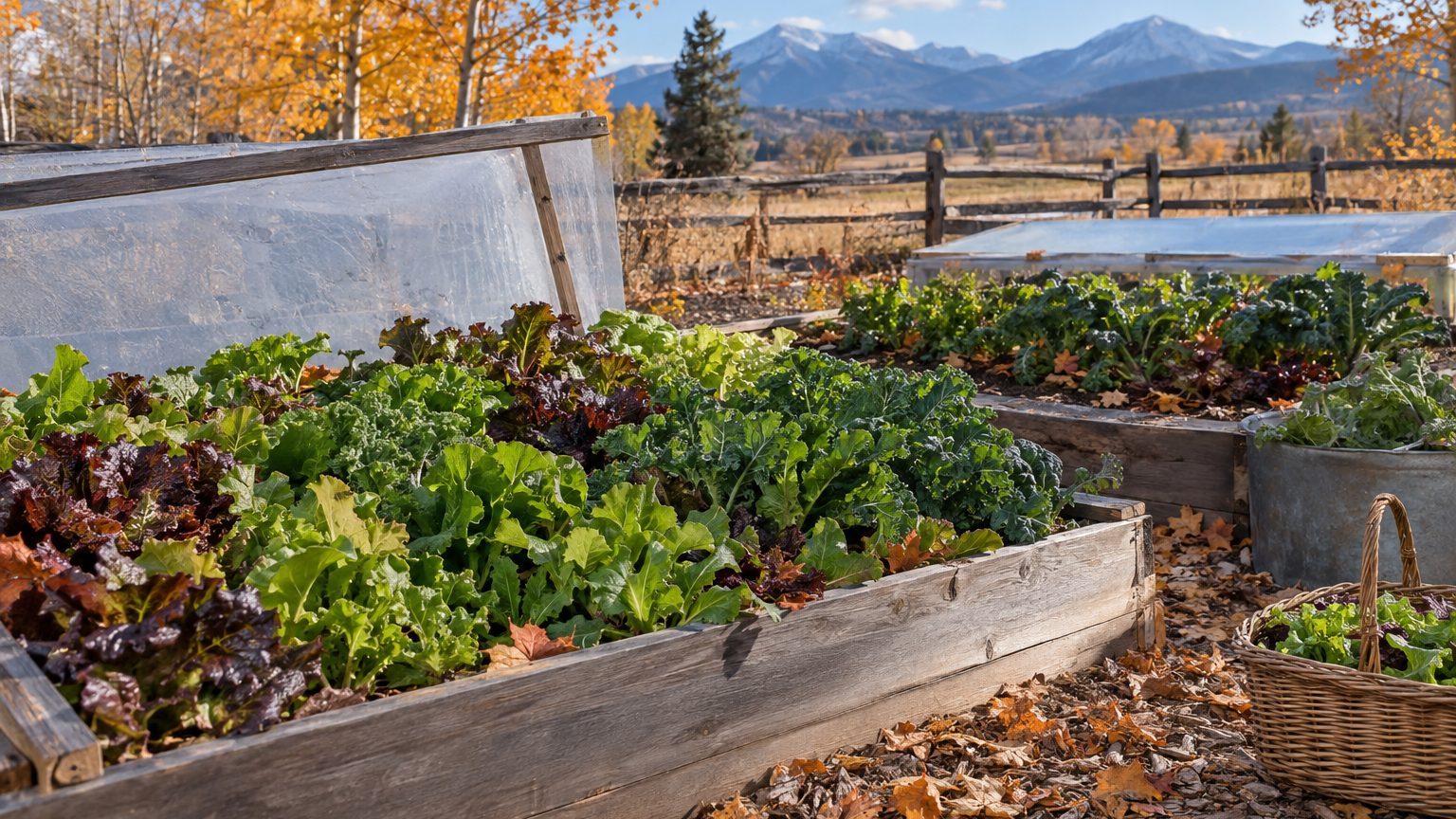

Wyoming gardeners can sow winter salad greens outdoors once the soil, not just the air, has warmed after the last spring freeze, then sow again in late summer for fall and winter cutting. The verified frost window runs roughly 129 to 151 days. The winter cold, not summer heat, decides which greens survive, and a cover is part of the plan, not an upgrade.
When the soil is warm enough in Wyoming
Start with the date everyone asks about. NOAA’s 1991-2020 Climate Normals, using station USW00024018, put the last spring 32°F freeze between May 7 and May 18 (that is the 30-70% probability band). Treat it as odds, not a promise: some years a freeze arrives after the later date.
That date is a proxy, and a rough one. Winter salads wait for warm soil, and soil warms after the frost risk ends, not alongside it. Seed pushed into cold ground sits, germinates unevenly, or rots. A cheap soil thermometer, read in the morning at seed depth, tells you more than the calendar does. A bed that has shed its frost but still reads cold at dawn is not ready, however pleasant the afternoon feels.
Elevation and zone change the picture
The frost dates above describe one reference station, and Wyoming is not one place. At 6,000 feet the frost-free stretch runs about 130 days, and at higher elevations frost is possible in any month. That is why season extension is not optional here. Row cover, low tunnels, cold frames and wind protection are what make the numbers workable.
The USDA Plant Hardiness Zone Map (2023 edition, built on the 1991-2020 normals) places Wyoming across zones 3a to 6a. That is a wide range, and it measures only the average annual extreme minimum temperature. Your own garden could sit several zones away from a gardener across the state, so read the range as a reminder to rely on local records.
This page talks in types of salad crop, not variety names. Which specific varieties have been trialed where you live is exactly what University of Wyoming Extension can tell you, and a name from a catalog or another state does not carry that weight. For the broader picture of what grows when ordinary lettuce stalls, see Winter Salads: What Grows When Lettuce Will Not.
One note on scope. Everything here is about greens grown in beds and containers. Wild plants are a different subject, and nothing on this page is advice to gather leaves from ditches, streams or pastures.
How long the season lasts here
The same NOAA normals give a first fall freeze between September 24 and October 5, again as the 30-70% band. Subtract each end from its counterpart and the window narrows or widens with the luck of the year. Counting from the later spring date to the earlier fall date gives 129 days. Counting from the earlier spring date to the later fall date gives 151. The roughly 130 frost-free days quoted for 6,000 feet sits at the short end of that range.
So what does a window of about four to five months allow? Not much slack. It permits one spring sowing of quick leafy crops and a second sowing in late summer aimed at fall and winter cutting. It does not permit dawdling, and it does not forgive a first sowing lost to a late freeze. In the shortest years the late-summer sowing is the one that matters, since it has to reach cutting size before the light fades and the freezes begin.
Counting backward from the first fall freeze works better than counting forward from spring. Read the seed packet’s days-to-maturity for the type you grow, add a margin for the slower growth of shortening days, and mark the last sowing date on the calendar. The extension service can confirm those dates for your county. The succession sowing guide on this site walks through how to stagger those sowings so the harvest does not arrive all at once and then stop.
A short window also changes the transplant question. Starting seedlings indoors or buying them gains weeks in a season this tight, but only if the roots are healthy when they go in. Before planting, slide a transplant out of its cell and look. White roots reaching the edge are fine. A dense, circling mat sulks for weeks, and in a 129-day year those weeks are the whole margin. Mâche, claytonia and spinach are usually better sown directly where they will grow, since they resent root disturbance more than lettuce does.
Gardeners in the southeast corner of the state, closer to Nebraska’s conditions, can compare notes with Winter Salads for Nebraska Gardens, where the season and the choices differ. For a humid contrast to Wyoming’s high, cold ground, Winter Salads for Connecticut Gardens shows how much disease pressure changes the plan.
Heat and water in Wyoming
The verified figures behind this page cover frost and winter cold. They do not include a count of days above 90°F or a summer rainfall total, so neither is quoted here. A reference station’s count would not describe your garden anyway, since heat swings with elevation and exposure. What the verified record does show is that high-elevation gardens can see frost in any month. At those sites the cold sets the terms, and summer heat is a smaller worry.
Where summers do run cool and damp, as in some mountain valleys, the trouble looks different from the hot-climate version. Crops ripen slowly, leaves stay wet longer, and mildew and other leaf diseases get a foothold. Airflow between plants, watering at the soil line in the morning, and not crowding rows do more good than any shading. Where summers run dry and bright, the issue is simply keeping the seedbed evenly moist so late-summer sowings come up together.
Winter is the real filter. At the Cheyenne reference station, the mean daily minimum of the coldest month is 18.1°F. That is an average night, not a record low, so many nights are colder. It is the number that separates what stands uncovered from what needs a cover to stay edible, and from what cannot manage at all.
| Type of salad crop | Left uncovered | Under a cover |
|---|---|---|
| Tender lettuces | Cannot manage the cold | Fall cutting only; not a reliable winter crop |
| Spinach | Survives, but leaves get battered by wind and cold | Stays in cutting condition far longer |
| Mâche (corn salad) and claytonia | Among the hardiest, but still weathered | Best chance of clean leaves through the cold months |
| Hardy mustards and kale | Stand up better than lettuce, but fade as nights drop | Remain usable well past the first freezes |
Read the table as a rough ranking, not a guarantee. Surviving a night at 18°F and being worth eating are different things, and wind can strip leaves faster than temperature alone. A low tunnel with its edges anchored against the wind beats a loosely draped sheet.
The first frost also sets a deadline. A sowing that goes in too late will not reach useful size before the days shorten, and growth slows to a crawl once light drops. After that point the crop mostly holds in place and you harvest what is already there. That is why the first fall freeze, September 24 to October 5, matters more to timing than any summer figure.
Which winter salads suit Wyoming
A short season favors the earliest, fastest types, the leafy greens that reach cutting size quickly and tolerate cool nights. Spinach, mâche, claytonia, hardy mustards and the quicker kales fit that description. Cold-hardiness comes second only to speed, since the average coldest-month night of 18.1°F removes tender lettuces from the winter list.
Where summers turn out cool and damp, disease resistance moves up the list. Look for descriptions that mention mildew tolerance, and give every type airflow at the root and space between plants. Where it runs dry and sunny, bolt resistance and some afternoon shade for late-summer sowings matter more. Most Wyoming gardeners will land somewhere between those poles, depending on elevation.
No variety names appear on this page, and that is deliberate. A variety that thrives at 4,000 feet may sulk at 7,000, and a catalog’s glowing description rarely says where it was grown. The only recommendation worth trusting comes from trials run close to your garden. University of Wyoming Extension and your county office are the places to ask, and they can also tell you which cover materials hold up against local wind.
For a first winter, a reasonable plan is modest. Choose two or three hardy types, sow them in a late-summer window counted back from the first freeze, protect them with a tunnel or cold frame before the first hard nights, and keep notes on dates. One season of your own records will do more than any generic chart, mine included.
Common questions
When can I sow winter salad greens outdoors in Wyoming?
Not before the soil has warmed, which comes after the last spring freeze. NOAA’s 1991-2020 normals for station USW00024018 put that freeze between May 7 and May 18. Check the soil with a thermometer, and confirm local timing with the state extension service, since elevation shifts everything.
How long is the growing window?
Using the verified frost dates, between about 129 and 151 days. At 6,000 feet, expect roughly 130 frost-free days, and at higher elevations frost is possible in any month.
Will winter salads survive without a cover?
Some hardy types may survive, but they will not stay in good eating condition for long. The mean daily minimum of the coldest month is 18.1°F at the Cheyenne reference station, and tender lettuces cannot manage that. Plan on a low tunnel or cold frame.
Which varieties should I buy?
Ask University of Wyoming Extension for the varieties trialed near you. The state spans hardiness zones 3a to 6a on the USDA map, so what works in one valley can fail in another, and a recommendation from outside your area is little better than a guess.