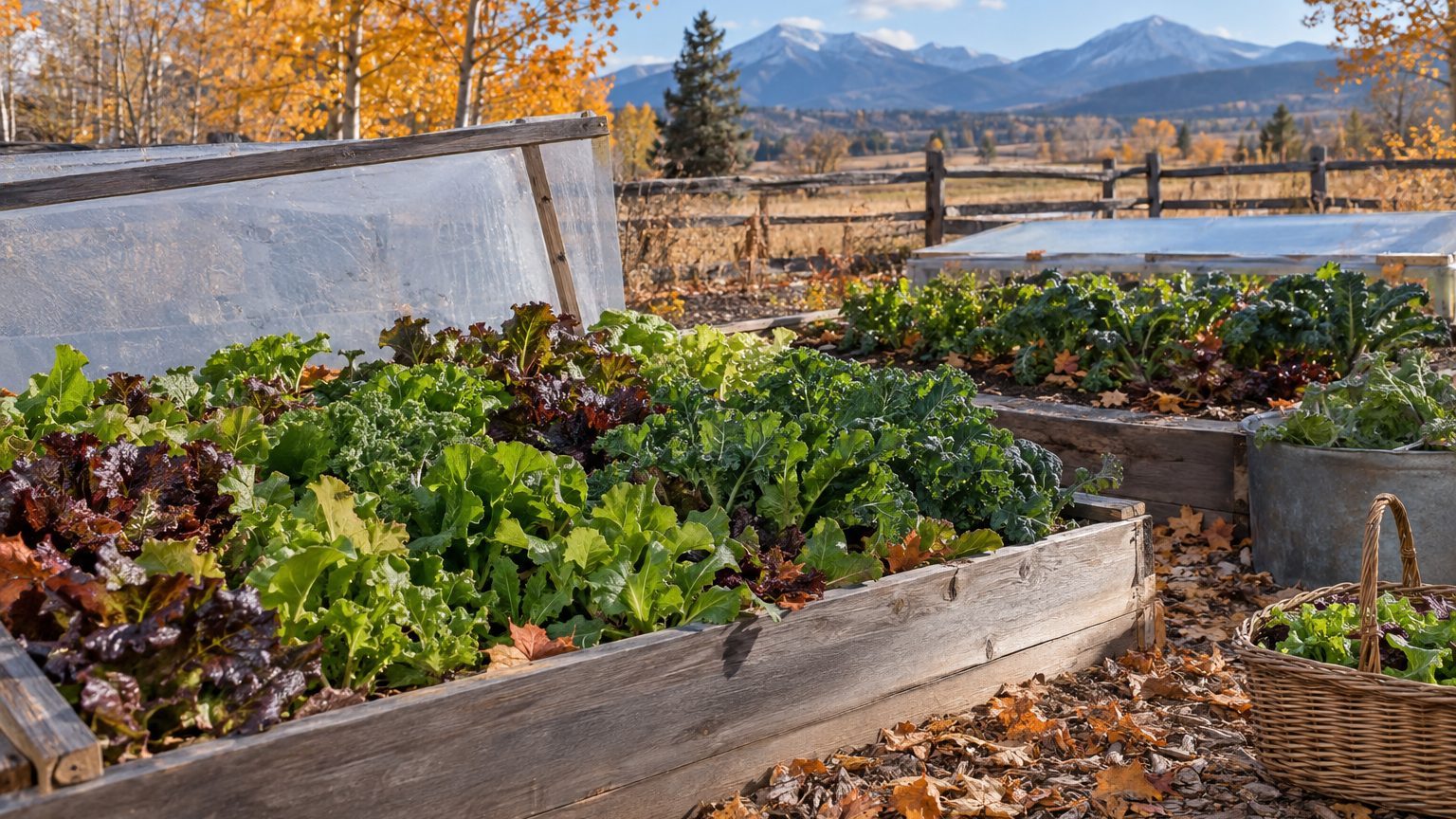

For most Nebraska gardeners, growing winter salads comes down to two dates and one number. The last spring frost band at the reference station runs April 12 to April 23, the first fall frost band October 15 to October 26, and the coldest month averages a nightly low of 15.2°F. Sowing is timed from the fall date, protection is set by the cold, and your own county shifts every figure.
When the soil is warm enough in Nebraska
The date everyone asks about is April 12 to April 23. That is the last spring frost band from NOAA’s 1991-2020 U.S. Climate Normals, built on the 30-70% probability band for a 32°F freeze at the reference station (Omaha). A frost date is a probability, not a promise, and a hard freeze after the band has happened in plenty of Nebraska springs.
The band is also an airport figure. Suburban and rural gardens typically see the last spring frost later than the reference city, often by one to two weeks, and more at elevation. Anyone in the Panhandle or on open acreage outside town should add that margin and then check county-level records before committing seed.
Frost is a stand-in for what the crop needs, which is warm soil. Air and soil run on different clocks. Soil holds winter’s cold long after the last freezing night, and it warms only after the frost risk ends, not with it. Heavy, wet clay (common across much of eastern Nebraska) lags further behind. A raised bed or a container drains faster and warms sooner, which is one reason this site grows salad in beds and containers. Everything here starts from purchased seed and stays in a bed, a pot, or a cold frame. Gathering salad greens from ditches, creeks, or fields is outside what these pages cover.
Why the spring date matters less than you think
A true winter salad is sown in late summer or early fall and cut through the cold months, so the calendar that governs it runs backward from October’s frost. The April band still matters for two things. It starts the clock on a spring sowing of cool-season greens, and it tells you how many weeks the whole season really has (more on that below).
Warm soil turns out to be a problem in August as much as in April. Lettuce seed in particular can stall in hot ground, so late-summer sowings do better with a shaded bed and steady moisture until seedlings emerge. A cheap soil thermometer settles the question better than any date. The seed packet lists a minimum germination temperature for each crop, and the thermometer tells you whether your bed has reached it.
Cultivar names are deliberately absent from this page. The varieties trialled in Nebraska soil are documented by University of Nebraska–Lincoln Extension, and that is where to look. The parent guide, Winter Salads: What Grows When Lettuce Will Not, covers the crops themselves in more general terms.
How long the season lasts here
Take the two frost bands from the same NOAA normals. If the last spring frost falls on April 12 and the first fall frost on October 15, you have roughly 186 days between them (the same figure comes out of April 23 and October 26). The extremes of the two bands stretch it to 197 days or squeeze it to 175. Call it about six months of frost-free growing at the reference station.
Now apply the airport caution. If your garden loses one to two weeks at each end, the window shrinks by two to four weeks. That makes a Nebraska rural plot’s season noticeably shorter than the Omaha figure, and the difference lands exactly where winter salads need it most, in autumn.
The length of the window decides what you can do with it. About six months allows a spring sowing of cool-season greens, a gap in the hottest weather, and then a second round in late summer for the cold months. That is succession sowing: staggered plantings so one crop is finishing when the next is ready, rather than one big row that bolts all at once. The succession sowing guide on this site covers the spacing of those rounds.
A shorter window changes the transplant question. When the first sowing is the only one, a seedling that stalls from root disturbance costs you a full cycle you cannot repeat. Direct sowing avoids the root check. Transplants make sense only when you can afford a setback or when the bed will not be ready for weeks. Gardeners in the upper end of the cold range, where the season is tighter, should lean toward direct sowing and fast types.
Colder states face a similar squeeze, so it is worth comparing notes. Winter Salads for Wisconsin Gardens shows how a northern territory handles an even tighter margin, while Winter Salads for Connecticut Gardens shows a coastal neighbor with different weather problems.
Heat and water in Nebraska
This page’s verified figures do not include a count of days above 90°F or a summer rainfall total, so it gives neither. Guessing either would mislead you, and the figure that decides this crop is a different one anyway. At the Omaha reference station, the coldest month has a mean daily minimum of 15.2°F. That is an average night, not the record low, which means plenty of nights run colder. The USDA Plant Hardiness Zone Map (2023) puts Nebraska at 4a to 5b. That is a territory-wide range based only on the average annual extreme minimum, so Omaha, the Panhandle, and the southwest corner differ.
Heat and water still shape the late-summer sowing. Seedlings emerging in hot weather need shade at the root and a bed that never dries out, so mulch and a drip line or soaker hose pay off. Rainfall varies across the state, so treat water as something you supply rather than something you wait for. When damp, still weather arrives, crowded beds invite mildew and slow ripening. Spacing for airflow is the cheapest defense, and it names the practice without needing any product.
The cold does the sorting. Roughly, a 15.2°F average low splits the salad crops three ways:
- Stand uncovered: the hardiest leafy types, which can sit through a typical Nebraska winter, though a severe snap may still damage the outer leaves.
- Need a cover to stay edible: many mustards, chicories, and arugula, which survive but turn tough, bitter, or ragged without a row cover, low tunnel, or cold frame.
- Cannot manage: most tender lettuces, which give out first once temperatures drop well below freezing, even under light cover.
These are general tendencies, not a promise for your yard. A south-facing wall, a windbreak, or a cold frame set against the house can move a bed up a tier, and an exposed prairie lot can move it down. Wind matters as much as temperature, because a cover that holds up in still air can shred in a Nebraska gale. Anchor it.
The first frost, October 15 to October 26 at the reference station (earlier for most rural gardens), sets how late a sowing can still count. Light fades quickly in fall, and growth slows long before the hard freezes arrive. A sowing that has not reached useful size by then will mostly sit and wait. The aim is to have plants near harvest size going into the cold, and then to cut from them through winter as the plant holds more than it grows.
Which winter salads suit Nebraska
A tighter season favors the earliest types, the ones cut young as baby leaf rather than grown to full heads. A warm late-summer start favors types you can give airflow and shade at the root. Damp autumn spells make disease resistance the first criterion on the seed packet. Nebraska’s verified figures do not show a humid climate, but they do show a cold one, so cold tolerance leads the list, with resistance close behind.
| Type | Cold behavior in Nebraska | Cover |
|---|---|---|
| Spinach and corn salad | Among the hardiest; hold through most winters | Often none; cover for severe snaps |
| Hardy kale and mustard greens | Tough in cold, flavor often improves | Helpful in the coldest stretches |
| Chicories (endive, escarole, radicchio) | Moderate; leaf edges damage in hard freezes | Cover recommended |
| Arugula | Quick to grow, less reliable in deep cold | Cover recommended |
| Lettuce (loose-leaf) | First to fail as temperatures fall | Cold frame or tunnel needed |
Read the table as a starting point. A 15.2°F average low is cold enough that any type below the first row is a gamble without cover, and the gamble improves with a cold frame, not a better variety.
This page names no cultivars, and that is the right call. The varieties that perform in Nebraska are the ones trialled in Nebraska, in your soil type and your wind, and this page does not have those trial results. A name pulled from a seed catalog or another state’s list would be a guess dressed up as advice. Seasoned gardeners tend to notice fast when a recommendation comes from somewhere else. University of Nebraska–Lincoln Extension publishes local guidance, and county offices often know which varieties came through the last hard winter.
Bring three questions to that conversation: which types hold in your county, which varieties show mildew resistance, and which resist bolting if you sow late in the summer heat. Then set your sowing dates against your own county’s frost record rather than the airport’s.
Common questions
Can I use April 12 to April 23 as my sowing date?
Only as a rough guide. It is the reference-station last spring frost band from NOAA’s 1991-2020 normals. Suburban and rural gardens typically frost later in spring and earlier in fall, often by one to two weeks. Check your county’s records and watch soil temperature, not the calendar.
Will winter salads survive Nebraska winters uncovered?
The hardiest leafy types often do, but the coldest month averages a nightly low of 15.2°F at Omaha, so many crops need a row cover, low tunnel, or cold frame to stay edible. Tender lettuces generally cannot manage without one.
How long is the Nebraska growing window?
About 186 days between the paired frost dates (April 12 to October 15, or April 23 to October 26), within a 175 to 197 day range. Rural gardens often lose two to four weeks of that, so plan for a shorter season than the reference figure.
Which varieties should I plant?
Ask University of Nebraska–Lincoln Extension for the varieties trialled in your part of the state. Local trial results beat any list assembled elsewhere, and this page deliberately names none.