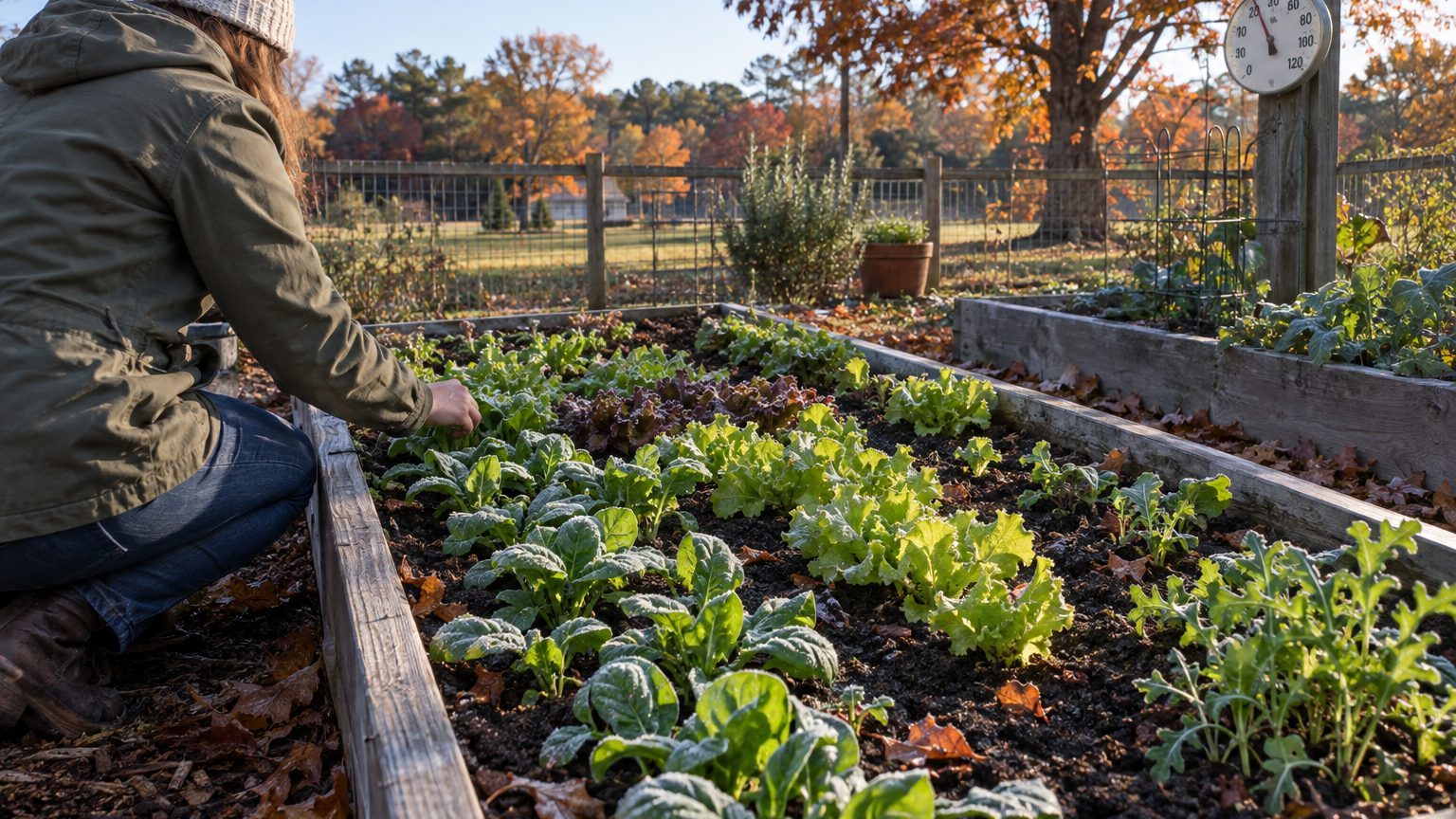

Sow winter salads in Alabama in early fall, early enough that seedlings are established before the first fall frost window of November 2 to November 16. A second, shorter sowing can follow in late winter, ahead of spring warmth. Those dates come from a single airport weather station, so treat them as a starting point for your own yard, not a state-wide deadline.
The short answer for Alabama
The reference figures are a last spring frost between March 19 and April 3, and a first fall frost between November 2 and November 16. Both come from NOAA NCEI 1991-2020 Climate Normals for station USW00003856. What they measure is a probability: the 30 to 70 percent band of odds for a 32°F freeze on those dates. They are not the earliest or latest a freeze can happen, which is why a late-March cold snap can still catch an Alabama garden in a mild year.
| Reference figure | Value | What it means for salads |
|---|---|---|
| Last spring 32°F freeze (30-70% band) | March 19 to April 3 | Late-winter sowings go in before and around this window; later sowings run into warming weather |
| First fall 32°F freeze (30-70% band) | November 2 to November 16 | Fall sowings need several weeks of growth before this window opens |
| Mean daily minimum, coldest month | 33.1°F (Huntsville reference) | The average winter night sits just above freezing, so hardy salad crops can stay in the ground |
That last row matters more than it looks. The 33.1°F figure is the average low of the coldest month, not a record and not a monthly average. It says the typical winter night here hovers right around the freezing line. Hardy greens shrug that off. Tender ones, such as the softest baby lettuces, will take damage on the nights that dip below it.
So the working window runs backward from the fall frost band. Count several weeks back from November 2 and that is when seedlings should already be up and growing, which puts the real sowing in early fall, once the summer heat has actually broken. Calendar dates only get you in the neighborhood. The heat decides the rest.
Your own garden likely differs from the airport. Suburban and rural gardens typically see the last spring frost later and the first fall frost earlier than the reference-city figures, often by one to two weeks, and more at elevation. If you garden outside town, pull your fall sowing earlier by that margin. The choice of type matters too, and The Best Winter Salads for Alabama sorts that out by how well each kind handles the swing between warm autumn days and freezing nights.
What will not work here
Sowing by the calendar alone fails first. Alabama fall heat can linger well after the date a cooler state would call safe. Lettuce seed sown into warm soil germinates poorly or sulks, and the seedlings that do survive tend to bolt early. If September feels like summer, the seed packet date does not matter. Wait for the cooler soil.
Slow crops sown late fail next. The first fall frost band begins on November 2, and days keep shortening after that. A head-forming type started in late October never gets the growth it needs before the shortest days slow everything down. It sits as a small seedling through winter and then bolts when spring warms. Quick cut-and-come-again leaves, like baby greens and mustards, are the better fit for a late start. Slower, heading types belong in the early part of the fall window or in a cold frame.
Dense, unthinned rows fail in a different way. Alabama winters are humid and often damp, and cold wet foliage packed shoulder to shoulder invites mildew and rot. Space plants wider than the seed packet’s tightest suggestion, thin early, and water in the morning so leaves can dry before night. A thick mat of greens that looks great in November can turn slimy by January.
Trusting an average as a guarantee also fails. A coldest-month mean minimum of 33.1°F tells you nothing about the single night that drops well below it. In the colder northern parts of the state, a hard freeze can flatten tender seedlings that a Gulf-side garden would never see. A roll of row cover is cheap insurance against the one bad night.
Finally, don’t expect salads to carry on into May. With the last spring freeze arriving between March 19 and April 3, warm weather follows fast, and spinach, lettuce and arugula all bolt in rising heat and long days. The Alabama winter salad season is a fall-to-early-spring run, not a year-round one. The plants that handle the whole stretch best are covered on the hub page, Winter Salads for Alabama Gardens.
What changes across Alabama
Alabama is not one garden. The USDA Plant Hardiness Zone Map 2023, built on 1991-2020 normals, places the state across zones 7a to 9a, five half-zone steps from the cooler north to the warmer Gulf coast. There is no single answer for the whole state, and any page that gives you one date is averaging gardens that behave differently.
If you garden in the north or at elevation
The reference-city frost dates run optimistic for you. Expect the first fall freeze to arrive earlier and the last spring one to linger later, by one to two weeks or more at altitude. Sow earlier in fall so plants reach a hardy size before the cold arrives. Keep row cover or a low tunnel on hand through winter, and hold spring sowings back until the last freeze has truly passed.
If you garden toward the south
Freezes arrive later and are fewer, so the fall window stays open longer. The catch is heat: warm autumn soil can push your useful start date later, not earlier. Salad crops may grow almost straight through winter, but the spring heat also arrives sooner, so the end of the season comes sooner too.
One caution on the zone number. It rests on a single variable, the average annual extreme minimum temperature, so it tells you what survives the cold, not when frost happens. Two gardens in the same zone can have frost dates weeks apart. To find where your property falls, look it up on the USDA Plant Hardiness Zone Map yourself rather than assuming, and then compare it with a frost date for your county.
Where to check this for your own county
Your best next stop is the Alabama Cooperative Extension System, the state’s land-grant extension service. County offices exist to answer exactly this question for local soil, local frost and local pests.
Look for two things there. First, a planting calendar written for vegetables in your county or region, ideally one that lists fall and late-winter windows for leafy greens. Second, any variety trial results from your area, since a type that thrived in a research plot a county or two over tells you more than any national seed catalog.
Be clear about what this page is: a state-level reference built on NOAA climate normals from one station. The verified facts behind it do not include an Alabama extension winter-salad calendar, so none is quoted here. A county recommendation beats a state one every time, and this page is the state one. When the extension office and these dates disagree, go with the extension office.
Skip calendars from other states, too. Neighboring-state schedules and lawn-care calendars are written for different climates and different crops. They won’t transfer to a salad bed in your county.
Checking this against your own garden
Your own observations outrank every date above. Three are worth watching, and none needs equipment.
Soil warmth by feel. Press your palm flat on bare soil in the morning. If it feels warm like a sun-heated stone, lettuce seed will struggle. If it feels cool and slightly damp, the bed is ready. Compare a sunny bed with a shaded one: the difference you feel is your microclimate, and it may be worth a week or more on your start date.
The summer flowers fading. When squash, cucumber and tomato plants stop setting blossoms as nights cool, the heat has genuinely turned. In spring the signal runs the other way: when the first male flowers open on early squash, warmth has arrived and salad sowing is over. Plants announce the season change before the calendar does.
The first true leaves. After the two seed leaves come the first true leaves. If seedlings reach that stage and keep growing, your timing is working. If they stall, yellow or collapse at the base, the bed is too cold, too wet or too crowded. Check, too, which spots show frost first on a cold morning. Low corners usually do, and a wall that stays warm after dark can hold salads weeks beyond the rest of the yard.
Common questions
Can I sow winter salads in January in Alabama?
In many years, yes, with protection. The coldest-month mean minimum at the Huntsville reference is 33.1°F, so freezing nights are common, and growth is slow in short days. Row cover or a cold frame helps, and hardy greens fare better than tender lettuces.
Is April 3 a safe date to stop worrying about frost?
No. March 19 to April 3 is the 30 to 70 percent probability band for the last 32°F freeze at the reference station, so freezes after it are possible. Suburban and rural gardens often see the last frost one to two weeks later.
Should I follow my hardiness zone or the frost dates?
Use both for different jobs. The USDA zone (7a to 9a across Alabama) reflects the average annual extreme minimum and tells you what survives the cold. Frost dates tell you when to sow and cover. Your county extension office can link the two for your area.
Do the fall dates apply if I live outside town?
Treat them as the upper limit. The first fall frost at a rural or elevated site often arrives one to two weeks earlier than the November 2 to November 16 reference window, so move your fall sowing earlier by a similar margin.