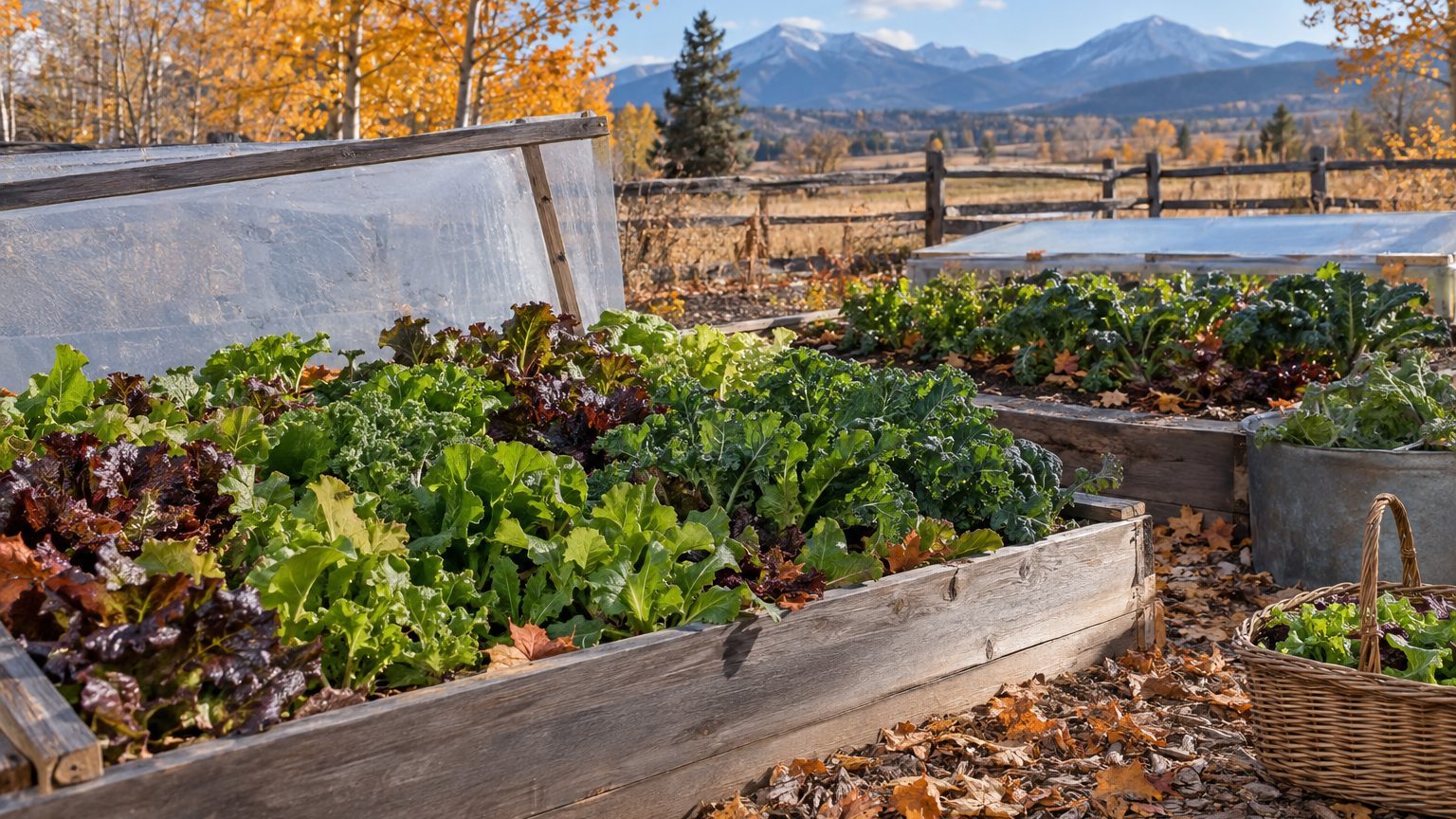

Alabama’s winter salad bed gets sown in autumn, while the soil still holds summer’s warmth and the nights have only just begun to cool. From there it feeds you through the mild months. Kale, collards, spinach and mustard carry on through most winters without help, and lettuce needs a cover on the hard nights. This week, look up the average first fall frost for your own county and count backward from it to plan your first sowing.
When the soil is warm enough in Alabama

Reading the frost dates
NOAA’s 1991-2020 climate normals for the Huntsville airport station put the last spring freeze between March 19 and April 3. That is the 30-70% probability band for a 32°F freeze, so it is a chance rather than a promise, and a late cold snap after April 3 is possible. Those dates belong to Huntsville, in the north of the state. Gardens in the suburbs and the country usually see the last freeze one to two weeks later, higher ground later still, and the southern counties differ from the Tennessee Valley altogether. Check your own county before you mark a calendar.
For a winter salad grower, the spring date matters at the tail end of the crop. It tells you when the bed will be needed for tomatoes and peppers, and when the last cool-season sowings of leaf lettuce or spinach will meet warming days that push them to bolt.
Why the soil, not the air, sets the day
A frost date is a proxy. Nothing in it measures the ground. Soil is slow to change temperature, so in spring it warms after the frost risk ends, not with it. In autumn the same lag works against you. The air cools first, and the soil holds summer heat for weeks. Seed sown into hot September ground often germinates poorly, with a patchy stand and lots of bare gaps.
So the calendar only gets you to the right week. The decision itself comes from a soil thermometer pushed a couple of inches into the bed first thing in the morning, before the sun has touched it. Look up the germination range for each crop on the seed packet or in your state extension service guidance, and sow the hardier greens first. Kale, collards and mustard will sprout in warmer soil than lettuce will. Lettuce and spinach follow once the ground has come down.
The crop-by-crop basics, including which greens can be cut again after a first harvest, are laid out in Winter Salads: What Grows When Lettuce Will Not. Grow all of these from packet seed or nursery transplants in beds and containers.
How long the season lasts here
NOAA’s 1991-2020 normals for the Huntsville station also give the first fall freeze, in a band running from November 2 to November 16. Put the two ends of the year together and the arithmetic is simple. If the last spring freeze comes late, on April 3, and the first fall freeze comes early, on November 2, the frost-free stretch is about 213 days. If the freeze comes early in spring, on March 19, and late in fall, on November 16, it is about 242 days. Your window at Huntsville is therefore somewhere between roughly seven and eight months, and both figures shrink by a week or two in a cold hollow or on a ridge.
Those are approximate counts, and the reading is a range. What matters for a winter salad is what the window allows, and here it allows more than a northern gardener would expect.
What a long window allows
The frost-free months belong to summer crops, and the winter salad bed goes in near the end of them. The first freeze does not close the season for greens. It only closes it for the tender crops around them. Hardy leaves keep growing slowly after the first freeze, and some taste better for it. You have room for two or three sowings rather than one, spaced across several weeks in autumn. The first sowing gives you the early cutting. The later ones stay small through the shortest days and then fill out as light returns.
To time a sowing, count backward from the first fall freeze in your county. Take the days to maturity printed on the seed packet, then add a week or two, because growth slows as the days shorten. Catalogue figures assume warm-season growth and run optimistic in December. A sowing that would just make a full-sized head in October may only reach baby-leaf size if you start it in late November, and baby leaf is still worth cutting.
The length of the window also settles the question of transplants. With this many months to work with, direct seeding is usually enough for kale, collards, spinach and mustard. Lettuce is the crop where transplants earn their place. Started in a shaded tray while the beds are still hot, they go out as sturdy seedlings once the soil has cooled, and you skip the risky weeks of germination in warm ground. The one cost is root disturbance, and lettuce copes with it if you keep the root ball intact and water it in.
How to stagger those sowings from one week to the next is covered in the succession sowing guide on this site. A gardener planning around a far shorter season can see how much that changes the plan in Winter Salads for New Brunswick Gardens.
Heat and water in Alabama

What the cold decides
Look them up for your county through NOAA or the Alabama extension service. What is on record is the winter cold. NOAA’s 1991-2020 normals for Huntsville give a mean daily minimum of 33.1°F in the coldest month. That average sits barely above freezing. It is an average, and individual nights fall well below it, which is why the winter low sorts these crops into three groups.
- Stand uncovered: kale, collards, spinach, mustard greens and mâche, in most winters.
- Need a cover to stay edible: loose-leaf lettuce, arugula and Swiss chard, which are bruised or killed by a hard freeze.
- Cannot manage: basil and other tender salad plants, which end at the first freeze.
The USDA Plant Hardiness Zone Map (2023) puts Alabama across zones 7a to 9a. That is a state-wide range, so the group a crop falls into depends on where you garden. A north Alabama plot near the Tennessee line will lean toward the covered group. A Gulf Coast bed may carry lettuce bare through most of the winter.
Heat before the cold, damp during it
The first freeze also sets how late a sowing can still reach useful size. Once the days are short, plants mostly sit and wait. A sowing that misses the window is not lost, but it will stay at seedling size until late winter. That makes the September and early October sowings the ones that count.
Those same weeks are the hot ones. Alabama summers run long, hot and humid, and warm soil lingers deep into fall. Shade the seedbed with a piece of shade cloth held above the bed, and sow in the late afternoon so the seed goes into the coolest part of the day. Keep the surface evenly moist until the seedlings are up, which in warm weather can mean watering once a day. Mulching lightly over the row holds moisture and shades the soil.
Humidity is the other concern. A damp winter with plenty of rain and slow drying favors fungal disease in the garden. Space plants so leaves dry quickly, water in the morning, and grow in raised beds that drain freely. Damp conditions favor pests, so check under boards and mulch in the evening.
Which winter salads suit Alabama
Choose by type, and choose first for disease resistance, because a humid, rainy winter is harder on leaves than the cold is. Loose-leaf and open-form types dry faster than tight heads and let air through, which matters here more than a few extra days of size. Then match the type to how cold your county gets.
| Type | In a typical Alabama winter | Fall-sowing note |
|---|---|---|
| Kale and collards | Stand uncovered | Sprout in warmer soil than lettuce does |
| Spinach | Stands uncovered | Sow once soil has cooled, bolts as days lengthen |
| Mustard greens and mâche | Stand uncovered | Fast to cut as baby leaf |
| Loose-leaf lettuce | Cover on hard freezes | Start as transplants while beds are warm |
| Arugula | Cover on hard freezes | Fast to cut, quick to bolt in spring warmth |
| Swiss chard | Cover in colder counties | Slow to size up in short days |
The varieties that do best in Alabama are the ones trialed in Alabama, against the mildew, the wet winters and the odd hard freeze in your part of the state. A name lifted from a national catalog can fail in your bed. The Alabama Cooperative Extension System is the place to ask, and your county office can tell you what has worked locally.
Gardeners west of the state line who grow the same greens will find a neighboring approach in Winter Salads for Arkansas Gardens. Read the seed packet for any type you choose. Look for a stated disease resistance, and pick the more open-leaved form when there is a choice.
Common questions
Can I grow lettuce outdoors all winter in Alabama?
In most winters, yes, with a cover ready. Loose-leaf lettuce survives ordinary cold nights, but a hard freeze can bruise or kill it. Keep a row cover or low tunnel on hand and put it on when the forecast drops. Colder north Alabama counties will use it more often than the coast.
Should I wait until the last frost to plant a winter salad bed?
No. Winter salads go in during autumn, not in spring. The spring frost date marks the end of the bed’s life, when warming days push greens to bolt and the space is wanted for summer crops.
My spinach bolted in March. What went wrong?
Nothing you did wrong. Spinach bolts as days lengthen and the weather warms, regardless of how well it was grown. Sow a little earlier next fall so the plants are big enough to cut heavily before that happens, and pull the bed once it starts sending up flower stalks.
When do I take the row cover off?
Vent it or remove it on sunny days, even in winter. A closed cover can heat up quickly in the afternoon and cook the leaves, and trapped humidity feeds mildew. Put it back on before sunset when a cold night is forecast, and check your county’s forecast the evening before.