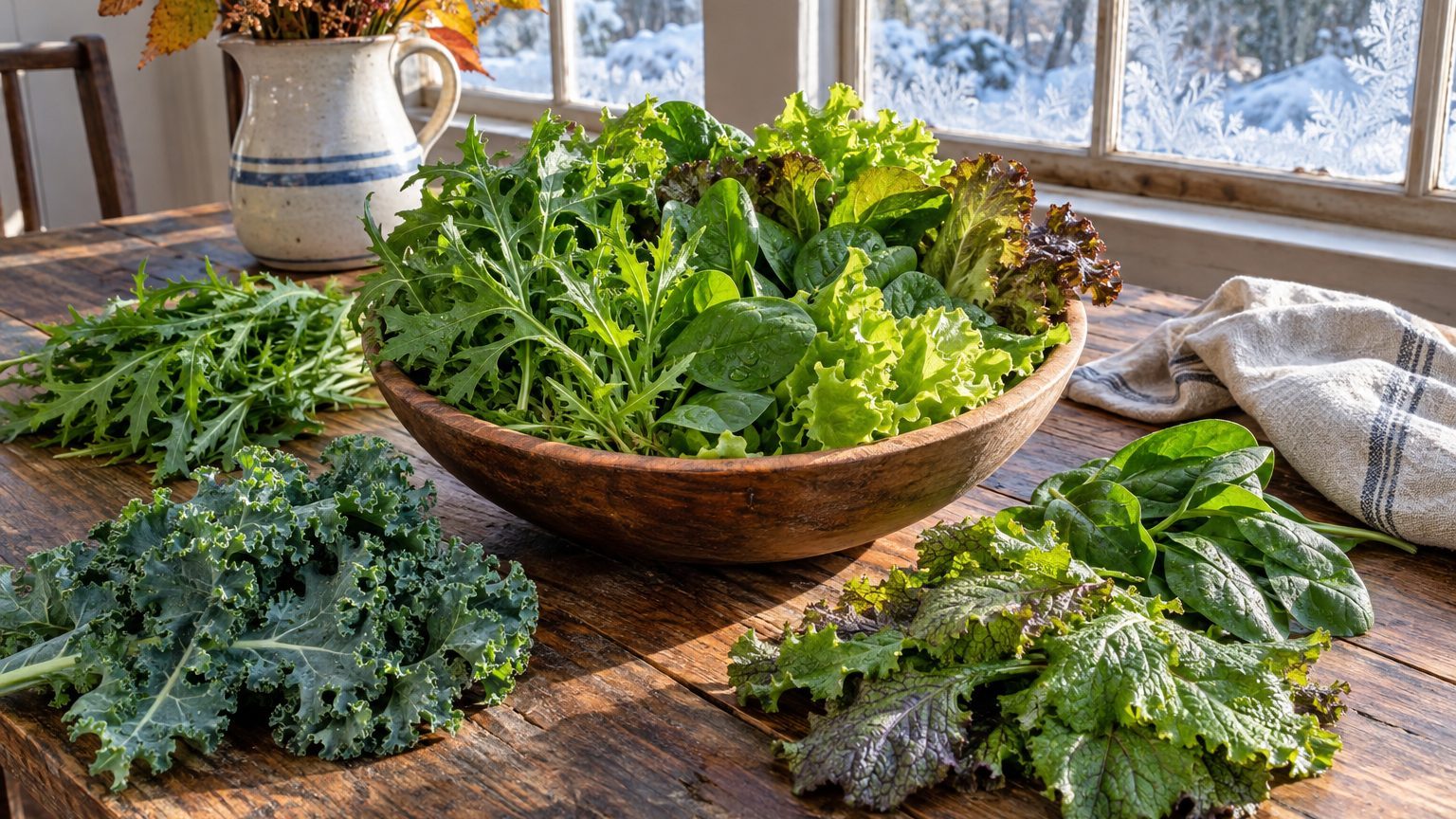

In the low desert around Phoenix, the best winter salads are quick, cool-loving greens: loose-leaf lettuce, arugula, spinach, mustard, chard and kale. Winter is the productive season there, and summer is the dead one. Up in Flagstaff and the high country the answer flips, because the ground freezes hard. Below, the choice by type, what to skip, and where to confirm it for your county.
The short answer for Arizona
In the low desert, grow leafy greens that you cut young and often: loose-leaf lettuce, arugula, mustard, spinach, chard and kale. In the high country, treat winter salads as protected crops, since outdoor beds freeze solid.
The reasoning starts with a number that surprises people. Using NOAA’s 1991-2020 Climate Normals for Phoenix, the mean daily minimum of the coldest month is 45.3°F. Cold does not decide what survives here. NOAA lists the frost-free season at 365 days, and Phoenix reached 32°F in only 6 of 30 springs. When a cold snap does bring 32°F, it lands between late December and mid January.
So the limiting factor is heat. Summer heat stops fruit set for months, which is why the tomato-and-cucumber salad belongs to a short window and the leafy bowl belongs to winter. For the wider picture, see Winter Salads for Arizona Gardens.
Choosing by type works better than hunting for a single champion variety:
| Type | Examples | Why it fits the low desert |
|---|---|---|
| Cut-and-come-again leaf lettuce | Loose-leaf and oakleaf types | Harvested young, so it is out of the bed before late warmth turns it bitter |
| Fast peppery greens | Arugula, mustard | Quick from seed, forgiving if a sowing misses |
| Hardy cooking-and-salad leaves | Kale, chard, spinach | Tolerate the rare 32°F night and keep producing through the cool months |
| Bitter chicories | Endive, radicchio | Take longer, but the cool months give them time |
| Full heads | Romaine, butterhead | Slowest of the group, so they need an early, well-timed start |
Within each type, favor varieties labeled slow to bolt or heat tolerant on the seed packet. That label counts for more in Arizona than almost any other trait.
What will not work here
A frost-based planting calendar will not work. Most of the country counts backward or forward from a last or first freeze date. In the low desert there is no reliable fall freeze and, in most years, no spring one either. Anyone who copies a Midwestern schedule ends up sowing by the wrong clock. The honest calendar here is built around when summer heat releases its grip, and the page on When to Sow Winter Salads in Arizona handles that side of the question.
Sowing too early is the classic failure. A gardener sees a few cooler mornings, plants a row, and the afternoon heat returns. Seedlings stall, bolt or fry. Greens are leaves, not fruit, so they do not hit the fruit-set wall that stops tomatoes. But they still resent hot soil, and seed of many lettuces sits dormant or germinates poorly in it.
Weekly watering fails too. A hot, dry desert climate dries a shallow seedbed fast, and salad greens have shallow roots. A deep soak once a week suits an established shrub, not a row of seedlings. Young plantings in the low desert usually need light, frequent watering until they establish, then a steadier rhythm. Mulch helps hold moisture, but keep it thin over seed.
Slow head crops started late are another letdown. Full heads of romaine or butterhead need a long run of cool weather. Miss the early window and the head either never forms or rushes toward bolting when warmth returns. Cut-and-come-again leaves forgive a late start far better.
Finally, a warning in the other direction. Because freezes are rare, people drop their guard. The cold snap that brings 32°F between late December and mid January is infrequent, but it can still burn tender leaves. Keep a bedsheet or row cover where you can reach it.
What changes across Arizona
Arizona is not one garden. The USDA Plant Hardiness Zone Map (2023, built on 1991-2020 normals) places the state anywhere from zone 4b to 10b. That system rests on a single variable, the average annual extreme minimum temperature, so it tells you about cold survival and nothing about summer heat. A spread that wide means there is no single answer for the state.
Everything above is anchored to Phoenix, the reference city for the low desert. Other parts of the state differ, sometimes dramatically. Flagstaff and the high country freeze hard, so a frost calendar that would be nonsense in Phoenix becomes useful again there.
If you garden north or at altitude
Shift your thinking toward the shoulder seasons and protection. Outdoor winter salads in a hard-freeze climate mean a cold frame, a low tunnel, a hoop house or a sunny windowsill, not an open bed. Hardy types such as kale, spinach and mustard stand up best to cold. Tender lettuces and arugula may do better under cover. Seeds sown in open ground in the depth of a freezing winter will mostly sit and wait.
Spring and fall become the main outdoor salad seasons at altitude, and summer is a bonus rather than a problem, the reverse of the low desert. Mid-elevation towns sit somewhere in between: cooler nights than Phoenix, fewer extreme-heat weeks, and a real chance of frost.
Do not guess which zone applies to you. Look up your own location on the USDA Plant Hardiness Zone Map, enter your ZIP code, and read the result as a cold-survival guide only.
Where to check this for your own county
The best next stop is University of Arizona Extension, the state’s land-grant extension service. Two things are worth hunting for there. The first is a local planting calendar for your area, ideally written for your elevation. The second is any list of vegetable varieties trialled in your county, since a variety that bolts in one valley can do fine in another.
Search for the leafy greens and cool-season vegetable guides, then look for the office or program serving your county. If a publication is written for the low desert and you garden at 5,000 feet, treat it with caution. If it is written for your elevation, trust it over anything here.
A county recommendation beats a state one, every time. This page is the state one. It rests on Phoenix climate normals and a statewide hardiness range, and it does not carry county-level sowing dates or variety trial results. Where county detail is missing here, the extension service is the place to fill it in.
Checking this against your own garden
Your own observations outrank every date on this page. Three things are worth watching, and none needs equipment.
- Soil warmth by feel. Press your hand flat on the bed in the morning and again mid-afternoon. Soil that still feels warm all day is not ready for lettuce seed. A bed against a south-facing wall will stay warm longer than one in open ground, which tells you where to sow first and where to wait.
- The first true leaves. After the seed leaves come the first true leaves. How quickly they appear, and whether they look sturdy or leggy, shows whether a spot suits the crop. Seedlings in reflected heat from a wall tend to rush and weaken, while those in light shade grow steadily.
- The vines in your garden. If you grow squash or cucumbers, watch their flowers. Male flowers show up first, and heat stalls fruit set. When the vines start setting fruit again, summer’s grip is loosening in your yard, and that is a decent sign to sow greens.
Write down what you see for a season or two. A scrap of paper in the shed beats any generic schedule.
Common questions
Can I grow lettuce outdoors all winter in Phoenix?
Generally yes. The coldest month’s mean daily minimum is 45.3°F, and Phoenix reached 32°F in only 6 of 30 springs. Keep a cover handy for the rare cold snap.
Do I need frost protection in the low desert?
Rarely, but not never. A cold snap can bring 32°F between late December and mid January. A sheet or row cover over tender lettuces covers the risk.
Which winter salad is easiest to start with?
Arugula, mustard and loose-leaf lettuce are quick from seed and can be cut young. This page has no variety trial data, so check your county’s extension office for tested names.
Does Flagstaff follow the same advice?
No. Flagstaff and the high country freeze hard, and the state spans USDA zones 4b to 10b. Up there, plan on cold frames, tunnels or indoor growing in winter.