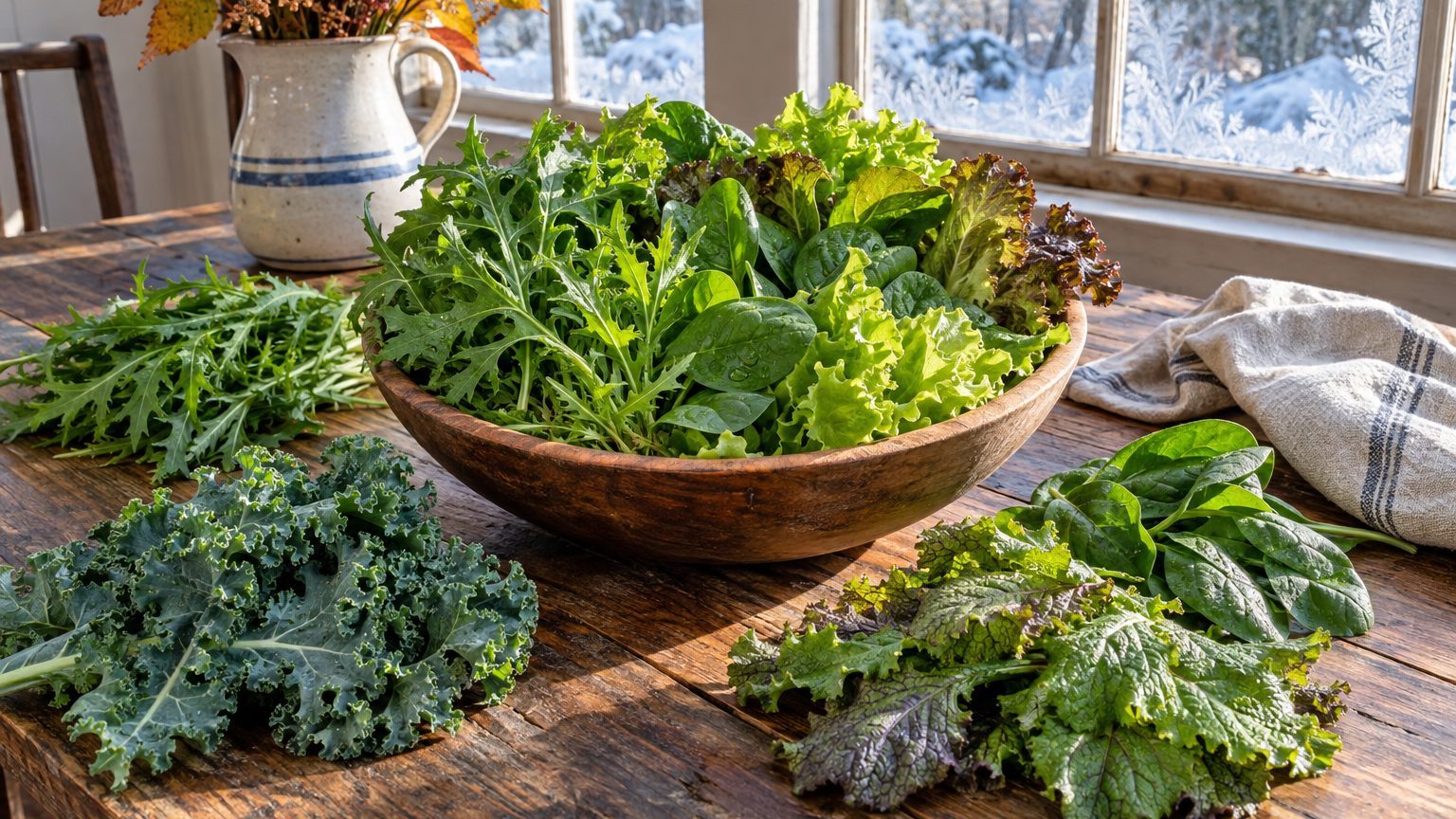

In Arkansas, the best winter salads are the cold-hardy leafy types: spinach, mâche, arugula, mustard greens, kale and loose-leaf lettuce. Sow them in fall so they size up before the first 32°F freeze, which falls between November 7 and November 20 in the reference data. Heading lettuces and slow growers can work, but they need more babysitting.
The short answer for Arkansas
Choose by type, not by cultivar name. Fast, loose-leaf crops beat heading types here because the useful growing window is shaped by two sets of frost dates, and they disagree by several weeks.
The 32°F figures come from NOAA’s 1991-2020 Climate Normals for the Little Rock station. They give a last spring freeze between March 12 and March 28, and a first fall freeze between November 7 and November 20. Those are not calendar promises. Each date marks the band where the probability of a 32°F freeze sits between 30 and 70 percent. Some years the freeze comes before the band, some years after.
Tender plants live by a different clock. At the 36°F light-frost threshold, NWS Little Rock gives April 3 and October 31. That is roughly seven months of mild weather, followed by a stretch when hardy greens keep growing and tender ones stall or die. A winter salad is simply a crop built for that second stretch. For sowing dates tied to these numbers, see When to Sow Winter Salads in Arkansas.
| Type | Cold behavior | Arkansas role |
|---|---|---|
| Spinach, mâche | Very hardy | Backbone of the winter bed |
| Kale, mustard greens | Hardy | Reliable, cut-and-come-again |
| Arugula | Hardy, quick | Fast fill; bolts early in spring warmth |
| Loose-leaf lettuce | Moderate | Good with light cover on cold nights |
| Head lettuce | Least tolerant | Needs protection and early, careful timing |
One more number matters. The mean daily minimum of the coldest month is 30.9°F at the Little Rock reference station. That is an average, not a record. Half-frozen nights are normal, and the hardy types shrug them off. It also means a hard night colder than the average will hurt lettuce long before it bothers spinach.
What will not work here
Early fall sowing of lettuce fails more often than any other plan. The 36°F date is October 31, so September and much of October are still warm. Lettuce seed sown into hot soil germinates poorly or sulks, and what survives tends to bolt or turn bitter. Hold lettuce until the soil cools, and put the arugula and mustards in first.
Sowing too late fails just as reliably. Gardeners see the November 7 to 20 freeze band and assume anything planted before it will make it. Short days slow growth sharply by then. A seedling that is still tiny in late November may just sit there all winter, alive but not giving you anything to cut until spring.
Open-ground head lettuce is a gamble. With nights averaging 30.9°F in the coldest month, leaf edges burn and outer leaves turn to mush in a hard freeze. It can be done under a low tunnel or row cover. Without cover, expect uneven results.
Tight spacing is a problem too. Arkansas winters are damp as well as cold, and crowded leaves stay wet longer, which invites mildew and rot. The common advice to sow thick for baby greens works in a dry climate. Here, thin early and leave room for air to move, especially with spinach and lettuce.
A last mistake is treating a winter salad as a spring crop. Seed sown right after the March 12 to 28 band lands in a season that warms fast. The harvest window is short before bolting starts. Spring sowing works for arugula and radish-style speed crops. It does not give you the long cutting season a fall sowing does.
What changes across Arkansas
The state does not have one answer. Under the USDA Plant Hardiness Zone Map (2023, built on 1991-2020 normals), Arkansas spans 6b to 8a. That is four half-zone steps, from 6b through 7a and 7b to 8a. The system uses a single variable, the average annual extreme minimum temperature, so it says how cold the worst nights get, not how long the season runs or how hot the summer is.
The frost dates above come from a Little Rock reference station. Other parts of the state differ. Northern Arkansas, the Ozark highlands and higher ground generally run colder, with earlier fall freezes and later spring ones. The southern part of the state and the low-lying areas run milder. This page does not have station data for those areas, so it does not offer dates for them.
A gardener in the north or at altitude should shift in three directions. Sow earlier in fall, since the freeze band arrives sooner and growth stops sooner. Lean harder on the hardiest types: spinach, mâche, kale and mustards. And put row cover or a low tunnel over lettuce from the start, not after the first scare. A gardener in the milder south has the opposite problem. Warm fall soil lingers, so lettuce sowing should wait longer, and spring bolting arrives sooner.
To find where you fall, look up your ZIP code on the USDA map instead of guessing from a neighbor’s garden. Zone lines can change within a few miles in hilly country. The broader crop-by-crop picture is in Winter Salads for Arkansas Gardens.
Where to check this for your own county
The University of Arkansas Cooperative Extension Service is the right next stop. It runs county offices across the state, staffed by agents who know local soil, local frost pockets and which varieties have done well in their area.
Three things are worth looking for. First, a local planting calendar or vegetable planting guide, ideally one that lists fall sowing dates for leafy greens. Second, any variety trial results from your county or a nearby one, since a type that thrives in one county can disappoint two counties over. Third, local frost date information, which may shift the dates on this page by a week or more.
This page does not have an Arkansas county planting calendar, so it will not pretend to offer one. What it gives is a state-level picture built on Little Rock reference data and a statewide hardiness range. A county recommendation beats a state one every time, and this page is the state one. Use it to choose the type of salad and the rough shape of the season. Let the county office decide the week.
Call or stop by if the online material is thin. Extension agents tend to be glad to hear which crops people are actually trying.
Checking this against your own garden
Your own observations outrank every date here. Three are worth watching, and none needs equipment.
Soil warmth by feel. Push your hand a couple of inches into the bed in the morning. If it still feels warm, lettuce should wait. If it feels clearly cool, lettuce seed will germinate. A bed against a south wall or a brick foundation will stay warm well after an open bed has cooled, so that tells you which spots suit lettuce and which suit arugula or spinach.
The first male flowers. On spinach, the appearance of male flower buds on the plant is the sign that bolting has started. Note the date each spring. If it comes early in a particular bed, that bed warms or dries faster than the rest, and next year it deserves the quicker crops or some afternoon shade.
The first true leaves. After the seed leaves come the first true leaves. Watch how long they take to appear after sowing, and how fast growth continues after that. Slow in one corner and quick in another maps your cold pockets, shade lines and frost drainage better than any chart.
Write the first 36°F night in your yard on the calendar too. If it lands well before or after October 31, you have learned something about your own microclimate that a regional average cannot tell you.
Common questions
What is the hardiest winter salad green for Arkansas?
Spinach and mâche are the toughest of the common salad types, with kale and mustard greens close behind. With a coldest-month mean minimum of 30.9°F at the Little Rock reference station, these types keep going through ordinary winter nights.
Can I grow lettuce through an Arkansas winter?
Yes, with conditions. Loose-leaf lettuce does best, preferably under row cover or a low tunnel on cold nights. Head lettuce is the least forgiving. Wait for soil to cool before sowing in fall, since lettuce struggles to germinate in heat.
When is the last frost in Arkansas?
For the Little Rock reference station, the 32°F freeze band runs March 12 to March 28, where the probability of a freeze is 30 to 70 percent. At the 36°F light-frost threshold, NWS Little Rock gives April 3. Local dates vary across the state.
Is the same advice right for northern Arkansas?
Not quite. The state spans USDA zones 6b to 8a, and the northern and higher areas generally freeze earlier in fall and later in spring. Sow earlier, favor the hardiest types, and cover lettuce sooner. Your county extension office can give local dates.