
Spinach in Oklahoma gets a short spring and a late-opening fall. Sow 2 to 3 weeks before the last frost (March 28 to April 10 at the Oklahoma City airport station), cut before heat above 75 F and long days push it to flower, and in autumn sow only once the soil drops below 80 F. After cutting, spinach holds two weeks at the very most, and only at 32 F.
The short answer
The longest day of the year at the Oklahoma City reference point delivers 14 h 24 of daylight. That figure is geometric, so atmospheric refraction adds roughly seven real minutes on top. It matters because, according to Utah State University Extension, spinach bolts during long days and warm temperatures, and it grows best where temperatures stay at or below 75 F. Day length is a trigger by itself. A gardener who hopes a mild summer will stretch the harvest is hoping for something the sky doesn’t allow. The days keep lengthening from late winter toward the solstice whether the afternoons are 68 F or 95 F.
So the limit here is both day length and heat, working together. Day length starts the clock on flowering, and heat sours the leaves and stalls growth. Oklahoma City averages 70.7 days a year at 90 F or higher, which tells you the heat side is not a brief inconvenience. The 75 F figure does double duty: it is where growth stops being good, and it is also where bitterness becomes a problem. It is a temperature, not a date, so you watch the thermometer, not the calendar.
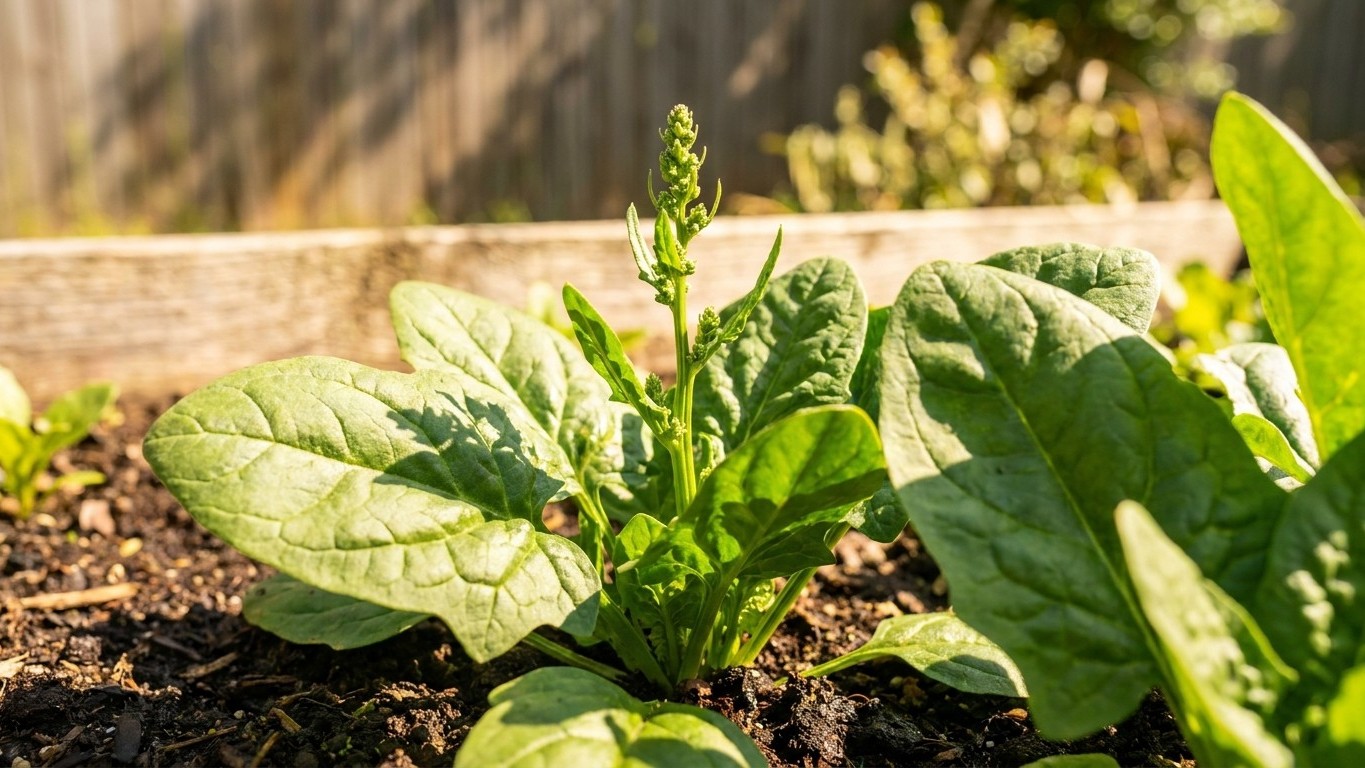
In practice, you cut when the leaves are big enough to eat and you stop waiting well before the plant decides to flower. Take outer leaves while the center keeps producing, or cut whole plants at soil level once the row looks like it is hurrying. When a seed stalk starts rising from the middle, finish the row. For the early warning signs, see Will Spinach Bolt Early in Oklahoma? The broader planting picture lives in Growing Spinach in Oklahoma.
Once the leaves are cut, the clock changes. The UC Davis Postharvest Technology Center puts the optimum at 0°C (32°F) with 95 to 98% relative humidity, and says spinach “will not maintain good quality for more than 2 weeks.” That is a ceiling, not a plan. Wilting, yellowing and decay become likely beyond 10 to 14 days, and faster at the 41 to 50°F (5 to 10°C) typical of ordinary distribution conditions. A home fridge door sits in that warmer band, so spinach kept there yellows in days. Put it in a closed container at the back of the bottom shelf, the coldest and most stable spot, and eat it well inside the ceiling.
How long the spring window really is
The usual advice is to sow 2 to 3 weeks before the last frost and to expect growth to turn poor once temperatures climb above 75 F. Put those two edges together for Oklahoma and you get a window that opens early and closes sooner than most people plan for. Here is how to work it out for your own yard.
- Find your last frost date. At the Oklahoma City airport station the range runs from March 28 to April 10, based on 1991-2020 NOAA NCEI normals. That is one reference city, not a statewide guarantee. Suburban and rural gardens often see the last spring frost one to two weeks later, and more at elevation, so check the figure for your county.
- Count back 2 to 3 weeks. From the airport range, that puts sowing between roughly March 7 and March 27. If your yard frosts a week or two later, shift it to about mid-March through early April.
- Locate the closing edge. Growth stops being good above 75 F. The figures behind this page don’t include a date for that crossing, and I won’t invent one. Track your own highs. When afternoons hover near 75 F, the crop is done growing well, and the leaves are heading toward bitter.
- Count the weeks between the two. Sowing opens in March and the heat arrives not long after the last frost date, so the usable spring is a matter of weeks. It is not a season. A mild spring stretches it and a hot one cuts it short.
- Cut to the schedule, not the packet. The source publishes no days-to-maturity figure for spinach, so don’t borrow one from another crop. Start cutting young leaves as soon as they are usable and keep cutting while the weather holds.
The long-day trigger tightens that window from the other side. Since days only get longer from the winter solstice onward, every week you delay sowing leaves less cool, shorter-day time to grow. Early sowing is the one lever you control. A row in the ground by the start of that March range gets the most cutting before the closing edge arrives.
Variety is the other lever, and here the honest answer is thin. The source names four varieties, Bloomsdale, Melody, Teton and Olympia, and publishes no data about any of them. I can list them. I can’t tell you which one holds out longest in Oklahoma, and I would rather say so than guess.
The autumn crop, and when the soil lets you sow
A fall crop works from the opposite direction. Days shorten and air cools, which suits spinach, but two obstacles sit at either end of the season. One blocks the sowing and the other ends the harvest. Between them lies a narrow, workable stretch.
Warm soil, not cold, blocks the sowing
Utah State University Extension notes that seed germination is reduced above 80 F soil. In Oklahoma, with 70.7 days a year at 90 F or higher, late summer soil sits well above that line. Seed scattered into it in August may sit there or sprout poorly. The window opens when the soil falls, not when the calendar flips to a cooler-sounding month. A cheap soil thermometer pressed a couple of inches into the bed will tell you more than any date.
Shade and moisture help at the margins. Watering the bed and shading it during the warmest days may cool the surface a bit, but neither beats waiting for the soil temperature to cross under 80 F. If the thermometer reads above it, hold the seed.
The frost that closes the season
At the Oklahoma City airport station, the first fall frost falls between October 29 and November 8 (NOAA NCEI, 1991-2020 normals). Rural and suburban yards usually get it one to two weeks earlier, so roughly mid-October to the first of November is a safer planning range. Treat the date as the wall your schedule has to clear. The source publishes no hardiness figure for spinach, so how far a row carries past that wall depends on your yard, your cover and the winter.
The source’s advice for a fall crop is simple: plant 50 to 75 days before the date you want to harvest. That is a planting rule, not a maturity figure for spinach. Count back from the airport frost range and the arithmetic looks like this:
- Harvest by October 29: sow between about August 15 and September 9.
- Harvest by November 8: sow between about August 25 and September 19.
Look at those dates against the soil. The early end of each range falls in the hottest part of the year, when soil still blocks germination. So the real sowing window is the later end, and only once the thermometer agrees. Move everything one to two weeks earlier if your yard frosts before the airport does. A bed that cools late and frosts early leaves little room, which is why checking your county’s dates matters more here than anywhere else in the plan.
Autumn also brings its own visitors. Cool-season leaves attract chewing and sucking pests as the weather mellows, and What Eats Spinach in Oklahoma, and When covers what to expect and when.
Common questions
Can a cool summer give me extra weeks of spinach?
No. With 14 h 24 of daylight at the solstice, long days alone are enough to trigger flowering, and a cool summer does not cancel that. Cool weather helps leaf quality and slows the heat problem, but it doesn’t turn the day length off.
How long does cut spinach keep?
The UC Davis Postharvest Technology Center says it will not hold good quality beyond 2 weeks, and only at 32°F with 95 to 98% humidity. Plan on using it well before that. Decay and yellowing become likely after 10 to 14 days, and at 41 to 50°F they come faster. Use the back of the bottom shelf, not the door.
Which variety bolts last in Oklahoma?
That data isn’t published. The source lists Bloomsdale, Melody, Teton and Olympia as varieties and gives no numbers on any of them, so there is no sound basis for ranking them here. Sowing early and cutting on time will do more for you than any variety swap.
Which frost dates should I use?
Use your own county’s if you can find them. The March 28 to April 10 and October 29 to November 8 ranges come from the Oklahoma City airport station. Suburban and rural gardens typically see the last spring frost later and the first fall frost earlier, often by one to two weeks, and more at elevation. A hillside yard in the eastern part of the state can differ from a flat one in the west by more than that.