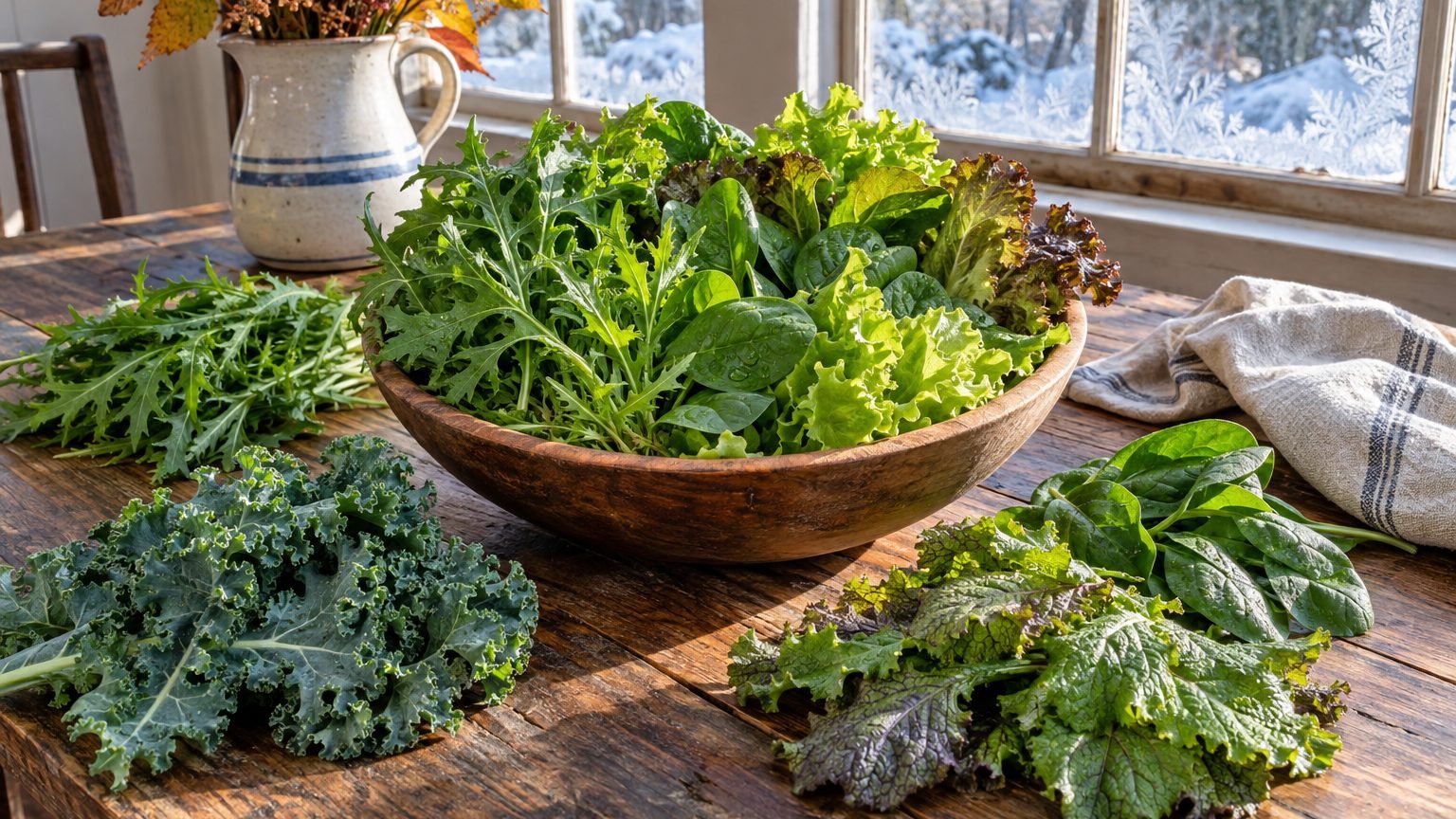

In coastal and southern California, the best winter salads are loose-leaf lettuces, arugula, spinach, Asian mustards and chicories, sown from fall into winter. Frost is not the limit there. Heat, dry spells and water rules are. In the Central Valley, the Sierra and the north, the list shifts toward cold-tough greens. This page gives the state-level picture within our guide to Winter Salads for California Gardens.
The short answer for California
Start with loose-leaf lettuce, arugula, spinach, mizuna and other mustard greens, then add chicories and chard for body. In the frost-free coast and south, nearly all of these can grow through the cool months without protection. Farther north and at altitude, lean on hardier types and treat the tender ones as short-season crops.
The numbers explain why the south is so generous. At the Los Angeles reference station, NOAA’s 1991-2020 climate normals show that no freeze occurs in an average year: zero days at or below 32°F in 30 years of daily records, and a frost-free season listed as 365 days (NOAA NCEI data). The mean daily minimum of the coldest month is 49.1°F. No salad green minds a night that cool. So a gardener there is not asking “what survives winter?” but “what hates the warm edges of winter?”
That flips the usual advice. Hardiness matters little in the south, and bolt resistance matters a lot. The table sorts the main types by what they ask of the season.
| Type | Where it shines | What to watch |
|---|---|---|
| Loose-leaf lettuce (green, red, oakleaf) | Coast and south all winter; mild stretches elsewhere | Turns bitter and bolts in warm snaps |
| Arugula, mizuna, mustards | Quick baby-leaf cuts in cool weather | Heat makes them hot and coarse |
| Spinach | Cool nights and short days | Bolts as days lengthen |
| Chicories (radicchio, endive, escarole) | Cool, drier winters; sturdy under stress | Slow to mature |
| Mâche, claytonia | North and altitude, where cold stops other greens | Sulk in warm, dry conditions |
If you can only grow three, pick one lettuce mix, one mustard or arugula, and one chicory. Together they cover mild, sharp and bitter, and they fail at different times.
What will not work here
Most failures in California come from timing and water, not cold. The two go together, because the state’s dry season runs well into the planting window.
Sowing on the old fall schedule
Lettuce seed germinates poorly in hot soil, and a warm early-fall spell can bake a seedbed that looked fine in the morning. A gardener who sows a heading lettuce the moment the calendar says “fall” often gets patchy rows. Seedlings that do come up stretch and bolt at the first heat spike. In a place where the coldest month still averages a 49.1°F low, the cure is patience: wait for soil to cool, or shade the bed with cloth until it does.
Spinach is the other casualty. It wants cold nights and short days, and a mild southern winter gives it fewer of both than a Midwest fall would. Expect a shorter harvest and plan on a second sowing rather than one big planting.
Weekly watering and tender, thirsty heads
Lettuce is mostly water and has shallow roots. A deep soak once a week suits a tomato but leaves lettuce stressed between drinks, and stress shows up as bitterness and early flowering. Winter rainfall is erratic across California, so a “wet season” is not a plan. Small, frequent applications at the root zone work better than overhead sprinklers, and they also fit local water restrictions, which can limit days and hours of irrigation in many communities. Check your own district’s rules before you build an irrigation schedule around a single day.
Drought-hardy chicories handle this better than butterhead or romaine, which is why they earn a spot even if you do not love bitter leaves.
Waiting for frost that never comes
Northern gardeners count on a hard freeze to sweeten kale and to knock back pests. With no freeze in an average year in the south, neither happens. Aphids, snails and slugs keep working through the mild months, so row cover and hand-picking stay on the winter chore list. And the cold-loving specialists, mâche and claytonia, are a gamble on warm coastal sites.
The reverse also holds. Do not take Los Angeles as the whole state. Northern California, the Central Valley and the Sierra do freeze, and a tender baby lettuce left uncovered there can be lost in a single clear night.
What changes across California
California has no single zone. Under the USDA Plant Hardiness Zone Map (2023, built on 1991-2020 normals), the state spans 5a to 11a. That system rests on one variable, the average annual extreme minimum temperature, so it tells you about the coldest night, not about summer heat or rainfall. A spread that wide means there is no one answer for the state. Los Angeles is the reference city on this page; other parts of California differ, sometimes sharply.
On the coast and in the south, the calendar is set by heat at both ends: sow as soil cools in fall, and finish before spring warmth triggers bolting. Winter itself is the main growing season, not a pause. Gardeners there can sow successive small batches of lettuce and mustards every few weeks.
In the Central Valley and the northern interior, winter nights can reach freezing, so the safe move is to favor spinach, chicories, kale and mâche, and to keep lettuce under cover. Early sowings go in while soil is still warm enough to germinate; protection goes on before the first freezing night rather than after.
At altitude, the Sierra and other high ground sit at the cold end of that 5a-11a range. Outdoor winter salads mostly become a cold-frame or indoor project, with hardy greens sown in late summer so they are established before hard cold. The same logic holds anywhere in the north: the colder your site, the earlier you sow and the more you rely on the toughest types in the table.
Do not guess your zone from a neighbor’s. Look up your own ZIP code on the USDA map, then use our guide on When to Sow Winter Salads in California to see how the timing moves.
Where to check this for your own county
A state page has to average across deserts, fog belts, valleys and mountains. Your county does not. The best next step is University of California Agriculture and Natural Resources, the state’s extension service, which runs offices in the counties and publishes research-based guidance for home gardeners.
Look for two things there. First, a local vegetable planting calendar for your county or nearest region, which will give sowing windows that a statewide page cannot. Second, any lists of varieties trialled in your area, because a lettuce that stays sweet in a cool coastal fog may bolt inland within weeks.
A county recommendation beats a state one, and this page is the state one. Treat what is here as a way to narrow the choices and understand the reasoning, then let the county source set the dates. If your county office and this page disagree, believe the county.
Extension staff and local gardening groups can also tell you about things no table captures: which pests are active this season, whether your water district has restrictions in place, and which microclimate quirks affect your neighborhood.
Checking this against your own garden
Every date on this page is a probability built from past records. Your own beds outrank them. Three simple observations will tell you more than any chart.
- Soil warmth by feel. Push your hand into the bed in the early morning. If it feels distinctly cool, not just cool on top, lettuce and spinach seed will germinate. If it feels warm like bathwater, wait. Beds that cool earlier than your neighbors’ point to shade or fog; beds that stay warm are your early-fall problem spots.
- First true leaves. After the seed leaves, watch how long the first true leaves take to appear. Fast, compact growth means the bed suits the crop. Slow, stretched seedlings point to either too little light or heat stress, and they warn you the mature plants will bolt.
- First flower stalks. The earliest sign of a stalk rising in lettuce or spinach marks the end of your season for that bed. Note the date. Next year, sow that bed a few weeks earlier, or move heat-sensitive crops to a shadier corner.
Write the dates down for a season. Two years of notes will give you a calendar tuned to one backyard, and no state page can do that.
Common questions
Can I grow winter salads outdoors anywhere in California?
Mostly yes, with adjustments. The coast and south are frost-free in an average year, while northern California, the Central Valley and the Sierra do freeze. Use protection or hardier types in those places.
What is the easiest winter salad for a beginner?
A cut-and-come-again loose-leaf lettuce mix. It is forgiving about spacing, gives harvests within weeks, and handles most mild California winters, though it bolts in warm snaps.
Do I need frost protection in Los Angeles?
Not in an average year. NOAA records for the Los Angeles reference station show zero days at or below 32°F across 30 years. Protect against pests and heat rather than cold.
Which zone am I in?
This page cannot say. California spans USDA zones 5a to 11a, so check your location on the USDA Plant Hardiness Zone Map, then confirm planting dates with your county extension office.