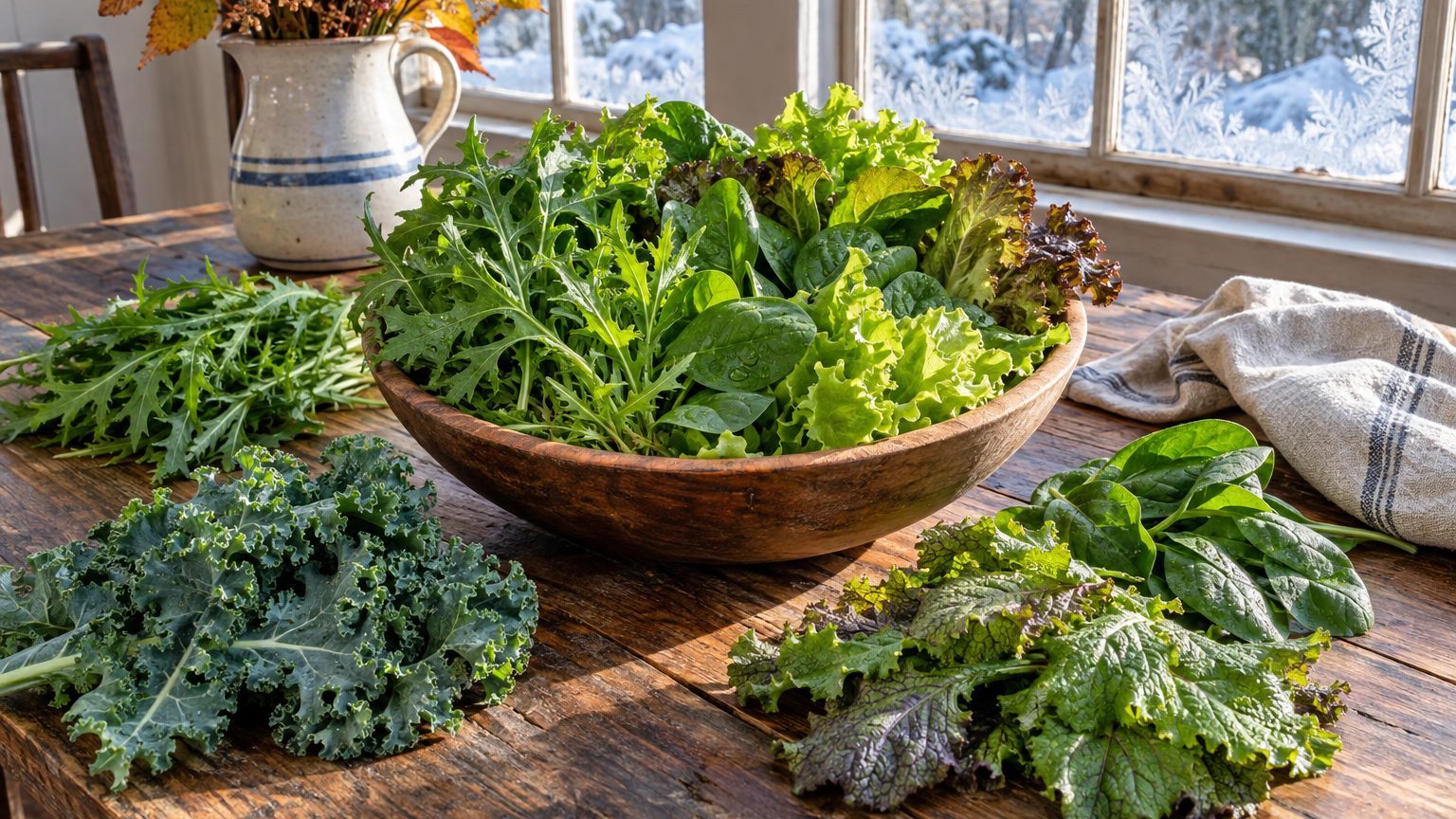

Spinach, mâche, claytonia and kale are the best winter salads for Connecticut. Fast Asian greens and arugula do well too, but only if you sow them early in fall and cover them by midwinter. Tender head lettuce is the weak pick: it belongs in a cold frame, not an open bed. The reasons come down to a handful of numbers.
The short answer for Connecticut
Choose by type, and choose the hardy types first. The figure that matters most is the mean daily minimum of the coldest month, which NOAA’s 1991-2020 Climate Normals put at 24.4°F for the Bridgeport reference station. That is an average low, so plenty of nights run colder. A leaf that shrugs off a hard frost in November can still be flattened by a January night with nothing over it.
The season edges come from the same NOAA normals (station USW00094702). The last spring 32°F freeze falls between April 2 and April 12, and the first fall freeze between October 28 and November 10. Those are probability bands, not promises: they mark the stretch where the chance of a 32°F freeze lies between 30 and 70 percent. Bridgeport sits on Long Island Sound and is the mildest part of the state, so inland and northwest gardens freeze earlier in fall and later in spring.
Here is how the main types sort out against that climate. Note that this page does not carry summer heat figures for Connecticut, so the table leans on cold and season length alone.
| Type | Examples | Verdict for Connecticut |
|---|---|---|
| Hardy leaves | Spinach, mâche, claytonia, kale | Best bet. Open bed in fall, light cover once nights turn hard. |
| Quick Asian greens and peppery leaves | Mizuna, tatsoi, arugula | Strong in fall. Need cover to keep going through the coldest weeks. |
| Chicories | Radicchio, escarole, endive | Good cold tolerance, but slow. Sow early or skip them. |
| Tender lettuces | Loose-leaf, butterhead | Cold frame or tunnel only. |
For the wider picture, start with Winter Salads for Connecticut Gardens, which this page sits under.
What will not work here
Late sowing fails first. With the first fall freeze arriving between October 28 and November 10 even on the mild coast, a seedling started in late October has almost no growing time left. Growth nearly stalls as days shorten, so a plant has to be close to harvest size before the cold settles in. The slow crops, chicories and anything that forms a dense head, get caught hardest. Sow them in summer’s tail or accept a spring harvest instead.
Unprotected tender lettuce fails next. A coldest-month average low of 24.4°F means the lows in a normal January keep dropping below freezing, and a leaf with thin tissue and a lot of water in it does not recover from repeated hard nights. Gardeners from milder states sometimes expect an open bed of butterhead to coast through December. In Connecticut it usually collapses well before the holidays.
Then there is the spring trap. The April 2 to April 12 band is a coin flip, not a green light. Anywhere from a 30 to 70 percent chance of a 32°F freeze still exists inside it, and that is the mild-coast figure. A gardener two hours inland who treats those dates as safe is working from the wrong town. Salad seedlings tolerate a light frost, but warm-season crops planted beside them do not, and mixing the two schedules in one bed is a common way to lose both.
Cover can backfire
A sealed low tunnel or cold frame protects on a 20°F night and can cook or rot the plants during a sunny, damp stretch. Cold-season leaf diseases take hold fast when foliage stays wet and air stops moving. Vent covers on mild days, and give leaves room instead of packing them in, even though it feels wasteful in a small bed.
The heat side of the question is one this page cannot settle. The verified figures here cover cold and frost, not summer temperature, so check local summer conditions before deciding how early in late summer your seedlings can safely germinate. For timing, the companion page When to Sow Winter Salads in Connecticut works through the dates.
What changes across Connecticut
Connecticut is not one garden. The USDA Plant Hardiness Zone Map (2023, built on 1991-2020 normals) places the state anywhere from 6a to 7b. That is a spread of four half-zones, roughly two full zones, inside one small state, so there is no single answer for “the” Connecticut gardener. The system rests on one variable only, the average annual extreme minimum temperature. It says whether a plant survives the coldest night of the year, not when the first freeze arrives.
The Bridgeport figures in this article come from the mild end. The colder end is inland and in the northwest, where the source notes that freezes arrive noticeably earlier in fall and leave later in spring. If you garden in the hills, shift everything in the same direction: sow fall crops sooner, put covers on sooner, and expect spring growth to restart later than the coastal dates suggest. The page has no verified day count for that shift, so treat it as a direction and let your own beds set the size.
On the coast the logic runs the other way. Milder nights give hardy greens a longer fall, and a simple cover may carry spinach and mâche through most of winter. Those are the places where gambling on chicories or a second round of Asian greens pays off more often.
Which zone are you in? Look up your ZIP code on the USDA Plant Hardiness Zone Map instead of guessing from a neighbor’s garden. Valleys, hilltops and shoreline lots can differ from the same county’s average, and the map will show you which end of the range you belong to.
Where to check this for your own county
Start with UConn Extension, the state’s land-grant extension service. What you want from it is specific: a local planting calendar for fall and winter vegetables, and a list of the varieties that have been trialled in your county, not merely sold in the state. Trial results tell you which spinach or kale held up under real local winters, which a seed catalog cannot.
Look for the office or educator who serves your county, and ask about cool-season crops and season extension, the extension term for covers and tunnels. If a county page gives its own sowing dates, use them over the ones here. This page has no UConn winter-salad calendar to quote, so it does not pretend to.
A county recommendation beats a state one, plainly. What you are reading is the state one: a single reference station on the coast, a zone range covering two full zones, and no knowledge of your soil or slope. It is a good frame for choosing types, and a poor substitute for local trial data.
Checking this against your own garden
Your own observations outrank every date on this page. Three are worth watching, and none needs equipment.
- Soil warmth by feel. Push your fingers a couple of inches into the bed in the morning. Soil that still feels cold in spring will germinate slowly, and a bed that warms earlier than the rest of the yard is your early-sowing spot.
- The first true leaves. The seed leaves come first. The first true leaves tell you the seedling is established and can take a cover. If they arrive late in fall, that bed is running behind and may need to be a spring crop.
- Where frost shows up first. Check the lawn and car windshield after the first clear, still night. Frost that forms in your yard before the forecast says it should marks a cold pocket, so cover the salad beds there first.
Keep a few dated notes from one season, and next year’s sowing dates will fit your yard better than any regional band.
Common questions
Can I grow winter salads outdoors in Connecticut without any cover?
Some, yes. Spinach, mâche, claytonia and kale are the best candidates for an open bed. With a coldest-month average low of 24.4°F at Bridgeport, expect slow growth in midwinter and some leaf damage on the coldest nights. Cover keeps them eating well.
Which winter salad is easiest for a first-timer?
Spinach and kale. Both are hardy types, both tolerate Connecticut’s cold, and both forgive an imperfect sowing date better than chicories or tender lettuce.
Do the Bridgeport frost dates apply to my town?
Only if you are on the coast. Bridgeport is the state’s mildest station, so inland and northwest gardens see freezes earlier in fall and later in spring. Treat the dates as the mild end of the range.
Does my hardiness zone decide when I sow?
No. The USDA zone, 6a to 7b across the state, reflects the coldest extreme and tells you what survives winter. Sowing dates depend on frost timing, which is a separate measurement, so use the zone for plant survival and frost dates for planning.