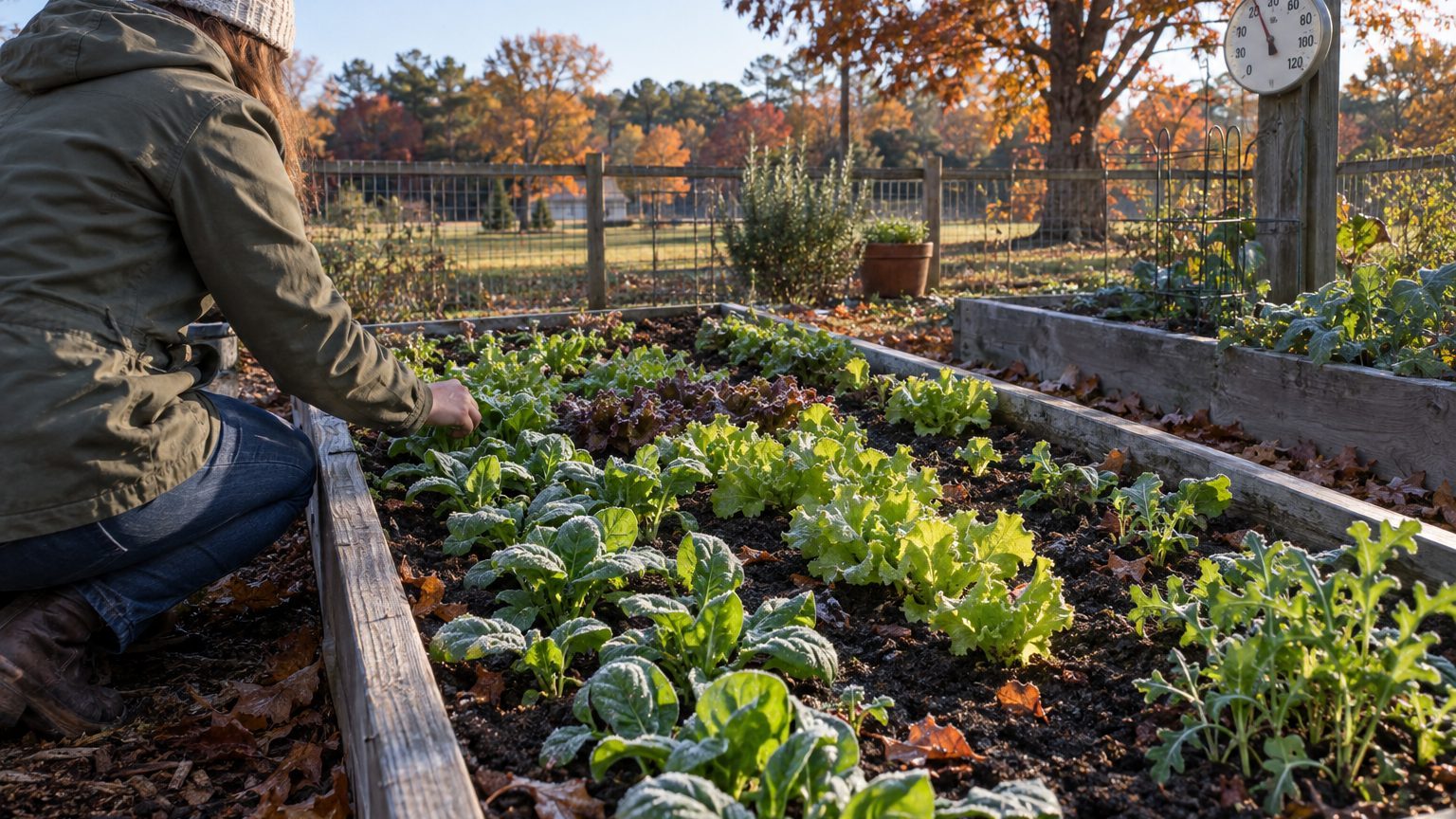

Sow winter salads in Iowa by counting backward from the first fall frost, which falls between October 14 and October 25 on the NOAA airport-station normals. For most gardeners that puts outdoor sowing in late summer. A smaller second window opens in early spring under cover, counted forward from a last spring frost of April 12 to April 24. County records run tighter, so read on before you commit to a date.
The short answer for Iowa
The dates come from the NOAA NCEI 1991-2020 Climate Normals, and they need careful reading. They are not the days frost will arrive. Each one is a probability band: the stretch of the calendar where the chance of a 32°F freeze sits between 30 and 70 percent. Last spring frost: April 12 to April 24. First fall frost: October 14 to October 25. Inside those bands a freeze is roughly a toss-up, and outside them it becomes either unlikely or very likely. The underlying NOAA data comes from an airport station.
That station sits at the optimistic end. Iowa State Extension county figures, which cover 1950 to 2021, run about 4 days later in spring and 10 days earlier in fall. A careful Iowa gardener plans on the county version of the dates when it differs.
| Event | NOAA airport band (1991-2020) | Iowa State Extension county figures |
|---|---|---|
| Last spring 32°F freeze | April 12 to April 24 | About 4 days later |
| First fall 32°F freeze | October 14 to October 25 | About 10 days earlier |
The fall window
This is the one that matters most. Take the days to maturity on the seed packet, add a cushion because growth slows as days shorten, and count back from the early end of the fall band (or from the county-adjusted date). The frost band is a deadline for growth, not just for sowing. By the time days get short enough to stall growth, the plant should already be close to harvest size, because a winter salad bed is mostly stored growth that you pick down slowly. The best winter salads for Iowa page covers which types tolerate that schedule.
The spring window
Spring sowing counts forward from April 12 to April 24, nudged later by county data. Hardy greens can go in once the soil is workable, but under the band’s own logic any sowing in the open before April 24 is a gamble on the freeze odds. A cold frame or low tunnel turns that gamble into a reasonable bet. For the wider picture of how the season fits together, see Winter Salads for Iowa Gardens.
What will not work here
Counting back from October 25 will not work. That is the far end of the optimistic airport band, and if your county runs 10 days earlier, a bed planned around it hits frost with seedlings still too small to feed anyone. Plan from the early end and you have a margin. Plan from the late end and you have a hope.
Tender lettuce left bare in the open will not work either. The mean daily minimum of the coldest month at the Des Moines reference station is 13.8°F. That is an average of the lows, so plenty of January nights go colder. Soft-leaved heads are not built for that, and even the tougher salad crops need a cover once the deep cold arrives. The state’s USDA hardiness zone range (4b to 6a) tells the same story from the extreme-minimum side.
Sowing late and expecting a winter harvest is the most common failure. A seedling with two small leaves when the freeze band arrives does not turn into a salad by January. It sits there. It may survive under cover and take off in March, which is useful, but it is not the same as picking in December. Many gardeners sow in October out of enthusiasm and call it a failed crop when it was simply a late one.
Covers cause their own trouble. A sealed cold frame on a sunny day in February can overheat the plants inside and trap moisture, and damp, still air in a crowded bed invites rot. Close spacing that looked sensible in a dry week turns into a mat of wet leaves under plastic. Vent on sunny days and thin more than feels necessary.
Finally, a hot start undermines the whole schedule. Lettuce seed is known to germinate poorly in hot soil, so a late-summer sowing needs shade, a cool morning, or a damp, covered bed to get going. Plan the sowing around the soil, not the calendar page.
What changes across Iowa
Iowa is not one garden. The USDA Plant Hardiness Zone Map (2023, built on 1991-2020 normals) puts the state in zones 4b to 6a. That range covers several half-zone steps, so there is no single answer for the state. Hardiness zones also rest on one variable only, the average annual extreme minimum, and say nothing about how long your growing season is or how damp your fall runs.
The dated advice on this page is anchored to Des Moines, the reference city for the 13.8°F coldest-month figure. Other parts of the state differ. In general, northern counties run colder and southern counties run milder, so a reader in the north should shift in a predictable direction: sow earlier in the fall, count back with a bigger cushion, and plan on covers for more of the winter. A reader in the south gets more room on the calendar, but the same logic of counting back from the frost band applies.
Which zone are you in? This page cannot tell you, and neither can a state average. The USDA map takes a ZIP code and gives a zone in seconds, so look there. Then treat the zone as a rough guide to winter cold, not as a sowing date. Two gardens in the same zone can have frost dates two weeks apart if one sits in a low spot where cold air pools and the other on a slope with a windbreak.
Where to check this for your own county
Iowa State University Extension is the place to go next. It is the state’s land-grant extension service, and it has local offices and staff who know what grows in each county. Two things are worth looking for once you are there: the local planting calendar for your county, and the varieties that have been trialled in your county or the nearest one. The first gives you frost dates built from county records, which, as noted above, run about 4 days later in spring and 10 days earlier in fall than the airport normals. The second tells you which lettuces, spinach, and other salad crops actually performed in nearby soil and weather.
A county recommendation beats a state one, and this page is the state one. It is built from a handful of statewide numbers and cannot know your elevation, your soil, or the cold pocket at the bottom of your yard. If the county calendar and this page disagree, trust the county.
One caution on what to expect. This page does not have a published Iowa State winter-salad sowing calendar to point to, and it will not invent one. Extension calendars are often written per crop rather than per state, so look for the crop you intend to grow, whether spinach, lettuce, or another green, and use the calendar for that species. A call or visit to your county office is a reasonable fallback if the website is thin on salads.
Checking this against your own garden
Your own observations outrank every date above. Three are worth watching, and none needs equipment.
- Soil warmth by feel. In late summer, push your hand into the bed in the morning. If the soil still feels warm and dry a few inches down, lettuce seed will sulk. A bed that feels cool faster than your neighbor’s tells you it is a spot for earlier fall sowing and later spring sowing.
- The first flush of male flowers. In spring, watch an early-blooming tree near you, such as a silver maple or hazel, when its male flowers or catkins open. Note the date each year. A tree that flowers late on your street tells you your spot runs cool, and one that flowers early says you can lean toward the early end of the spring band.
- The first true leaves. Seedlings put out simple seed leaves first, then the true leaves that look like the adult plant. Count the days from sowing to that stage in your bed. Slow true leaves under cover point to shade or cold air pooling, and fast ones say you have a sheltered, bright microclimate.
Write the dates down for two or three seasons. A notebook entry that says “true leaves appeared in 9 days under the low tunnel” is worth more than any statewide band, because it measures your bed rather than an airport. One more nuance: the first white frost on your own lawn is a useful marker too, since it often arrives earlier in low ground than the official station records it.
Common questions
Is it too late to sow winter salads outdoors in early October in Iowa?
For most outdoor beds, yes. The first fall freeze band is October 14 to October 25 on the airport normals, and county figures run about 10 days earlier. A sowing now needs a cold frame or low tunnel, and expect the plants to overwinter small and resume growth in spring rather than feed you in December.
What does “first fall frost October 14 to October 25” actually mean?
It is the band where the chance of a 32°F freeze is between 30 and 70 percent, taken from NOAA’s 1991-2020 normals. It is not a guarantee that frost arrives on those days, and a freeze before or after them is entirely possible.
Should I use the airport dates or the Extension dates?
Use the county-based Iowa State Extension figures where you can find them. They run about 4 days later in spring and 10 days earlier in fall, so they are the more cautious choice. The airport numbers are the optimistic end.
Do I need a cold frame in Iowa?
For harvests through the coldest months, yes. The mean daily minimum of the coldest month at the Des Moines reference station is 13.8°F, and many nights run colder than that average. Hardy types can survive some of it, but a cover keeps leaves usable for picking and protects the crop on the worst nights.