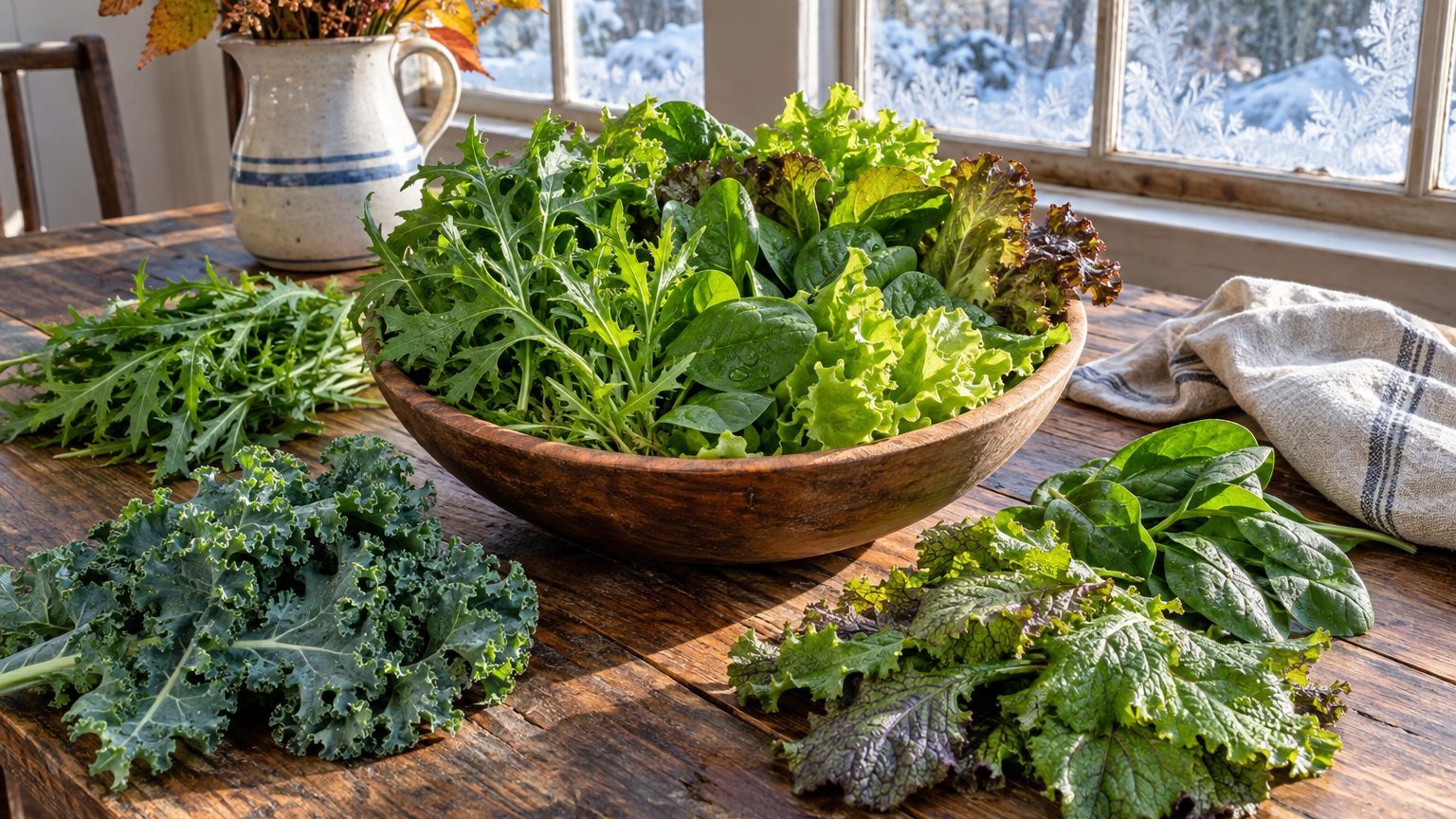

The best winter salads for Mississippi are the cold-tolerant leafy greens: mustard, kale, arugula, mizuna and spinach, with loose-leaf lettuce as the tender second tier. They suit a state where the average night in the coldest month stays above freezing, but where freezes still happen. This page sorts the options by type. For the wider picture, start with Winter Salads for Mississippi Gardens.
The short answer for Mississippi
Mississippi’s cool season is long and mild, but it is not freeze-free. At the Jackson reference station, the mean daily minimum of the coldest month is 36.6°F. That figure averages every night together, so it hides the ones that dip below 32°F. It says the cold is moderate, not that it never bites.
The frost dates tell the same story. The last spring freeze falls between March 6 and March 22, and the first fall freeze between November 7 and November 22. Both are probabilities of a 32°F freeze, taken from NOAA’s 1991-2020 Climate Normals. Inside each window, the odds sit between 30 and 70 percent. Neither is a guarantee.
One caution matters here. Those numbers come from an airport weather station. Suburban and rural gardens typically see the last spring frost later and the first fall frost earlier, often by one to two weeks, and more at elevation. Treat them as the reference-city figures, not a statewide promise.
That shape decides the choice by type. Plants that shrug off a freeze carry the garden, and plants that sulk in warmth need careful timing. Here is how the main types sort out:
| Type | Examples | Role in a Mississippi winter bed |
|---|---|---|
| Hardy brassica greens | Mustard, kale, collards, mizuna, tatsoi | The backbone. Handle freezes and keep producing through the coldest weeks. |
| Arugula | Standard and wild types | Fast and peppery. Fine in the cool months, quick to bolt once spring warms. |
| Spinach | Smooth and savoyed types | Loves cold weather but needs the early-fall warmth to fade before it starts well. |
| Loose-leaf lettuce | Red and green leaf types | The most tender of the group. Rewards a light cover on freezing nights. |
| Chicories and endive | Escarole, radicchio, frisée | Cold-tolerant and bitter. Good for salads that need some backbone. |
Exact sowing dates for each type are on When to Sow Winter Salads in Mississippi. This page stays with what to plant.
What will not work here
Start with heat, because it fails more beds than cold does. The first fall freeze does not arrive until November 7 to 22 at the reference station, which leaves a long stretch of warm weather after the calendar says fall. Lettuce and spinach sown into warm soil tend to germinate poorly or sulk. A gardener who sows them the moment summer crops come out often ends up with a patchy row and a bag of wasted seed.
Spring is the other trap. With the last freeze as early as March 6 to March 22 at the reference station, warmth builds fast after that. Heading lettuces, the romaine and butterhead types, take a long time to form heads. Many bolt before they finish. Loose-leaf types, which you harvest leaf by leaf from the start, beat them here every time.
Humidity punishes close spacing. Mississippi’s damp air keeps leaves wet longer, and crowded rows of lettuce or spinach invite mildew and rot. A bed planted as tightly as a northern seed packet suggests will often do worse than the same bed thinned early. Give leaves room to dry out between rains, and water the soil rather than the foliage.
Mild winters also keep pests going. If the average coldest-month night stays at 36.6°F, aphids and slugs are not wiped out the way a hard northern winter would do it. Check the undersides of kale and mustard leaves regularly instead of assuming cold has handled it.
Finally, skip the northern cold specialists as a first project. Mâche and claytonia are bred for cold that Mississippi rarely delivers. They are not impossible, but they cost garden space that mustard, kale or a good loose-leaf lettuce would use better. And do not plan around Jackson’s dates if your garden sits in the country or on a hillside. Shift them by one to two weeks and often more.
What changes across Mississippi
Mississippi is not one garden. The USDA Plant Hardiness Zone Map (2023 edition, built on 1991-2020 normals) places the state across zones 7b to 9a. That spread covers four half-zone steps, 7b, 8a, 8b and 9a, so no single answer fits the whole state.
The zone system rests on one variable: the average annual extreme minimum temperature. It says how cold the worst nights get. It does not tell you how hot September is, how long the frost-free stretch lasts or how damp the air stays. Two gardens in the same zone can still have different frost dates.
Readers toward the cooler, northern end of that range, and anyone at higher elevation, should lean harder on the freeze-proof types: mustard, kale, collards and chicories. Expect a later last frost in spring and an earlier first frost in fall than the reference-city dates, and keep a light row cover ready for lettuce on freezing nights. The gardening season for tender greens is shorter there, and the hardy types give more margin.
Readers toward the milder, southern end have the opposite problem. Tender lettuce and spinach may sail through many winter nights, but warmth arrives sooner, so bolting and disease pressure can arrive sooner as well. Favor loose-leaf types, space them generously and plan to finish the season early.
Which end applies to you? This page will not tell you. Look up your own location on the USDA Plant Hardiness Zone Map instead of guessing from a neighbor’s garden or a state average.
Where to check this for your own county
This page is the state-level view, and a county recommendation beats it. The state view has to cover a wide range of zones, so it cannot know how your county’s soil, elevation and fall rainfall behave.
Your best next stop is Mississippi State University Extension, the state’s land-grant extension service. This page does not carry an extension winter-salad calendar for Mississippi, so go to the source for one. Two things are worth looking for there.
- A local planting calendar. Look for sowing windows for greens in your part of the state, ideally written for your county or region rather than the whole state.
- Varieties trialled near you. Extension offices often test cultivars locally. A variety that has survived a county’s real winters and humidity is a better bet than one with a good catalog description.
Your county extension office can also answer questions about local frost timing and pests. Ask when the last spring freeze usually lands in your area and which greens local growers rely on. That conversation can be worth more than any date printed here.
Checking this against your own garden
Your own observations outrank every date on this page, including the reference-city frost windows. Three things are worth watching, and none needs equipment.
First, soil warmth by feel. Push your hand a few inches into the bed in the morning. If it still feels warm, like a bath that has gone lukewarm, cool-season seed will likely struggle. When it feels cool and pleasant, sowing makes sense. A bed in full afternoon sun will warm later in fall and earlier in spring than a shaded one, which tells you which spots suit which crops.
Second, the first true leaves. Seedlings first show rounded seed leaves, then leaves that look like the mature plant. How quickly those true leaves appear tells you how fast your bed is really growing. Slow progress in midwinter means a cold pocket, and it may need a cover. Fast progress means a sheltered spot.
Third, the first flush of male flowers on early squash or cucumbers in spring. That burst of blooms means the garden has crossed into warm-season territory, and your lettuce and arugula are about to bolt. Note the date for your own yard and plan next year’s final harvest around it.
Keep notes for one season. They will correct the state numbers faster than any chart.
Common questions
What is the single best winter salad green for Mississippi?
Mustard greens and kale are the most dependable, because they tolerate freezes and keep producing. For a milder, tender salad, loose-leaf lettuce is the best second choice.
Can lettuce survive a Mississippi winter?
Often, yes, especially loose-leaf types. The mean daily minimum of the coldest month at the Jackson reference station is 36.6°F, but individual nights can go below freezing. A light cover on those nights protects the leaves.
Do the frost dates on this page apply to my garden?
Treat them as reference-city figures. The last spring freeze of March 6 to March 22 and first fall freeze of November 7 to November 22 come from an airport station. Suburban and rural gardens typically see later spring frosts and earlier fall frosts, often by one to two weeks, and more at elevation.
Which hardiness zone is Mississippi in?
The USDA map places Mississippi in zones 7b to 9a, so there is no single zone. Check the USDA Plant Hardiness Zone Map for your own location, and confirm local details with your county extension office.