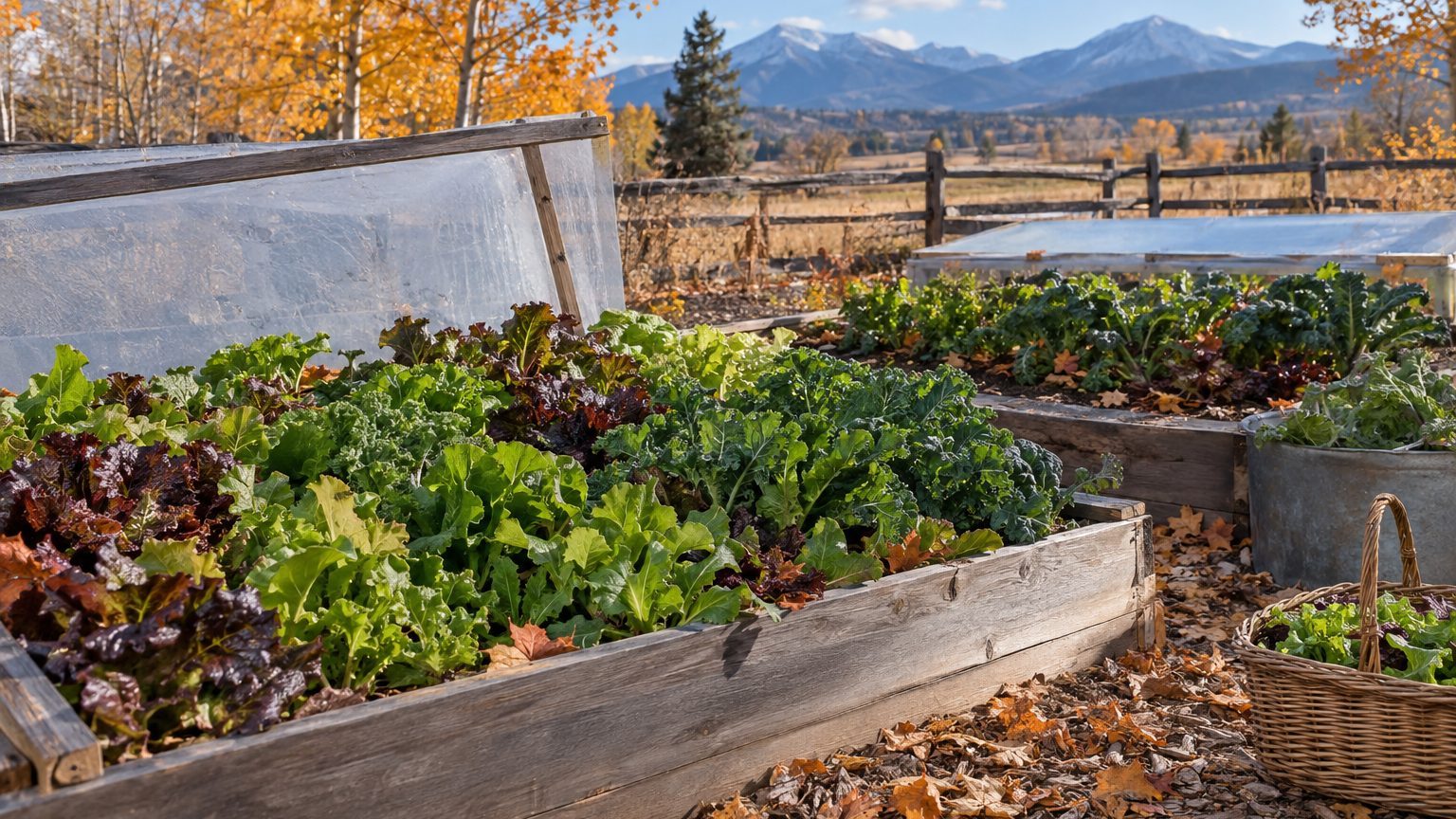

Mississippi winter salads are a fall sowing, not a winter one. You seed them once the summer heat has let go of the soil, then cut them through a winter mild enough for hardy greens to keep growing. Sowing into warm ground is the mistake that wastes the most seed. Press your hand flat on the bed each morning in early fall, and sow only when the top inch feels cool rather than warm.
When the soil is warm enough in Mississippi

The date most gardeners ask for is the last spring frost. NOAA’s 1991-2020 climate normals put it at the Jackson airport station between March 6 and March 22, using the band where the chance of a 32 F freeze falls between 30 and 70 percent. That range is a probability, not a promise. It also describes one airport. Suburban and rural gardens usually see the last spring frost one to two weeks later, and more at higher elevation, so check your own county with Mississippi State University Extension before you plan around it.
Why the frost date is only a proxy
Winter salads do not wait for a frost date. They wait for soil. Air temperature swings by the hour, but a bed holds heat for weeks, and in a Mississippi fall the ground stays warm long after the first cool mornings show up. Lettuce and spinach seed both germinate poorly in hot soil, so a single crisp morning is not your signal to sow. The soil is the signal.
Spring works the same way in reverse. Soil warms after the frost risk ends, not with it. The March window at Jackson therefore marks the end of your cool-season cutting and the point where the bed passes to tomatoes, peppers and beans. It is not a date to start seeding lettuce.
Reading the bed in early fall
Use a soil thermometer if you own one. If you do not, use your hand. Dig two inches down in the morning, before the sun has touched the bed. If it feels like bathwater, wait. If it feels cool and slightly damp, sow.
You can also cool the ground on purpose. Water the seed row deeply the day before sowing. Sow in late afternoon, when the bed is about to lose sun rather than gain it. Lay a board or a sheet of shade cloth over the row until the first seedlings push up, then take it off the same day you see green, or the seedlings will stretch and flop.
The first fall frost is a different marker. NOAA’s 1991-2020 normals for the Jackson station give it as November 7 to November 22, with the same 30 to 70 percent probability band and the same caution that outlying gardens run earlier by a week or two. You sow well ahead of that range, because seedlings need weeks of growth before cold and short days slow them down.
The crops that fit this schedule are types you may already know: loose-leaf lettuce, spinach, arugula, mustard greens, kale and mâche. Everything here assumes beds or containers, sown from seed you bought. The general guide, Winter Salads: What Grows When Lettuce Will Not, covers the crop list and the basics this page takes for granted.
How long the season lasts here
Doing the subtraction
Both frost dates come from NOAA’s 1991-2020 normals for the Jackson airport station, so you can count the frost-free stretch between them. Take the shortest case, from the late end of the spring range (March 22) to the early end of the fall range (November 7). That is about 230 days. Take the longest, from March 6 to November 22, and you get about 260 days. Your own frost-free season at Jackson sits somewhere in that band, roughly 33 to 37 weeks.
Treat that as a reference-city figure. Gardens outside the city and in the northern part of the state commonly lose a week or two at both ends, and your county extension office can tell you how far to shift it.
What that window allows
A window this long is generous, but it is a frost-free window, and winter salads live mostly outside it. Their season starts as the frost-free stretch ends. What the length does for you is give the summer crop time to finish and the fall crop time to be sown into a bed that has cooled. You are not racing the calendar the way a northern gardener would.
That leaves room for several small sowings instead of one big one. Sow a short row, then another a few weeks later, then another. Each batch reaches cutting size at a different time, so you are never buried in one week’s lettuce and empty the next. The succession sowing guide on this site walks through spacing the batches.
The long window also settles the question of transplants. Direct-sown seed avoids the root check that transplants take when they leave their cell, and with weeks to spare there is little reason to skip it. Reserve transplants for two situations. One is a bed still occupied by summer crops that you want to clear late. The other is a bed you cannot keep evenly moist, because a seedling in a tray is easier to water than a seed in open ground.
Farther north the arithmetic tightens, the first sowing becomes the only one, and transplanting starts to look worthwhile. Winter Salads for Virginia Gardens shows how that plays out with a shorter season.
One more use for the calculation. Count backward from the first fall frost range to plan your last worthwhile sowing. A late batch will not reach full size, but it may still give you small, tender leaves for cutting young. Sow it, cover it on freezing nights, and treat any full-size heads as a bonus.
Heat and water in Mississippi

Summer heat and humidity
Mississippi summers are hot and humid, and that shapes the fall sowing more than anything else. This page does not quote a count of days above 90 F or a summer rainfall total, because neither is in the reference data it rests on. Look up the Jackson normals from NOAA NCEI, and ask MSU Extension for figures near your county. The pattern is the useful part. Long hot spells warm the soil into fall, and steady humidity keeps leaves damp.
Damp leaves are where trouble begins. Mildew and rot follow warm, wet foliage, and dense seedlings in a crowded row trap moisture. Space plants for airflow. Water at the soil in the morning so the leaves dry by afternoon. A drip line or a soaker hose does this better than an overhead sprinkler.
What the winter low decides
The cold, not the heat, sorts these crops. NOAA’s 1991-2020 climate normals for the Jackson station put the mean daily minimum of the coldest month at 36.6 F. That is an average, so many nights are milder and some go below freezing. The USDA Plant Hardiness Zone Map (2023) places Mississippi across zones 7b to 9a, and other parts of the state run colder or milder than Jackson. That average low sorts the crops into three groups.
- Stand uncovered: kale, collards, spinach and mâche in most winters.
- Need cover on freezing nights: loose-leaf lettuce and arugula, so the leaves stay edible.
- Cannot manage at all: warm-season salad crops such as tomatoes, cucumbers and basil.
A light row cover draped over hoops is enough for the middle group. Put it on before dusk when a freeze is forecast and take it off in the morning once the air warms, so the plants do not cook or stay wet.
Light and late sowings
The first fall frost range from the last section sets how late a sowing can still reach useful size. Short days matter as much as cold. As daylight shrinks, growth slows for every crop here, and a seedling that is still tiny in December will stay tiny. Sow early enough that plants are close to cutting size before the light fails. A late sowing still gives you baby leaves, and baby leaves are worth cutting.
Which winter salads suit Mississippi
Choosing by type
Reason from the facts above. The long season means you do not need the earliest-maturing types. The hot, humid fall means you want plants that tolerate warm soil at sowing and that resist mildew once the weather turns damp. The mild winter means the cold-hardy greens will keep going where they might stall in colder states.
| Type | Winter cold | Main concern here |
|---|---|---|
| Kale and collards | Hardy, usually no cover | Caterpillars in warm spells |
| Spinach | Hardy | Mildew in damp weather, slow germination in warm soil |
| Mâche | Hardy | Slow to establish, needs even moisture |
| Mustard greens, tatsoi, mizuna | Fairly hardy | Bolting in warm spells |
| Arugula | Moderate, cover in hard freezes | Bolting, flea beetles |
| Loose-leaf lettuce | Tender, cover on freezing nights | Warm-soil germination, rot in damp foliage |
Start with kale, collards and spinach, since they need the least fuss. Add loose-leaf lettuce and arugula once you are comfortable putting a cover on before a freeze. Winter Salads for South Carolina Gardens covers a neighboring Southeast climate with similar humidity pressures, and it is a useful comparison if you garden near the state line.
Why this page names no varieties
This page does not name a cultivar, and that is deliberate. Disease resistance is the first criterion here, and which varieties resist mildew in Mississippi is something trial plots answer, not a general guide. Your county’s MSU Extension office knows what was grown and tested in your region. Ask which spinach and lettuce varieties did well in fall plantings, and whether any list of recommended varieties exists for your county. Any variety name here would be a guess.
When you read a seed packet, look for resistance codes and for wording about heat tolerance at sowing. Choose types labeled for fall planting over spring-only ones.
Common questions
Can I sow winter salad in spring instead of fall?
You can, but the window is short. Spring sowings of lettuce and spinach need to mature before the warm weather that follows the March frost range, or they bolt. Fall gives you the longer, kinder run.
Do I need a cold frame or hoop house in Mississippi?
Not for hardy greens. Kale, collards, spinach and mâche usually stand uncovered. A simple row cover on hoops is enough for lettuce and arugula, and it costs far less than a permanent frame.
Why did my lettuce seed not come up in the fall?
Warm soil is the usual cause. Lettuce seed often sits dormant when the bed is too warm, then rots if the bed stays wet. Cool the bed as described above, or start seed in a shaded tray and transplant once the ground cools.
Can I grow winter salads in containers?
Yes, and containers give you an advantage. You can move them into afternoon shade while the soil is still warm, then into full sun as the days shorten. Use a pot with drainage holes and fresh potting mix each season, since old mix holds disease over from summer.