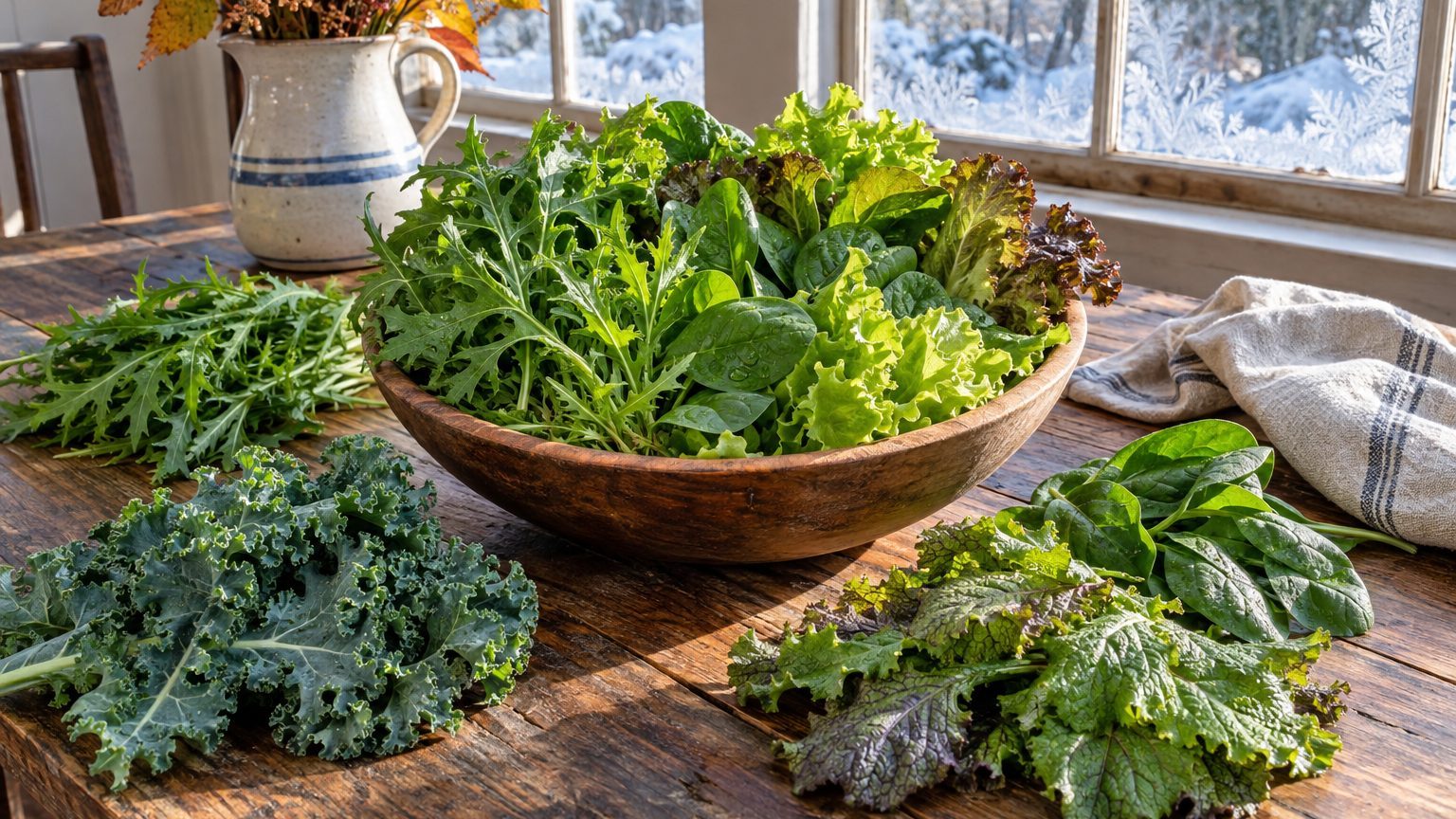

Build Tennessee winter salads around cold-hardy leaf crops: spinach, mâche, claytonia, kale, mustard greens and the tougher lettuces. Tender heading lettuces belong in the fall and spring shoulders, not the dead of winter. The state’s mild-but-not-frost-free winters reward that split. The rest of this page explains where the lines fall, and the parent guide on Winter Salads for Tennessee Gardens covers the wider picture.
The short answer for Tennessee
Choose by type, not by cultivar name: spinach, mâche, claytonia, kale and mustards for the cold core of winter, and lettuce and arugula for the edges of the season. The numbers from the Nashville reference station explain why. The average daily minimum in the coldest month is 30.1°F. That is a mean low, not a record low, so a typical January night sits just under freezing and plenty of nights stay above it. Hardy leaf crops shrug that off. Plants that sulk below freezing do not.
Frost dates frame the season. In the NOAA 1991-2020 Climate Normals for Nashville (station USW00013897), the last spring frost falls between March 31 and April 12, and the first fall frost between October 28 and November 8. Each of those windows is a probability band, not a promise: the dates between which the chance of a 32°F freeze runs from 30 to 70 percent. A freeze can still arrive before or after the window, so treat it as the middle of the odds. For sowing dates against that window, see When to Sow Winter Salads in Tennessee.
Hardy greens that carry the winter
Spinach, mâche (also sold as corn salad), claytonia (miner’s lettuce), kale and the mustards form the backbone. They keep their quality through freezing nights, and some turn sweeter after a frost as the plant concentrates sugars. Arugula is quick and forgiving, though it tastes sharper and bolts faster when spring warms.
Tender lettuces and the shoulder seasons
Leaf lettuces, especially looseleaf and the more cold-tolerant romaine types, do well in fall and again in early spring. Butterheads and other soft heading types are the first to suffer in a hard freeze. Give them a cover or treat them as a crop you harvest before the deepest cold.
| Type | Best role in Tennessee | Main risk |
|---|---|---|
| Spinach, mâche, claytonia | Core winter harvest | Slow growth in the shortest days |
| Kale, mustards | Winter and early spring cutting | Flavor turns strong in warm spells |
| Arugula | Fast fall and spring salads | Bolts as days warm |
| Looseleaf and romaine lettuce | Fall and early spring, winter under cover | Freeze damage without protection |
| Butterhead and soft heads | Shoulder seasons only | Cold injury and rot in wet spells |
What will not work here
Slow heading crops sown late are the first casualty. With the first fall frost arriving between October 28 and November 8, a crop that needs a long run of mild weather to form a tight head will stall once growth slows, and then sit in the bed through winter without finishing. Fast baby-leaf types are the safer bet. They are cut young, before the cold decides anything.
Tender lettuce left uncovered through a hard freeze fails, too. Because the mean coldest-month minimum is only 30.1°F, winter here is not steady cold. It swings. A string of mild days encourages soft growth, then a sharp freeze catches those leaves unprepared. Plants held at a steady cold are often tougher than the same plants after a warm week. A light row cover or low tunnel is cheap insurance on the nights the forecast drops well below freezing.
Spring is where the overwintered bed gives out. After the last frost window (March 31 to April 12 at Nashville), warming days push arugula, lettuce and spinach toward flowering fast. Once a plant bolts, the leaves turn bitter. Plan to pull and replace the bed rather than hoping it will hold into May.
Crowding hurts in a humid state. Tennessee’s damp air favors fungal leaf problems, and tightly spaced plants hold moisture on the foliage overnight. Winter does not eliminate that risk, particularly in mild, wet stretches. Give leafy crops room for airflow, water at the base in the morning if you water at all, and thin seedlings instead of leaving them as a thick mat.
Last, late-summer sowing in hot soil is a trap. Seed that goes into a bed still holding summer heat can germinate poorly, especially lettuce. If you are starting seed in the warm tail of the season, shade the bed, keep it evenly moist, and expect a thinner stand than you would get in cooler weather. This page does not have measured soil-temperature thresholds for Tennessee, so use your own hand and the local extension guidance described below.
What changes across Tennessee
Tennessee does not have one garden climate. The USDA Plant Hardiness Zone Map (2023 edition, built on 1991-2020 normals) places the state across zones 5b to 8a, and that system rests on one variable: the average annual extreme minimum temperature. That is six half-zone steps from the coldest ground to the mildest, so there is no single answer for the whole state. The Nashville figures above describe one reference city and nothing more.
The facts for this page carry a clear caution. East Tennessee and the Cumberland Plateau are cooler and run later in spring than Nashville. A gardener on the Plateau or at elevation should treat the March 31 to April 12 window as too early for their own garden and expect spring work to start later. The page does not have a measured fall shift for those areas, so check local frost dates rather than assuming Nashville’s October 28 to November 8 window holds.
Practically, that means leaning harder on the toughest types as you go colder or higher: spinach, mâche, claytonia and kale first, tender lettuces only under cover. Gardeners in the milder parts of the state can stretch lettuce and arugula further into the season, though the bolting and humidity cautions still apply.
Which zone you are in is for the map to say, not this page. Look up your location on the USDA Plant Hardiness Zone Map and compare it with the 5b to 8a spread, then use the zone as one input alongside your own frost observations.
Where to check this for your own county
University of Tennessee Extension is the place to go next. Every county has an office, and the staff and publications there know local soils, frost patterns and what has actually grown in nearby gardens. This page is a state-level overview built from one reference station. A county recommendation will beat it every time.
Look for two things. First, a local planting calendar for cool-season vegetables, ideally with dates tied to your county’s frost record rather than a statewide guess. Second, any varieties trialled in your county or region, because a cultivar that performs in the Nashville Basin may sulk on the Plateau or in the mountains. If your county office publishes a fall vegetable guide, that usually carries the answer to “what should I sow, and when” in a single page.
One limit worth stating: this page does not list named cultivars or county trial results, and it does not claim any. If you want a specific lettuce or spinach recommendation, extension trial data is the source to trust over a seed catalog’s general promises.
Call or visit the county office if the website is thin. Extension staff field questions about winter vegetables every fall, and a short conversation about your exposure, soil and drainage can save a season of guessing.
Checking this against your own garden
Dates on a page, including every one above, come second to what your own bed is doing. Three observations carry most of the weight, and none needs an instrument.
- Soil warmth by feel. Push your hand a few inches into the bed in the morning. If it feels distinctly cool, lettuce and spinach seed will sprout more reliably. If it still feels warm like a summer bed, wait or shade it. A bed that cools sooner than your neighbor’s tells you about your exposure and drainage.
- First true leaves. Seedlings first show a pair of seed leaves, then the true leaves that look like the mature plant. How long they take to appear tells you how fast your garden is growing right now. A slow pace in November means the season is closing and sowing more is wasted effort.
- Where frost shows first. On the first frosty morning, look at where the white shows up on grass and car roofs. Low spots collect cold air and frost earlier, while a bed against a sunny wall may stay green a week longer. That pattern tells you where tender lettuce can stay and where only hardy greens belong.
Keep a few dated notes from one season: when you sowed, when true leaves came, when the first frost hit which bed. By next fall you will have a local calendar more accurate than any state window.
Common questions
Can lettuce survive Tennessee winters outdoors?
The hardier looseleaf and romaine types often do, especially with a row cover on the coldest nights. Soft butterhead types are less reliable. Winters swing between mild and sharply freezing, so protection matters more than the lettuce’s label.
Which winter salad should a beginner try first?
Spinach is a sound first choice. It handles cold well, grows in most Tennessee gardens and gives repeat harvests of leaves. Mâche is a close second for gardeners who want something that holds through freezes.
Do I need a cold frame or row cover?
Not for the hardiest greens in milder parts of the state. A light cover helps with tender lettuces, with plants in exposed beds, and anywhere that runs colder, such as East Tennessee and the Cumberland Plateau.
Does the same advice apply across the whole state?
No. USDA zones in Tennessee run from 5b to 8a, and the frost dates here come from Nashville. Gardeners farther east or at elevation should shift later in spring and rely on local extension guidance for their own county.