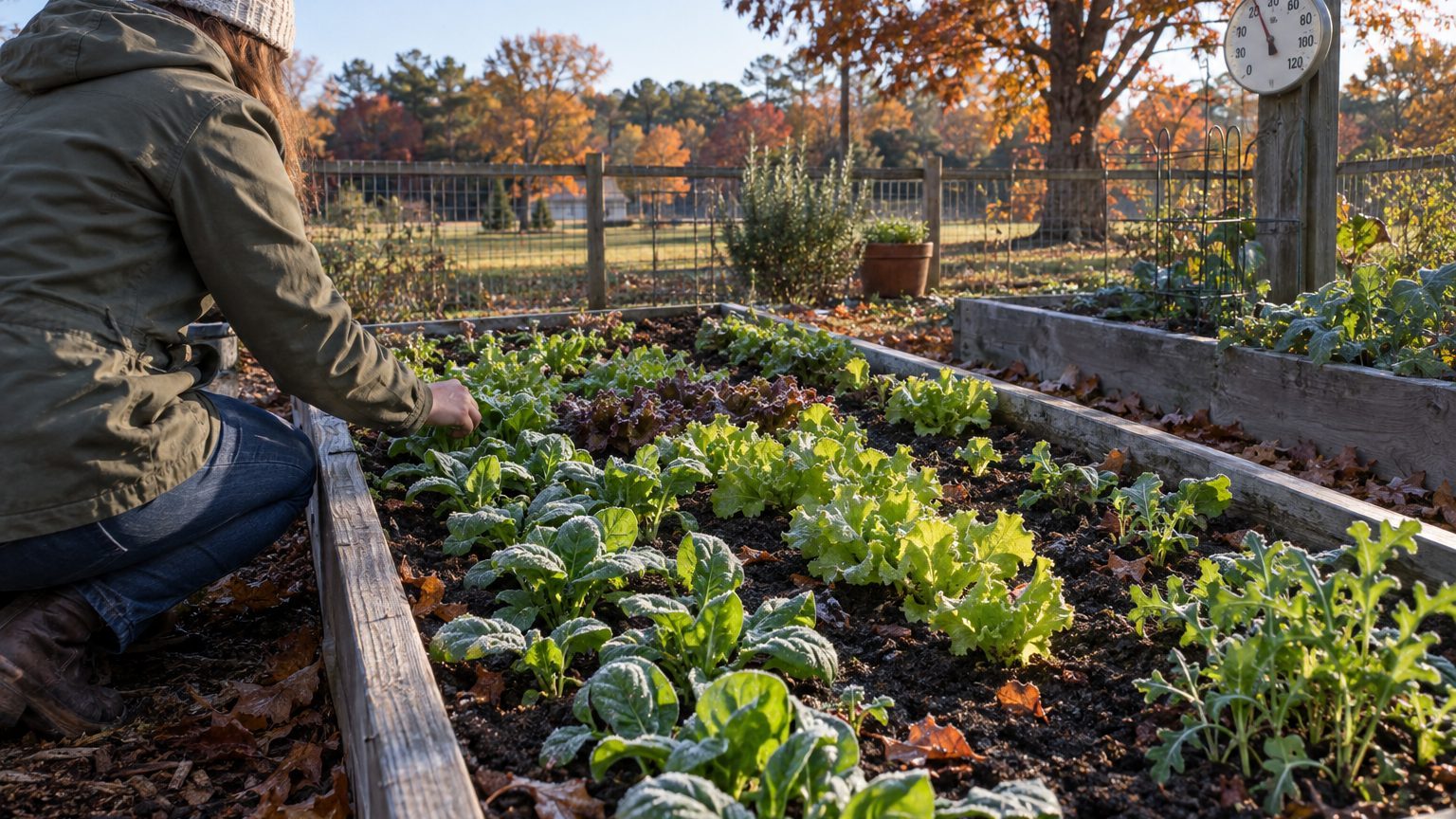

Sow winter salads in Tennessee in the weeks leading up to the first fall frost, which the Nashville reference station puts between October 28 and November 8. Count back from there and most gardens land in September and early October. A second, shorter opening follows the last spring frost band, March 31 to April 12. Both dates come with a catch.
The short answer for Tennessee
For most seed, the working window runs from early September to mid-October, with the best results at the front end. That comes from counting back roughly four to eight weeks from the fall frost band. It is a rule of thumb, not a sourced date. Fast greens sown in early October can still make a harvest. Anything slower wants to be in the ground a month earlier.
The frost dates themselves need careful reading. They come from NOAA’s 1991-2020 Climate Normals for the Nashville station, and they are probabilities of a 32°F freeze, not calendar promises. The band covers the dates where the odds of that freeze fall between 30 and 70 percent. A freeze on April 20 is not impossible, and a mild November that skips frost until the 15th is not a miracle.
| Event | Date band (Nashville reference) | What it describes |
|---|---|---|
| Last spring frost | March 31 to April 12 | 30-70% probability band for a 32°F freeze |
| First fall frost | October 28 to November 8 | 30-70% probability band for a 32°F freeze |
| Coldest month, mean daily minimum | 30.1°F | Average overnight low, not a record low |
That last row matters for winter survival. A coldest-month average low of 30.1°F sits just under freezing. Hardy salad greens can often hold through that in open ground, but an average hides the nights that drop well below it.
Today is October 6, so the fall window is already closing. Roughly three weeks remain before the earliest edge of the frost band. Fast crops sown now, with a cover ready for cold nights, still have time. Slow heading types do not. The broader picture is in Winter Salads for Tennessee Gardens.
The spring opening works differently. Cold-tolerant salads can go in as soon as the soil is workable, before the March 31 to April 12 band has passed. But spring is the short, sharp season. Rising heat pushes lettuce toward bolting, so a spring sowing is a quick harvest, not a winter crop.
What will not work here
Sowing in November. It is the most common mistake, and the numbers explain it. Once the first fall frost band arrives (October 28 to November 8), days are short and soil is cooling. Seed that does sprout stalls at seedling size and sits until late winter. You get a tray of tiny plants that survive, not a harvest.
Slow heading crops sown in October fail for the same reason. Radicchio, big-headed lettuce and similar types need weeks of steady growth, and the calendar does not give them that if they start late. In Tennessee the problem is not a short season overall. It is a short fall window for crops that need to size up before growth slows.
The opposite problem hits in early September. Tennessee Septembers can run warm, and lettuce seed often refuses to germinate in hot soil. Sowing into baked ground and watering once a week gives patchy, failed rows. Sow in the evening, shade the bed, and keep the surface damp daily until seedlings are up. Then pull back on the watering.
An unprotected bed of tender lettuce is a gamble all winter. With a coldest-month average low of 30.1°F, many nights sit right at the line between a light frost and a hard one. Hardy greens such as mizuna and arugula usually take that in stride. Soft butterhead types often do not. A cheap row cover or low hoop tunnel changes that gamble.
Crowding fails in a humid state like Tennessee. Mild, damp winter stretches favor slugs and leaf diseases, and tightly packed salad rows stay wet longer. Thin to the spacing on the seed packet, even if the seedlings look sparse in October. They will fill in.
Spring sowing has its own trap. Gardeners wait until after the last frost band (April 12 at the late edge) and then expect a winter-style salad crop. By then warmth is arriving fast, and cool-season greens bolt and turn bitter. If the goal is a spring harvest, sow earlier and accept that frost may nip the seedlings.
What changes across Tennessee
Tennessee is not one garden. The USDA Plant Hardiness Zone Map (2023, built on 1991-2020 normals) places the state anywhere from zone 5b to 8a. That is six half-zone steps, and each step marks a different average annual extreme minimum temperature. There is no single answer for the whole state, only a spread.
The dates on this page belong to Nashville. The frost data note adds that East Tennessee and the Cumberland Plateau are cooler and run later in spring. A gardener there should not copy the Nashville band as written. The same logic suggests earlier fall frost at altitude, though this page does not hold station data to prove it.
| Where | What to shift |
|---|---|
| Nashville reference area | Use the dates on this page as written |
| East Tennessee, Cumberland Plateau, higher ground | Spring runs later, so push spring sowing back. Start fall sowing earlier and plan row cover from day one |
| Warmer parts of the state, toward the 8a end of the range | Winters are milder, so hardy greens have more margin. The page has no station data to set exact dates |
This page cannot say which zone any individual reader sits in. The USDA map, searchable by ZIP code, answers that, and it is worth a look before you commit to a sowing date. The zone number tracks winter lows, not frost dates, so it does not replace a local frost estimate. It does tell you whether your winters are the 5b kind or the 8a kind.
Once you know your place in that range, The Best Winter Salads for Tennessee helps match types to it. Colder gardens lean toward the toughest greens. Milder ones can try a wider mix.
Where to check this for your own county
Your state extension service is the next stop. In Tennessee that is University of Tennessee Extension, part of the national land-grant system tracked by USDA NIFA. Every county has an office, and the staff there know local conditions in a way a statewide page cannot.
Look for two things. The first is a local planting calendar for cool-season vegetables, ideally one that lists fall sowing dates by county or region. The second is a list of varieties trialled where you live. Trial results tell you which lettuces and greens held up through a real local winter, which beats a seed catalog’s general claims.
This page does not have a county or regional salad calendar to offer. What it holds is one reference station’s frost probabilities and a statewide hardiness range. That is the state view, and a county recommendation beats a state one every time. A county office can account for elevation, soil type and local cold pockets that a single Nashville station cannot.
If your county office publishes a calendar that disagrees with this page, trust the calendar. Use this page to understand why dates matter, and use the extension to set the dates for your own bed.
Checking this against your own garden
Every date above is a statewide estimate. Your garden has its own record, and three simple observations tell you more than any table.
Soil warmth, by feel
Dig a handful from a few inches down in the morning. If it feels warm, like a cup of tepid water, September heat is still in the ground and lettuce seed may struggle. If it feels distinctly cool, germination will be slow but steady. Compare a sunny bed with a shaded one. The difference shows how much your site changes the clock.
First frost damage on summer plants
Watch tomato, squash or basil leaves for the first blackening. That date is your own first frost, and it may differ from a neighbor’s across the road. A low corner of the yard that blackens first is a cold pocket. A bed beside a south-facing wall that blackens last has a head start for winter greens.
Speed of the first true leaves
After sowing, note how long seedlings take to put out their first true leaves, the ones that look like the mature plant, not the rounded seed leaves. A fast flush means your soil is still warm enough to push growth. A slow one means the window is nearly shut, and a cover is worth adding.
Jot these dates in a notebook for a season. By next fall you will have a local calendar that no state page can match.
Common questions
Is it too late to sow winter salads in early October?
Not for fast, hardy greens. The Nashville frost band begins October 28, which leaves about three weeks from today. Slower types are better saved for next September or for a spring sowing.
Do I need row cover for winter salads in Tennessee?
It helps most for tender lettuces. The coldest-month average low is 30.1°F, so frost on many nights is normal. Hardy greens often cope uncovered, but cover buys margin on the colder nights and in colder parts of the state.
Can I use the Nashville dates if I live in East Tennessee?
Not as written. East Tennessee and the Cumberland Plateau run cooler and later in spring than Nashville. Treat the Nashville band as a starting point and check your county extension office for local dates.
Which winter salads should I grow?
That depends on how cold your site gets and how early you can sow. The Best Winter Salads for Tennessee sorts types by hardiness and speed, so you can match them to your own window.