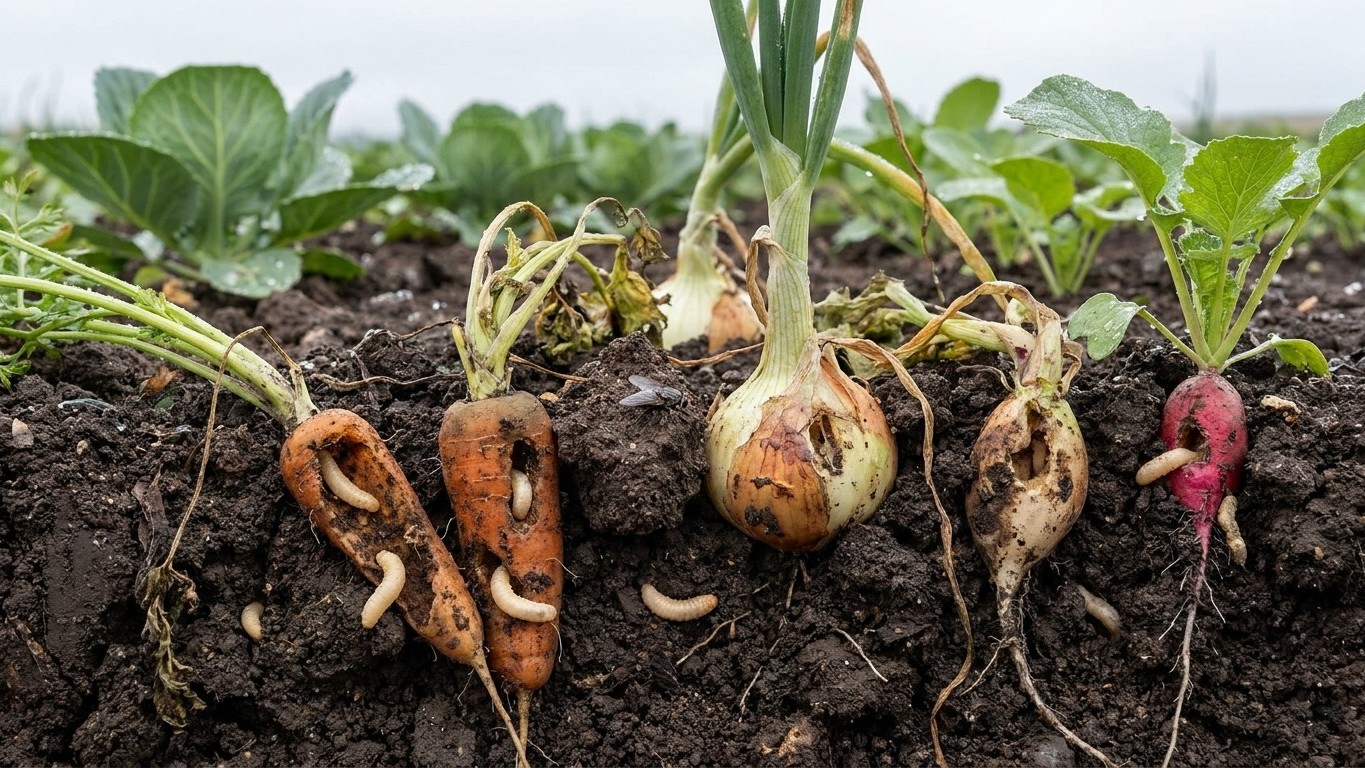

In most of Alabama, unusual root crops go in from late March into early April, but the soil sets the real date, not the calendar. NOAA’s 1991-2020 normals put the last spring freeze at March 19 to April 3 at one reference station. The growing window is long. Summer heat is the hard part, and winters mild enough to let some of these roots stay in the ground are the payoff.
When the soil is warm enough in Alabama
The NOAA NCEI 1991-2020 Climate Normals for station USW00003856 give a last spring freeze (32 F, 30-70% probability band) of March 19 to April 3. That is the reference-station figure, not a statewide guarantee. Suburban and rural gardens typically see the last spring frost one to two weeks later, and more at elevation, so check your own county. Treat the dates as odds, not a promise. A late freeze can still arrive after the range.
Frost is only a proxy. Celeriac, horseradish and the rest are waiting for warm soil, and soil warms after the frost risk ends, not with it. Air can turn mild in a weekend while the top few inches of a bed stay cold and wet from winter. A basic soil thermometer pushed a few inches down in the morning tells you more than any date. The Alabama Cooperative Extension System publishes the soil-temperature thresholds for each vegetable, and those are the numbers to follow.
The group does not all follow one rule. Celeriac transplants wait for settled warmth. Kohlrabi, turnips and rutabagas are cool-season brassicas, so their problem in Alabama is the reverse: they must be sown early enough in spring, or late enough in fall, to avoid the heat. Because they are brassicas, they share their diseases and pests with cabbage, kale and mustard. A bed that held any of those last year is not a fresh bed for them, and the rotation page in this series explains how to plan around it. For a broader look at how these crops differ, see Celeriac, Kohlrabi, Horseradish and Jerusalem Artichokes.
Jerusalem artichokes: choose the spot first
Decide where they go before you decide when. Jerusalem artichoke is effectively permanent once planted, because every fragment of tuber left in the soil regrows. Gardeners regret this planting more than almost any other, so give it an edge of the property, a bed with a hard border, or a large container you can watch. Never put it in the middle of a vegetable plot. Once the site is settled, tubers go in at the same time the soil becomes workable and warm in spring.
These tubers store inulin instead of starch, and in many people it causes digestive discomfort. That is a plain fact of the vegetable, not a verdict on it. A small first portion is the sensible way to find out how you react.
Horseradish: planting and preparation
Horseradish is a perennial that also resprouts from root pieces left behind, so site it with the same caution. Grating a fresh root releases compounds that burn the eyes and airways. Work with good ventilation, keep your face away from the bowl, and don’t treat it casually. A kitchen with a running fan or an open window is the minimum.
How long the season lasts here
Both frost dates come from the same station and source. The first fall freeze falls between November 2 and November 16. Subtract the dates and the window runs from about 213 days (April 3 to November 2) to about 242 days (March 19 to November 16). Remember that rural and suburban gardens often lose a week or two at each end, so your own window may be noticeably shorter than the airport’s.
What does a window that long allow? Mainly a second sowing. Quick types such as kohlrabi and turnips can go in once in spring and again in late summer or fall, so the crop lands in cool weather both times. Slow types do not need that trick, but they do need to be placed so their main growth does not fall in midsummer. The succession sowing guide on this site lays out how to stagger these sowings.
The length also changes the transplanting question. In a short season, starting celeriac indoors is the only way to finish at all, and the cost is a root check: celeriac dislikes root disturbance, and a stalled transplant can lose the weeks it was meant to save. In Alabama the window is generous enough that the transplant decision is about timing around heat, not about squeezing in. Harden seedlings off properly, and set them out only after the soil has warmed.
Compare that with a place where the whole picture is tighter. In Growing Unusual Root Crops in New Brunswick, the season dictates a single sowing and an early start. Alabama gardeners have the opposite luxury, and its price is managing heat. For a neighboring Southern view, Growing Unusual Root Crops in Arkansas covers similar trade-offs.
Heat and water in Alabama
Two facts govern this group. The season length says whether celeriac, the long one, can finish here at all. The winter low decides whether the perennials and hardy roots can stay in the ground under mulch or must be lifted and stored before the soil freezes.
The page does not have a verified count of days above 90 F or a summer rainfall total for this territory, and it will not guess at one. What can be said without numbers is that Alabama summers are hot and humid, and that heat is what separates a crop that sizes up from one that bolts, cracks or rots. Celeriac needs a long, steady run, and Alabama’s 213 to 242 days at the reference station is long enough on paper. The catch is where midsummer falls inside that run. A spring-set transplant has to size up before the hottest weeks, or the crop leans on a fall finish. Your county extension office can tell you which timing works locally.
Water matters as much as heat. Roots grown in hot weather want even moisture, because swings between dry and soaked soil cause splitting and woody texture. A deep layer of mulch keeps the root zone cooler and steadier. Drip irrigation or soaker lines keep foliage dry, which matters in a humid climate where leaf diseases spread fast. Raised beds help in heavy clay that holds water after storms.
For winter, the coldest-month mean daily minimum at Huntsville is 33.1 F, barely above freezing. That is an average, though. Individual nights go lower, and the first fall freeze dates above show that freezes arrive. The USDA Plant Hardiness Zone Map (2023, 1991-2020 normals) places Alabama in zones 7a to 9a. That system rests on a single variable, the average annual extreme minimum temperature, so it is a range across the state, not one number. In most of the state, hardy perennials such as horseradish and Jerusalem artichoke can overwinter under a layer of mulch. In colder northern locations, or in an unusually hard winter, lift what you want to keep before the soil freezes.
Roots left in the ground or stored indoors both need inspection, since looks alone do not make a root safe. Check for soft patches, weeping spots and moldy crowns. Any of those ends the question, and the root goes in the compost or the trash, not the kitchen. Do not rely on a fixed keeping time. Condition decides, not the calendar.
Turnips and rutabagas, as brassicas, carry the same disease pressure in a humid summer as cabbage does. Grow them where cabbage-family crops have not been recently, and follow the rotation page for spacing the years.
Which these root crops suit Alabama
Reason from Alabama’s facts. A long season with a hot middle favors types that can be timed around summer, those given airflow and shade at the root, and those whose crop falls in spring or fall. Humidity makes disease resistance the first criterion when choosing among types.
| Type | What Alabama asks of it | Practical lean |
|---|---|---|
| Celeriac | Long run, steady moisture, protection from midsummer heat | Transplant after the soil warms, mulch heavily, and plan a finish before or after peak heat |
| Kohlrabi | Quick cool-season crop | Spring sowing early, then again for fall |
| Turnip and rutabaga | Cool-season brassicas, humid-weather disease risk | Fall emphasis, clean rotation away from cabbage-family beds |
| Horseradish | Perennial, hardy through most winters | Permanent bed, good drainage, careful siting |
| Jerusalem artichoke | Hardy, permanent once planted | Edge of the property or contained bed |
This page names no varieties, deliberately. A cultivar that thrives in one Alabama county can fail in another because of soil, elevation and disease history, and the only recommendation worth following is one trialled locally. The Alabama Cooperative Extension System lists the varieties tested in the state, and your county office knows what actually grows near you. Taking a name from a catalog or from a different state is exactly how gardeners end up with a failed bed.
Common questions
Can I plant unusual root crops in Alabama in March?
It depends on the crop and the soil. The reference station’s last spring freeze falls March 19 to April 3, and rural gardens often run later. Cool-season types like kohlrabi can go in early, while celeriac transplants should wait until the soil has warmed.
Can celeriac finish in Alabama?
The window between frosts runs about 213 to 242 days at the reference station, which is long enough on paper. Summer heat is the obstacle, so timing and mulch decide the outcome. Check extension trials for your county.
Can I leave roots in the ground over winter?
Hardy perennials such as horseradish and Jerusalem artichoke can often overwinter under mulch in much of the state, given a Huntsville January mean minimum of 33.1 F. In colder northern areas, lift what you want to keep. Inspect anything you harvest or store. A soft patch, a weeping spot or a moldy crown means discard it.
Is Jerusalem artichoke a good idea in a home garden?
Only with a permanent site in mind. Any tuber fragment left behind regrows. Many people also find the inulin in the tubers causes digestive discomfort, so start with a small portion.