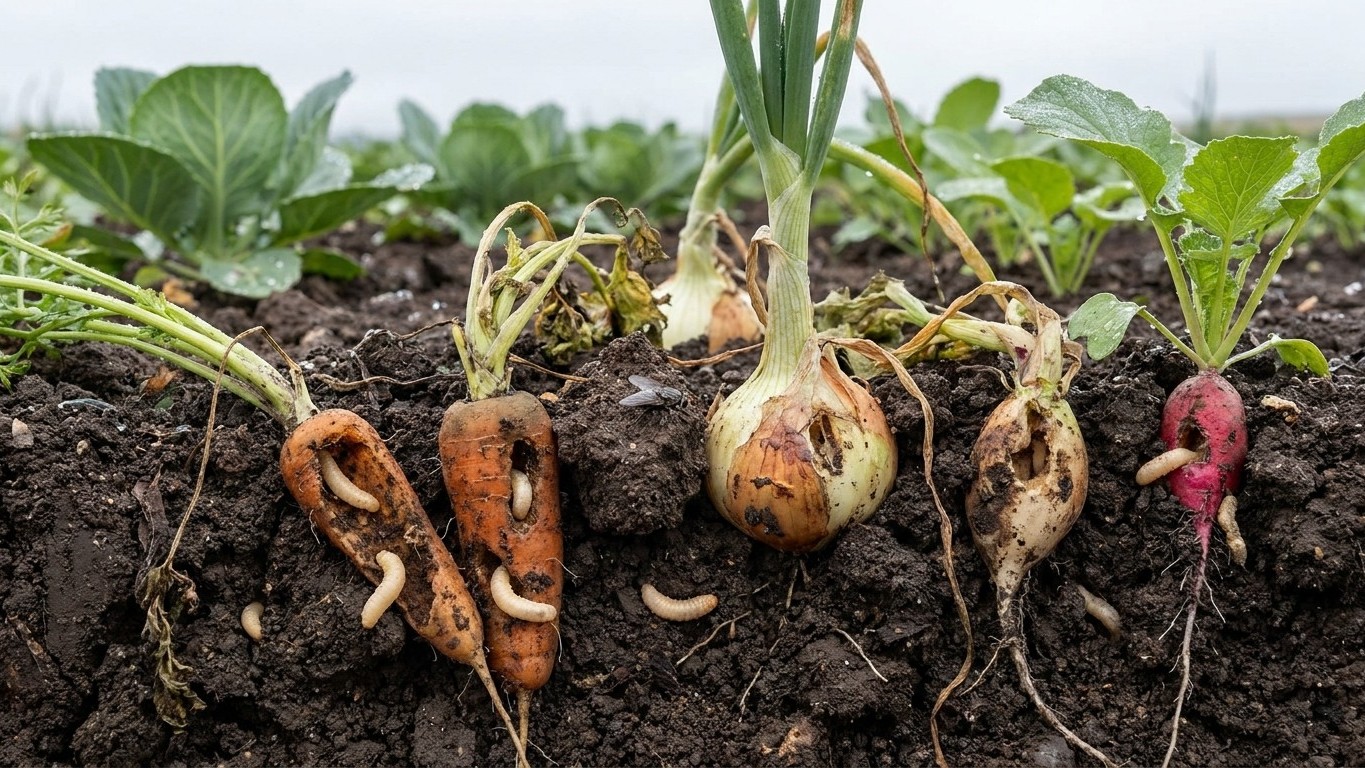

Wait for warm soil, not just the last frost. At Little Rock’s NOAA reference station, the last 32°F freeze falls between March 12 and March 28, and the soil lags behind it. Kohlrabi, turnips and rutabagas can go in first. Horseradish and Jerusalem artichokes follow. Celeriac is the doubtful one, because Arkansas heat is a bigger obstacle for it than the calendar.
When the soil is warm enough in Arkansas
The date question comes with a number, and it’s the wrong number to plant by. NOAA’s 1991-2020 Climate Normals, station USW00013963, put the last spring freeze at 32°F between March 12 and March 28. That is the 30-70% probability band, and it is a probability, not a promise: some years bring a freeze after the later date. At the 36°F light-frost threshold, NWS Little Rock gives April 3, a tighter date that matters more for anything tender.
Why the soil trails the frost
Frost is a proxy. These root crops wait for warm soil, and soil warms after the frost risk ends, not with it. Air can turn mild for a week while the ground a few inches down stays cold and wet, which is where seeds rot and transplants stall. A soil thermometer pushed into the bed beats any calendar, and the seed packet or extension guidance will tell you the minimum for each crop.
The types differ in how patient they need to be. Turnips, rutabagas and kohlrabi tolerate cool soil and a light frost, so they can go in at the front of the window and be harvested before summer heat arrives. Celeriac transplants are touchier: a cold snap after planting can push them to bolt rather than swell. Horseradish is started from root pieces and Jerusalem artichokes from tubers, both set out as the soil opens up in spring.
Fall has its own dates. The first fall freeze at 32°F falls between November 7 and November 20, and at 36°F NWS Little Rock gives October 31. A fall sowing of the quick roots has to be sized up by then, or protected.
Resist hunting for a variety name here. This page can’t source the cultivars trialled in your part of the state, and a wrong guess is worse than none. The University of Arkansas Cooperative Extension Service publishes what has actually been trialled, county by county.
Site the Jerusalem artichoke before you plant it
This is the single most regretted planting in a vegetable garden. Once planted, it is effectively permanent, because every fragment of tuber left in the ground regrows. Choose a corner you will never want for anything else, away from beds you rotate, ideally bordered by a mowed strip or a deep barrier. Plan to dig thoroughly and accept that you will never get every piece.
Then the food fact, stated once: Jerusalem artichokes store inulin instead of starch, and many people get digestive discomfort from it. A small first portion is the sensible way to find out where you stand.
How long the season lasts here
Count the days between the two sets of dates. Pair the late end of spring (March 28) with the early end of fall (November 7) and the window is 224 days. Pair March 12 with November 20 and it stretches to 253 days. Those are the NOAA 32°F figures. Use the tighter 36°F dates instead, April 3 to October 31, and you get 211 days.
That is a long window, and what it allows is the useful part. A season this length makes a second sowing the norm rather than a gamble. Turnips and kohlrabi can go in early spring, come out before the worst of the heat, and go in again in late summer for a fall crop that matures in cooling weather. The succession sowing guide on this site shows how to space those sowings so you aren’t harvesting everything in one week.
It also changes the transplant question. In a short season, buying or starting celeriac seedlings is the only way to finish a crop, and the root check at planting becomes a gamble you have to take. Here you have room to be choosy. Look at the root mass before you plant: a pot-bound or damaged root system is a good reason to skip a seedling. Turnips, rutabagas and kohlrabi are best direct-sown, and there is no reason to transplant them.
These figures belong to Little Rock. USDA’s 2023 Plant Hardiness Zone Map puts Arkansas across zones 6b to 8a, so the northern Ozarks will run colder and shorter and the south and east milder. Treat the 211 to 253 days as a reference point, and shorten or lengthen it for your own county.
For comparison with another warm, humid state, see Growing Unusual Root Crops in Alabama. For a dry, high-elevation contrast, Growing Unusual Root Crops in New Mexico shows how far the answers change.
Heat and water in Arkansas
This page doesn’t carry a verified count of days above 90°F or a figure for summer rainfall, so it gives none. What gardeners across the state know without a spreadsheet is that summers are hot and humid, and the roots feel both. Check the extension service or NOAA’s normals for your nearest station before you trust any figure you read elsewhere.
Two facts we do have govern this group. The first is season length. At 224 to 253 days at the 32°F dates, the calendar alone says celeriac, the long one, can finish here. Whether it’s happy is another matter. It is a cool-season crop, and a long Arkansas summer in the middle of that window is hard on it. Treat it as an experiment, give it shade and steady moisture, and ask the extension service whether it is worth the bed.
The second fact is the winter low. The mean daily minimum of the coldest month at Little Rock is 30.9°F (NOAA 1991-2020). That is an average of nights, not a record low, and it sits just under freezing. Horseradish and Jerusalem artichokes are cold-hardy perennials and can stay in the ground through an Arkansas winter. Hardy roots such as turnips and rutabagas can often be left under a thick mulch in the milder parts of the state. In colder northern areas, lift them and store them before the soil freezes hard. Mulch also gives mice and voles a warm place to feed, so check the bed as you would any store.
Water matters as much as heat. Swings between dry spells and heavy rain split roots and make kohlrabi woody. A layer of mulch evens the moisture and keeps the root zone cooler, which is the right instinct for a hot-summer crop. Airflow matters too, because a humid climate favors fungal trouble in crowded beds.
Turnip and rutabaga are brassicas. They share their diseases and pests with cabbage, kale and mustard, so a gardener who rotates them into a cabbage bed has rotated nothing. Keep them on a separate rotation from the cabbage family and see the rotation page on this site for the schedule.
If you store roots, inspect each one before it goes in and again from time to time. A soft patch, a weeping spot or a moldy crown ends the question: discard it. A root that looks sound is not therefore safe, and this page won’t promise a keeping time, because it depends on the variety, the cooling and the condition of the root you put in.
Which these root crops suit Arkansas
Choose by type, not by cultivar name. Arkansas has a long window, hot humid summers and winters near freezing at Little Rock. That points to quick, early types for spring and fall, root crops that cope with heat when given shade and airflow, and disease resistance as the first criterion for anything in a humid bed.
| Type | What Arkansas conditions ask of it |
|---|---|
| Turnips and kohlrabi | Early spring and late summer sowings; harvest before the worst heat; brassica rotation |
| Rutabagas | Fall-maturing crop; brassica rotation; mulch in the north |
| Celeriac | Experimental; needs shade and steady moisture through summer |
| Horseradish | Hardy perennial; thrives in the winter low; give it its own corner |
| Jerusalem artichokes | Very hardy and permanent; site first, plant second |
The ranking is judgment, not a trial result. The crop that suits a Little Rock garden may not suit one in the Ozarks, and the variety that resists disease in one county can fail in the next. The University of Arkansas Cooperative Extension Service publishes the varieties trialled in the state, and that is the only recommendation that means anything. This page doesn’t have them, and declining to invent a name is the correct answer.
For the full crop-by-crop overview, see Celeriac, Kohlrabi, Horseradish and Jerusalem Artichokes.
Common questions
Can I plant before the last spring frost date?
Turnips and kohlrabi tolerate cool soil and light frost, so a careful early sowing can work. The frost date is a probability band, and soil temperature, not the calendar, decides whether seeds sprout or rot.
Can I leave roots in the ground over winter?
Horseradish and Jerusalem artichokes can stay. Hardy roots such as turnips and rutabagas can often stay under mulch in milder areas. In colder parts of the state, lift and store them before the soil freezes hard, and inspect each one for soft patches, weeping spots or moldy crowns.
Is celeriac worth growing in Arkansas?
The calendar allows it, with 224 to 253 days between 32°F freezes. Summer heat is the obstacle. Try a few plants with shade and even watering before committing a whole bed, and ask the extension service what has worked locally.
Is horseradish safe to prepare at home?
Grating a fresh root releases compounds that burn the eyes and airways. Ventilate the room, keep your face well away from the bowl, and don’t treat the vapors as a joke.