
In north Florida, most of these roots go in as the cold ends in late winter or early spring, and the cool-loving ones also go in during fall. Central and south Florida flip that calendar: winter is the main season and summer is the hard part. Heat and humidity matter more here than frost. The group covered in Celeriac, Kohlrabi, Horseradish and Jerusalem Artichokes, plus turnips and rutabagas, can all work, each on its own schedule.
When the soil is warm enough in Florida
The date most north Florida gardeners want is the last spring frost. For Jacksonville, it falls between February 16 and March 7 (NOAA NCEI 1991-2020 Climate Normals, 32°F freeze probabilities in the 30-70% band, station USW00013889). Treat it as a probability, not a promise. Some years a freeze arrives after the later date.
Frost is also only a proxy. Seeds and tubers care about the temperature of the soil, and soil lags behind the air. It warms after the frost risk ends, not with it. A cheap soil thermometer pushed a few inches down tells you more than the calendar does. For the soil temperature each crop wants, check with the state extension service rather than trusting a rule of thumb from a seed packet written for another region.
Jacksonville is not all of Florida
That frost window comes from an inland airport station in north Florida, and it describes north Florida only. Even there, three of the thirty autumns in the record saw no freeze at all. Central and south Florida are effectively frost-free, so the question flips. Instead of asking when the soil is warm enough, gardeners in Orlando or Miami ask when it is cool enough. The main season for these roots runs from fall through winter. Never apply the Jacksonville dates to either city.
The USDA Plant Hardiness Zone Map (2023, built on 1991-2020 normals) places Florida in zones 8b through 11b. That is a territory-wide range, built on one variable, the average annual extreme minimum temperature. Jacksonville is the reference city here, and other parts of the state differ, sometimes by several zones.
Site the Jerusalem artichoke before anything else
Of all the plantings on this list, this is the one gardeners regret most. A Jerusalem artichoke is effectively permanent once planted. Every fragment of tuber left in the ground regrows, and digging never gets them all. Choose the spot as if you will never be rid of it: an edge of the property, a bed with a hard boundary, or a corner you can accept giving up for good. Never put it in the middle of a vegetable bed.
Once the site is settled, plant tubers in spring after the frost risk and into warming soil. They are among the few roots here that enjoy heat. They store inulin rather than starch, and in many people it causes digestive discomfort. A small first portion is the sensible way to find out where you stand.
How long the season lasts here
The first fall frost at the same Jacksonville station comes between November 26 and December 13 (same NOAA NCEI source and probability band). Subtract the spring dates from those, and the frost-free window runs from 264 days, pairing March 7 with November 26, to 300 days, pairing February 16 with December 13. That is nearly nine months at the short end and almost ten at the long end.
Those numbers decide what the window allows. A window this long allows a second sowing, which a northern gardener cannot count on. The gap in the middle is the catch. Summer heat shuts down the cool-season roots, so in practice the two sowings are late winter and fall rather than back-to-back runs.
The length also changes the transplanting question. Roots resent disturbance, and moving a seedling risks damaging the root that will become the crop. In a short season, gardeners transplant to gain weeks and accept that risk. Where the window is this generous, direct sowing in place is usually the better trade, because there are no weeks to gain. Celeriac is the exception. It is slow and fine-seeded, so it is started in trays and moved with care.
For the mechanics of staggering sowings, see the succession sowing guide on this site.
Keep the scale in mind. This is a north Florida figure. In central and south Florida there is no frost-bounded window to subtract, and the limit is heat at both ends of the year. At the opposite extreme, Growing Unusual Root Crops in Nunavut shows what a season measured in weeks does to the same crops. For another humid, warm state on the Gulf, see Growing Unusual Root Crops in Louisiana.
Heat and water in Florida
Two facts govern this group. The first is season length, which says whether celeriac, the long one, can finish at all. The second is the winter low, which decides whether the perennials and hardy roots can stay in the ground under mulch or must be lifted and stored.
On the first, the north Florida window of 264 to 300 days is long enough on paper. The trouble is that celeriac wants cool weather for most of its growth, and Florida’s cool weather is a fall-to-winter affair. A spring planting runs into early summer heat before it can bulk up. A fall planting has the better odds. In central and south Florida, the same logic holds with an even stronger tilt toward winter.
On the second, the mean daily minimum of the coldest month at Jacksonville is 42.9°F. That is an average of overnight lows, not a record low, so hard freezes can still occur, as the frost dates show. But it tells you the soil seldom locks up. Horseradish and Jerusalem artichokes can stay in the ground, and no race against frozen soil exists. A mulch layer is more about moisture and weed control than about survival.
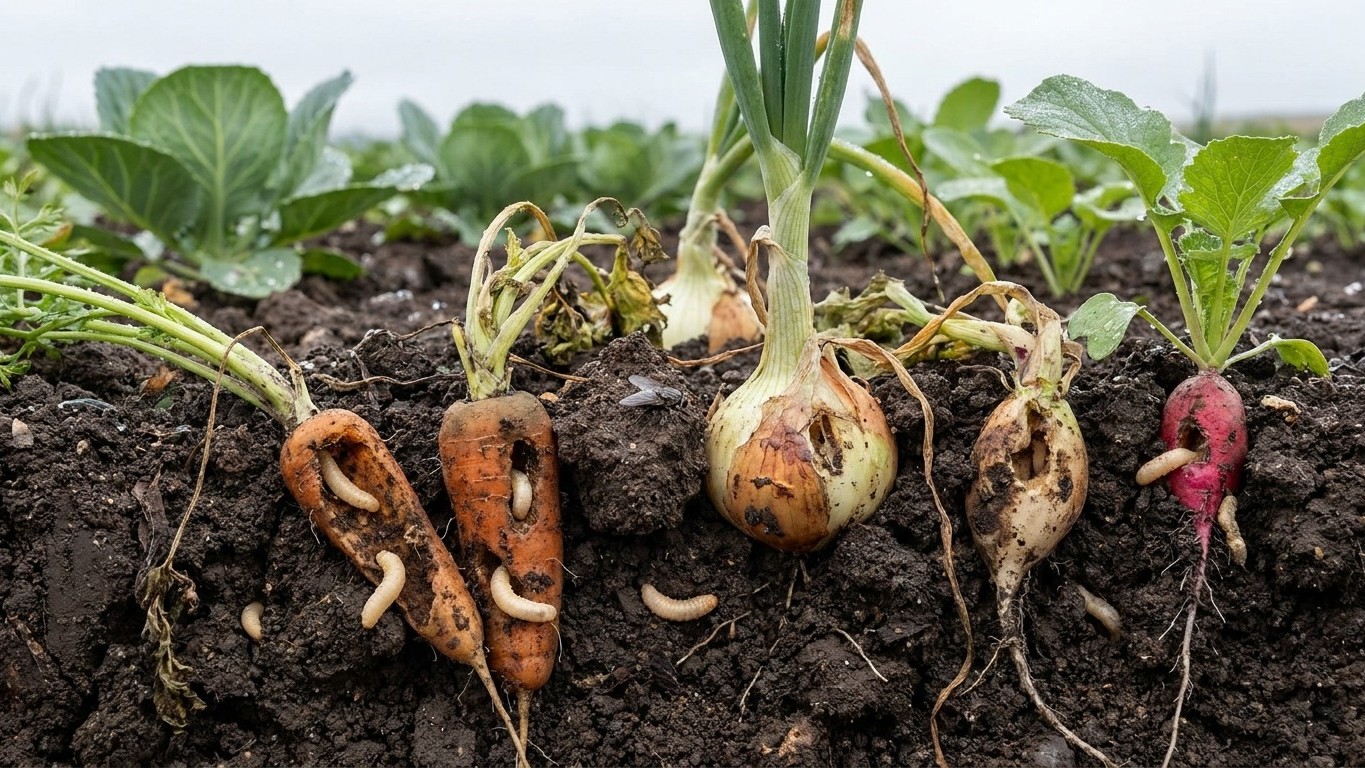
This page has no count of days above 90°F or a summer rainfall figure for a named station, so it will not invent one. What every Florida gardener knows is the pattern: long, hot, humid summers with heavy rain. That combination does damage to roots in three ways. Waterlogged soil invites rot, high humidity feeds fungal disease, and warm sandy soil favors root-knot nematodes, microscopic worms that gall roots and are a well-documented problem across much of the state. Rotation, raised beds with good drainage, and soil solarization before planting are the practices to ask your extension office about. This page names no products.
Leaving roots in the ground has its own risk when the soil stays wet. Inspect anything you lift. A soft patch, a weeping spot or a moldy crown ends the question, and so does anything that smells off. A root that looks sound is not therefore safe, and this page will not promise how long any harvest keeps. Heat and humidity make storage in a Florida kitchen or garage a short-term arrangement at best.
Which these root crops suit Florida
Choose by type, and let Florida’s own facts set the criteria. The window is long, so the earliest-maturing types are not the priority they would be in a northern state. Heat comes first: favor types and sites that give airflow and shade at the root. Humidity comes second and carries more weight than any other factor, so disease resistance should be the first thing you look for when you pick seed or planting stock.
| Type | Fit in north Florida | Main concern |
|---|---|---|
| Turnip and rutabaga | Cool season, fall into late winter | Brassica pests and diseases; heat |
| Kohlrabi | Cool season, fast crop | Brassica troubles; heat toughens it |
| Celeriac | Fall start, long and cool | Steady moisture; spring heat |
| Horseradish | Perennial, cool seasons | Wet soil rot; summer heat |
| Jerusalem artichoke | Heat-tolerant | Permanent spread; careful siting |
Turnips and rutabagas are brassicas. They share their troubles with cabbage, kale and mustard, and a gardener who rotates them into a cabbage bed has rotated nothing. Check the rotation page on this site before you plan beds, and count all of these as one family.
This page names no varieties, and that is deliberate. A cultivar that thrives in Jacksonville’s humidity may fail in the Panhandle or the Keys, and the only recommendation that means anything is one trialled where you garden. The University of Florida IFAS Extension county offices are the place to ask. They know which types resist local disease and nematodes, and which planting dates suit your county.
One preparation note: grating fresh horseradish releases compounds that burn the eyes and airways. Work with good ventilation, keep your face and eyes away from the bowl, and do not treat the sting as a joke.
Common questions
Can I use the Jacksonville frost dates in Orlando or Miami?
No. The February 16 to March 7 and November 26 to December 13 windows come from a north Florida station. Central and south Florida are effectively frost-free, and there the calendar inverts, with the main season running through winter.
Can these roots stay in the ground over a Florida winter?
In north Florida, usually yes for horseradish and Jerusalem artichokes, since the coldest month’s mean daily minimum at Jacksonville is 42.9°F. The risk is wet soil and rot, so inspect anything you dig, and discard a root with a soft patch, a weeping spot or a moldy crown.
Is it fine to rotate turnips or rutabagas into a cabbage bed?
No. They are brassicas and share pests and diseases with cabbage, kale and mustard. Treat the whole family as one rotation group.
Which varieties should I plant?
Ask your county office of the University of Florida IFAS Extension. Trial results from your own region beat any general list, and this page deliberately names none.