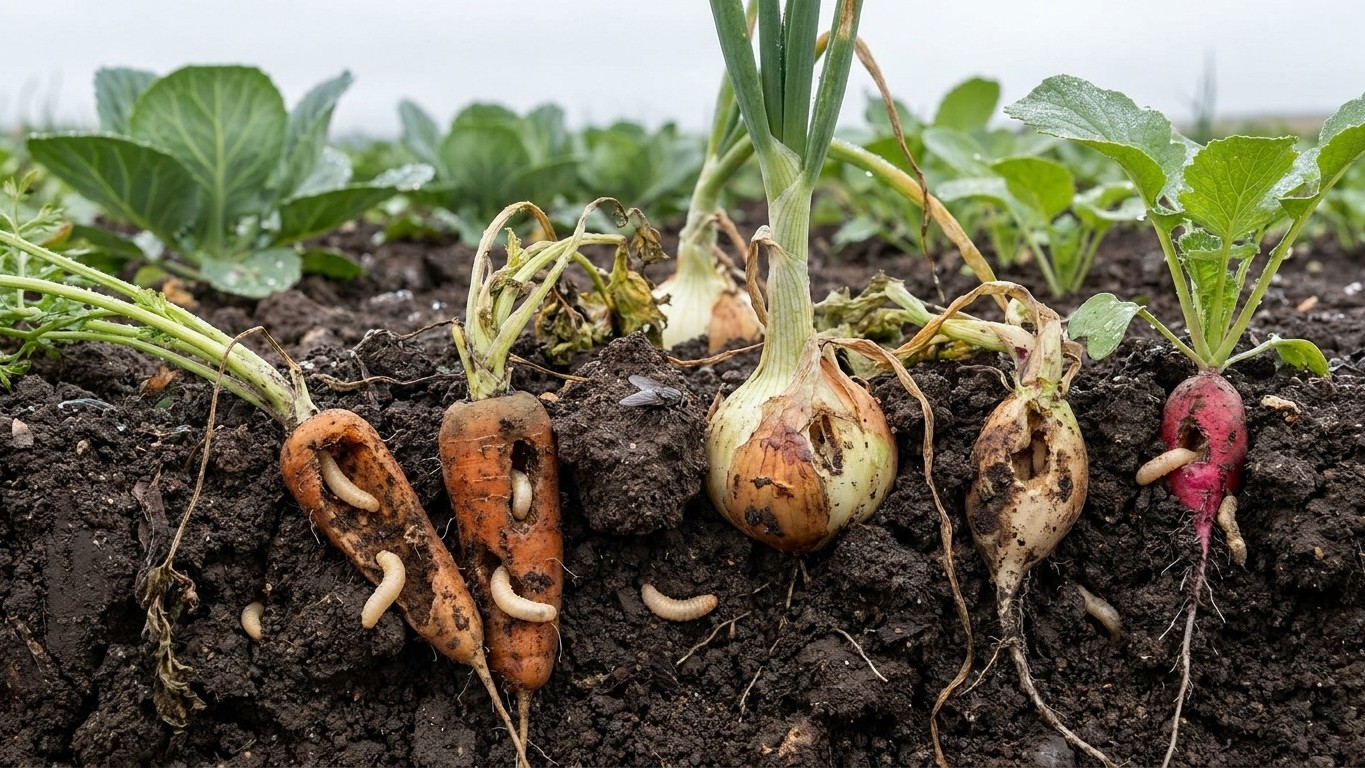

Minnesota can grow every one of these roots, but the calendar sets the terms. At the Minneapolis reference station, the last spring freeze falls between April 17 and April 30. Winter lows of 8.8°F in the coldest month then decide which roots stay in the ground and which come inside. The rest depends on where in the state you garden, and how far north.
When the soil is warm enough in Minnesota
The date most gardeners ask about is the last spring frost. The NOAA NCEI 1991-2020 Climate Normals, using the 30-70% band of 32°F freeze probabilities, put it between April 17 and April 30 for the Twin Cities. That is a probability, not a promise: some years the freeze comes back after the window closes, and some years it never shows up inside it.
Frost is also only a proxy. Celeriac, kohlrabi, turnips and rutabagas do not care what the air did last night; they care what the soil is doing. Soil lags the air in spring, so it warms after the frost risk ends, not along with it. A bed that has been thawed for three weeks can still be cold and wet at root depth, and seed or transplants sitting in it will stall or rot. An inexpensive soil thermometer pushed in at planting depth tells you more than the date on the calendar does.
What the cold ground punishes
Celeriac and kohlrabi hold a grudge against cold snaps. A long chilly stretch after transplanting can push them toward bolting, and a bolted celeriac is a lost season. Turnips and rutabagas are more forgiving of cool soil, which is why they go in earlier than celeriac. Horseradish, a perennial, is planted as a start and tolerates a cold spring better than the annuals do. For soil temperature thresholds on each crop, University of Minnesota Extension is the source to trust, along with the varieties its trials have found reliable. This page names no cultivars because it cannot source them, and an invented variety name is worse than none.
Site the Jerusalem artichoke first
Before anything else about growing it: Jerusalem artichoke is effectively permanent once planted. Every fragment of tuber left in the ground regrows, and digging the bed over tends to scatter pieces rather than remove them. It is the most regretted planting in a vegetable garden, so give it a boundary of its own, such as a corner you are happy to surrender, a bed edged by lawn or pavement, or a large sunk container. Never put it in the middle of the vegetable plot.
Eating it is a separate matter. The tubers store inulin rather than starch, and many people get digestive discomfort from them. Start with a small first portion and see how you do.
Horseradish deserves a similar caution at the kitchen counter. Grating a fresh root releases compounds that burn the eyes and airways. Grate it with the window open or a fan running, and keep your face well back from the bowl.
How long the season lasts here
The same NOAA normals give a first fall freeze between October 11 and October 23. Both ends of the window come from the same source, so the arithmetic is safe. Pair the latest spring date (April 30) with the earliest fall date (October 11) and you get about 164 days. Pair the earliest spring date (April 17) with the latest fall date (October 23) and you get about 189 days. A typical year lands somewhere between.
The Twin Cities are the mild south of the state. Northern Minnesota runs two to three weeks tighter at both ends, which can take roughly four to six weeks out of the window. If you garden near Duluth or International Falls, treat these numbers as a ceiling, not a forecast.
What does that length allow? In the Twin Cities, a window running toward 189 days has room for a second sowing of fast crops. Turnips and kohlrabi can go in again in midsummer for a fall harvest, timed so the roots size up as the weather cools. The succession sowing guide on this site walks through the spacing of those sowings, so use it rather than guessing dates.
In a tighter northern window, the first sowing is the only one. That also changes the transplant question. Starting celeriac indoors and moving it out buys back weeks, but every transplant carries a root check: a plant pulled from a cramped cell with its roots circling will sulk, and in a short season you cannot afford the sulking. Look at the root ball before it goes in, loosen anything wound tight, and set it out only when the soil has warmed.
Celeriac is the long crop of this group and the one the window is really about. Its needs are set by its variety, not by this page, so check the days to maturity on the seed packet or in the extension’s trial results against your own dates. If the packet’s figure crowds your window, choose differently or accept a smaller root.
Gardeners in other cold-climate territories run the same calculation with different dates, and the neighboring pages show how it plays out: Growing Unusual Root Crops in Vermont and Growing Unusual Root Crops in Nova Scotia are useful comparisons.
Heat and water in Minnesota
This page does not carry a verified count of days above 90°F or a summer rainfall total for a Minnesota station, and it will not invent one. What the verified data does show is that cold, not heat, is the main constraint here. A territory with winter lows and a season measured in the low hundreds of days does not need the hot-climate advice about shading roots from scorching soil.
What a cool, damp summer brings instead is a different set of troubles. Mildew on the foliage of celeriac and other leafy tops becomes likelier when leaves stay wet. Roots ripen slowly, and a slow-ripening crop meets the first fall freeze while still small. Disease pressure builds in beds where water sits. The practical responses are plain: space plants so air moves between them, water at the base in the morning, and keep mulch from piling against crowns, where it holds moisture against the plant.
Turnips, rutabagas and kohlrabi are brassicas. They share their pests and diseases with cabbage, kale and mustard, so a gardener who rotates them into a bed that held cabbage has rotated nothing. The rotation page in this series explains how to space these crops across the beds.
Winter decides what stays in the ground
The coldest month at the Minneapolis reference station has a mean daily minimum of 8.8°F (NOAA NCEI Climate Normals 1991-2020). That is the figure that decides winter hardiness. The USDA Plant Hardiness Zone Map (2023, built on 1991-2020 normals) spans 3a to 5a across the state, so a Twin Cities garden and a northern one can sit zones apart.
For horseradish and Jerusalem artichoke, both hardy perennials, that is workable: they can stay in the ground under mulch. Celeriac cannot. Lift it, and the tender roots, before the soil freezes. Hardy roots such as turnips and rutabagas can sit through a few light frosts, but a hard freeze that reaches the soil is the signal to lift.
When you store anything, inspect each root rather than trusting its looks. A soft patch, a weeping spot or a moldy crown ends the question: that root does not go into storage and should not be eaten. A root that looks sound is not thereby safe, and no keeping time is promised here because conditions vary too much.
Which these root crops suit Minnesota
The choice comes down to type, and Minnesota’s facts point in a clear direction. The short season, especially in the north, favors the earliest types and the fast crops, and it makes celeriac the one to think hardest about. The cold winter favors the hardy perennials, which cost nothing to overwinter. Damp spells make disease resistance the first criterion when you pick seed.
| Type | What the territory asks of it | Winter handling |
|---|---|---|
| Celeriac | Needs the full growing window; the most demanding of the group | Lift and store before the soil freezes |
| Kohlrabi | Fast; suits a short season and a second sowing in the south; a brassica | Harvest before hard freezes |
| Turnip and rutabaga | Cool-season roots; brassicas, so keep them out of cabbage beds | Lift when a hard freeze nears the soil |
| Horseradish | Perennial; tolerates the cold | Can stay in place under mulch |
| Jerusalem artichoke | Perennial and permanent; needs its own bounded spot | Can stay in place under mulch |
In the Twin Cities, with up to 189 days at the generous end, celeriac is a fair bet if you transplant strong, well-rooted seedlings and keep the water even. Farther north, the earlier and quicker types are the safer pick, and celeriac becomes a gamble you take only if you have the patience for a smaller root.
What this page will not do is tell you which varieties to buy. It has no trial data to support a name, and a cultivar that thrives in Iowa may sulk in Minnesota. The recommendation that means something comes from University of Minnesota Extension, which tracks what has been trialled in the state’s conditions and what resists the diseases that a damp summer encourages. Refusing to name a variety here is the honest answer, not a gap.
For the full picture of the group, see Celeriac, Kohlrabi, Horseradish and Jerusalem Artichokes.
Common questions
Can celeriac finish in northern Minnesota?
It is a gamble. Northern Minnesota runs two to three weeks tighter than the Twin Cities at both ends of the season, and celeriac is the longest crop of the group. Check the days to maturity of a specific variety against your own frost dates, and ask your extension office what has worked locally.
When should I plant horseradish and Jerusalem artichoke?
Both are perennials planted as starts or tubers, so the soil needs to be workable and not waterlogged. Neither depends on warm soil the way celeriac does. The more important decision is where: Jerusalem artichoke regrows from any tuber fragment left behind, so site it in a bounded spot before you plant.
Do I need to ventilate when preparing horseradish?
Yes. Grating a fresh root releases compounds that burn the eyes and airways. Open a window or run a fan, and keep your face away from the bowl.
Where do I find varieties that work in Minnesota?
Start with University of Minnesota Extension, which publishes what has been trialled in the state. Its recommendations reflect local frost dates, winter cold and disease pressure, which a general list cannot.