
Start celeriac indoors, direct-sow kohlrabi once the bed can be worked, and plant horseradish and Jerusalem artichoke after the ground has thawed. Treat the average last frost, April 29 to May 10 at Billings, as the earliest sensible date rather than a starting gun. Montana’s window favors kohlrabi and the perennial roots. Celeriac is the one that needs help.
When the soil is warm enough in Montana

At Billings, the last spring freeze falls between April 29 and May 10, according to the NOAA NCEI 1991-2020 Climate Normals (the 30 to 70 percent probability band for a 32F freeze). That is a probability, not a promise. In some years the last freeze comes earlier, and in others it comes later.
The date is also a proxy. Frost tells you when the air stops freezing at night. Root crops care about the soil, and soil warms after the frost risk ends, not at the same moment. A bed can be frost-free for a week and still be cold and soggy at planting depth. Billings is also one of the milder valleys, and mountain valleys elsewhere in Montana can frost in any month, so a gardener in the Gallatin or Flathead should expect a later start and a shorter margin.
What goes in first, and what waits
Kohlrabi, a cool-season brassica, tolerates cool soil and goes in first. Celeriac gets started indoors, because its seedlings are slow and it needs every week it can get. Horseradish is planted as a root piece in spring once the ground is workable. Turnip and rutabaga are also brassicas, which means they share their pests and diseases with cabbage, kale and mustard. Rotating them into a cabbage bed rotates nothing, so keep them on the same rotation plan as the rest of that family.
The varieties that have been trialled in your valley are the ones worth buying. Montana State University Extension is the place to ask, and this page deliberately names no cultivars.
Site Jerusalem artichoke before you plant it
Jerusalem artichoke is effectively permanent once planted. Every fragment of tuber left in the soil regrows, so digging it out never quite finishes the job. This is the most regretted planting in a vegetable garden. Give it a fenced corner, a bed bordered by lawn you mow or a raised bed with a solid bottom, and never the middle of a plot you rotate. Once it is sited, planting is simple: tubers go in as soon as the soil can be worked, and the tall stems come up fast.
The tubers store inulin rather than starch, and in many people that causes digestive discomfort. A small first portion is the sensible way to find out how you react.
Horseradish asks for care in the kitchen. Grating the fresh root releases compounds that burn the eyes and airways, so open a window, run the fan and keep your face well back from the bowl. This is a real irritant, not a quirk.
How long the season lasts here
The first fall freeze at Billings arrives between October 1 and October 14, from the same NOAA NCEI 1991-2020 normals. Set that against the last spring freeze of April 29 to May 10 and the frost-free stretch runs from 144 days (May 10 to October 1) to 168 days (April 29 to October 14). That is roughly 21 to 24 weeks. Both ends are probability bands, and the true figure in any given year can fall outside them.
The number matters less than what it allows. A window of that length leaves little slack for celeriac, the longest crop in this group. It is started indoors and transplanted, and the transplant has to be handled gently, because celeriac sulks when its roots are disturbed. Starting too late means a small root at frost, and in a mountain valley with a shorter window the case for celeriac gets weaker still.
The same window makes the first sowing the main sowing for most of these crops. Kohlrabi is the exception, because it matures quickly enough that a second sowing in mid-summer can still finish before the fall freeze. Whether it will depends on your own frost dates and on how fast the types you choose mature, which your extension office can tell you for your valley. For spacing sowings so they don’t all ripen at once, see the succession sowing guide on this site.
The horseradish and Jerusalem artichoke are different, since they are perennials. They are planted once, and the first season mostly builds the root. For how the same group fares in other states, compare Growing Unusual Root Crops in Oregon and Growing Unusual Root Crops in West Virginia. For the crops themselves, see Celeriac, Kohlrabi, Horseradish and Jerusalem Artichokes.
Heat and water in Montana

This page does not carry a verified count of days above 90 F or a summer rainfall figure for Montana, so it quotes none. Any such count would be a number at one reference station anyway, not a description of a state that spans high plains, mountain valleys and everything between. Check your own valley with your county extension office or the NOAA normals for the nearest station.
What can be said is how the two possible summers play out. A hot, dry spell calls for even moisture and mulch, because celeriac and kohlrabi crack, turn woody or bolt when watering swings between drought and flood. A cool, damp summer brings a different set of problems: mildew, slow ripening and rot in the crown. In that case, spacing for airflow and keeping foliage dry matter more than extra water.
The winter low decides what stays in the ground
The cold end is better documented. At Billings, the mean daily minimum of the coldest month is 17.9 F (NOAA NCEI Climate Normals 1991-2020). By USDA zones (the 2023 Plant Hardiness Zone Map), Montana runs from 3a to 6a, a wide spread, so Billings is a reference point and other parts of the state differ.
At a site like Billings, horseradish and Jerusalem artichoke can be left in place under a mulch. The roots are perennial and the soil insulates them. In a colder valley, the safer plan is to lift what you intend to eat and cover the rest deeply. Celeriac does not overwinter in this climate and should be lifted before the soil freezes.
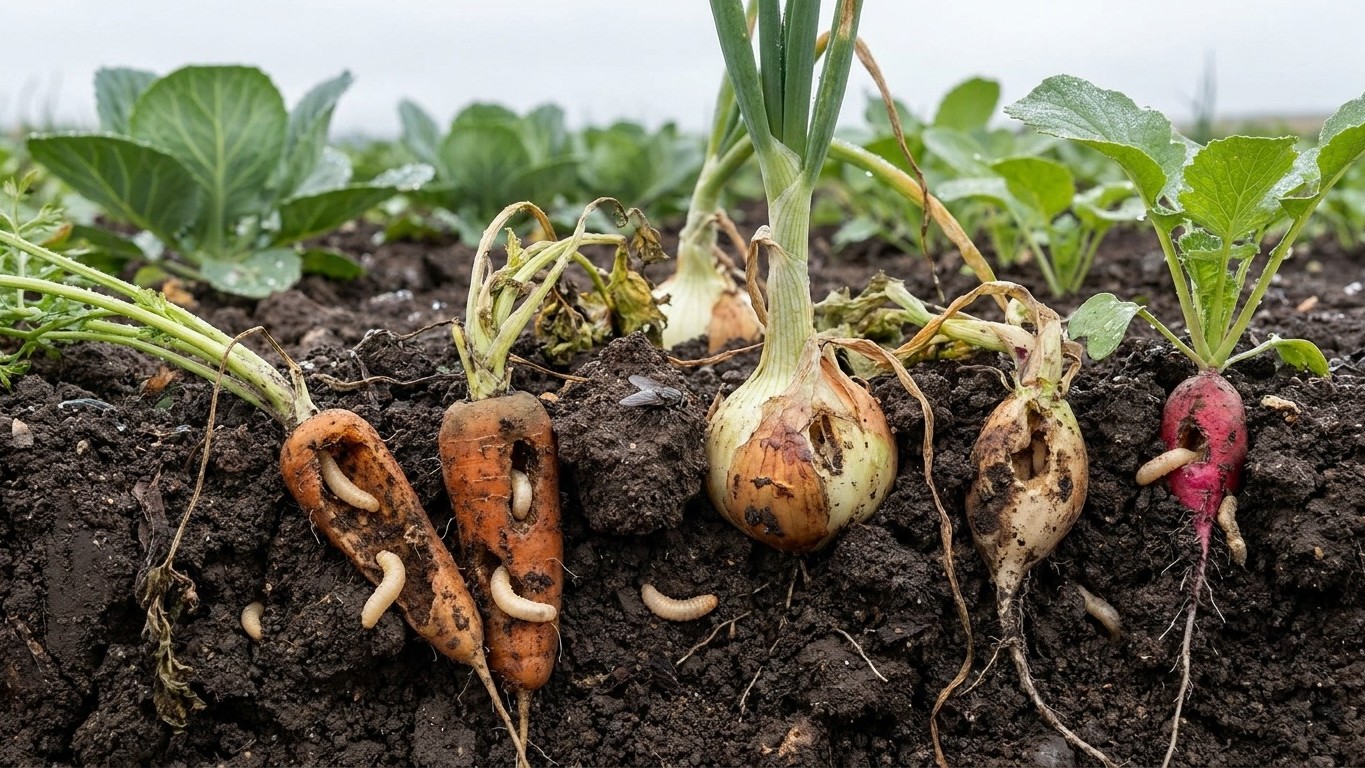
Anything lifted and stored needs inspecting, not trusting. Look over each root before it goes away and again as the winter goes on. A soft patch, a weeping spot or a moldy crown ends the question: that root is not worth keeping or eating, however sound the rest of it looks. This page makes no promise about how long any root will keep.
Which these root crops suit Montana
Montana’s short window and cold winters decide the choice, and the order is fairly clear. Kohlrabi suits the state best, since it is quick and tolerates cool nights. Horseradish and Jerusalem artichoke suit it too, for different reasons: they are perennial and cold-hardy, so the frost dates matter little to them. Celeriac comes last, and it is worth growing only where the season runs long and you are willing to start it early.
| Crop | Fit for a short season | Main thing to watch |
|---|---|---|
| Kohlrabi | Good, quick type | Even watering to avoid splitting |
| Horseradish | Good, perennial | Irritant fumes when grating |
| Jerusalem artichoke | Good, perennial | Spreads permanently; digestive upset for many people |
| Turnip and rutabaga | Fair to good, brassicas | Share diseases with cabbage, kale and mustard |
| Celeriac | Marginal, needs the long end of the window | Early indoor start; gentle transplanting |
When you pick among types, look for the earliest-maturing ones in a short valley. Where summers are damp, put disease resistance first. Where they are hot, favor roots you can shade and give airflow at the base.
This page names no varieties, and that is deliberate. A variety recommendation only means something if it was trialled where you garden, and this page does not have those trials. Montana State University Extension and your county office do. Ask them which types performed at your elevation, then buy those.
Common questions
Can I plant on the last frost date?
The last frost date is a probability, not a promise, and the soil lags behind the air. Wait until the bed is workable and has warmed, and check with a soil thermometer. The thresholds for each crop are in your extension office’s guidance.
Is celeriac realistic in Montana?
Only at the long end of the window. At Billings, the span from last to first freeze runs between 144 and 168 days, and celeriac needs an early indoor start to use it. In a shorter mountain valley, kohlrabi and the perennial roots are the safer picks.
Can Jerusalem artichoke be removed later?
It is very hard. Every tuber fragment left in the soil regrows, so choose a contained spot from the start. Expect to dig for several seasons if you change your mind.
Do turnips belong in a cabbage rotation?
No. Turnip and rutabaga are brassicas and share pests and diseases with cabbage, kale and mustard. Rotate them as members of that family and follow the rotation guide in this series.