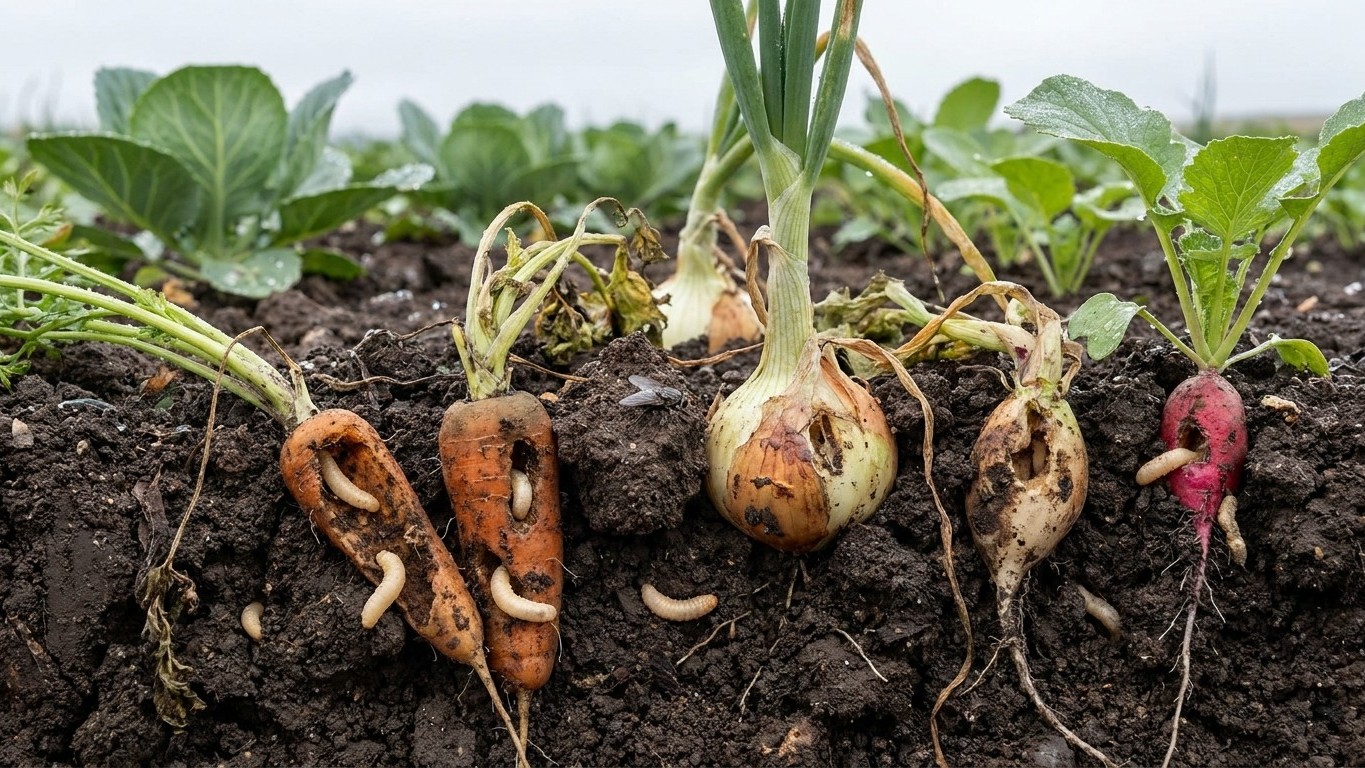

In Nebraska, the last-frost date is only the first gate. NOAA’s 1991-2020 normals for the airport weather station behind the Omaha figures put the last spring freeze between April 12 and April 23. Unusual roots such as celeriac, parsnip, turnip, kohlrabi and horseradish respond to soil temperature, not the calendar. Plan around a window of roughly six months, lift the tender ones before the ground freezes, and leave the hardy perennials where they are.
When the soil is warm enough in Nebraska

The date comes from NOAA’s 1991-2020 U.S. Climate Normals, which give the 30-70% band of 32°F freeze probabilities: the last spring freeze falls between April 12 and April 23. That is a probability, not a promise, and some years will break it. It is also the reference-city figure from one airport station. Suburban and rural gardens typically see the last spring frost later, often by one to two weeks and more at elevation, so check your own county before you mark the calendar.
Treat the frost date as a proxy and nothing more. These crops wait for warm soil, and soil warms after the frost risk ends, not with it. A bed can be frost-free and still cold and soggy, and seed sown into it sits, rots or sulks. A soil thermometer pushed in at planting depth on a spring morning tells you more than any almanac. For the exact thresholds by crop, University of Nebraska–Lincoln Extension is the source to trust.
By type, the order looks like this. The cool-season roots (turnip, rutabaga, kohlrabi, and parsnip-type roots) tolerate cooler soil and go in first. Celeriac goes out as transplants once frost risk has passed. Horseradish root cuttings and Jerusalem artichoke tubers go in as soon as the ground is workable. Beyond what is described here, this page cannot vouch for any named variety.
Jerusalem artichokes: choose the site before you plant
Jerusalem artichoke is effectively permanent once planted. Every fragment of tuber left in the soil regrows, and digging the bed over only scatters the pieces. It is probably the most regretted planting in a vegetable garden. Put it where a spreading perennial can live out its days: a back corner, a strip bounded by mown lawn or pavement, or a patch you never intend to plant anything else in. Do not put it beside a bed you rotate.
The tubers store inulin instead of starch, and many people find it causes digestive discomfort. That is a plain fact of the vegetable, with no health claim attached in either direction. Start with a small first portion and see how you get on.
How long the season lasts here
Both frost ranges come from the same NOAA normals: last spring freeze April 12 to April 23, first fall freeze October 15 to October 26. Subtracting gives the window.
| Pairing | Frost-free days |
|---|---|
| April 12 to October 15 (earliest spring, earliest fall) | 186 |
| April 23 to October 26 (latest spring, latest fall) | 186 |
| April 23 to October 15 (shortest case) | 175 |
| April 12 to October 26 (longest case) | 197 |
So the reference city has between 175 and 197 days between freezes, call it six months. A country garden that loses one to two weeks at each end, as the NOAA caution warns it may, can plan on a noticeably shorter window than the table suggests.
What does six months allow? Room for a second sowing, for one thing. Quick roots like turnips and kohlrabi can go in again in late summer, timed so they mature before the October freeze. Check the succession sowing guide on this site for how to space those sowings. Both are brassicas, along with rutabaga. They share their troubles with cabbage, kale and mustard, so a bed that held any of those last year has not been rotated for them. The crop rotation guide on this site explains how to count families, not crops.
A window this long also makes transplanting celeriac worth the trouble. It is the slowest of the group, and a head start indoors is how it finishes before fall. Transplanting has a cost: roots that are moved can fork or stunt. That is why parsnip-type roots are sown where they will grow and celeriac is handled by its tops, never by a bent root. A shorter season would force a harder choice. Here, a gardener has some slack, though not enough to waste on a late, cold start.
Heat and water in Nebraska

Two things matter most for this group here, and the season length is one of them. It says whether celeriac, the long one, can finish at all. The other is the winter low, which decides whether the perennials and hardy roots can stay in the ground under mulch or must be lifted before the soil freezes.
For summer heat and rainfall, this page does not carry a sourced count of days above 90°F or a summer rainfall total, and it will not guess at either. Any such count would describe one reference station, not your yard. The practical effect of heat is familiar anyway: hot, dry spells make brassica roots turn woody and strong-flavored, and uneven watering splits and forks roots. A deep, regular soak and a mulch layer matter more than the exact degree count. When a wet spell comes instead, expect leaf disease, slow ripening and rot, so airflow around the plants and good drainage in the bed matter. Your local extension office and weather station records will give you the real numbers for your county.
The winter figure is sourced. The mean daily minimum of the coldest month is 15.2°F at the Omaha reference station, and the USDA Plant Hardiness Zone Map (2023) puts the state across zones 4a to 5b. That zone is built on the average annual extreme minimum, so it runs colder than the monthly mean, and parts of the state differ from Omaha.
That cold is no problem for the true perennials. Horseradish and Jerusalem artichoke can stay in the ground all winter, which is exactly why the siting warning matters. The hardy roots, such as parsnips, can be left under a deep mulch and dug on a mild day, with the caveat that a frozen bed may make digging hard. Celeriac is the one to lift before the soil freezes.
Storage touches food safety, so inspect every root before it goes in. Reject any with a soft patch, a weeping spot or a moldy crown, because that settles the question. A root that looks sound is not therefore safe, and this page will not promise how long any of them keep. Check them again during storage and discard anything that has changed.
Horseradish needs one more warning. Grating a fresh root releases compounds that burn the eyes and airways. Open a window, run a fan, and keep your face well away from the bowl. This is not a joke.
Which these root crops suit Nebraska
The choice comes down to type, and the facts above narrow it.
| Type | What Nebraska’s facts say |
|---|---|
| Turnip, kohlrabi | Quick enough for spring and a late-summer second sowing; brassicas, so rotate away from cabbage-family beds |
| Rutabaga | A brassica too; needs steady moisture through summer heat |
| Celeriac | Long season; a six-month window allows it, with transplants and lifting before freeze |
| Parsnip-type roots | Sown in place; hardy enough to winter under mulch |
| Horseradish | Permanent and cold-hardy; mind the fumes when grating |
| Jerusalem artichoke | Permanent and cold-hardy; site it first, and test a small portion |
A season of this length favors the earliest-maturing types for the second sowing, and it favors celeriac only if you start it early. Summer heat favors types given airflow and shade at the root, such as a thick mulch and spacing that lets leaves dry. Dampness favors disease resistance as the first criterion when you pick seed.
This page names no variety, and that is the correct answer. A variety is only worth recommending if it has been trialled where you garden, and this page has no such trial data. An invented name would be worse than none. University of Nebraska–Lincoln Extension and its county offices know what has been grown and tested locally. Ask them for varieties of each type.
For the full crop-by-crop picture, see Celeriac, Kohlrabi, Horseradish and Jerusalem Artichokes. Gardeners who want to see how the same group changes under other climates can compare Growing Unusual Root Crops in Connecticut and Growing Unusual Root Crops in Wisconsin.
Common questions
Can I plant root crops on April 23, the end of the frost range?
The date is a probability, not a guarantee, and the soil matters more. Check soil temperature at planting depth, and remember that a rural garden may see its last frost one to two weeks after the reference figure.
Which roots can stay in the ground over winter?
Horseradish and Jerusalem artichoke are perennials that overwinter in place. Hardy roots like parsnips can be mulched and dug later, though frozen ground can make that hard. Celeriac should be lifted before the soil freezes.
Can turnips or rutabagas follow cabbage in the same bed?
They should not. Turnip and rutabaga are brassicas and share their pests and diseases with cabbage, kale and mustard, so the bed has not truly been rotated. See the crop rotation guide on this site.
Is grating fresh horseradish really that bad?
Yes. A freshly grated root releases compounds that burn the eyes and airways. Ventilate the room well, and keep your face away from the bowl while you work.