
Most unusual roots can work in New Hampshire, with one caveat and one hazard. The caveat is celeriac, which needs nearly the whole season. The hazard is Jerusalem artichoke, which never leaves once planted. Kohlrabi and horseradish are easier fits. Plant by warm soil, not by a calendar date, and check your own county’s frost dates, because the figures below come from an airport station.
When the soil is warm enough in New Hampshire
Mid-to-late April is the number most gardeners reach for. NOAA’s 1991-2020 U.S. Climate Normals put the last spring 32°F freeze between April 16 and April 27, using the 30-70% probability band at an airport reference station (NOAA NCEI data). Treat that as a probability, not a promise: a freeze after the later date is entirely possible. Suburban and rural gardens typically see the last frost one to two weeks later than an airport, and higher elevations see it later still.
Frost is only a proxy
Here is what the frost date can’t tell you. Celeriac, kohlrabi, horseradish and Jerusalem artichoke don’t wait for frost to end. They wait for warm soil, and soil warms after the frost risk is over, not at the same moment. A cold, wet May can leave the ground sluggish weeks after the last freeze, and seed or transplants set into it just sit.
A soil thermometer settles the argument better than any date. Push it a few inches down in the morning, and take the planting thresholds for each crop from your state extension service rather than from memory. Kohlrabi tolerates cool conditions far better than celeriac, which stalls when chilled. Celeriac starts indoors well ahead of the last frost and moves out only when both air and soil have turned. Horseradish roots and Jerusalem artichoke tubers go in as soon as the ground can be worked and is no longer waterlogged.
Site the Jerusalem artichoke first
Before you plant a single tuber, decide where it will live for good. Jerusalem artichoke is effectively permanent once planted, and every fragment of tuber left in the ground regrows. Gardeners who put it in the middle of a vegetable bed tend to regret it for years. Choose a corner or a strip at the edge of the property, away from beds you rotate, ideally bounded by a mowed path, a wall or a solid edge. Plant tubers in spring, give them room, and expect tall stalks by late summer.
The tubers store inulin instead of starch, and in many people that causes digestive discomfort. It’s a plain fact of the vegetable. A small first portion is the sensible way to find out how you react.
Gardeners wanting the full range of these crops will find the overview in Celeriac, Kohlrabi, Horseradish and Jerusalem Artichokes.
How long the season lasts here
Use both ends of the reference data. The first fall freeze falls between October 13 and October 26, from the same NOAA 1991-2020 Normals and the same 30-70% band. Set that against a last spring freeze of April 16 to April 27 and the frost-free window runs from about 169 days at its shortest (April 27 to October 13) to about 193 days at its longest (April 16 to October 26).
That is the airport’s window. If your garden frosts one to two weeks later in spring and one to two weeks earlier in fall, as suburban and rural sites often do, subtract two to four weeks. A garden at elevation may lose more. Your county extension office can tell you which end of the range you live on.
What that length allows
A window in this range is long enough for a first sowing and, for the quick crops, a second one. Kohlrabi is the obvious candidate. A spring sowing followed by a later one means you aren’t harvesting everything in the same fortnight. The succession sowing guide on this site lays out how to stagger sowings. Roots that need the whole season don’t get that second chance.
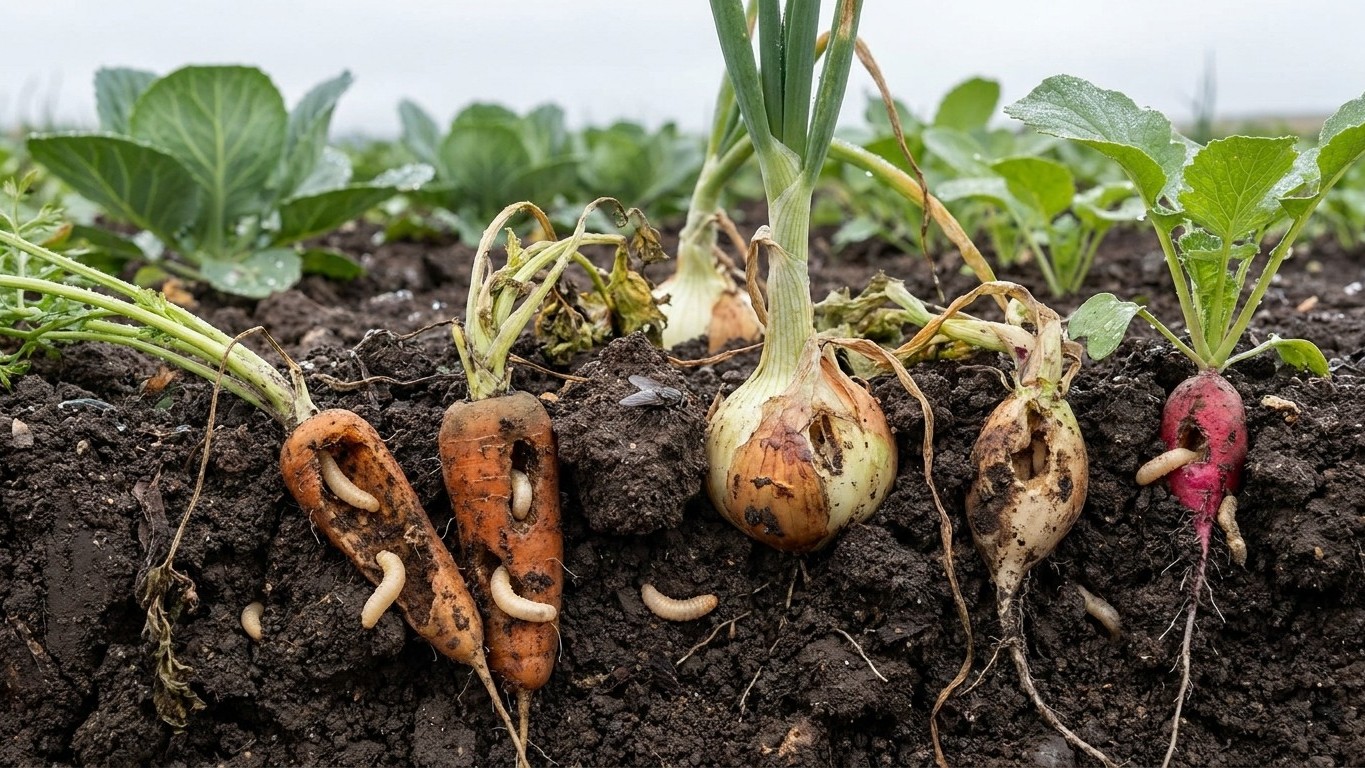
Celeriac is the long one. It has to be started indoors and transplanted, and in a window trimmed by those two to four weeks, there is little slack. The sowing date indoors matters, and so does the transplant itself. Check the roots before you set a seedling out: disturbed or tangled roots cost growing time that celeriac cannot spare. Where the window is shorter than the New Hampshire reference range, as in the far north, the first sowing becomes the only one and the root check becomes more expensive. Gardeners with an even shorter season can see how the trade-offs shift in Growing Unusual Root Crops in Alaska.
Horseradish and Jerusalem artichoke sit outside this arithmetic. Both are perennials that establish from pieces of root or tuber, so the length of one season matters less to them than the soil they are planted in.
Heat and water in New Hampshire
This page doesn’t carry a verified count of days above 90°F or a summer rainfall total for New Hampshire, so it won’t quote one. Gardeners can pull both from the NOAA Climate Normals for the nearest station, and any such count is a reading at one reference point, not a description of the whole state. What matters is how to read the figures once you have them.
If your summers run cool and damp, expect a different set of troubles than heat brings. Mildew, slow ripening and root rot are the usual costs. Celeriac in particular lingers in cool weather, which eats into an already tight window. Where a dry spell does arrive, uneven watering can crack celeriac and split or toughen kohlrabi, so even moisture and a layer of mulch pay off.
Kohlrabi and horseradish are brassicas, as are turnip and rutabaga if you grow them. They share their troubles with cabbage, kale and mustard, so a gardener who rotates them into a cabbage bed has rotated nothing. Give them a different family in the bed the year before, and see the rotation guide on this site.
The winter low decides what stays in the ground
Manchester’s coldest month averages a daily minimum of 17.1°F (NOAA NCEI Climate Normals 1991-2020). That is a mean minimum, not a record low, so single nights run colder. New Hampshire spans USDA zones 3b to 6a on the 2023 USDA Plant Hardiness Zone Map. That figure is based on average annual extreme minimum temperature and covers the whole state, so your zone will differ from Manchester’s.
In practice, horseradish and Jerusalem artichoke are hardy perennials and can overwinter in the ground under mulch. Celeriac is not that tough. Lift it before the soil freezes, and don’t leave it to the cold. Anything you store needs regular inspection. A root that looks sound is not therefore safe, and a soft patch, a weeping spot or a moldy crown ends the question. Discard it.
Fresh horseradish demands care in the kitchen. Grating the root releases compounds that burn the eyes and airways. Work with the window open or a fan running, and keep your face away from the bowl.
For another cold-winter state with its own constraints, see Growing Unusual Root Crops in Wisconsin.
Which these root crops suit New Hampshire
Choose by type, because the facts for this state point in a clear direction. A season of roughly 169 to 193 days at the reference station, shorter at many gardens, favors the earliest types. A cool, damp summer makes disease resistance the first thing to look for. And a winter low of 17.1°F in the coldest month means the perennials are safe bets while the tender crops must be lifted.
| Crop | What New Hampshire’s facts mean for it | Practical approach |
|---|---|---|
| Kohlrabi | Tolerates cool conditions; the window allows more than one sowing | Sow in succession; rotate away from the cabbage family |
| Horseradish | Hardy perennial; winter low poses no obstacle | Choose a permanent bed; mulch for winter; rotate cautiously, as it is a brassica |
| Jerusalem artichoke | Hardy and effectively permanent | Site at the edge of the property, never in a rotating bed |
| Celeriac | Needs nearly the full window; tightest fit of the group | Start indoors, check roots before transplanting, lift before the soil freezes |
This page names no cultivar, and that is deliberate. A variety that thrives in a trial plot in one county can fail in a frost pocket two valleys over, and the only recommendation that means anything is one tested in New Hampshire soil and weather. This page doesn’t hold those results. University of New Hampshire Extension does, so ask there for the varieties trialled in your area, and ask your county office for your local frost dates at the same time.
When you do pick varieties, put disease resistance first if your summers are humid, and earliness first if your garden sits high or frosts late. A type that finishes early with a good disease profile beats a theoretically better one that never ripens.
Common questions
When can celeriac go outside in New Hampshire?
After the frost risk has passed and the soil has warmed. The reference station’s last freeze falls between April 16 and April 27, but many gardens frost one to two weeks later, so use your own county’s date and a soil thermometer. Celeriac stalls in cold ground, so waiting a little costs less than rushing.
Can horseradish and Jerusalem artichoke stay in the ground over winter?
Generally yes. Both are hardy perennials, and a layer of mulch helps. New Hampshire spans USDA zones 3b to 6a, so conditions vary between gardens. Celeriac is different and should be lifted before the soil freezes.
Is it all right to plant kohlrabi where cabbage grew last year?
No. Kohlrabi is a brassica, like cabbage, kale and mustard, and they share their diseases and pests. Planting it in a former cabbage bed rotates nothing. The same applies to turnip, rutabaga and horseradish.
How do I know whether stored roots are still good?
Inspect them regularly, and don’t treat a sound appearance as proof of safety. A soft patch, a weeping spot or a moldy crown means the root goes in the trash. One bad root is also a reason to check the neighbors it was touching.