
New York City’s last spring freeze falls between March 23 and April 3, according to NOAA’s 1991-2020 normals for Central Park. That is the city’s figure, not the state’s. Turnips, kohlrabi and rutabaga go in early, horseradish and Jerusalem artichokes go in once the ground is workable, and celeriac needs the longest runway. Upstate gardeners should shift every date later.
When the soil is warm enough in New York
The date most gardeners want is the one on the NOAA table: March 23 to April 3 for the last 32°F freeze at the Central Park station, from the 1991-2020 U.S. Climate Normals (the 30-70% probability band). A frost date is a probability, not a promise, and a late cold snap can still arrive after it. Central Park is also a dense urban site. Upstate New York and the Adirondacks frost earlier in fall and later in spring, so treat these dates as the New York City figure and push your own calendar later the farther north and higher you garden.
The bigger point is that frost is a proxy. These root crops care about warm soil, and soil warms after the frost risk ends, not with it. A bed can be frost-free for two weeks and still sit cold and sodden at root depth. Seed sown into it sulks, rots or stalls. A soil thermometer pushed a few inches down does more for you than any printed date. Wait until the readings stop swinging with each cold night, and check the bed again after a stretch of rain.
Different roots read that warmth differently. Turnips, rutabagas and kohlrabi tolerate cool ground and can go in as soon as it can be worked without turning to paste. Horseradish is planted as root pieces or crowns in early spring. Celeriac is the fussy one. It is the slowest of the group, and it is usually started indoors and set out after frost risk has passed, when nights are no longer cold.
Site Jerusalem artichokes before you plant them
Jerusalem artichoke is effectively permanent once planted. Every fragment of tuber left in the ground regrows, and digging the patch simply scatters more pieces. It is the single most regretted planting in a vegetable garden. Give it a corner you can wall in with a mowed strip, a raised-bed edge or a lawn border, and keep it well away from beds you rotate. Once it is sited, planting is easy: tubers go in as soon as the soil is workable.
The vegetable also has a digestive side. It stores inulin instead of starch, and many people get digestive discomfort from it. A small first portion is the sensible way to find out how you react. For specifics on how this group behaves in other climates, see Celeriac, Kohlrabi, Horseradish and Jerusalem Artichokes.
How long the season lasts here
The same NOAA normals put the first fall freeze at the Central Park station between November 14 and November 27. Count forward from the spring dates and the frost-free window runs from about 225 days (April 3 to November 14, the shortest pairing) to about 249 days (March 23 to November 27, the longest). That is a New York City window. Upstate stations will be shorter. This page does not carry their dates, so it does not guess at them.
The number matters for what it allows. A window of 225 to 249 days leaves room for a second sowing. Turnips, kohlrabi and rutabaga can go in during spring, and a second round can follow in late summer to mature into the cool, short days of fall, when mid-to-late November freezes are still weeks off. Roots that finish in cool weather also tend to be less woody than those that mature in July heat, though that is a general gardening observation rather than a figure from the NOAA tables.
Celeriac gains the most from a long window. Because it is slow, starting it indoors and transplanting is the normal route, and a long season makes that worth the trouble. A short season changes the math. If the first sowing is the only one you get, every week counts, and transplanting carries a cost: a root disturbed at the wrong moment sulks and loses time you do not have. In the cooler parts of the state, favor direct sowing for the quick roots and keep transplants for the single crop, celeriac, that cannot be rushed.
Staggering sowings across the window, rather than sowing everything on one weekend, is what turns a long season into a steady supply. The succession sowing guide on this site lays out the rhythm in detail, with spacing between sowings and how to read your own window. Gardeners elsewhere run the same logic against very different calendars, and the Growing Unusual Root Crops in Utah page shows how a drier, higher territory shifts the plan.
Heat and water in New York
The brief for this territory calls for the count of days above 90°F and the summer rainfall at the reference station. Neither figure is among the verified facts available for this page, so I am not going to supply one from memory. What can be said safely is how the two variables act on these crops, and what to look for in your own yard.
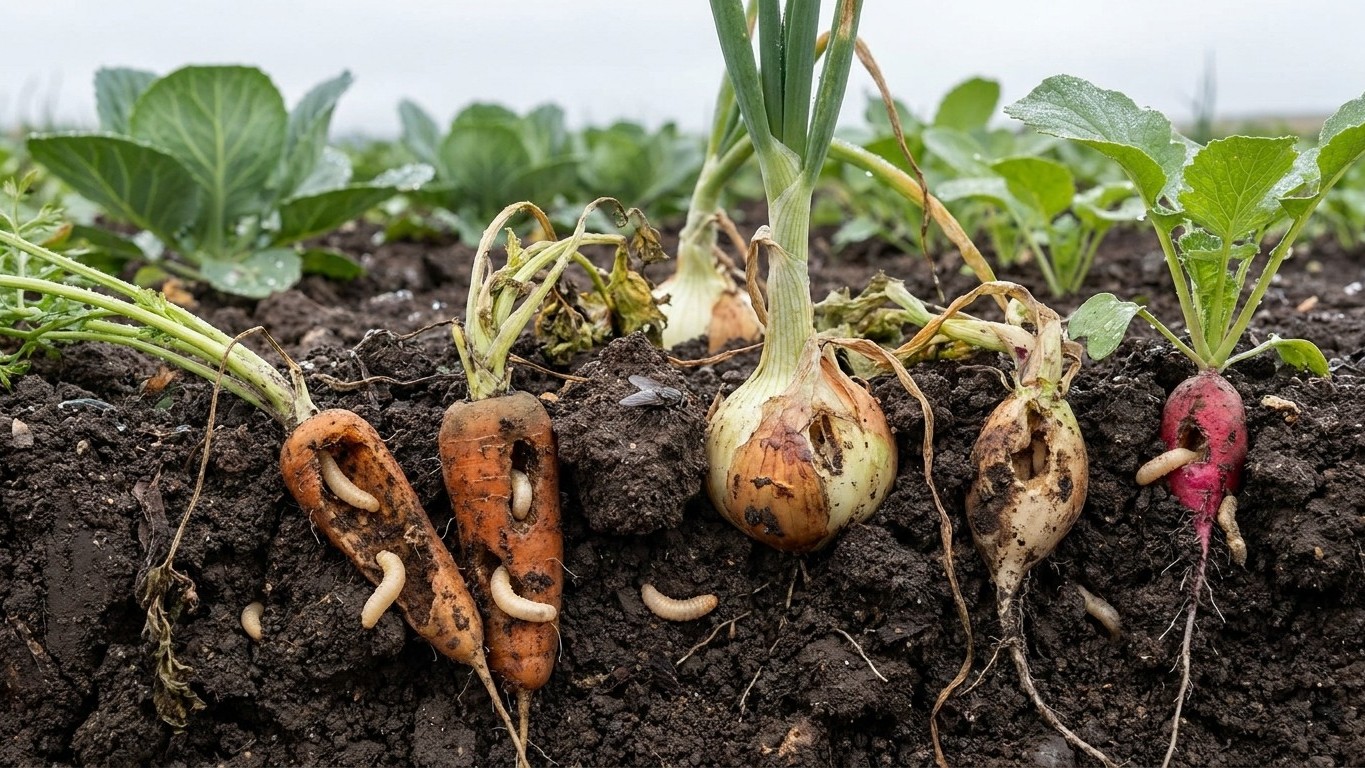
Heat and uneven water are what split roots, toughen them and turn them bitter or hollow. If your summer runs hot and dry, shade at the root and a steady mulch layer matter most. If it runs cool and damp, as it often does in the northern and higher parts of the state, the trouble changes. You get foliar mildew, slow ripening and rot, not sunburn. Turnip and rutabaga are brassicas, so they share their troubles with cabbage, kale and mustard. A gardener who rotates them into a cabbage bed has rotated nothing. The crop rotation page on this site explains how to space them out.
Two facts govern this group more than any others. The first is season length, which decides whether celeriac can finish here at all. With a New York City window of roughly 225 to 249 days it can. Upstate, ask your extension office before you commit a bed to it.
The second is the winter low, which decides whether the perennials and the hardy roots can stay in the ground under mulch or must be lifted before the soil freezes. At the New York City reference station, the mean daily minimum of the coldest month is 27.9°F (NOAA Climate Normals 1991-2020). That is a monthly mean, not a record low, and it describes a mild urban site. The USDA Plant Hardiness Zone Map 2023 rates the state across a range from 3b to 7b. That range is built on the average annual extreme minimum, and it tells you how different the state’s coldest corners are from its warmest.
Horseradish and Jerusalem artichoke are perennial and can generally be left in place under mulch. Roots you lift, such as celeriac, need inspecting before they go into storage. Look over every one. A soft patch, a weeping spot or a moldy crown ends the question. Never decide a root is safe because it looks sound from the outside, and do not trust a keeping time you read somewhere, including here.
Which these root crops suit New York
Choose by type, and let New York’s conditions do the narrowing. A short season, which is the upstate reality, favors the earliest-maturing types of turnip and kohlrabi and makes direct sowing the default. A hot summer favors roots given airflow and shade at the root zone, with mulch to hold moisture steady. A humid or damp one makes disease resistance the first thing to look for on a seed packet, ahead of flavor or size.
This page does not name a single cultivar, and that is deliberate. Variety names are only worth following when they come from trials run in your own conditions, and this page does not have those trials. A name borrowed from another state’s list can fail here in ways a gardener spots at once, such as bolting early, rotting in a wet July or running out of season. The right source is Cornell Cooperative Extension, whose county offices know what has been trialled where you live.
Among the types, the quick roots (turnip, kohlrabi, rutabaga) suit nearly any part of the state if sown to match your window. Celeriac suits the long-season south and needs more thought upstate. Jerusalem artichoke suits any gardener with a contained corner and a tolerance for digestive trial and error. Horseradish suits anyone who wants a permanent patch, with one caution about the kitchen. Grating a fresh root releases compounds that burn the eyes and airways. Work in a well-ventilated room, keep your face away from the bowl, and do not treat the fumes as a joke.
To compare the same group in a very different climate, read Growing Unusual Root Crops in Arkansas. The crops are the same, but the heat and water run in the opposite direction from New York’s.
Common questions
When should I plant these roots in New York?
Plant when the soil is workable and warm enough to stop swinging with the weather, not on the frost date alone. In New York City the last spring freeze is March 23 to April 3 (NOAA, Central Park), but upstate dates run later. Quick roots can go in first, and celeriac transplants wait until frost risk has passed.
Can I grow celeriac upstate?
It depends on your season length, which this page cannot measure for your town. The New York City window is roughly 225 to 249 days, but upstate windows are shorter. Ask your county Cornell Cooperative Extension office what has worked locally before you devote a bed to it.
Can I plant turnips where cabbage grew last year?
No. Turnip and rutabaga are brassicas, and they share pests and diseases with cabbage, kale and mustard. Moving them into a cabbage bed is not a rotation. Give them ground that has been free of the whole family for several seasons.
Do I need to dig these roots before winter?
Horseradish and Jerusalem artichoke are perennial and are normally left under mulch. Roots you lift must be checked one by one before storage, and a soft patch, a weeping spot or a moldy crown means discard it. One more point on Jerusalem artichoke: any tuber you miss at digging will come back next spring.