
Mississippi gardeners get two shots at unusual roots. Hardy types such as salsify, scorzonera, parsnips and daikon go in during late winter or, with better odds, from late summer into early fall. Frost-tender types such as yacon wait until the last spring freeze is behind you. The dates below come from one reference station, so treat them as a starting line, not a verdict.
The short answer for Mississippi
Frost odds set the calendar. At the Jackson reference station, NOAA’s 1991-2020 Climate Normals put the last spring frost between March 6 and March 22 and the first fall frost between November 7 and November 22. Tender roots go in after the spring window closes. Hardy roots go in either before it ends or, more reliably, in late summer.
These are not dates a freeze obeys. They mark the 30-70% band of 32°F freeze probabilities. Early in the spring window, a later freeze is still likely. By the end of it, a freeze is unlikely but not ruled out. The same logic runs in reverse in the fall.
There is a catch. The figures come from an airport station. Suburban and rural gardens usually see the last spring frost later and the first fall frost earlier, often by one to two weeks, and more at elevation. If you garden outside a city, shift both ends of the window inward.
Hardy roots get two windows
Fast roots like daikon and black radish can go in during late winter, as soon as the soil is workable, and again in early fall. Slower ones such as parsnips, salsify and scorzonera do better in the fall window. To place them, count backward from November 7 (earlier for a rural garden) by the days to maturity on the seed packet. Then add a cushion, because growth slows as days shorten. Sunchoke tubers also go in during late winter and early spring, since the tubers tolerate cold soil.
Tender roots wait for warmth
Yacon and other frost-tender tubers go out after the March 22 end of the window plus your own margin. Planting on the first warm weekend in March is how people lose a bed to one late freeze.
| Root type | Examples | Window |
|---|---|---|
| Fast hardy roots | Daikon, black radish | Late winter through the March window; again in early fall |
| Slow hardy roots | Parsnip, salsify, scorzonera | Late summer to early fall, timed back from November 7 |
| Hardy tubers | Sunchokes | Late winter to early spring |
| Frost-tender tubers | Yacon | After the last spring frost, plus a margin |
What will not work here
Running out of season is not the problem. From the end of the March window to the start of the November one, the frost-free stretch is more than seven months. Slow roots fail here for other reasons, and most of them involve heat and water.
Slow roots sown in spring
Parsnips, salsify and scorzonera want a long, cool stretch to size up. Sow them in March and the crop runs straight into a Mississippi summer. Germination is patchy, tops stall, and the roots that do form tend to turn tough and fibrous. Sowing the same seed in midsummer heat fails differently: the soil crusts, the seed dries out between waterings, and the stand never comes up evenly. Parsnip seed also loses vigor fast, so last year’s packet makes a bad situation worse.
Cold-sweetened flavor is another casualty. The mean daily minimum of the coldest month at Jackson is 36.6°F. That figure is an average, so hard freezes still happen, but the winter does not hand you many nights cold enough to sweeten a parsnip. Expect a milder flavor than northern seed catalogs promise.
Close spacing in a humid summer
Celeriac, parsnips and burdock carry a lot of leaf. Pack them tight in a state with humid summers and frequent heavy rain, and the canopy stays wet. Leaf diseases move in, and roots rot where water stands. Heavy clay, common in parts of the state, makes this worse. Raised rows and generous spacing are cheap insurance.
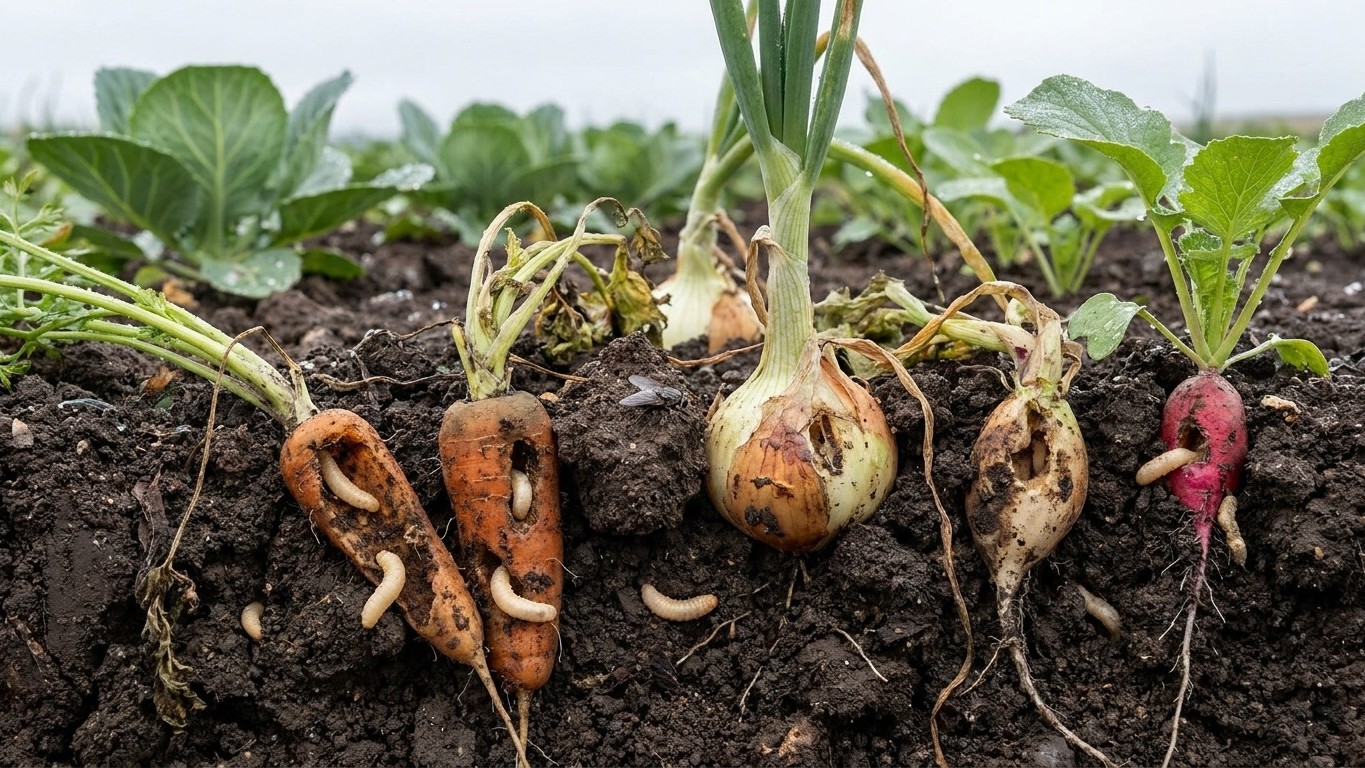
Root-knot nematodes deserve a mention too. Warm soil and mild winters let these microscopic pests carry over from one year to the next, and the damage looks like galled, forked, stunted roots. If carrots or sweet potatoes have come up knobby in a bed before, plant your unusual roots somewhere else.
Finally, weekly watering is not the failure here. Rain is. The risk is a bed that stays soggy while you assume it needs more water.
What changes across Mississippi
The USDA Plant Hardiness Zone Map (2023, built on 1991-2020 normals) places Mississippi in zones 7b to 9a. That spread means there is no single answer for the state. The USDA system rests on one variable, the average annual extreme minimum temperature, so it tells you about winter survival. It says nothing about when your last frost falls or how hot July gets.
Gardeners in the north and on higher ground should shift later in spring and earlier in fall. Slow roots sown in fall need more cushion before the first freeze. Frost-tender tubers like yacon need extra care in the colder zones: mulch heavily, or lift and store them rather than trusting the ground. Low spots and the bottoms of slopes hold cold air on still nights, so a garden there can frost well after a neighbor on a rise.
Gardeners toward the Gulf end of the range get a milder winter and, in most years, more room at the back end of fall. The trade is more moisture and heat pressure on everything. Spacing and drainage matter more, and the case for late-summer sowing gets stronger.
Look up your own zone rather than assuming it. The USDA map lets you enter a ZIP code. Treat the Jackson dates as the middle of the state’s spread, not a promise for every county.
Where to check this for your own county
The best next stop is Mississippi State University Extension, the state’s land-grant extension service. A county recommendation beats a state one, and this page is the state one. It uses one reference station and general crop behavior, while your county office knows your soils and how a typical year plays out locally.
Once there, look for two things. First, the vegetable planting calendar for your county or region, which shows local spring and fall sowing windows. Second, any varieties trialled in your area. Trial results tell you which cultivars handled heat, rain and disease, and that decides whether a root crop pays off here. Your county extension office can also point you to soil testing and nematode advice if you suspect a problem bed.
Extension calendars cover mainstream vegetables far better than they cover salsify or yacon. If a root you want is missing, use the closest relative they list as your timing guide. Salsify behaves much like a parsnip or carrot, so those calendars give a reasonable proxy.
For more on picking crops, read The Best Unusual Roots to Grow in Mississippi. For the broader picture, see Growing Unusual Root Crops in Mississippi.
Checking this against your own garden
Your own observations outrank every date on this page. Three are worth tracking.
- Soil warmth by feel. Dig a handful from planting depth in the morning. If it feels cold in your palm, it is too early for tender tubers. A bed that warms ahead of another bed is sunnier or better drained. A bed that lags is shaded or holding water.
- The first male flowers on squash or cucumbers. Male blooms show up before female ones, and their arrival signals that warm-season conditions have settled in. If yours appear well before a neighbor’s, you have a warm pocket. If they come late, treat your spring window as later too.
- The first true leaves on seedlings. The seed leaves come first. The first true leaves, which look different, show the seedling is established. Track how many days that takes from sowing. A slow bed is cold or shaded, and a quick one will probably run ahead of the calendar.
Write the dates down. After one season you will have a local calendar that no station figure can match, and after three you will know which corner of your yard to use for each crop.
Common questions
Is fall really better than spring for unusual roots in Mississippi?
For slow, hardy roots such as parsnips, salsify and scorzonera, yes. They grow through cooler weather and mature before the November freezes. Spring suits fast roots like daikon and black radish, plus sunchoke tubers.
Is March 22 safe for planting tender roots?
Not necessarily. March 22 is the end of the 30-70% band of 32°F freeze probabilities at the Jackson reference station, and it still leaves some chance of a freeze afterward. Rural and suburban gardens often see the last frost one to two weeks later, so build in a margin.
Can unusual roots stay in the ground over winter?
Hardy ones usually can. At Jackson, the mean daily minimum of the coldest month is 36.6°F, but that is an average, not the coldest night. Mississippi spans zones 7b to 9a, so gardeners in the colder parts should mulch heavily, and tender tubers such as yacon are safer lifted and stored.
Which calendar should I follow for my county?
Use the vegetable planting calendar from your county office or regional page on Mississippi State University Extension. Where a county calendar and this state page disagree, go with the county. One more tip: if you garden on clay, shift your expectations toward raised rows no matter what any calendar says.