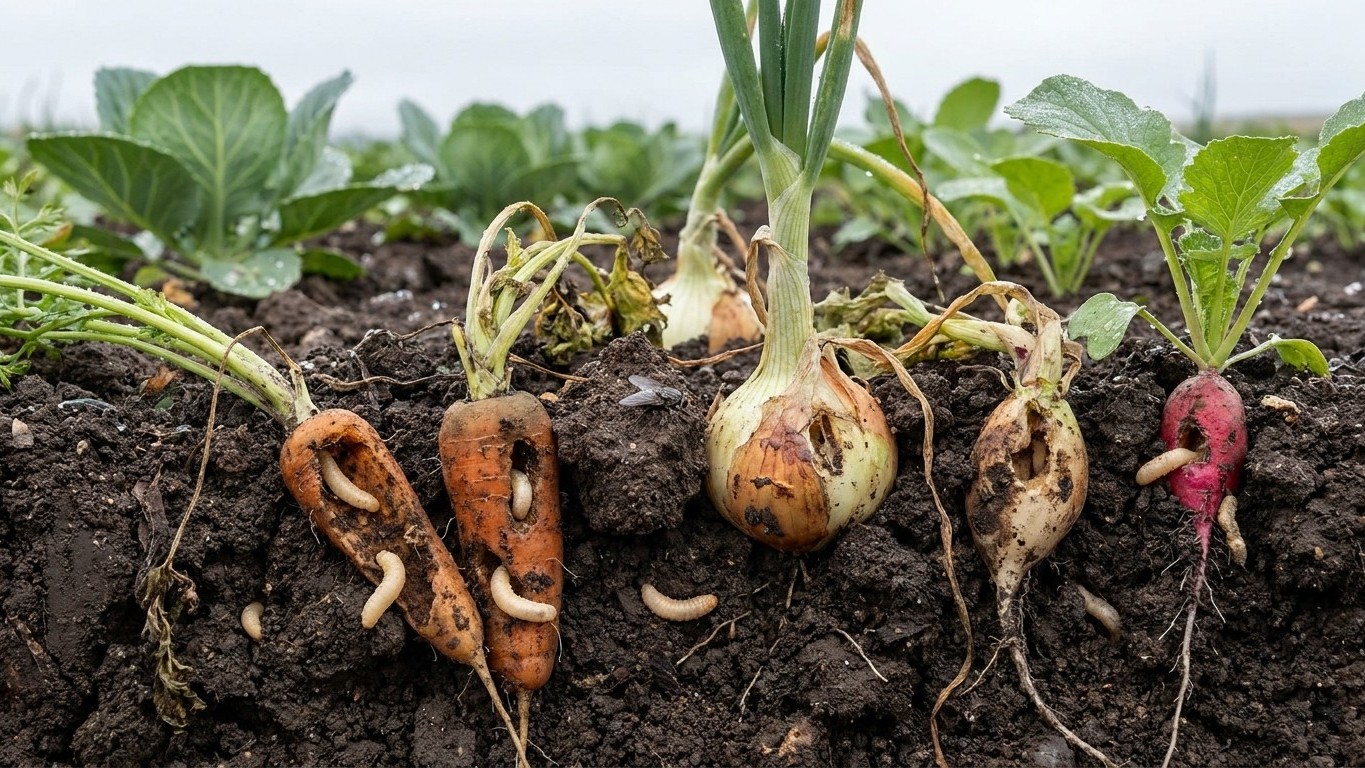

Hardy, frost-tolerant roots that finish in a short season are the best unusual crops for Newfoundland and Labrador. That means black and daikon radishes, Hamburg parsley, scorzonera, salsify, Jerusalem artichokes and horseradish, with celeriac as a worthwhile project. Tender tropical tubers like oca and yacon are the ones to skip. The growing window closes early, and the winters reward plants built for cold.
The short answer for Newfoundland and Labrador
The frost window behind the advice
Every recommendation here hangs on two dates. At the St. John’s A weather station, the last spring frost falls on average May 30, and the first fall frost on average October 17. Both come from Environment and Climate Change Canada’s Canadian Climate Normals for 1981-2010. (US readers: that is an older reference period than the 1991-2020 normals behind American frost dates.)
These are mean dates, so they are midpoints, not guarantees. In one year out of two, spring frost arrives after May 30. In one year out of two, autumn frost beats October 17. The stretch between the two averages comes to about 140 days, and a late spring followed by an early autumn can shave a lot off that. Plan on the shorter version.
Winter matters just as much for anything left in the ground. The mean daily minimum of the coldest month at the St. John’s reference station is -8.7 °C (16.4 °F). That is an average of the coldest nights in the coldest month, not a record low, so individual nights go well below it.
Choosing by type
A workable rule of thumb: for crops sown straight into the garden, favor varieties whose seed packet says about 100 days or less, and treat anything longer as a candidate for indoor starting. The table sorts the unusual roots by how they fit the window.
| Type | Examples | Verdict here | Why |
|---|---|---|---|
| Fast, hardy roots | Black radish, daikon, watermelon radish, golden and striped beets | Best bets | Finish well inside the window and tolerate light frost |
| Slow, cold-tolerant roots | Hamburg parsley, scorzonera, salsify | Good, with patience | Take their time but can be harvested late in autumn |
| Perennial roots and tubers | Jerusalem artichoke, horseradish | Reliable | Do not depend on one season’s length once established |
| Long-season starts | Celeriac | Possible | Needs an indoor start and a late-spring transplant |
| Tropical tubers | Oca, yacon, mashua | Skip | Want more frost-free time than the window offers |
One warning on the reliable row: Jerusalem artichokes and horseradish both spread, and a leftover piece of root will happily start again. Give them a corner of their own, or a container sunk in the ground, before they become a permanent tenant.
This page does not carry summer heat or rainfall figures for the province, so the verdicts above rest on the frost dates and winter minimum alone. For the sowing details, the When to Plant Unusual Roots in Newfoundland and Labrador page picks up where this one leaves off, and the broader overview is in Growing Unusual Root Crops in Newfoundland and Labrador.
What will not work here
Crops that need the whole summer and then some
Yacon is the clearest casualty. It is a root you grow for a very long season, and a 140-day gap between average frosts, which is the optimistic version, does not give it enough time. Oca and mashua have a different problem. They tend to bulk up their tubers late, as autumn arrives, and an average first frost of October 17 means that in half of all years the frost cuts them down earlier. You would be gambling the whole crop on the last few weeks.
Treating May 30 as a go-signal
The most common failure is not a crop, it is a date. May 30 is the average last frost, which means about half of years still have frost after it. A gardener who sets out tender transplants on that day is flipping a coin. Celeriac seedlings, for example, are frost-tender when young, and a cold snap in early June can undo weeks of indoor work. Hardy roots like radishes, beets and Hamburg parsley do not need to wait for the average date.
Leaving tender roots in the ground over winter
With a mean coldest-month minimum of -8.7 °C, tender tubers cannot stay put. Storage roots like oca and mashua must be lifted before hard frost and kept somewhere cool and frost-free. Hardy perennials such as horseradish and Jerusalem artichokes are adapted to cold winters, though a layer of mulch still helps them through a thin-snow year.
Borrowing someone else’s calendar
Dates from a mainland Canadian city, or from a US state, do not transfer. The frost figures on this page come from one station, and the notes attached to that data say plainly that northern and upland districts run weeks behind it. A sowing date that works at the St. John’s A station can be too early by weeks in a cold valley or on a high, exposed site, and a short season leaves no room to recover from a mistimed start.
What changes across Newfoundland and Labrador
A province is not one garden, and this one covers a great deal of ground, from the island of Newfoundland to mainland Labrador. The hardiness figure on this page is zone 6a on the Canadian system, taken from Natural Resources Canada’s Plant Hardiness Zone by Municipality for the reference city, using 1991-2020 normals. It describes that one city, not the province.
Please do not read it as a USDA zone. The Canadian system is built from seven climate variables, while the USDA’s rests on one, and Natural Resources Canada itself states there are no simple conversions between them. Its own example: Canadian zone 4a overlaps nine different USDA zones, from 3a to 7a. If you are used to American zone numbers, set them aside for this page.
Because the province spans several zones, there is no single answer, and this page does not have the full spread. To find where your own community sits, use the Canada’s Plant Hardiness Site map from Natural Resources Canada and look up your municipality rather than guessing from a neighbor.
What should shift if you garden north of the reference city, or at altitude? Start by moving every date later, by weeks rather than days. Narrow your list to fast hardy roots, slower cold-tolerant ones and the established perennials. Drop celeriac unless you have a heated indoor start and a sheltered bed. Where cold air pools in a hollow, expect frost to come earlier in autumn than it does a few yards uphill, and lean harder on crops that sit happily through a frost.
Where to check this for your own county
For local guidance, start with the provincial agriculture department, the Newfoundland and Labrador Department of Fisheries, Forestry and Agriculture. The province is not organized by county the way a US state is, so read “county” as your region or nearest community.
Once there, look for two things. The first is a local planting calendar, ideally one tied to a weather station near you instead of the provincial capital. The second is a list of varieties that have been trialled in your area: which radishes, beets or parsley roots finished, and which sulked. A trial in your region tells you more than any general recommendation, because it was grown under your frost dates and your summers. This page cannot say what the department currently publishes on these crops, so check what is posted before you buy seed.
This page is the provincial view, and its frost dates come from a single station, St. John’s A, with normals running 1981-2010. If your garden sits at a different elevation, nearer the coast or farther inland, or up toward Labrador, your own numbers will differ, perhaps by a few weeks.
Checking this against your own garden
Your own observations outrank every date here. Three are worth watching, and none needs equipment.
- Soil warmth by feel. Push a hand into the bed, knuckle deep, in the morning. If it feels raw and cold even on a sunny day, hold off on slow-germinating seed like salsify, scorzonera and parsley root. A bed that feels cool but not chilling is ready for radishes and beets.
- First true leaves. Sow a short row of radishes as a test. Seedlings first show two rounded seed leaves, then the first true leaves, which look like the adult plant. If true leaves appear promptly, the soil is working for you. If seedlings sit stalled at the seed-leaf stage for a week or more, conditions are still too cold for the slower roots.
- Where autumn frost lands first. Note which plants blacken first, and in which part of the garden. A low corner that browns days before a wall-sheltered bed has just told you where your short-season roots belong and where tender transplants will stay safe longest.
Common questions
Is May 30 a safe date to plant?
No. It is the average last spring frost at the St. John’s A station, so in about half of years frost comes later. Hardy roots like radishes and beets can go in earlier, while tender transplants are best held until you are past your own last frost.
Which unusual root is easiest to start with?
Fast, hardy types: black radish, daikon, or golden and striped beets. They finish well inside the frost window and forgive a cold spring. Horseradish is also low-fuss once planted, though you will need to keep it contained.
Can I grow oca, yacon or mashua?
Not reliably outdoors. The gap between average frosts is about 140 days, and in many years it is shorter. These crops want more frost-free time, and the winter minimum of -8.7 °C means tubers cannot stay in the ground. A greenhouse changes the picture, but that is a separate project.
Does zone 6a apply to my garden?
Zone 6a, on the Canadian system, describes the reference city only, and it is not a USDA zone. The province covers several zones, so look up your own municipality on the Natural Resources Canada hardiness map before relying on any single number.