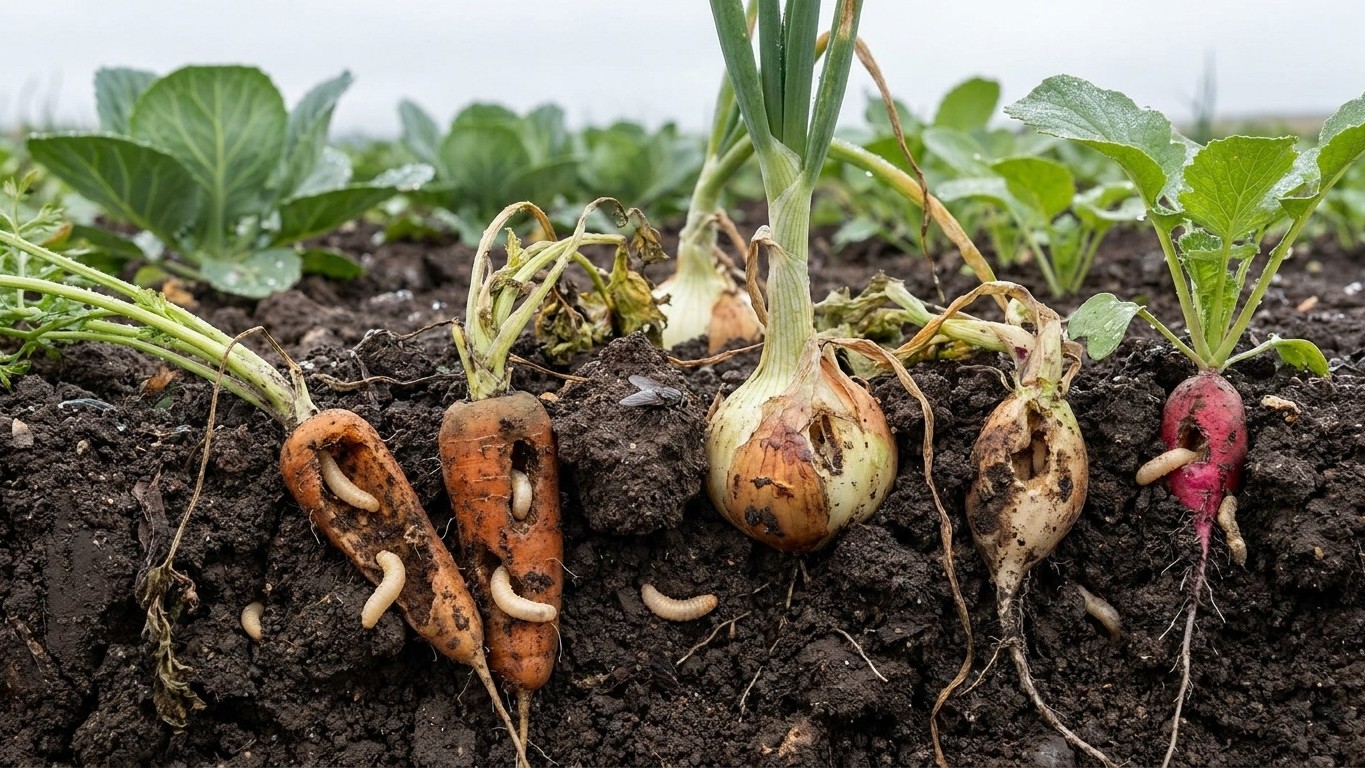

Oklahoma rewards the tough, forgiving roots: Jerusalem artichoke, horseradish, daikon and other fall radishes, and rutabaga. The slow, cool-loving ones (parsnip, salsify, celeriac) are the risky bets, and the tropical imports are a gamble. The state’s long frost-free stretch looks generous on paper. Summer heat is what decides which roots actually finish.
The short answer for Oklahoma
The best unusual roots for Oklahoma either shrug off heat or finish before it arrives: Jerusalem artichoke and horseradish for permanent beds, and daikon, black radish, and rutabaga sown for fall. Slow cool-season roots such as parsnip, salsify, and celeriac are the hardest to get right here.
Reading the frost numbers
The reference city for this page is Oklahoma City. Its airport station, in NOAA’s 1991-2020 U.S. Climate Normals, puts the 30 to 70 percent band for a 32°F freeze in spring at March 28 to April 10. In fall that band runs October 29 to November 8. Those dates are probabilities of a freeze, not promises. Inside the band, the odds that a freeze has or hasn’t happened by a given day are roughly a coin flip.
One caution matters a lot for rural and suburban gardeners. Airport stations run warm. Out in the country, the last spring frost usually lands one to two weeks later and the first fall frost one to two weeks earlier, and the gap grows with elevation. The coldest month averages a daily minimum of 27.0°F, so winter nights routinely dip below freezing. Hardy roots can sit through that in the ground.
Sorting by type
| Type | Examples | Verdict for Oklahoma | Reasoning |
|---|---|---|---|
| Permanent perennials | Jerusalem artichoke, horseradish | Strong fit | Plant once, harvest in cool months; winter cold is not the problem |
| Fast fall roots | Daikon, black radish, rutabaga, turnips | Strong fit | Mature in cooling weather and can sit through the fall freeze window |
| Slow cool-season roots | Parsnip, salsify, scorzonera, celeriac | Risky | Need many weeks of mild weather that the spring window rarely provides |
| Long warm-season roots | Yacon, jicama | Gamble | Need a long warm season, and fall frost cuts the top growth |
Pick varieties by the days-to-maturity number on the packet, and favor the shorter ones. The When to Plant Unusual Roots in Oklahoma page turns these types into sowing windows.
What will not work here
Spring-sown parsnips and salsify top the failure list. Both sulk in cold soil, germinate slowly, and then need months to size up. If you sow when the spring band closes in early April, the roots spend their fattening weeks in summer heat. This page does not carry summer temperature or rainfall figures, but Oklahoma summers are hot and dry spells are common. Roots stressed that way tend to stay thin and tough.
Celeriac fails for a related reason. It wants steady moisture across a long season, and a once-a-week soaking can’t carry it through a dry July. If you can’t water more often than that, skip it, or mulch deeply and treat any harvest as a bonus.
Yacon and jicama are the tropical gamble. Their appeal is size, but both need a long run of warm weather, and a freeze kills the tops. At the reference city the fall band opens October 29, and a rural garden may see that freeze one to two weeks sooner. In the northern tier or on higher ground, the harvest window shrinks further. Crowns of tender roots left in the soil over winter are also a poor bet when the coldest month’s nights average 27.0°F. Lift them and store them indoors.
Late fall sowing fails too. A daikon or rutabaga planted too close to the fall freeze band runs out of growing days and stalls as small, disappointing roots. Count backward from your own first frost, not the airport’s.
Last, Jerusalem artichoke fails by succeeding. A single missed tuber resprouts the next year, and a patch tucked into a mixed bed will take it over. Give it its own corner or a sunken barrel. Horseradish does the same thing from root fragments. In the more humid eastern part of the state, tightly spaced rows of any root also hold moisture around the shoulders, so give them elbow room.
What changes across Oklahoma
Oklahoma is not one garden. The USDA Plant Hardiness Zone Map (2023 edition, built on 1991-2020 normals) places the state in zones 6a to 8a. That is five half-zone steps, so there is no single answer. The system rests on one variable, the average annual extreme minimum temperature. It says nothing about summer heat, rainfall, or frost dates, which matter more for these roots than winter cold does.
Gardeners in the northern part of the state and on higher ground should shift in three ways. Start spring sowing later than the reference-city window, because the last frost comes later there. Sow fall roots earlier, because the first freeze arrives earlier. And drop the long warm-season roots from the plan, or grow them only as a pot experiment. A gardener in a colder corner gains more from the permanent perennials, which handle the cold, than from stretching for a slow root.
In the warmer south and low country, the problem flips. The season is longer, so a late-sown fall crop has more room. But spring-sown cool-season roots meet heat sooner, so those gardeners should lean even harder on fall sowing. Winter minimums are milder there, which makes leaving hardy roots in the ground easier.
Nobody can tell you your zone from a distance, and this page won’t try. Look up your location on the USDA Plant Hardiness Zone Map and read the half-zone for your own address. Then note how far you sit from Oklahoma City, and which direction.
Where to check this for your own county
Start with Oklahoma State University Extension, the state’s land-grant extension service. Find your county office there, and look for two things: a local planting calendar and a list of vegetable varieties trialled in your county. Trial results show what actually grew in local soil and heat, not what a seed catalog promises.
Ask the county office specific questions. What is the typical last spring frost for your part of the county, given that airport figures run earlier than rural ones? Are root crops such as radishes, turnips, rutabaga, or Jerusalem artichoke on any recommended list? Does the county have a common soil problem, such as heavy clay, that changes how deep roots can size up? A crop missing from a list is not a verdict. It may just mean nobody has trialled it.
A county recommendation beats a state one, and this page is the state one. It rests on one airport station and a zone range that spans five half-zone steps. Treat it as a way to sort crops by type and decide where to look next, not as a sowing schedule for your yard. For the wider picture of how these crops fit together, see Growing Unusual Root Crops in Oklahoma.
Checking this against your own garden
Your own observations outrank every date here. Three are worth tracking, and none needs a gadget.
- Soil warmth by feel. Push your hand a few inches into the bed in the morning. If it still feels distinctly cold, slow-germinating roots like parsnip will sit and rot. A bed that warms sooner than your neighbor’s is a south-facing or sheltered spot, useful for early sowings.
- The first flush of male flowers. On squash or cucumbers, male blooms appear first, and their arrival means warm weather is settling in. If yours come early, your garden runs warm, and fall sowings need more shade and water. If they come late, you have a cooler pocket or a shorter season.
- The first true leaves. On a test row of radishes or beets, the true leaves (the ones after the rounded seed leaves) show how fast seedlings are establishing. Slow, pale growth after a sowing says the soil or air is still too cold. A fast row says your microclimate is mild.
Write the dates down for a year or two. A notebook beats any regional table, because it records your slope, your wind, and your soil.
Common questions
Can I grow parsnips in Oklahoma?
You can, but they are one of the harder roots here. Their long, slow season runs into summer heat when sown in spring. Try a small row first, keep the soil evenly moist, and check your county extension office for local advice.
Are Jerusalem artichokes hardy enough for Oklahoma winters?
Yes. The state sits in USDA zones 6a to 8a, and the coldest month’s mean daily minimum at the reference city is 27.0°F. Jerusalem artichokes are grown well beyond that cold, so the tubers sit comfortably in the ground. The real concern is containing them, not protecting them.
What are the Oklahoma frost dates for these roots?
At the Oklahoma City reference station, the 30 to 70 percent band for a 32°F freeze is March 28 to April 10 in spring and October 29 to November 8 in fall. Treat these as probabilities of a freeze, not guarantees.
Do the dates on this page apply to my county?
Not exactly. They come from one airport weather station, and rural gardens often see the last spring frost one to two weeks later and the first fall frost one to two weeks earlier. Check Oklahoma State University Extension for your county’s own figures.