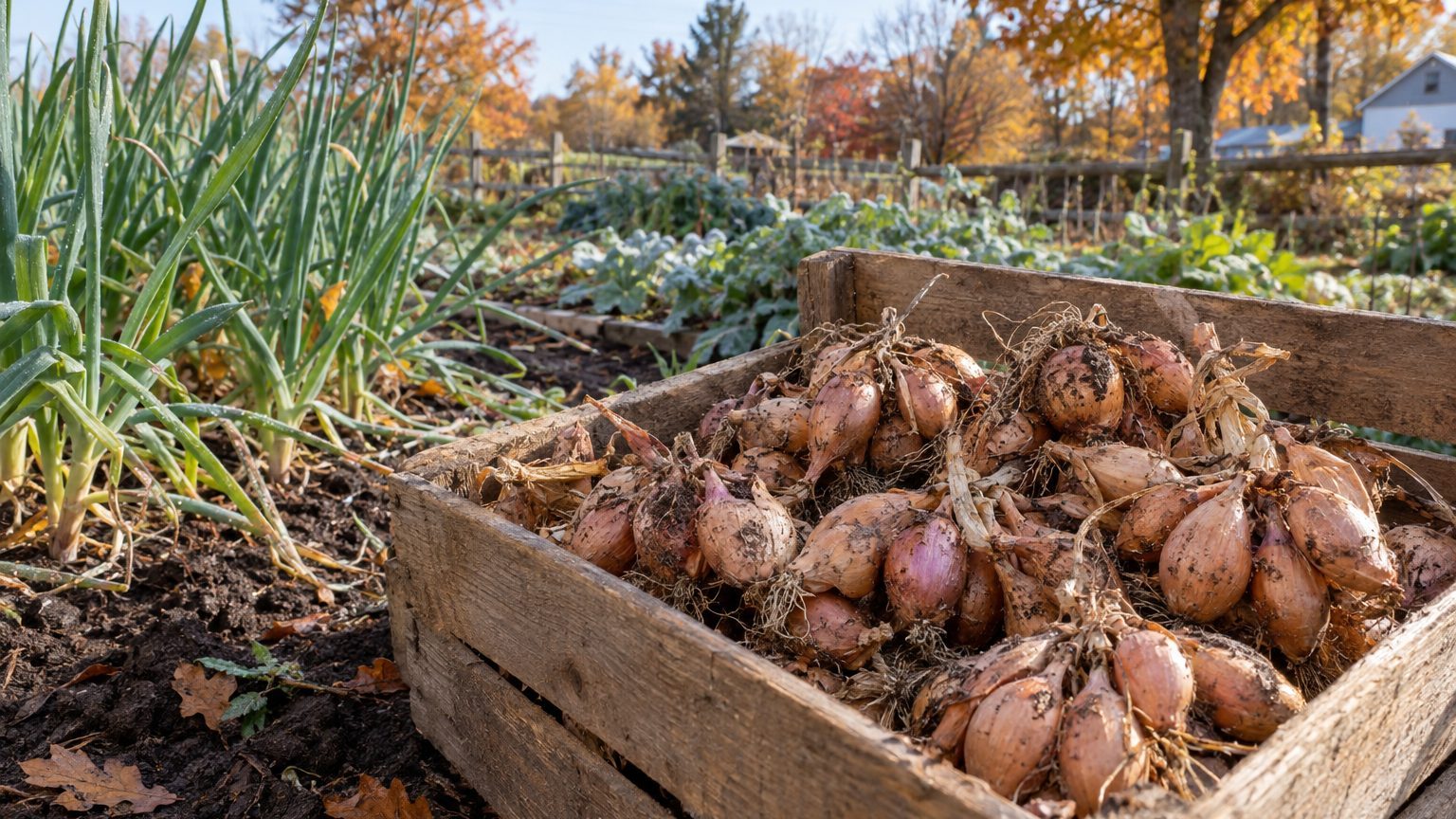

For Kansas, plant multiplier shallots from bulbs, sets of a fall-hardy type, and treat seed-grown shallots as a spring option with a tighter margin. Wichita’s coldest-month nights average 22.5°F, cold enough to matter but rarely brutal. The reasoning behind that pick follows, along with where it breaks down.
The short answer for Kansas
Choose by type, not by catalog name. Kansas gardeners get the most reliable crop from multiplier shallots grown from bulbs, planted in fall or very early spring, because that type starts growing early and finishes before summer pushes the plant to quit. Seed-grown shallots are the second choice. They can work, but they need a spring start and a long, steady run of growth that the calendar does not always give them.
Here is the data this page rests on. The Wichita reference station (NOAA 1991-2020 Climate Normals) puts the last spring frost between April 4 and April 18. Those dates are a probability, not a promise: they mark the band where the chance of a 32°F freeze falls between 30 and 70 percent. The first fall frost lands between October 23 and November 2, on the same measure. The mean daily minimum of the coldest month is 22.5°F, and that number, more than any frost date, decides whether a bulb in the ground gets through winter.
Why does that favor bulb-grown multipliers? Shallots are cool-season alliums, and a planted bulb already holds a head start in stored energy. A bulb set in the ground in fall can root before the soil locks up, then push green growth as soon as March and April thaw it. A winter minimum of 22.5°F is cold, but it is a long way from the deep freezes that kill unprotected bulbs in the Upper Midwest. With a layer of mulch, a fall planting has a fair shot here.
Seed-grown types ask for more. They have to be started early, hardened off and set out around the last frost, then reach bulb size in the window before the heat arrives. That window is narrower than the frost dates make it look. This page does not have a summer temperature or rainfall figure for Kansas, so it cannot say exactly when heat shuts the growing season down. The advice rests on the cold and frost data it does have, and it errs on the side of earlier planting.
Within the bulb type, you have a second decision: storage versus fresh eating. Some shallot types keep for months in a cool, dry place, while others are best used within a few weeks of curing. If you plan to eat shallots through winter, ask the seller about storage life before ordering, not just flavor or color. When to put them in the ground is a separate question, covered in When to Plant Shallots in Kansas. The broader how-to lives in Growing Shallots in Kansas.
What will not work here
Late-spring planting of anything slow is the clearest failure. Suppose you plant seed-grown shallots outdoors in May, well after the April 4 to April 18 last-frost band. They are small seedlings when the weather turns hot, and shallots set bulbs in response to lengthening days and warming temperatures. A seedling that has not built enough leaves by then makes a small bulb, or bolts. Kansas has the frost-free stretch to grow a crop, but not so much slack that you can waste the early weeks.
Fall planting can fail too, in two directions. Plant too early, while soil is warm, and bulbs send up a lot of top growth that winter then cuts back. Plant too late, after the October 23 to November 2 frost band has passed and the ground is cooling fast, and bulbs may not root before freezing. With winter nights averaging 22.5°F in the coldest month, bare soil also freezes and thaws repeatedly, and that can heave shallow bulbs out of the ground. Mulch is the cheap fix, and it matters more than the exact variety.
Finally, the airport caveat. The frost dates above come from one reference station. Suburban and rural gardens typically see the last spring frost one to two weeks later, and the first fall frost one to two weeks earlier, than an airport does, and more so at elevation. If you plan to the Wichita dates exactly, a rural garden may get hit by a freeze on the seedlings you set out early. Treat the dates as a starting point and give yourself room.
What changes across Kansas
Kansas is not one garden. The USDA Plant Hardiness Zone Map (2023 edition, based on 1991-2020 normals) places the state in zones 5b through 7a. That is a spread of several half-zones, and the system measures one thing only: the average annual extreme minimum temperature. So there is no single zone to quote for the state, and no single variety answer either.
For shallots, the practical meaning is this. The colder end of that range means harder winters on fall-planted bulbs, a later spring thaw, and a shorter run to bulbing. A gardener there should lean harder on mulch, favor the most cold-hardy bulb types, and shift both fall planting and spring planting around the calendar of their own area, not Wichita’s. The warmer end of the range gives a bit more margin on winter and an earlier spring start, but it brings the heat sooner too. Those gardeners should aim to get plants established early so bulbs finish before summer pressure builds.
Elevation works the same way as going north. The frost caution on this page says the last spring frost comes later and the first fall frost earlier at elevation, beyond the one-to-two-week gap between airports and open country. A reader in higher ground should expect to plant later in spring, harvest on a shorter clock, and pay closer attention to frost forecasts around the edges of the season.
This page will not tell you which zone you are in. Zones shift block by block, and a guess from here could be wrong by a full half-zone. Look up your location on the USDA Plant Hardiness Zone Map using your ZIP code, then compare it with the 5b to 7a range to see where you sit. Wichita’s numbers are a reference point, not a rule for your yard.
Where to check this for your own county
K-State Research and Extension is the place to confirm any of this. It is the state’s land-grant extension service, and it has local offices that know county-level conditions, which no statewide page can match.
Look for two things there. First, a local planting calendar or vegetable planting guide for your county or district, with dates that account for your area’s frost patterns. Second, any variety trials or recommended-variety lists for alliums or onions. Shallots often fall under onion guidance, so search for onions as well if shallots turn up empty. A variety that performed well in a trial garden near you is better evidence than a catalog description written for the whole country.
A county recommendation beats a state one, and that is not modesty. This page is the state one. It is built on a single reference station in Wichita, and it covers a range of hardiness zones from 5b to 7a. A county agent has seen what actually survived last winter in your soil and which plantings bolted in last June’s heat. If their advice and this page disagree, follow them.
If you call or visit an office, bring your questions in a form they can answer quickly: your approximate location, whether you plan fall or spring planting, and whether you want storage shallots or fresh ones. Ask also whether they know of local sources for bulbs adapted to the area, since regional growers often sell types that have already proven themselves in nearby soil.
Checking this against your own garden
Your own observations outrank every date here. Three are worth tracking, and none needs equipment beyond your hands and your eyes.
Soil by feel
In late winter or early spring, grab a handful from a few inches down. If it crumbles and does not smear into a wet clump, it is workable. If it is still cold enough to numb your fingers quickly, roots will sit idle. Note the date this happens each year, because a bed that thaws and drains two weeks ahead of the neighbor’s tells you about its slope, sun and drainage.
The first true leaves
Watch when green shoots appear on bulbs you planted in fall, or when seedlings first push a true leaf past their seed leaf. An early flush says your spot warms quickly, which also means it may be hit by a late freeze, so keep a cover handy. Slow or staggered emergence points to cold pockets or heavy soil.
Flower stalks and falling tops
When some plants send up a flower stalk, or the tops begin to yellow and flop, bulbing is ending. Record the date. If stalks show up early and in numbers, heat or stress hit during growth, and next year you should plant earlier or choose a more bolt-resistant type. If tops fall late and evenly, your timing and watering worked.
Write all three dates in a notebook for two or three seasons. After that, you will have a calendar tuned to your own yard, which no reference station can supply.
Common questions
Can I grow shallots from seed in Kansas?
Yes, but with less margin than bulbs give you. Seed-grown shallots need an early indoor start and a spring planting near the April 4 to April 18 last-frost band at the Wichita reference station, later in colder or higher areas. Bulbs are the safer first choice.
Should I plant shallots in fall or spring?
Fall planting of hardy bulb types suits Kansas well, given a coldest-month minimum of 22.5°F and a mulch layer. Spring planting works too, as early as the soil can be worked. The exact timing is in When to Plant Shallots in Kansas.
Will shallots survive a Kansas winter?
Fall-planted bulb shallots usually do, especially with mulch. The reference-station figure for the coldest month is a mean daily minimum of 22.5°F, not a record low. Colder parts of the state, in zone 5b territory, call for heavier mulching and attention to hardy types.
Which type stores longest?
This page has no storage trial data for Kansas, so it cannot rank types. Ask the seller about keeping quality, and check K-State Research and Extension for local trial results. For general growing guidance, see Growing Shallots in Kansas.