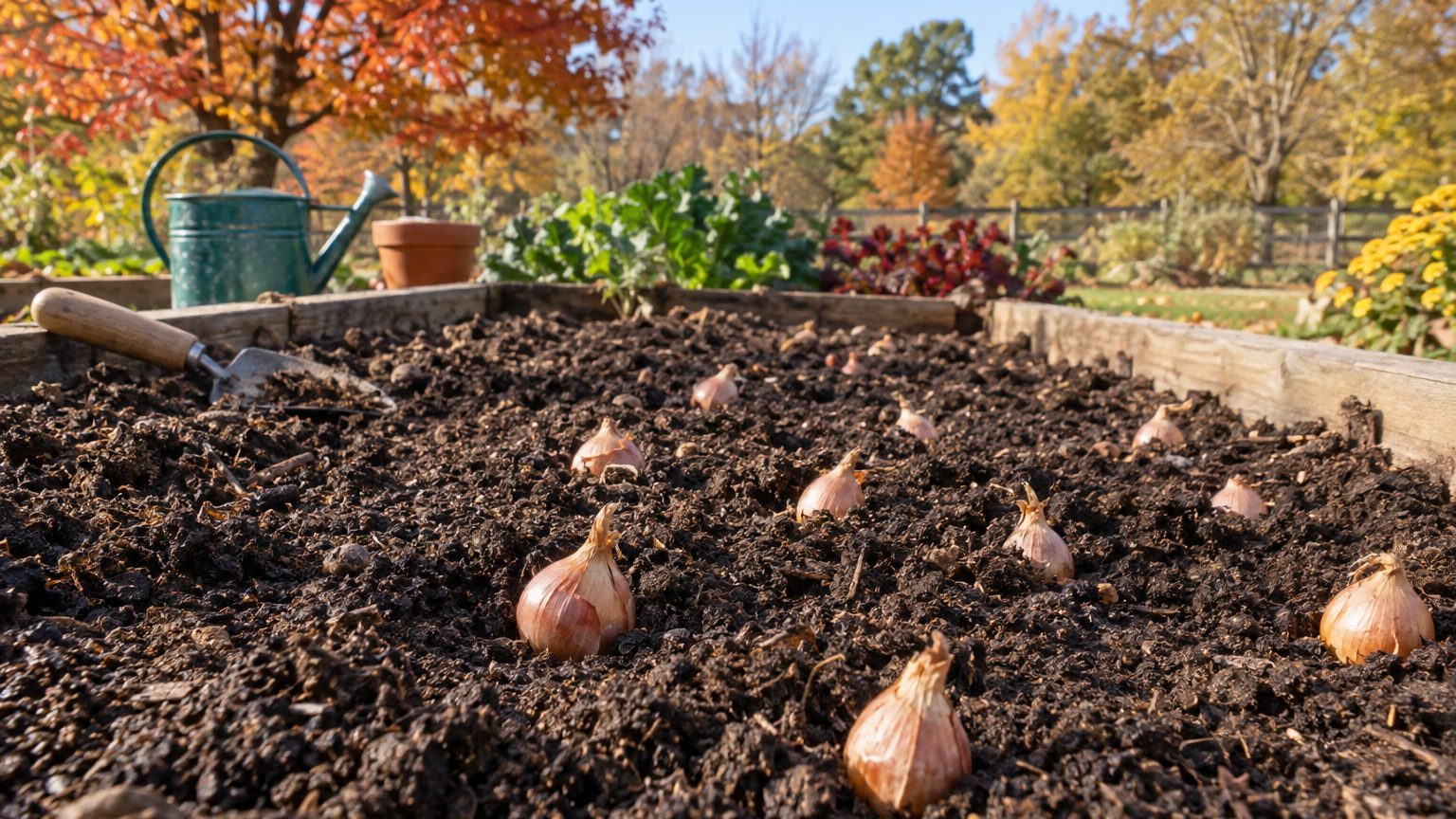

Plant shallots in Kansas in fall, in the weeks around the first freeze, or in early spring as soon as the soil is workable. Fall is the better bet for bigger bulbs. The reference dates come from Wichita: the last spring freeze falls between April 4 and April 18, and the first fall freeze between October 23 and November 2. Your own garden will likely differ.
The short answer for Kansas
Fall planting is the Kansas default. Set the cloves in the ground around the fall frost band, October 23 to November 2 at the Wichita reference, so roots form before the soil locks up. Spring planting is the fallback, done ahead of the April 4 to April 18 band. Both dates need unpacking, because they are not what they look like.
Those two bands are probabilities of a 32°F freeze, taken from NOAA’s 1991-2020 Climate Normals. Each marks the stretch where the odds sit between 30 and 70 percent, which is close to a coin flip. They are not a date the frost stops. Some years a freeze arrives well after April 18, and some autumns it holds off past November 2.
There is a second catch. The figures come from an airport weather station. Suburban and rural gardens typically see the last spring frost later and the first fall frost earlier than the airport, often by one to two weeks, and more at elevation. Treat the Wichita numbers as the reference-city figure, never as a statewide guarantee.
Fall planting
Aim for the front half of the fall band if you garden outside town: roughly the last week of October at the reference, earlier if your frosts come early. The goal is root growth with little or no top growth before winter. Shallots are tough. The mean daily minimum of the coldest month at Wichita is 22.5°F, cold enough to demand a hardy crop but nowhere near what established shallots can take.
Spring planting
Spring sets go in as soon as you can work the soil, ahead of the April 4 to April 18 band. Shallots tolerate light freezes, so waiting for the frost to be over only costs growing days. The earlier they root, the more leaf they build before summer heat triggers bulbing.
| Planting | Reference-city frost band (Wichita) | Adjustment for a rural or higher garden |
|---|---|---|
| Fall | First freeze: October 23 to November 2 | Plant earlier; first frost can arrive one to two weeks sooner |
| Spring | Last freeze: April 4 to April 18 | Expect the last freeze one to two weeks later, but plant as soon as soil is workable |
Not sure which varieties suit these windows? The Best Shallots to Grow in Kansas covers that, and the broader guide, Growing Shallots in Kansas, covers the rest of the season.
What will not work here
Waiting on the last frost date fails first. Gardeners used to cool northern climates hold shallots until the frost danger is gone, which in Kansas can mean mid-April or later in a rural plot. That leaves a thin margin before early summer heat pushes the plant to stop growing leaves and start sizing the bulb. A shallot with only a few weeks of leaf growth yields small bulbs.
Planting too early in fall is the opposite mistake. If cloves go in while the soil is still warm, they send up green tops that a hard freeze then burns back, wasting the plant’s stored energy. The first fall freeze band of October 23 to November 2 is a guide to timing, but a warm October can fool you for a few weeks. Planting a week or two after a first light frost is safer than planting in September because the calendar says fall.
Weekly watering on a fixed schedule will not hold up in a Kansas summer either. Shallots have shallow roots, and a hot, dry, windy stretch can dry the top few inches within days. A mulch layer of straw or shredded leaves, plus watering by soil check rather than by weekday, makes more difference than any variety choice. The same goes in the other direction: heavy clay that stays wet through winter rots cloves, so raised rows or beds are a better fit than flat ground.
Another miss is trusting the airport. A gardener in a low spot or on open rural ground may have a frost 10 days after Wichita’s, and a fall planting date based on the airport could land cloves in frozen mud. Winter hardiness itself is rarely the issue here. With a coldest-month mean minimum of 22.5°F, established shallots survive fine. The failure is almost always in the timing at either end of the season, not in the cold between them.
Finally, crowding. Eastern Kansas is noticeably more humid than the western plains, and a bed packed tight with shallots in a wet spring holds moisture on the leaves and invites disease. Give the bulbs room and good airflow, especially in the eastern third of the state.
What changes across Kansas
Kansas is not one garden. The USDA Plant Hardiness Zone Map (2023 edition, based on 1991-2020 normals) places the state in zones 5b through 7a. That spread is a full zone and a half, built on a single variable: the average annual extreme minimum temperature. So there is no single Kansas answer, only a range, and the Wichita dates sit near the middle of it.
If you garden in the northern part of the state or at higher elevation in the west, the shift runs in a predictable direction. Spring comes later, so spring planting slides later with it. Fall comes sooner, so the fall planting window opens earlier and closes sooner. Give yourself an extra week or two on the early side of the fall band, and do not count on the Wichita April dates for spring work. The caution from the frost data applies here: rural and higher gardens often see the last spring frost later and the first fall frost earlier, and more so with altitude.
In the south and southeast, the opposite happens, and the fall window can run later. Warmer fall soil, though, makes it easier to jump the gun and get top growth too soon, so the signs in your own garden matter more than the date. Southern spring planting also has less runway before heat arrives, which tilts the case further toward fall.
Nothing here can tell you which zone your yard falls in, since zone lines cut across counties and even across town. The USDA Plant Hardiness Zone Map has a ZIP code lookup, and that is the tool to use. Once you have your zone, compare it with the 5b to 7a spread and nudge the dates accordingly: later in spring and earlier in fall as you go colder, the other way as you go warmer.
Where to check this for your own county
K-State Research and Extension is the state’s land-grant extension service, with offices across Kansas. This is the next stop after this page, because extension agents see your county’s soil, frost pockets, and local failures every season.
Two things are worth looking for. The first is a local planting calendar or vegetable planting guide for your county or district, which will usually give dates for onions and their relatives, and shallots tend to follow the same logic. The second is any variety trial results. Extension and the state’s research stations sometimes test onion-family crops, and a variety that performed in your part of Kansas is worth more than one that looked good in a catalog. If the website does not list shallots specifically, call or email your county office and ask what they recommend for onions and garlic, then ask how shallots should differ.
Be plain about what this page is. It is the state-level view, built from one reference station’s frost record, and a county recommendation beats it every time. A state page averages across zones 5b to 7a; a county agent narrows it. Where the two disagree, go with the county, and treat the dates here as a starting range to be adjusted.
Checking this against your own garden
Your garden’s own signals outrank every date above. Three are easy to watch, and none need equipment.
- Soil warmth by feel. In fall, push your hand into the bed in the morning. If the soil feels cool and holds together without feeling like cold mud, the roots can start. If it still feels warm like summer, wait. In spring, soil that crumbles instead of clumping is ready. Beds that warm up fast are your sunny, well-drained spots, and slow ones are your cold pockets.
- The first flush of male flowers. Dangling catkins on a neighborhood oak or cottonwood, and later the first male blooms on squash, show when your area has truly warmed. If they open a week before your neighbor’s, you have a warm microclimate and can plant a little earlier in spring.
- The first true leaves. Watch your shallots and the weeds around them. Fall-planted cloves with green tips showing before winter went in too early or in a warm spot. In spring, early leaf growth tells you how fast your bed is waking.
Write the dates down for a season or two. A scribbled note on when the soil first crumbled and when the first cottonwood catkins fell will beat any state calendar within a couple of years.
Common questions
Is fall or spring better for shallots in Kansas?
Fall planting generally gives the roots and leaves more time before summer heat triggers bulbing, so it tends to produce larger bulbs. Spring planting works if you get sets in early. Late spring planting is the weak option.
What are the frost dates behind these recommendations?
At the Wichita reference station, the last spring freeze falls between April 4 and April 18, and the first fall freeze between October 23 and November 2. These are 32°F freeze probabilities in the 30 to 70 percent band, from NOAA’s 1991-2020 normals.
Will Kansas winters kill fall-planted shallots?
Rarely. The mean daily minimum of the coldest month at Wichita is 22.5°F, and the state’s hardiness zones run from 5b to 7a. Most losses come from rot in wet soil or from tops that grew too early, not from cold alone.
Should I use the Wichita dates if I live outside the city?
Use them as a starting point only. Rural and suburban gardens typically see the last spring frost one to two weeks later and the first fall frost one to two weeks earlier than the airport, and more at elevation. Check with your county extension office.