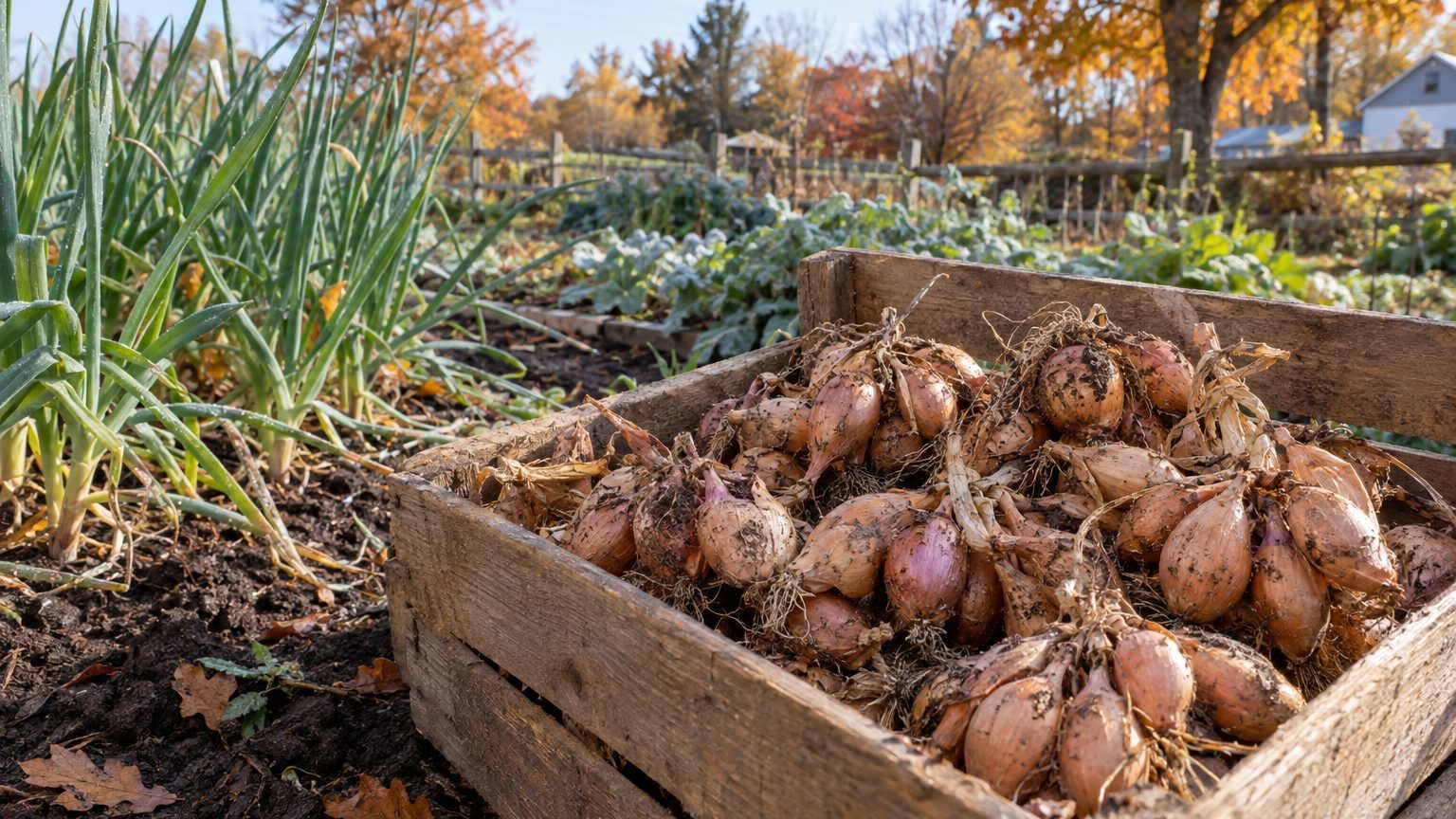

For most Missouri gardens, the best shallots are multiplier types grown from bulbs and planted in fall. Seed-grown shallots are the backup for anyone who missed that window. The calendar drives the choice: Missouri summers arrive fast and humid, and a shallot that finishes bulbing before the worst heat is the one that stores well. This page sorts the options by type, not by catalog name.
The short answer for Missouri
Pick multiplier shallots from bulbs, plant them in fall, and favor types that mature early and cure well. Seed-grown shallots, started indoors and set out in spring, are a sound second choice. Spring-planted bulbs are third, because they have the least time before summer closes in.
The numbers behind that ranking come from the Kansas City reference station. NOAA’s 1991-2020 Climate Normals put the last spring frost between April 6 and April 20, and the first fall frost between October 18 and October 29. Those are not guaranteed dates. Each is the band in which the probability of a 32°F freeze sits between 30 and 70 percent.
One caution about that station. It sits well north of the city, and the downtown station runs about five days earlier in spring. Southern Missouri is milder still. Treat the dates as a Kansas City anchor, not a statewide rule.
Winter is the other number that matters. The mean daily minimum of the coldest month is 19.5°F at the same reference station. That is cold enough to stop top growth, yet not so punishing that a mulched fall planting is a gamble. A bulb set in the cool months builds roots all winter and starts leaf growth early in spring. It then has a head start on the heat that triggers bulbing.
| Type | When it goes in | Main risk in Missouri | Verdict |
|---|---|---|---|
| Multiplier shallots from bulbs (fall) | Fall, ahead of hard freezes | Heaving in wet clay, rot if mulch stays soggy | First choice |
| Seed-grown shallots | Started indoors, set out in early spring | Small transplants meeting early heat | Good second choice |
| Multiplier shallots from bulbs (spring) | As soon as soil can be worked | Short cool window, smaller bulbs | Fallback |
Choosing within a type
Within multipliers, look for descriptions that stress early maturity, firm skins and long storage. Round, compact types tend to cure faster than long, thick-necked ones, which matters when the curing weeks are humid. This page does not have county trial results, so it cannot name a winner among varieties. Section four explains where to find one. For the full growing sequence, see Growing Shallots in Missouri.
What will not work here
The slowest shallots lose first. A type that needs a long, cool stretch to size up will run out of road in Missouri, because the gap between the last spring freeze (April 6 to April 20 at the reference station) and summer heat is short. Bulbs planted in spring at the tail end of that window get only a few weeks of cool growth before warm weather tells them to stop making leaves and start bulbing. The result is small bulbs, often with thin necks. Gardeners often blame the variety when the real culprit is the planting date.
Close spacing also fails here, and humidity is the reason. Missouri summers are damp, and shallots packed tightly hold moisture in the foliage and at the neck. Fungal problems such as downy mildew, botrytis and neck rot thrive in that setting. Wide spacing, good airflow and raised beds in heavy clay are what keep a crop from collapsing in a wet June.
Planting too early in fall is a quieter mistake. If bulbs go in while the soil is still warm, they send up a lot of top growth that the first hard freeze then punishes. Give roots time and leave the tops for spring. A light mulch helps, but a thick, wet one in clay can hold water around the bulb and cause rot.
Heaving is the other winter problem. Missouri winters swing between freezing and thawing, and clay soil lifts shallow bulbs out of the ground as it expands and contracts. Plant at a proper depth and check beds after thaws, pressing any lifted bulbs back down.
Finally, harvest and curing can fail even when the growing goes well. Pulling shallots in August and leaving them to cure outdoors in rain invites rot. Cure them under cover with good airflow, not on open ground.
Planting plans borrowed from other regions do not travel. Advice to wait until spring because winter will kill fall plantings does not fit these winter minimums, and a long-season Gulf state’s leisurely spring crop does not fit here either. For dates specific to Missouri, see When to Plant Shallots in Missouri.
What changes across Missouri
Missouri is not one garden. The USDA Plant Hardiness Zone Map (2023, built on 1991-2020 normals) runs from 5b to 7b across the state. That is five half-zone steps, and the zone system is built on one variable only: the average annual extreme minimum temperature. So there is no single answer for the whole state, only a spread, and Kansas City is just the reference point used here.
In the north, winters bite harder, the ground stays frozen longer, and fall plantings need more protection and a firm commitment to mulch. A gardener in the northern counties may reasonably plant a portion of the bulbs in fall and hold some back for spring. Fall plantings that survive will usually beat spring ones, but losses in a hard winter are more likely at the cold end of the range.
In the south, the story flips. Spring arrives earlier than at the reference station, so the last freeze comes sooner than April 6 to April 20, and summer heat shows up sooner as well. Gardeners there should lean even harder on fall planting and early-maturing types, and plan to harvest earlier than the Kansas City dates suggest. Seed-grown shallots set out in early spring have the least time to size up in that setting.
Do not guess your own zone from a neighbor’s tip or a plant tag. Look up your location on the USDA Plant Hardiness Zone Map, then use the spread above to decide whether to shift earlier or later than the Kansas City figures.
Where to check this for your own county
Start with University of Missouri Extension, the state’s land-grant extension service. Its county offices are staffed by people who work with local soils and local weather every season, and that is exactly the kind of detail a state-level page cannot hold.
Two things are worth asking for. The first is the local planting calendar for your county: when fall-planted bulbs should go in, and when spring sets or transplants should follow. The second is the list of varieties trialled in your county, or the closest one. A shallot that performed well in a trial plot near you tells you more than any national catalog description, because it has already faced your clay, your humidity and your summers.
If a published shallot calendar or trial list does not exist for your county, ask the office what they recommend for onions and garlic. Those crops share most of the same timing and disease pressures, and local staff can often translate that guidance to shallots. This page does not have a Missouri extension shallot calendar to cite, so it will not invent one.
Checking this against your own garden
Your own observations outrank every date in this article. Two are worth watching, and neither needs special equipment.
Soil warmth by feel. Dig a handful from planting depth. In fall, soil that still feels warm means it is too soon to plant, since top growth will run ahead of the roots. In spring, soil that is cold but crumbles rather than smearing is ready for bulbs or transplants. Compare a sunny bed with a shaded one and you will see how much your own yard differs from the reference station.
The first true leaves. On seed-grown shallots, the first true leaf, the one after the thin grasslike seed leaf, shows the seedlings have established. On fall-planted bulbs, new green shoots tell you roots are working. Slow, stunted leaves in spring point to cold or waterlogged soil, a common problem in heavy clay. Fast, vigorous growth that then yellows early points to heat arriving ahead of schedule.
Write the dates down for a season or two. A notebook of when the soil felt right and when leaves appeared will give you a local calendar more accurate than any statewide figure.
Common questions
Can I grow shallots from seed in Missouri?
Yes, and it is a sound second choice. Seed-grown shallots are started indoors and set out in early spring, which fits Missouri’s short cool window. The catch is that small transplants can meet early heat before they are sized up, so timing matters more than with fall-planted bulbs.
Is fall planting really safe, given a coldest-month minimum of 19.5°F?
For the Kansas City reference, that figure is the mean daily minimum of the coldest month, not the record low, so individual nights can run colder. Fall-planted shallots generally handle that range with modest mulch. The bigger risks are heaving in clay and rot under soggy mulch, and in the northern part of the state, where zone 5b conditions apply, protection matters more.
Which frost date should I use for my garden?
Use the reference dates as a starting point only: April 6 to April 20 for the last spring freeze band and October 18 to October 29 for the first fall one. Downtown Kansas City runs about five days earlier in spring, and southern Missouri is milder, so your own site may differ.
Do I need a specific variety name to succeed?
Not necessarily. Choosing the right type, planting at the right time and spacing for airflow matter more than a brand name. For named varieties, ask University of Missouri Extension which have been trialled in your county.