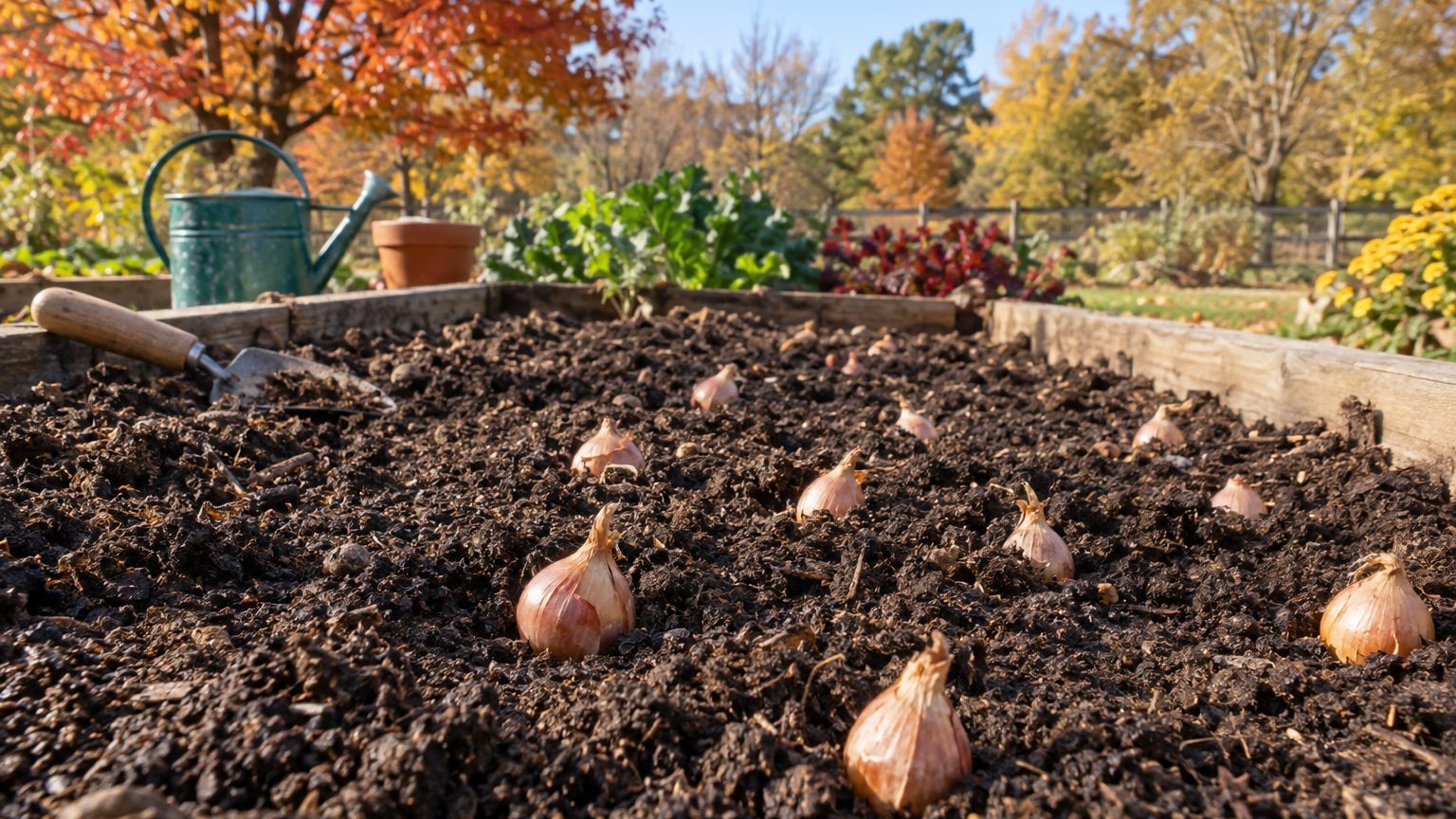

Plant shallot sets in the Northwest Territories as soon as the soil thaws enough to work, which in a Yellowknife-type climate points to the average last spring frost of May 25. That date is a midpoint, not a safe line. About 116 days separate it from the average first fall frost of September 18, and that narrow gap drives every choice below.
The short answer for Northwest Territories
Aim to get shallot sets in the ground between the week before and the week after May 25, once the top few inches of soil have thawed and stopped being a swamp. Both frost dates on this page come from the Environment and Climate Change Canada normals for the YELLOWKNIFE A station, covering 1981-2010. The last spring frost averages May 25, and the first fall frost averages September 18.
What those two dates actually are
Each one is a mean date, the average of the real dates recorded across the years in the normals. It is not a guarantee, and it is not a probability band. In roughly one year out of two, the last spring frost lands later than May 25. In roughly one year out of two, the first fall frost arrives before September 18. Treat each date as the middle of a window with real spread on both sides.
Count the days and you get about 116 between the two means. That is the stretch, on average, when frost is not expected at all. It is shorter in a bad year and a little longer in a good one. Shallots grown from sets spend part of that time just rooting and leafing out, so every day lost in spring comes straight out of the bulb-sizing period.
Turning the dates into a planting window
| Date | What it marks | What to do with it |
|---|---|---|
| May 25 | Average last spring frost, YELLOWKNIFE A | Center of the planting window, not a safe date |
| Soil thawed and workable | Your own bed, not a calendar | Plant sets, even if a light frost is still possible |
| September 18 | Average first fall frost, YELLOWKNIFE A | Plan to lift bulbs around here, earlier in a cold year |
Shallot sets are the small bulbs sold for planting, and they shrug off a light spring frost better than most vegetables do. That is why planting a few days ahead of May 25 is reasonable if the ground allows it. Planting in frozen or waterlogged soil is not. Wait for the bed itself, not for the date.
One caution on sources: the Canadian normals cover 1981-2010, while the US figures elsewhere on this site cover 1991-2020. The two sets of numbers are not on the same footing, so do not line them up side by side.
What will not work here
A season of roughly 116 frost-free days on average rules out some of the usual advice before it starts. Shallots are forgiving, but they are not magic, and the Northwest Territories removes most of the slack.
Slow varieties and seed-grown shallots
Shallots grown from true seed and the slowest, large-bulbed types need a long runway. Starting them outdoors from seed in a place where the soil is not workable until late May is a losing bet. Even started indoors, they arrive in the garden late and small. Stick with sets of early-maturing types, and read The Best Shallots to Grow in Northwest Territories before you buy anything, because the variety decision matters more here than almost anywhere.
Fall planting with no protection
Fall planting is the standard move in milder places, and it is the one most likely to fail here. The mean daily minimum of the coldest month at Yellowknife is -29.5°C (-21.1°F). That is an average of the lows, so individual nights go colder still. A bulb sitting in the top few inches of soil under thin or patchy snow faces that cold with little between it and the air. Snow depth makes or breaks it, and it varies a lot from year to year and from one yard to the next. A thick mulch of straw or leaves might carry a few bulbs through, but this page has no trial data showing that it does, so treat it as an experiment on a small patch, not a plan.
Waiting for the date to feel safe
Holding off until June because May 25 "isn’t safe yet" costs more than a light frost would. Summer light in the far north is nearly round-the-clock, and long days push onion-family plants toward forming bulbs. A plant that goes in late has less leaf built up when that signal arrives, so it makes a smaller bulb. Early planting into cold ground risks a few damaged leaf tips. Late planting risks the whole crop’s size.
Watering cold soil like a July bed
Cold, wet soil in early spring is where sets rot. A heavy watering routine that suits a hot, dry summer elsewhere does harm here. Plant in a raised bed or a well-drained spot, water only if the soil is truly dry, and let the spring thaw do most of the work.
What changes across Northwest Territories
The hardiness zone on file for the reference city, Yellowknife, is 1b in the Canadian system, from Natural Resources Canada’s 1991-2020 data. That is a Canadian zone, not a USDA zone, and the two do not convert. The Canadian system is built on seven climate variables, the USDA system on one, and NRCan itself says there are no simple conversions between them. Never read "1b" as a US number.
It is also one city’s number. The Northwest Territories covers a huge span of latitude, and this page has the zone for one reference city only, so there is no single answer for the whole territory. The frost dates carry the same warning: they come from one airport station, and northern or upland districts run weeks behind it. Add those weeks to May 25, and subtract them from September 18. A garden far north of Yellowknife may have a season noticeably shorter than 116 days.
If you garden in the north or at altitude, shift three things. Push your planting date later and let the soil, not the calendar, decide. Choose the earliest-maturing sets you can find and plant them a little closer to a warm wall or in a raised bed, where soil warms faster. Consider row cover or black plastic to bring the soil up to temperature a week or so sooner. For the zone itself, look up your own community on the Natural Resources Canada plant hardiness map instead of assuming the Yellowknife figure applies. The broader picture of the crop is in Growing Shallots in Northwest Territories.
Where to check this for your own county
The Northwest Territories does not run on counties, so read "county" here as your own community or region. The place to start is the Government of the Northwest Territories agriculture pages from Industry, Tourism and Investment, the territorial body that handles this ground. Look for two things: a local planting calendar for your region, and any list of vegetable varieties that have been trialled near you.
Be ready for gaps. This page does not have a shallot-specific planting calendar for the territory to hand you, and I won’t claim the agriculture pages carry one. If they don’t, ask what they do have for onions and garlic, since the timing logic is close. Calendars published elsewhere are not a substitute. A lawn calendar from a US university, for instance, is built around a different species and a different climate, and it tells you nothing here.
A recommendation from your own region beats a territorial one every time, and this page is the territorial one. It rests on a single airport station and a single reference city. Where a local source disagrees with the May 25 midpoint, trust the local source.
Checking this against your own garden
Your own observations outrank every date above. Three are worth watching, and none needs a gadget.
Soil warmth by feel. Push your hand into the bed to about 4 inches. If the soil is still so cold your fingers ache within a minute, it is too early for sets. Compare a sunny, sheltered corner with an open bed: a gap of a week or more between them tells you how much a raised bed or a south-facing wall is worth to you.
The first flush of male flowers. The pollen-bearing catkins on local willows and aspens open when spring has genuinely turned. Note the date each year. If they open at roughly the same stage as your soil passes the hand test, you have a reliable local signal that outlasts any average.
The first true leaves. Watch for the first real leaves on early crops such as peas or lettuce, and for green tips on the sets themselves after planting. How many days they take to show, compared with the neighbor down the road, reveals your yard’s microclimate. Keep a note of the dates for a few seasons and your own record will start to beat the airport’s.
Common questions
Can I plant shallots in fall in the Northwest Territories?
It is a gamble. With a coldest-month mean daily minimum of -29.5°C, bulbs depend on snow cover and heavy mulch to survive, and this page has no trial results showing it works. Try a small test patch alongside a spring planting.
Is it safe to plant before May 25?
Sometimes. May 25 is the average last frost, so in about half of years frost comes later. Sets tolerate a light frost, but only plant when the soil is thawed and drains.
Do the Yellowknife dates apply to the rest of the territory?
Not exactly. They come from one station, YELLOWKNIFE A, and northern or upland districts run weeks behind it. Shift your dates later and check with local growers.
How long is the growing window?
From the average last frost of May 25 to the average first frost of September 18, about 116 days. A cold year can cut that, and the dates are from the 1981-2010 normals, so recent seasons may differ from them.